Artwork
Umizgi huculskie
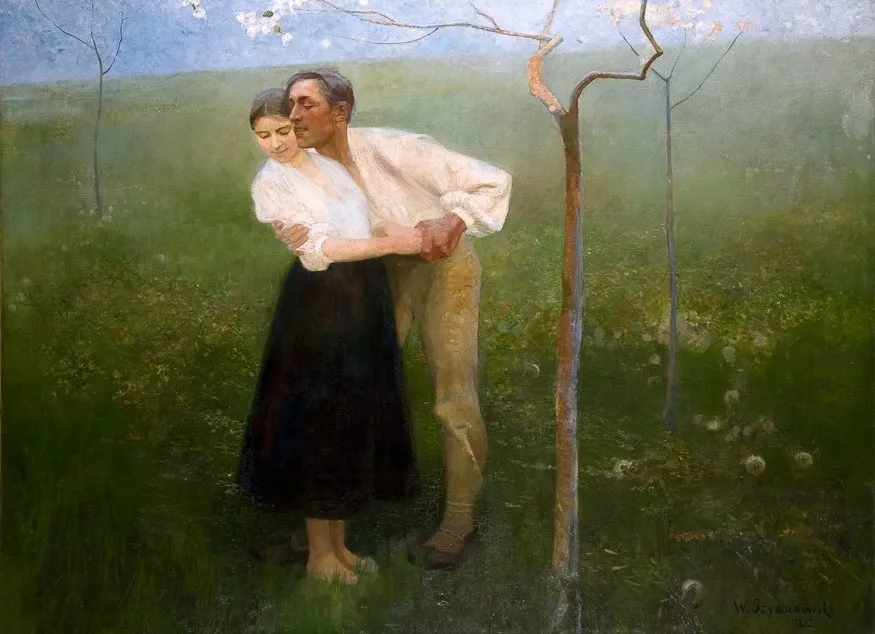
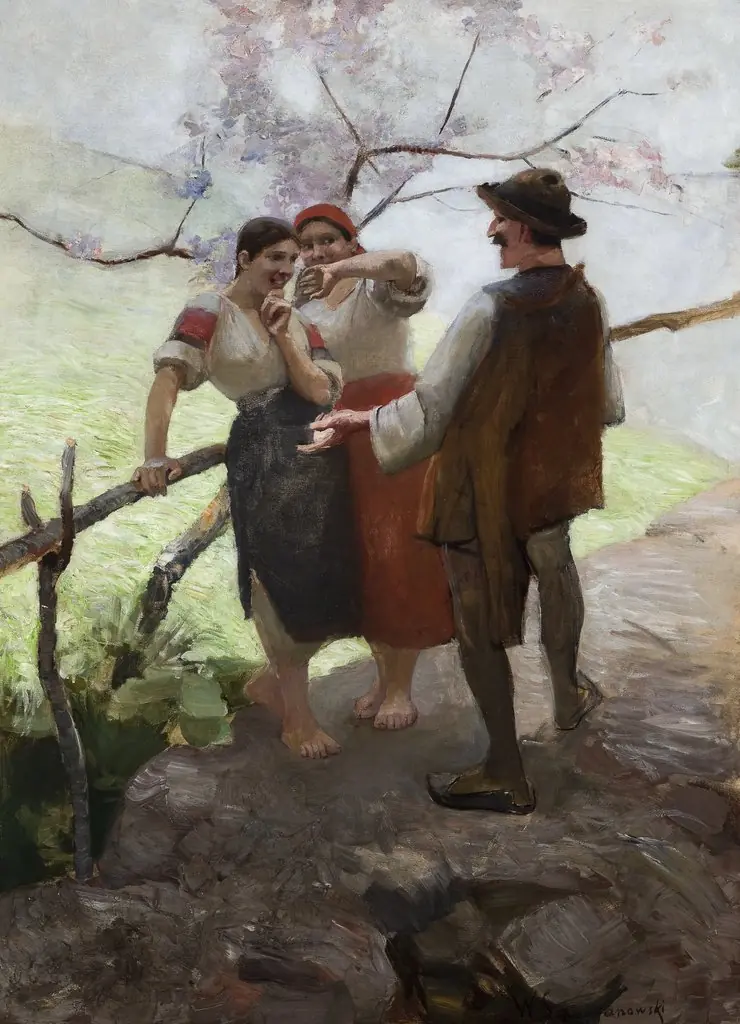
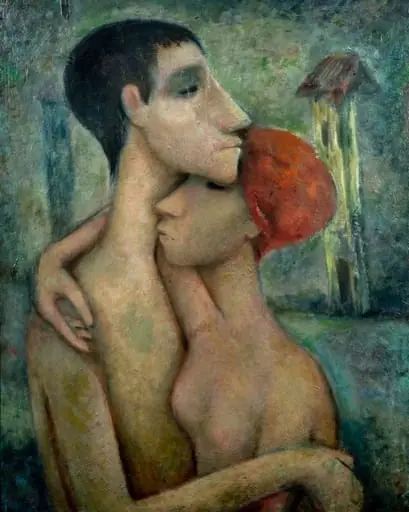
Umizgi huculskie is an oil painting by the Post-Impressionist artist Wacław Szymanowski. It dates from 1896 and is held in the collection of the National Museum in Kraków.
About this work
Overview
Umizgi huculskie, a post-impressionist painting on canvas created in 1896 by Polish artist Wacław Szymanowski, is part of the National Museum in Kraków's collection. Szymanowski, also known for sculptural works like the Chopin statue in Warsaw, explored diverse artistic mediums.
Subject & Meaning
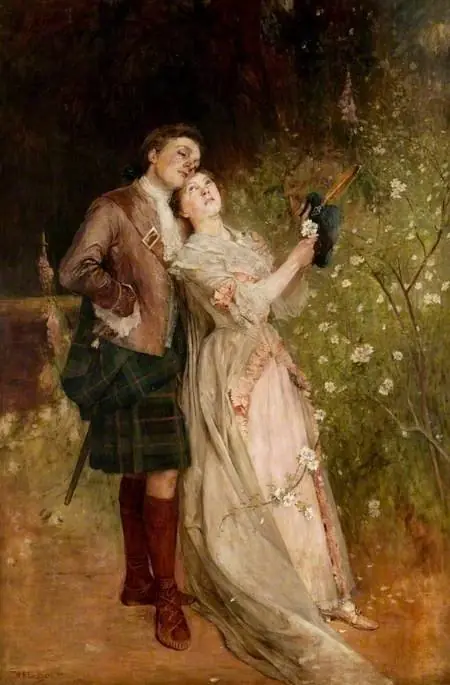
The painting portrays an intimate scene of a man and woman embracing in a serene, natural setting. The couple's gentle pose, with the man's face pressed against the woman's head, conveys deep affection and tranquility.
Technique & Style
Characterized by post-impressionist elements, the work features a lush, green field and clear blue sky, with figures dressed in simple, contrasting attire. Note the use of chiaroscuro, though specific details on its application here are not provided.
History & Provenance
Created in 1896, the painting is now held in the National Museum in Kraków, Poland, as part of its permanent collection.
Context
While the broader cultural context of *Umizgi huculskie* is not detailed here, its post-impressionist style aligns with late 19th-century European artistic movements emphasizing emotional depth and natural settings.
Legacy
The painting's legacy is intertwined with Szymanowski's overall artistic contribution, recognized both for his paintings and notable sculptures like the Chopin monument in Warsaw.
Artist & collection
Artist
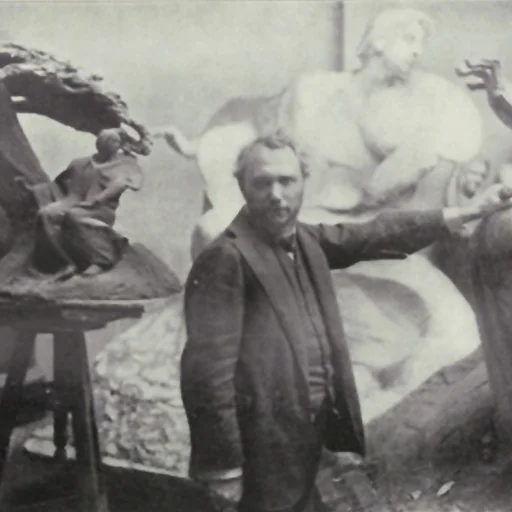
Wacław Szymanowski (23 August 1859 – 22 July 1930) was a Polish sculptor and painter. He is best known for his statue of composer Frédéric Chopin in Warsaw's Royal Baths Park (Łazienki Park).