Artwork
Emil Wikström ateljeessaan Pariisissa
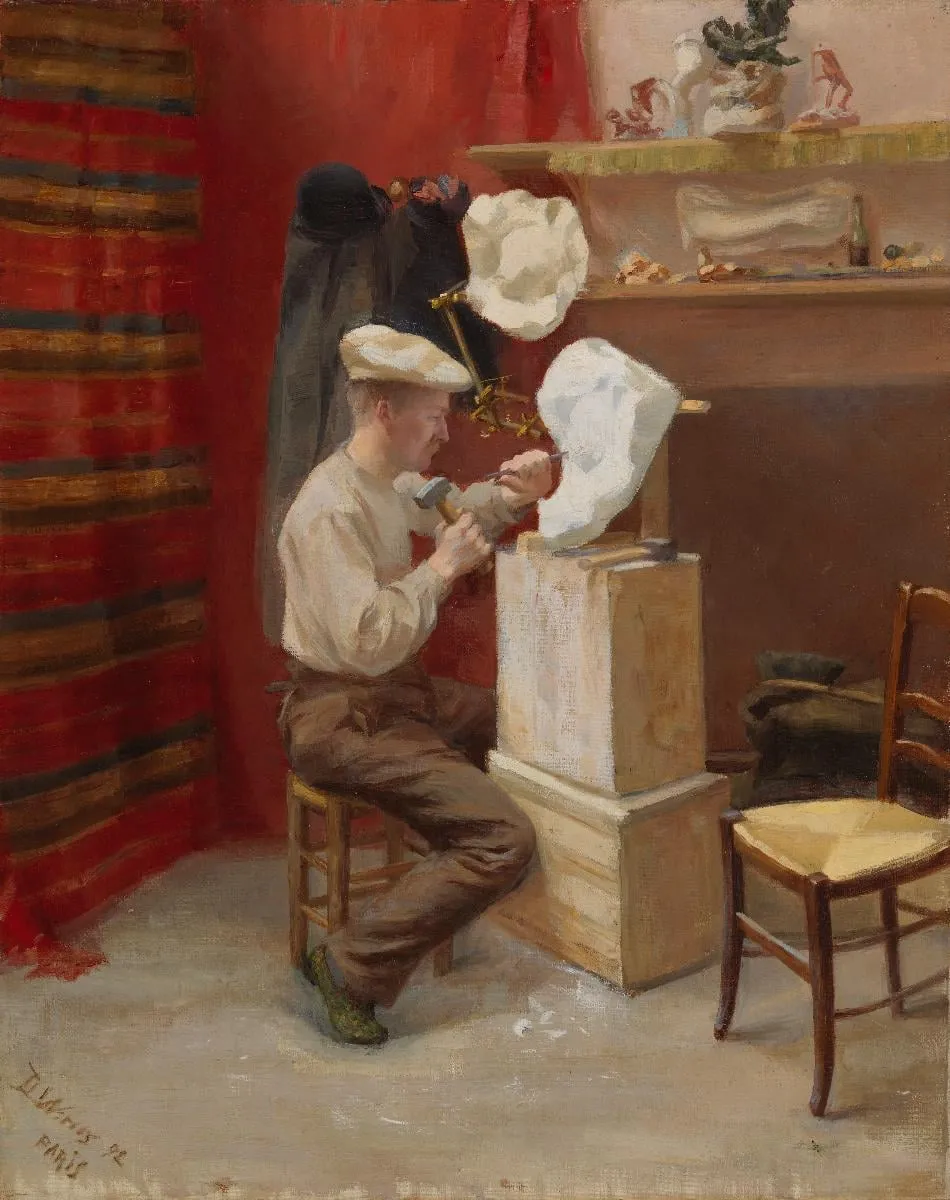
Emil Wikström ateljeessaan Pariisissa is an unspecified painting by Dora Wahlroos. It is held in the collection of the Finnish National Gallery.
About this work
Overview
The surrounding space is dimly lit and cluttered with unidentifiable objects, emphasizing the intimacy of the creative act over grandeur.
Dora Wahlroos depicts the Finnish sculptor Emil Wikström in his Paris studio, capturing a quiet moment of focused labor. The scene centers on Wikström kneeling on a stool, hands shaping raw clay under directional light. The surrounding space is dimly lit and cluttered with unidentifiable objects, emphasizing the intimacy of the creative act over grandeur. The thick application of paint on the red wall adds tactile presence to the environment.
Subject & Meaning
Wikström is shown engaged in the early, ambiguous stage of sculpting—a form that may become a flower but remains indeterminate. This ambiguity reflects the process of artistic creation itself: intuition guiding form before definition. The absence of clear narrative or symbolic cues invites contemplation of craftsmanship as a private, meditative ritual rather than a public performance.
Technique & Style
Wahlroos employs impasto brushwork, particularly on the red wall, creating a textured surface that contrasts with the smoother modeling of the clay and figure. Light is used selectively to highlight the sculptor’s hands and the clay, while the background recedes into muted tones. The composition avoids dramatic contrast, favoring subdued realism that aligns with late 19th-century Nordic naturalism.
History & Provenance
Painted during Wahlroos’s time in Paris, the work documents her association with Finnish artists abroad. Emil Wikström, then emerging as a significant sculptor, was a peer and likely a subject of mutual artistic interest. The painting remained in private Finnish collections after its completion, reflecting its role as a personal record rather than a public commission.
Context
In late 19th-century Paris, Nordic artists often worked in modest studios, away from the academic mainstream. Wahlroos’s focus on a fellow Finn at work aligns with a broader trend of documenting artistic labor among Scandinavian expatriates. The studio setting, cluttered yet unglamorous, reflects the practical realities of sculptors outside institutional support systems.
Legacy
The painting offers a rare visual record of Wikström’s early process and Wahlroos’s observational skill. While neither artist achieved international fame, this work preserves a moment of quiet artistic dedication. It stands as a quiet testament to the cross-cultural exchanges among Nordic artists in Paris, valued today for its authenticity over spectacle.
Artist & collection
Artist
Dora Wahlroos kept a studio door in Paris that never quite shut—she painted through the afternoons and hammered metal in the evenings, as though daylight and dusk were two sides of the same coin.

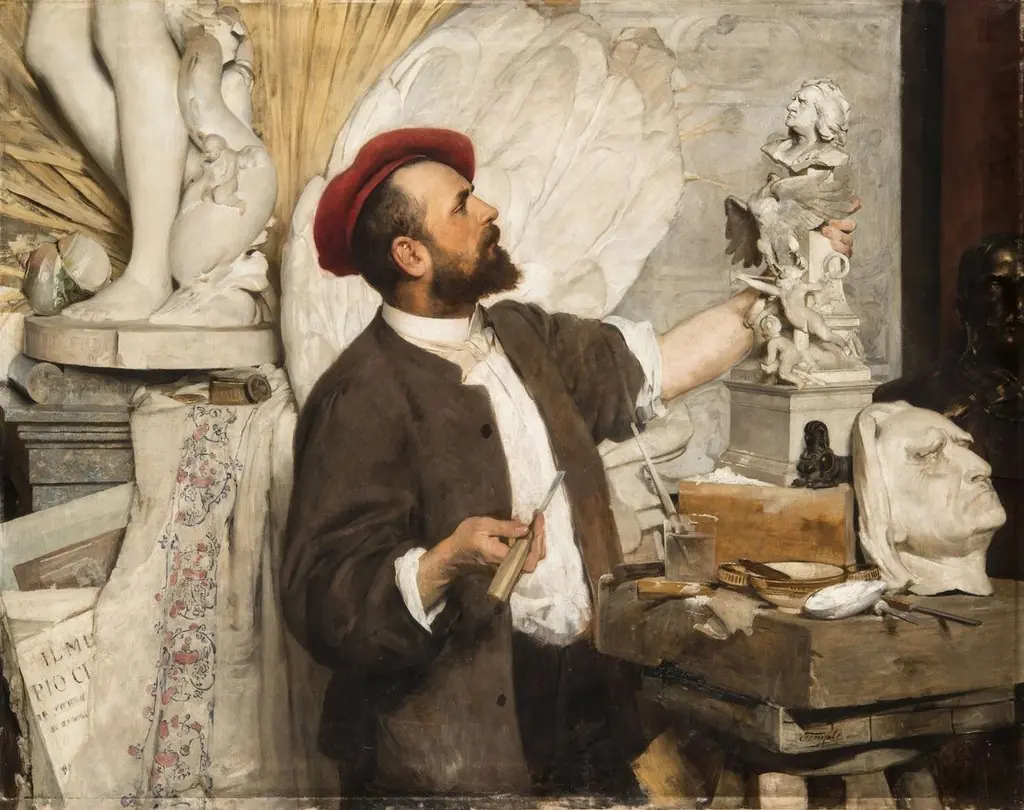 Alajos Stróbl at Work
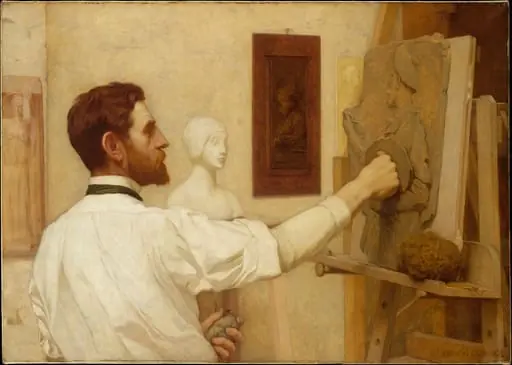 Augustus Saint-Gaudens
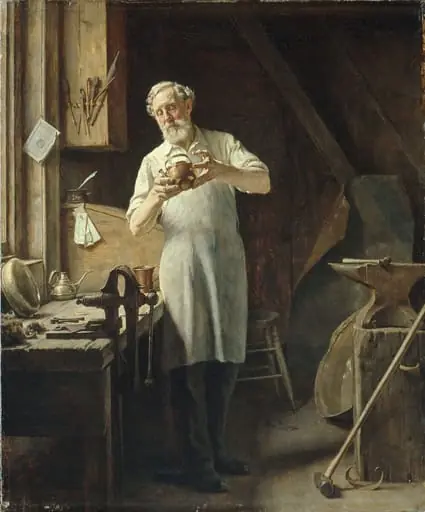 The Coppersmith
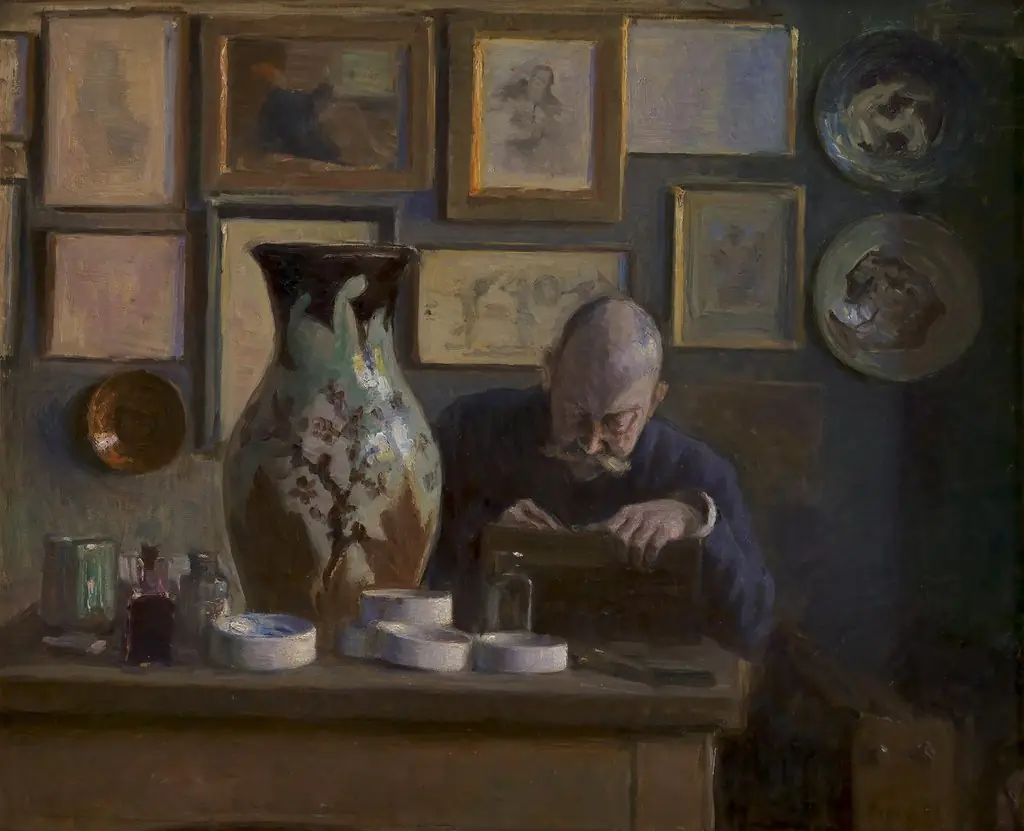 Arkitekten Thorvald Bindesbøll i sin arbejdsstue
 Arkitekten Thorvald Bindesbøll i sin arbejdsstue
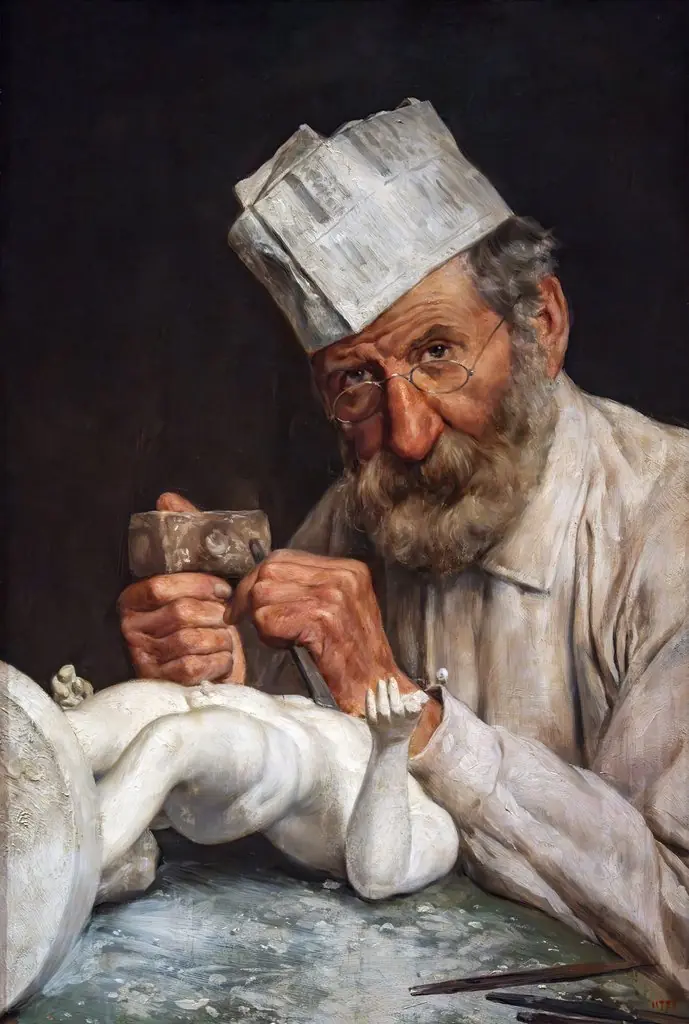 The Sculptor (Self portrait)
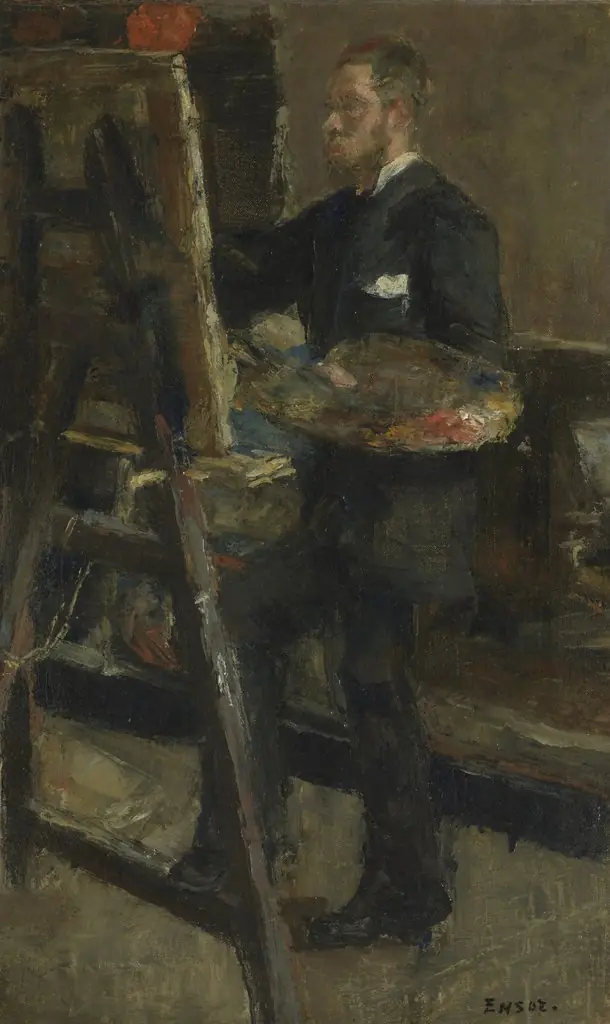 The Painter Alfred William Finch
 Interior of a Painter's Studio
 His Studio
 In the workshop
 Study of a Boy Carving a Crucifix
 Emil Kjöllerfeldt