Artwork
Erna Polzl
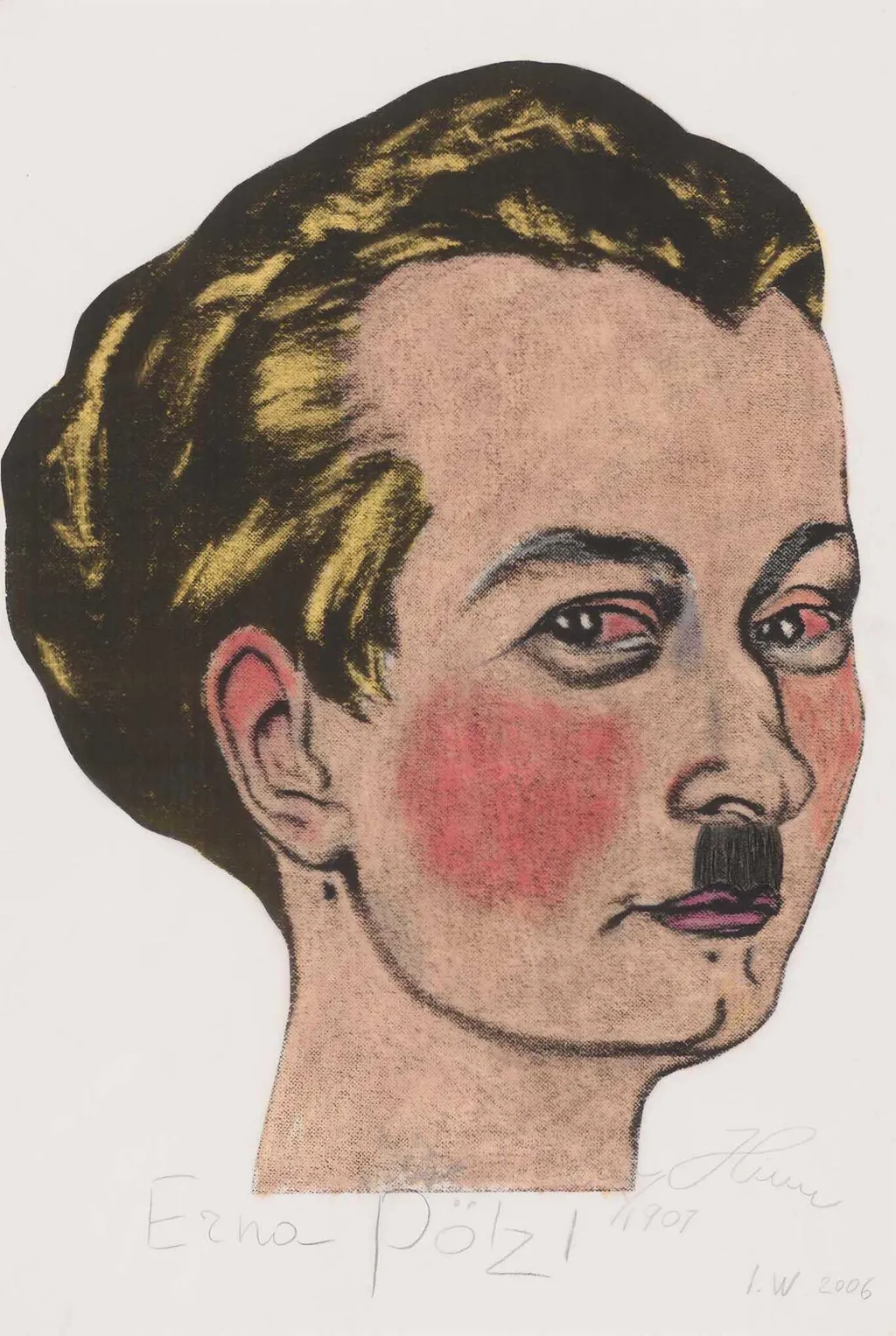
Erna Polzl is a drawing by Ira Waldron. It is held in the collection of the Metropolitan Organisation of Museums of Visual Arts of Thessaloniki – MOMus.
About this work
Overview
The series juxtaposes intimate subjects—family members, pets, and close companions—with a critical commentary on the dictator’s broader legacy.
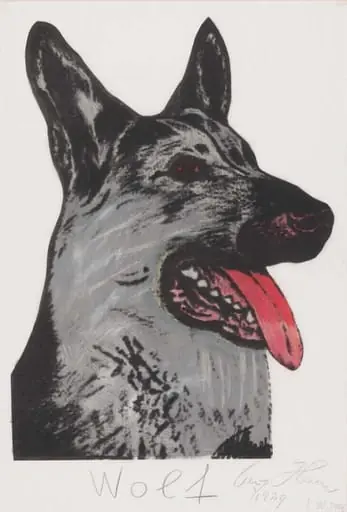
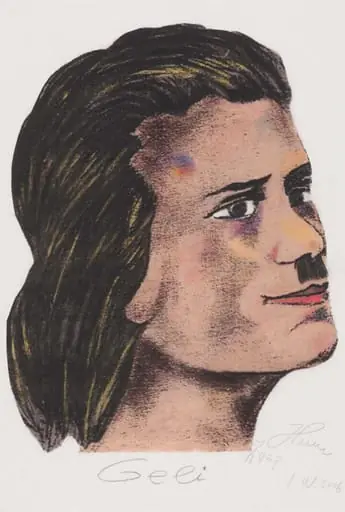
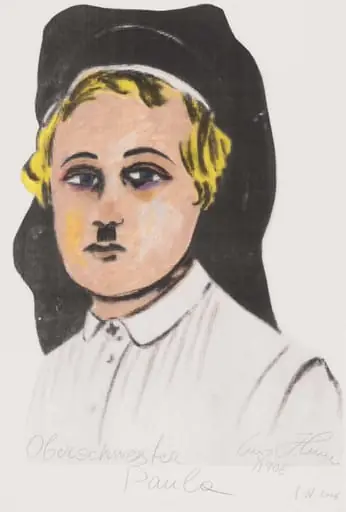
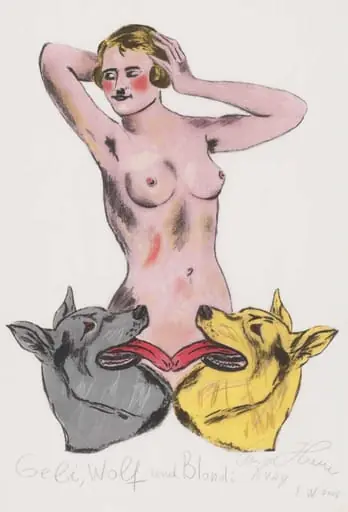
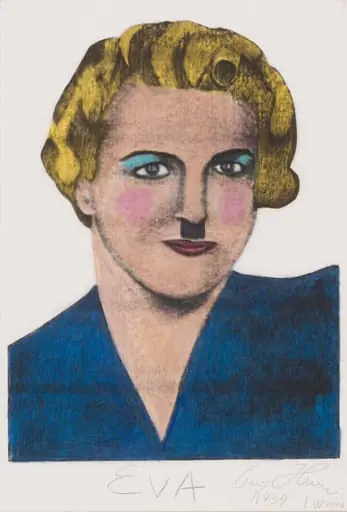
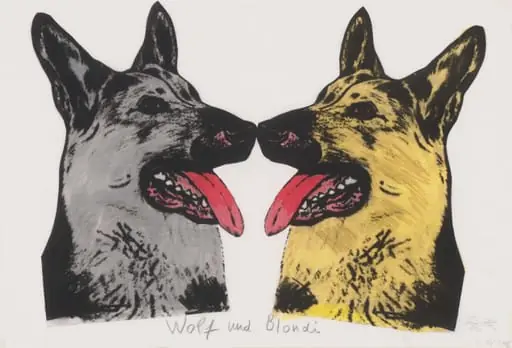
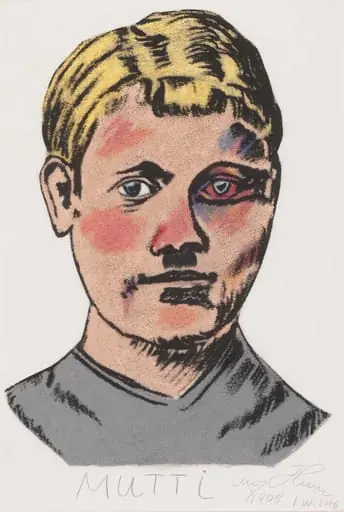
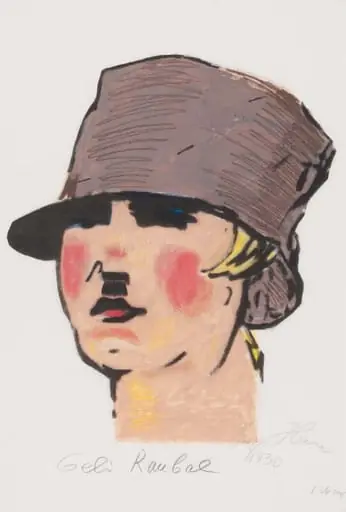
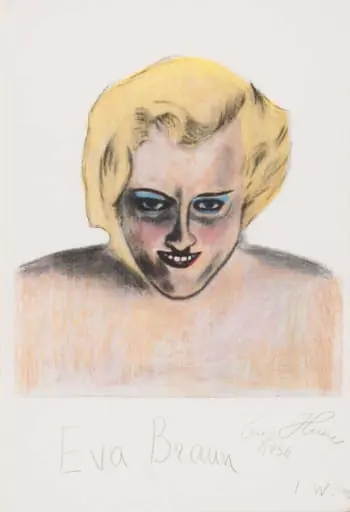
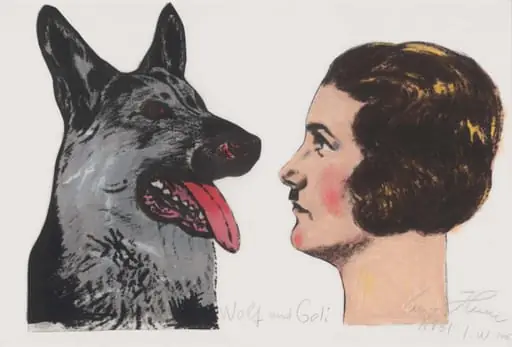
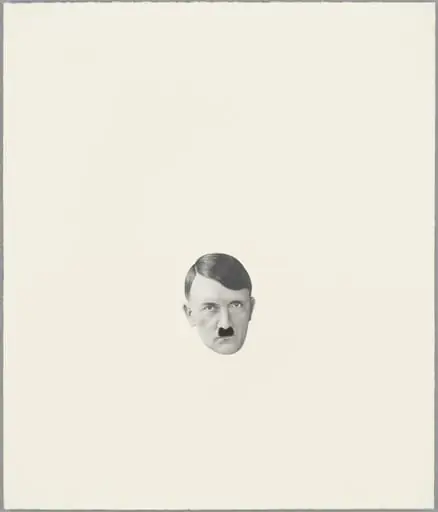
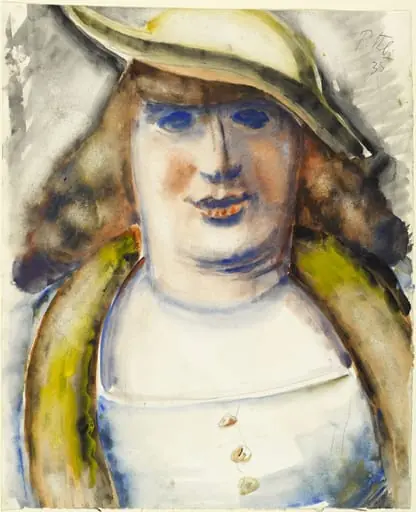
The work titled Erna Polzl belongs to a series of thirteen mixed‑media pieces called Die Damen mit den Hunden (Ladies with little dogs). Each piece appropriates the visual language of Adolf Hitler’s own drawings, re‑working them through added or altered elements. The series juxtaposes intimate subjects—family members, pets, and close companions—with a critical commentary on the dictator’s broader legacy.
Subject & Meaning
In this particular image a woman with a soft expression, identified as Erna Polzl, is rendered alongside references to Hitler’s personal life, such as his mother and his wolfhounds. By foregrounding these tender associations, the artist highlights a paradoxical tenderness within a figure otherwise remembered for extreme brutality, inviting viewers to confront the coexistence of affection and authoritarian violence.
Technique & Style
The piece employs mixed media, combining drawing techniques reminiscent of Hitler’s own sketchy lines with contemporary interventions. Stippling and fine shading create texture, while added pigments or collage elements modify the original composition, allowing the artist to both mimic and disrupt the source material.
History & Provenance
The series was produced as a direct response to the visual archive of Hitler’s personal sketches, re‑contextualizing them within a modern critical framework. Though specific exhibition dates are not recorded here, the works have circulated in contemporary art venues that address historical memory and political critique.
Context
By re‑imagining Hitler’s private imagery, the series engages with a broader tradition of artists who appropriate authoritarian iconography to expose underlying contradictions. The focus on domestic scenes and pets counters the dominant narrative of Hitler solely as a public tyrant, thereby expanding discourse on how personal and political spheres intersect.
Legacy
The series continues to be referenced in discussions of art that interrogates totalitarian histories. Its method of subtle alteration—adding, subtracting, or re‑coloring—serves as a model for how visual culture can be repurposed to critique power structures while preserving the unsettling intimacy of the original source.
Artist & collection
Artist
Ira Waldron drew people who knew him too well—Geli, Wolf, Paula—and turned them into characters you’d recognize on sight.
Museum
Metropolitan Organisation of Museums of Visual Arts of Thessaloniki – MOMus
Continue through works from the same source collection.