Artwork
Mutti
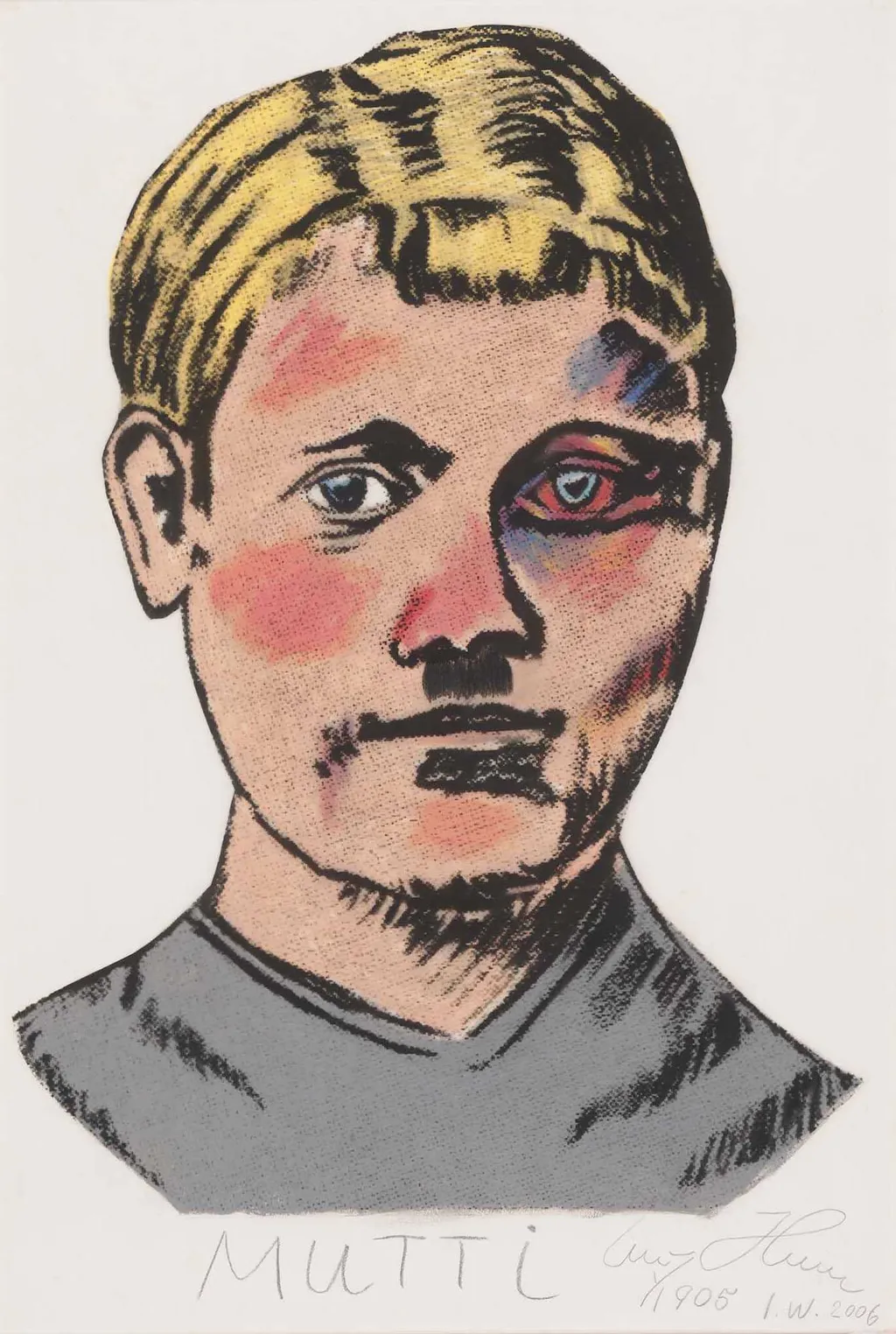
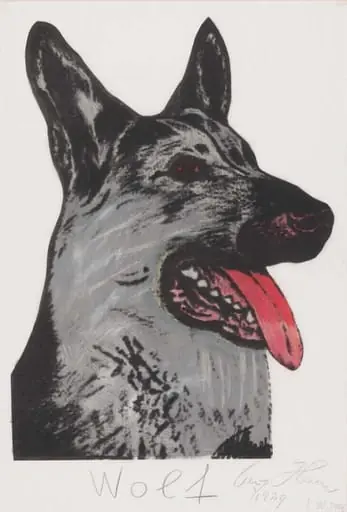
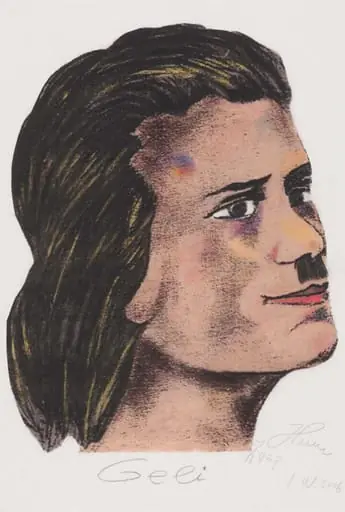
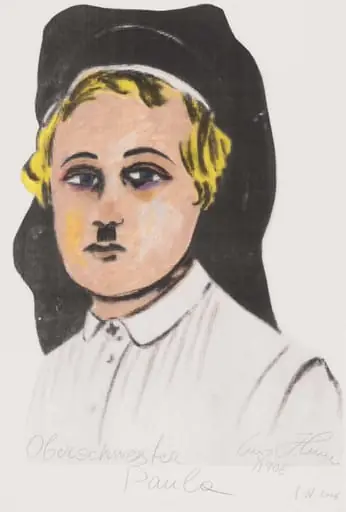
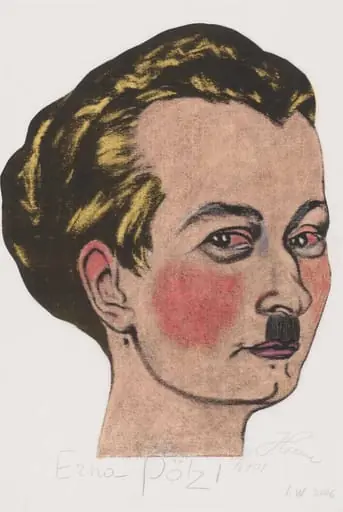
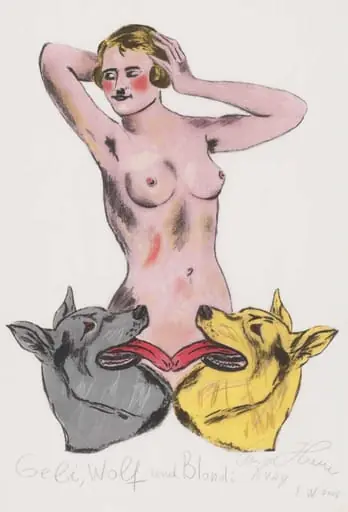
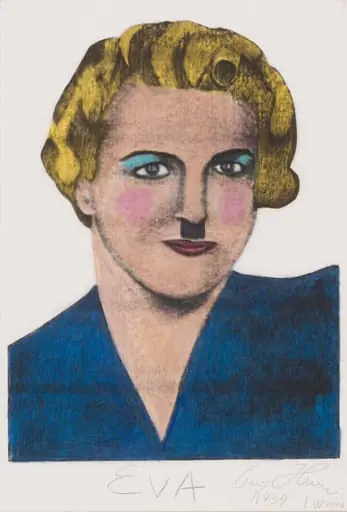
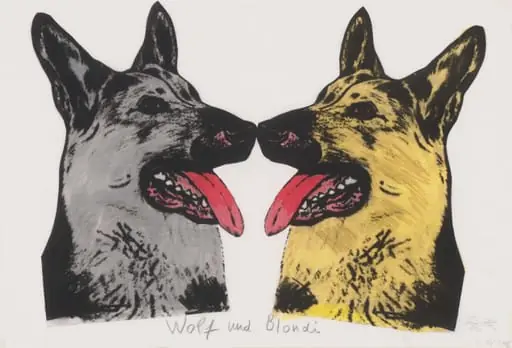
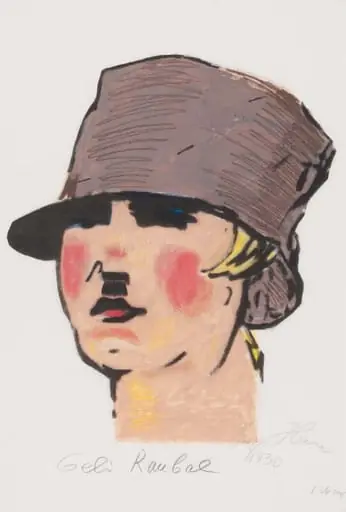
Mutti is a drawing by Ira Waldron. It is held in the collection of the Metropolitan Organisation of Museums of Visual Arts of Thessaloniki – MOMus. The series 'Die Damen mit den Hunden' comprises 13 mixed-media drawings that replicate the visual language of Adolf Hitler’s own sketches.
About this work
Overview
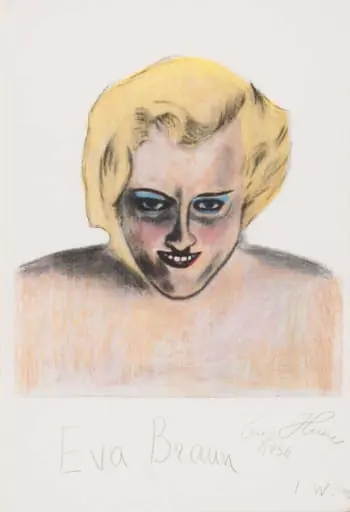
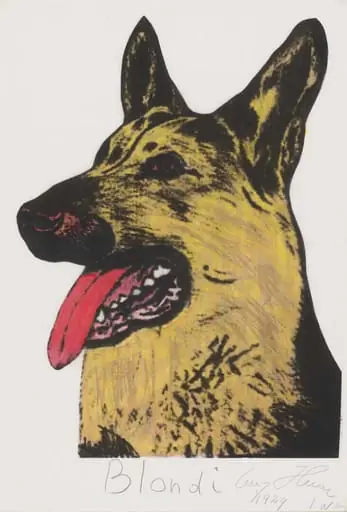
The series 'Die Damen mit den Hunden' comprises 13 mixed-media drawings that replicate the visual language of Adolf Hitler’s own sketches.
The series 'Die Damen mit den Hunden' comprises 13 mixed-media drawings that replicate the visual language of Adolf Hitler’s own sketches. Rather than reproducing them faithfully, the artist introduces subtle and overt modifications—altering faces, adding animals, or inserting domestic scenes—to disrupt the original imagery. These interventions transform the works from mimicry into critical commentary, inviting viewers to reconsider the relationship between personal expression and political violence.
Subject & Meaning
The drawings center on figures from Hitler’s private life: his mother, his dogs, and his romantic associates. By depicting these intimate subjects, the artist evokes a veneer of tenderness, suggesting a man capable of affection. Yet the alterations—distorted features, intrusive marks, or unsettling juxtapositions—undermine this gentleness, revealing how personal sentiment could coexist with, and even enable, public cruelty.
Technique & Style
The works emulate Hitler’s draftsmanship, employing delicate lines and soft shading, often through cross-hatching and layered graphite. The artist preserves this aesthetic to maintain the illusion of authenticity, then disrupts it with abrupt ink blots, erased contours, or unexpected elements like additional animals. The contrast between controlled technique and destabilizing interventions heightens the psychological tension within each piece.
History & Provenance
The series draws from documented sketches by Hitler, many of which were created during his youth and early adulthood. The artist accessed reproductions of these works, using them as source material rather than original artifacts. No evidence suggests direct engagement with Hitler’s personal holdings; instead, the project is grounded in historical imagery available through archives and published collections.
Context
Created in the late 20th or early 21st century, the series responds to ongoing debates about the representation of evil and the seduction of aestheticized authority. By adopting Hitler’s own artistic voice, the artist confronts the discomfort of finding beauty in the work of a perpetrator. The project resists moral simplification, instead probing how culture and personal habit can normalize atrocity.
Legacy
The series contributes to a broader artistic practice of recontextualizing authoritarian imagery to expose its hidden contradictions. It does not seek to rehabilitate Hitler’s persona but to interrogate how art can be complicit in constructing myth. The work remains a quiet, persistent challenge to the notion that aesthetic merit can be separated from moral consequence.
Artist & collection
Artist
Ira Waldron drew people who knew him too well—Geli, Wolf, Paula—and turned them into characters you’d recognize on sight.
Museum
Metropolitan Organisation of Museums of Visual Arts of Thessaloniki – MOMus
Continue through works from the same source collection.