Artwork
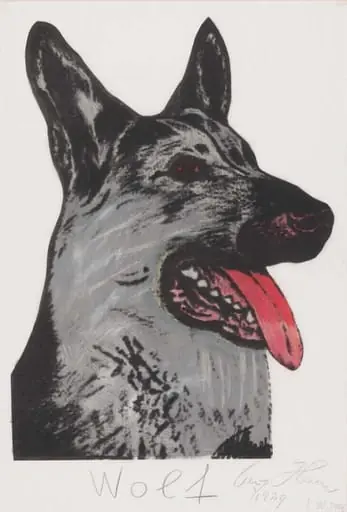
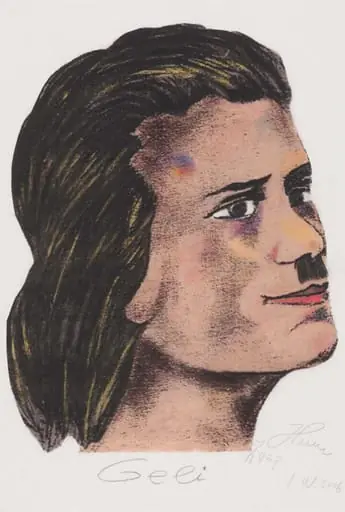
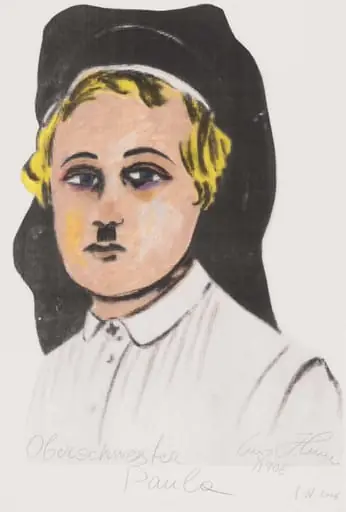
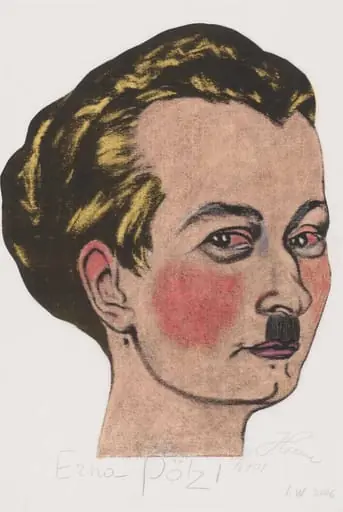
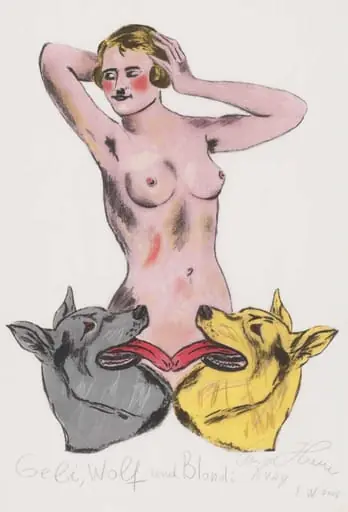
Wolf und Blondi
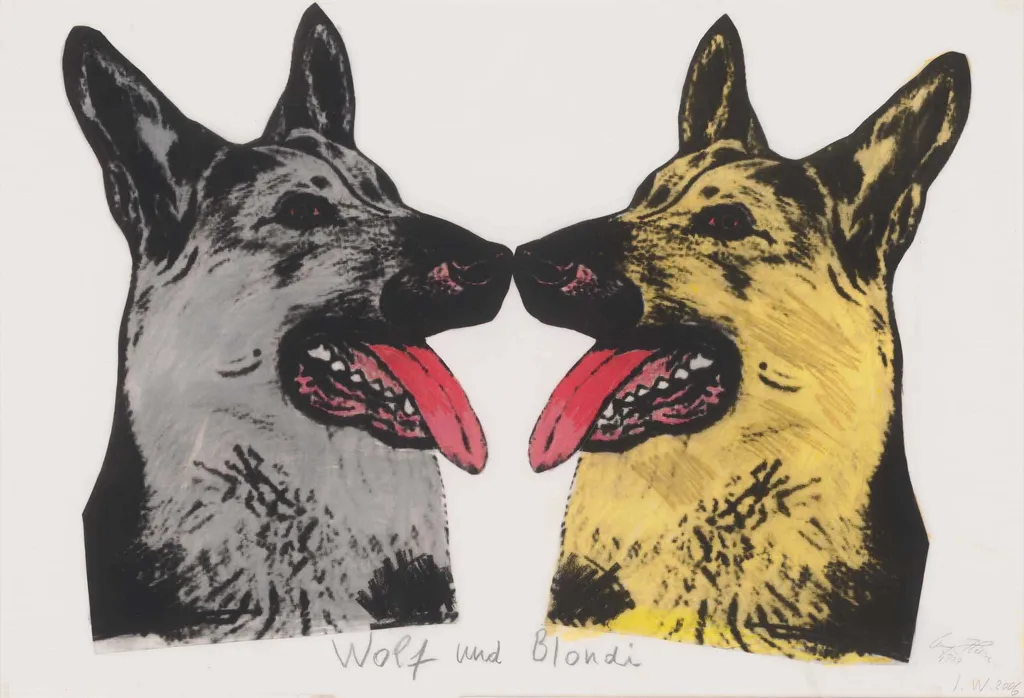
Wolf und Blondi is a drawing by Ira Waldron. It is held in the collection of the Metropolitan Organisation of Museums of Visual Arts of Thessaloniki – MOMus.
About this work
The artist added some changes to make it unique, showing a softer side of Hitler, which is an interesting twist.
The painting shows Adolf Hitler with his dogs.
It's a drawing that looks like Hitler's own artwork.
The artist added some changes to make it unique, showing a softer side of Hitler, which is an interesting twist.
The drawing is part of a series that explores Hitler's personal life.
This series has many works that resemble Hitler's style, but with the artist's own additions.
The artist's style is similar to others who use detailed techniques, like Waldron, Ira (1957).
Overview
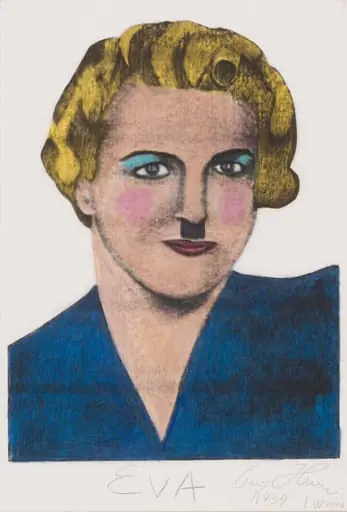
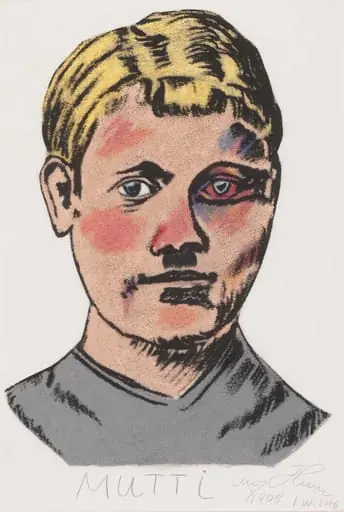
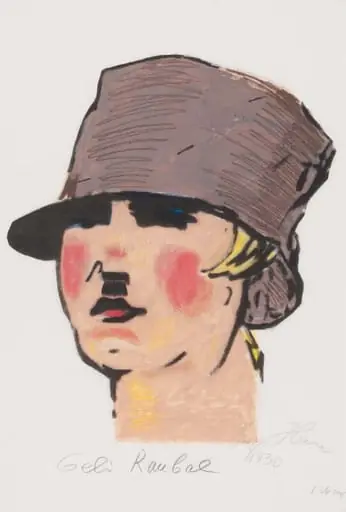
This work is part of a 13-piece series titled 'Die Damen mit den Hunden,' in which the artist reworks visual elements drawn from Adolf Hitler’s own sketches. Each piece mimics his draftsmanship but incorporates subtle or overt alterations that disrupt the original tone. The series does not replicate Hitler’s art faithfully; instead, it repurposes his imagery to interrogate the relationship between personal expression and political violence.
Subject & Meaning
The image depicts Hitler alongside his wolfhounds, Blondi and Wolf, figures he frequently sketched in private. By focusing on these intimate moments, the artist highlights the contrast between his domestic affections and his public brutality. The inclusion of animals—often symbols of loyalty—serves as a quiet counterpoint to the systemic cruelty of his regime, inviting reflection on the dissonance between private persona and public action.
Technique & Style
The artist employs a meticulous, linear style that closely emulates Hitler’s own draftsmanship, characterized by soft contours and restrained shading. Interventions—such as smudged lines, erased features, or added shadows—introduce unease into otherwise familiar compositions. These disruptions are not flamboyant but deliberate, functioning as visual fractures that destabilize the illusion of benign normalcy in the original drawings.
History & Provenance
The series emerged from extended research into Hitler’s personal artwork, much of which was archived after his death. The artist accessed reproductions of these sketches, primarily from private collections and historical archives, to create new works that neither glorify nor caricature but recontextualize. The resulting pieces were first exhibited in the early 2000s, framed as critical interventions rather than historical reconstructions.
Context
The series engages with postwar German efforts to reckon with cultural memory, particularly the tension between artistic production and moral responsibility. By adopting Hitler’s visual language, the artist confronts the uncomfortable reality that creativity and atrocity can coexist within a single individual. The work resists easy moral binaries, instead presenting a disquieting ambiguity that challenges viewers to consider how personal aesthetics may enable political horror.
Legacy
The series has contributed to scholarly discourse on the ethics of representing totalitarian figures through art. Rather than reducing Hitler to a caricature, the artist’s restrained interventions invite sustained contemplation. The work remains referenced in discussions about the limits of artistic appropriation, the weight of historical imagery, and the responsibility of the artist when engaging with traumatic legacies.
Artist & collection
Artist
Ira Waldron drew people who knew him too well—Geli, Wolf, Paula—and turned them into characters you’d recognize on sight.
Museum
Metropolitan Organisation of Museums of Visual Arts of Thessaloniki – MOMus
Continue through works from the same source collection.