Artwork
Twilight
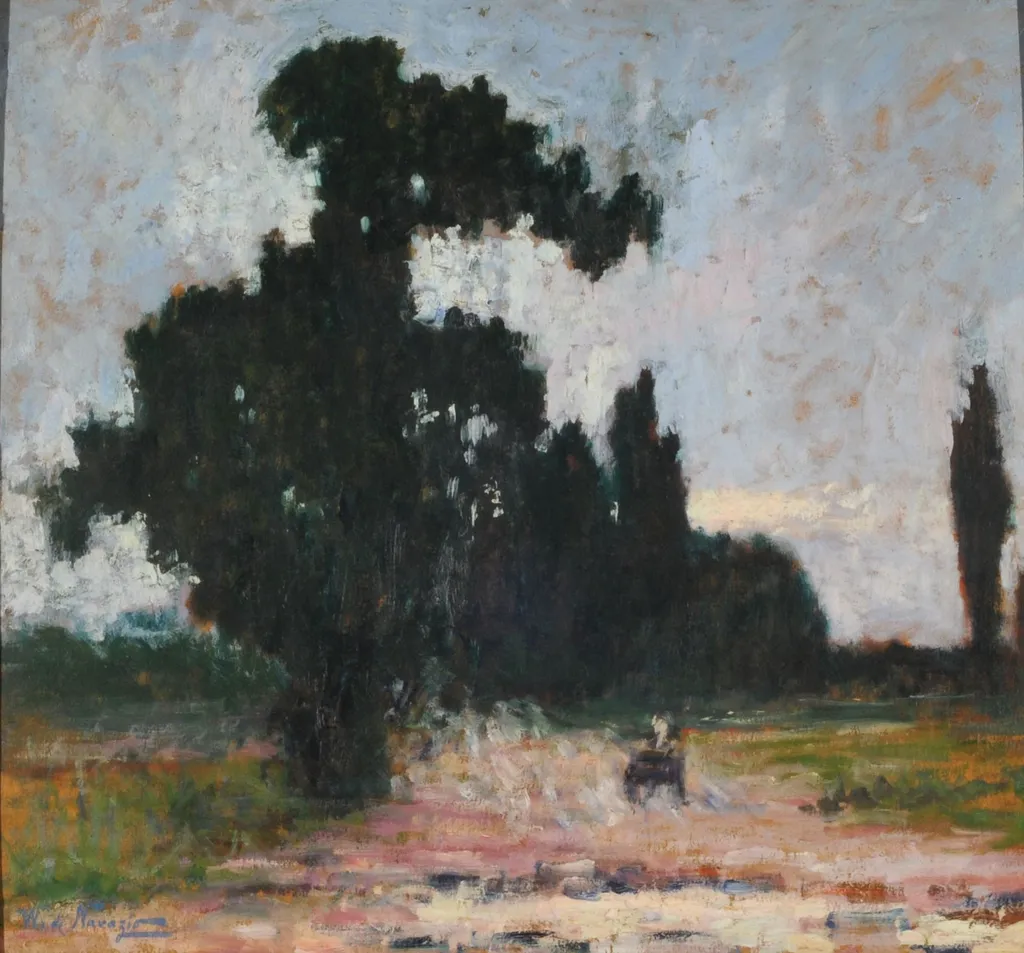
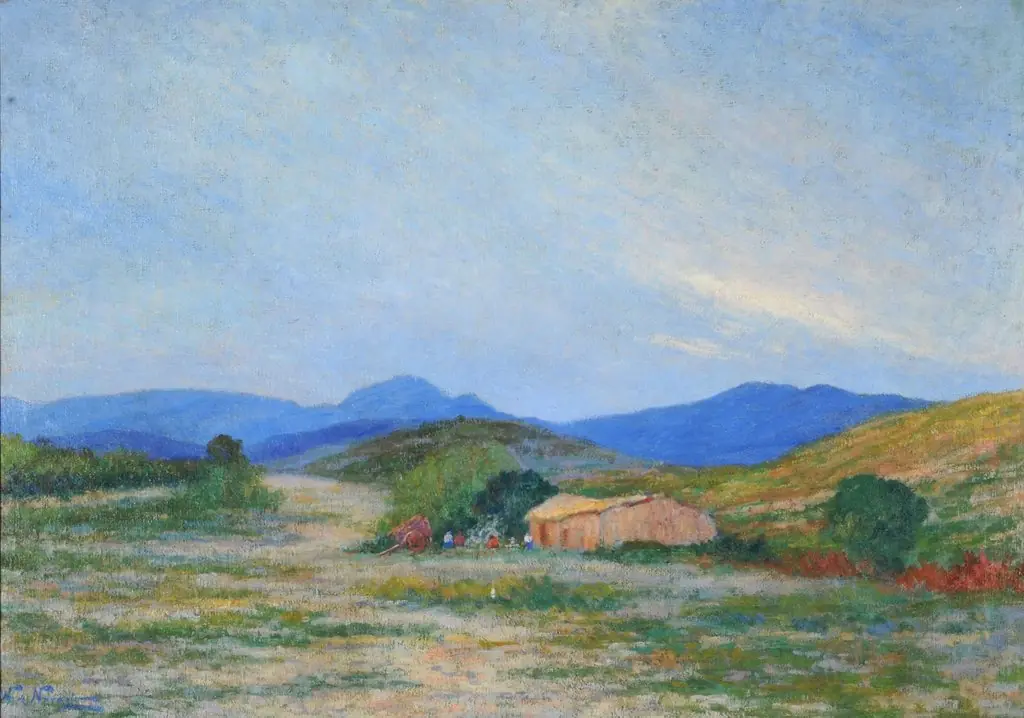
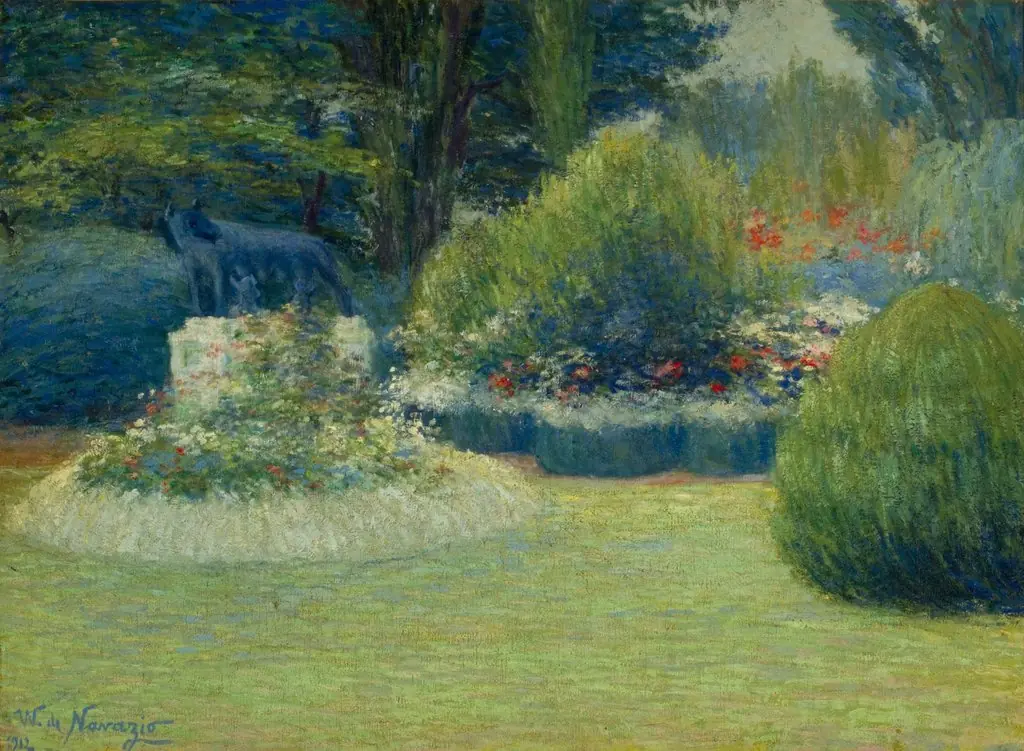
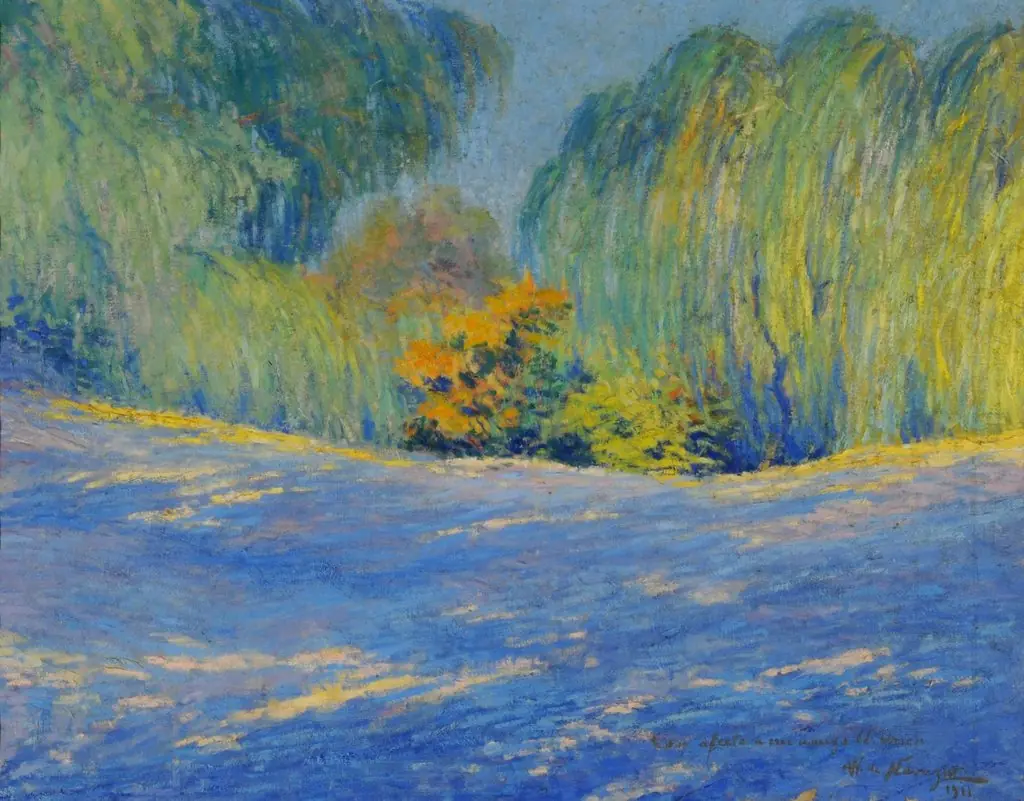
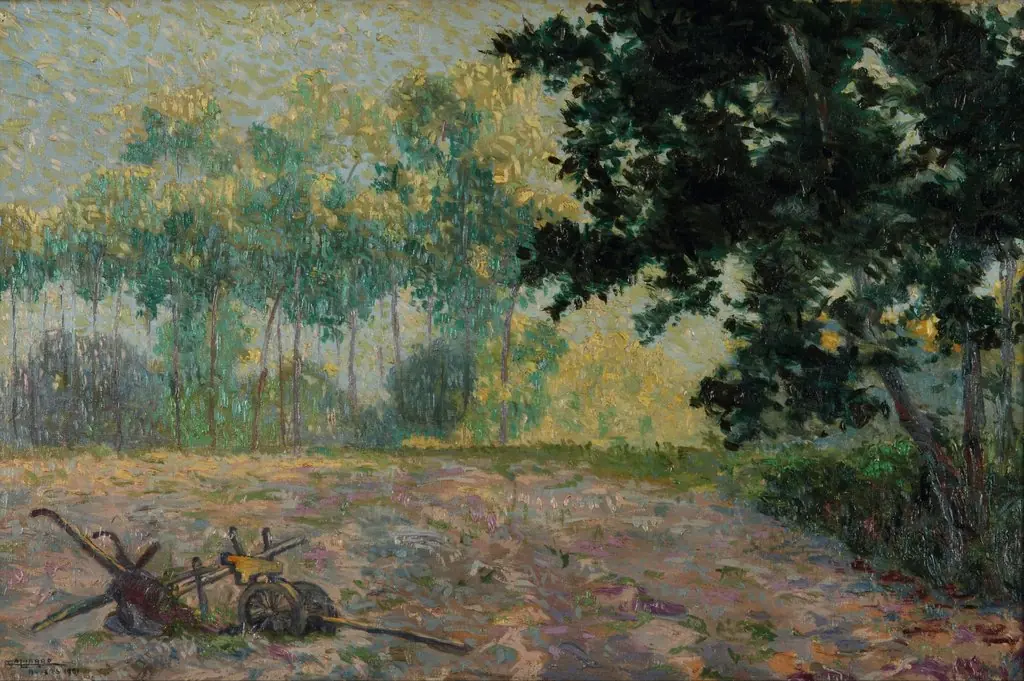
Twilight is an unspecified painting by the Realist artist Walter de Navazio. It dates from 1850 and is held in the collection of the National Museum of Fine Arts, Argentina.
About this work
Overview
Twilight, painted around 1850 by Walter de Navazio, is a landscape work currently held in the collection of the National Museum of Fine Arts in Buenos Aires.
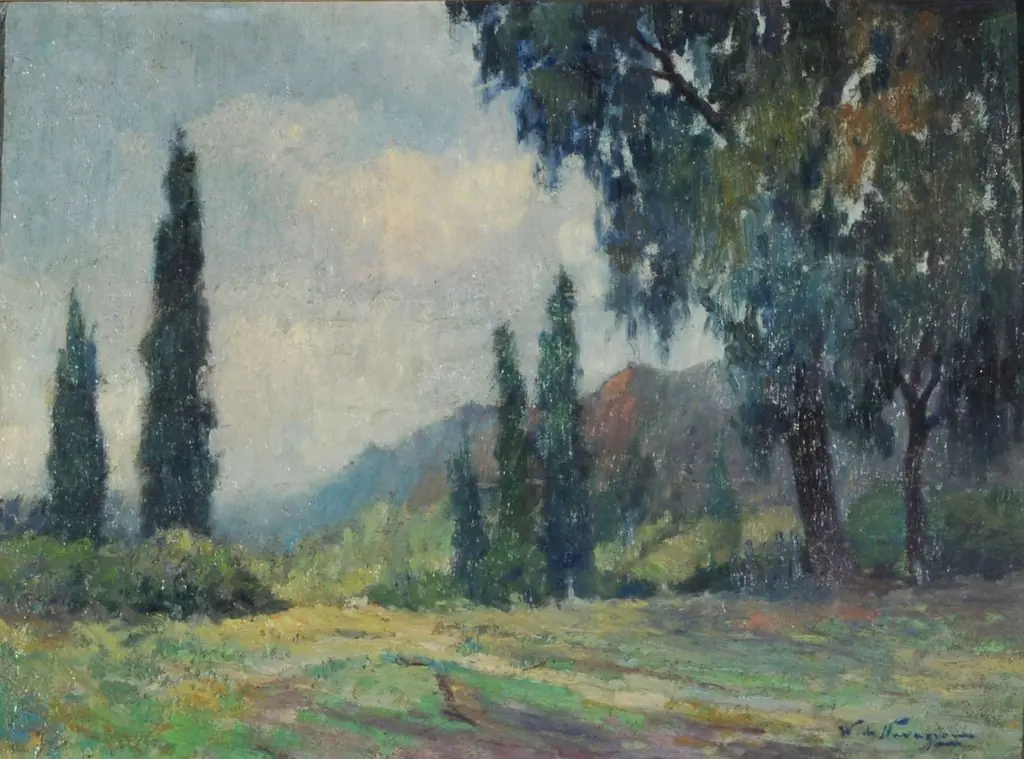
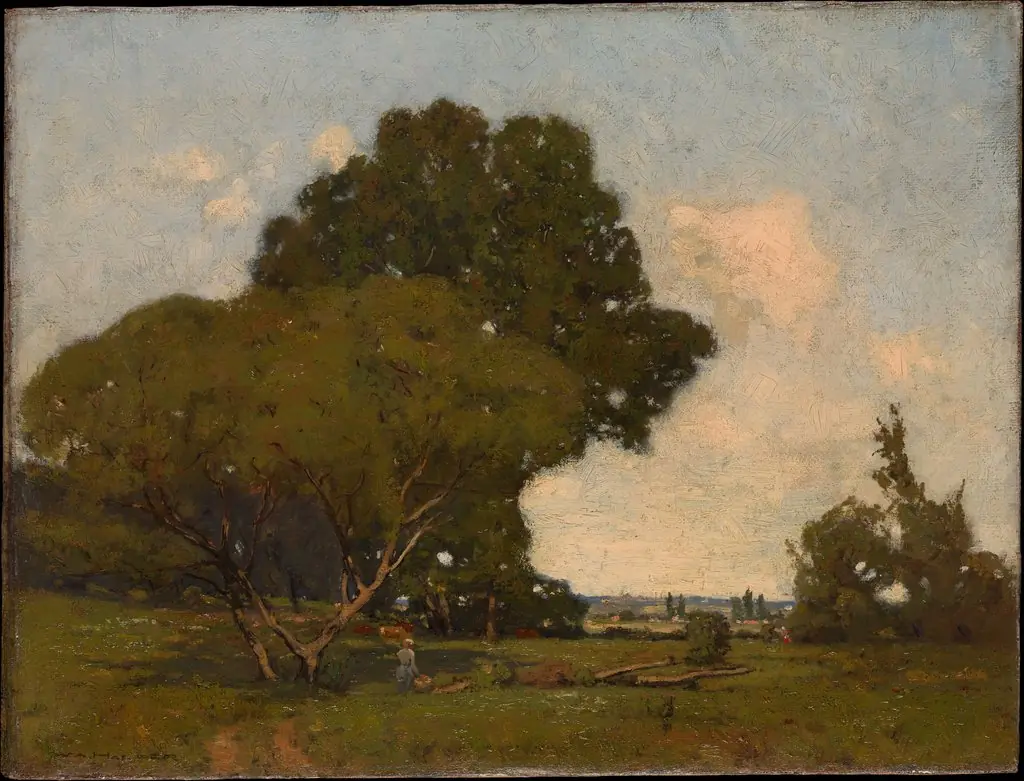
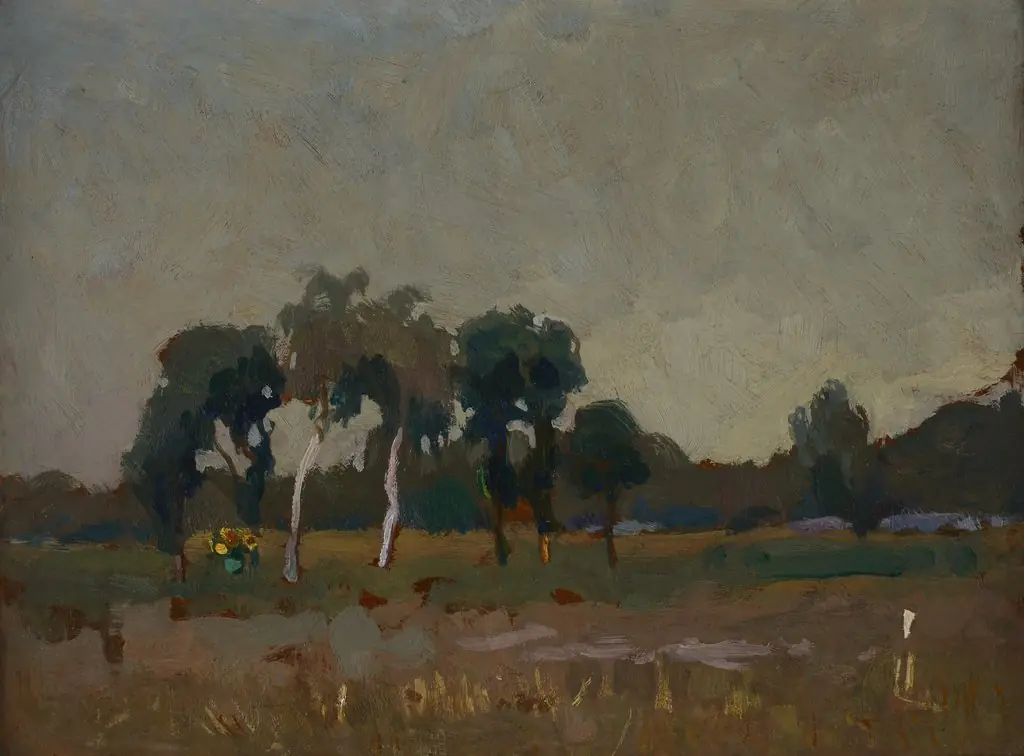
Twilight, painted around 1850 by Walter de Navazio, is a landscape work currently held in the collection of the National Museum of Fine Arts in Buenos Aires. It captures a quiet moment at day’s end, focusing on a solitary, darkened tree as its central motif. The composition balances stillness with subtle motion, achieved through loose brushwork and contrasting tones that suggest the fading light of evening.
Subject & Meaning
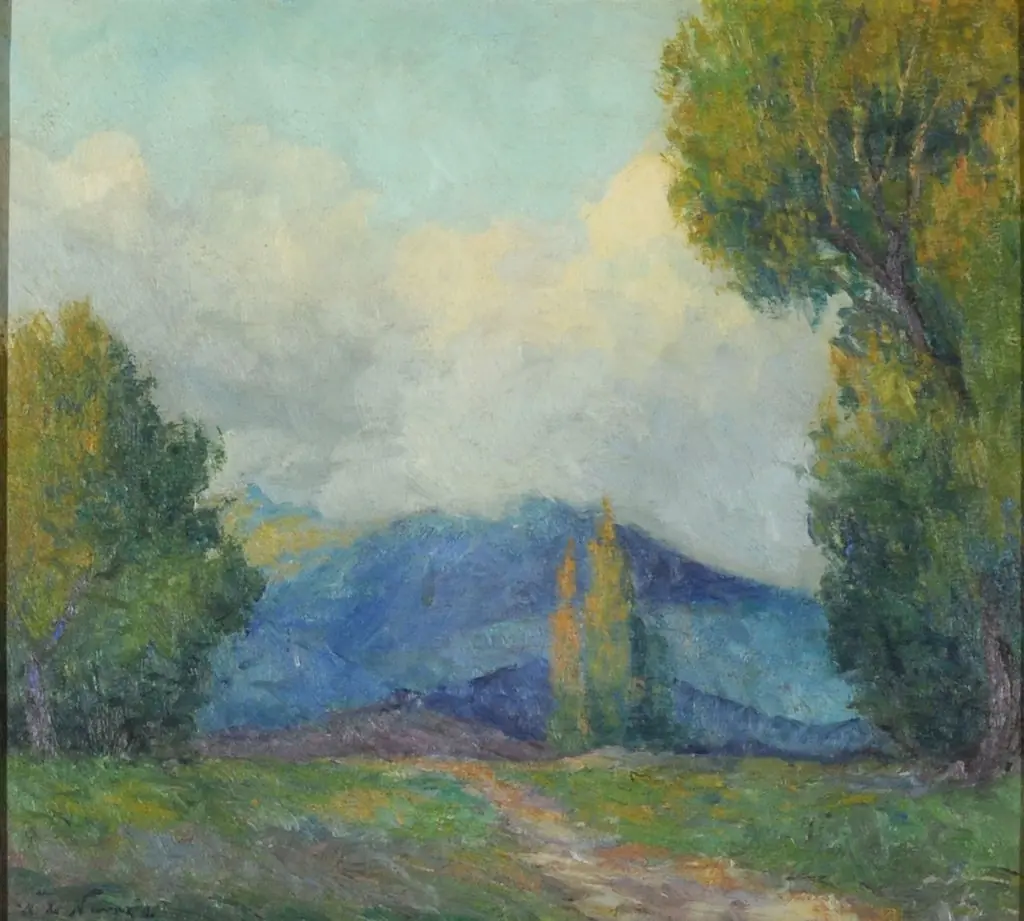
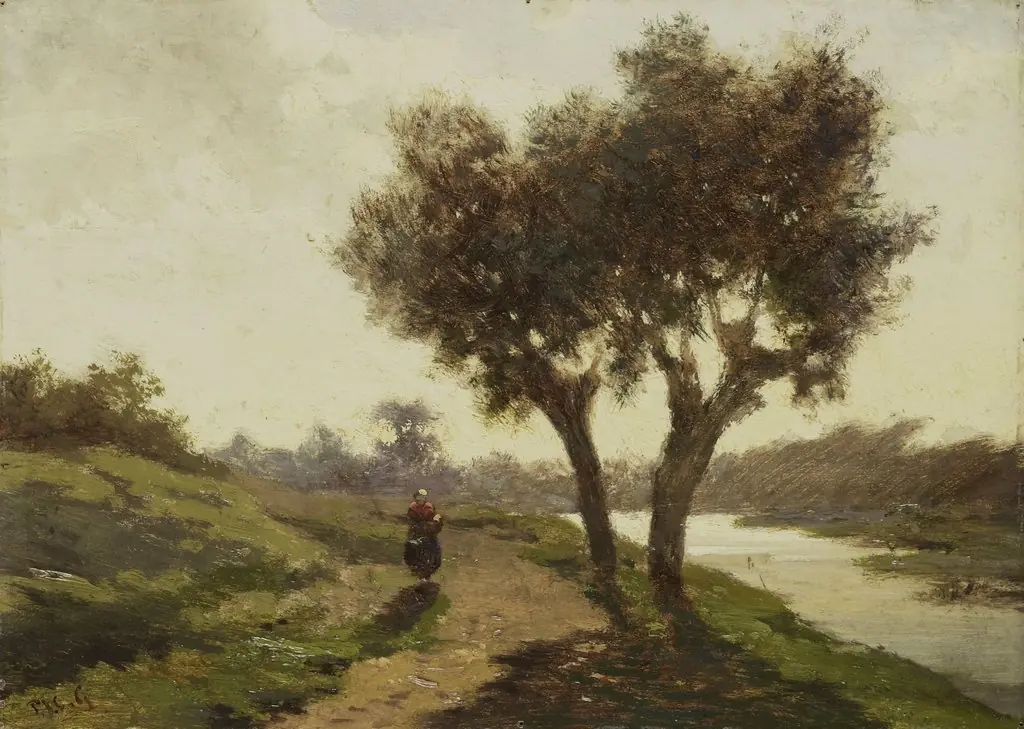
The painting centers on a massive, shadowed tree, its gnarled trunk and upward-reaching branches dominating the frame. Surrounding it, distant foliage and a pale sky evoke a tranquil, transitional hour between day and night. The tree may symbolize endurance or solitude, its form standing firm against the softening light. No human figures or narrative elements are present, reinforcing a contemplative, non-didactic mood.
Technique & Style
De Navazio employs a loose, expressive brush technique to convey atmosphere rather than detail. The dark tree emerges sharply against a washed-out blue sky, creating a strong chiaroscuro effect. Light is not rendered realistically but suggestively, with thin layers of pigment allowing the canvas to breathe. The strokes remain visible, adding rhythm and a sense of immediacy to the scene’s quietude.
History & Provenance
Created circa 1850, Twilight entered the collection of the National Museum of Fine Arts in Buenos Aires in the late 19th or early 20th century, though its earlier ownership remains undocumented. As one of the few known works by de Navazio, it holds significance as an early example of Argentine landscape painting, reflecting European influences adapted to local scenery.
Context
In mid-19th-century Argentina, landscape painting was emerging as a means to define national identity through natural scenery. De Navazio’s work aligns with this trend, though it avoids grandeur or idealization. Instead, it favors intimacy and mood, echoing Romantic sensibilities filtered through a regional lens, where the natural world was observed with quiet reverence rather than dramatic flourish.
Legacy
Twilight remains a rare surviving example of de Navazio’s output and an early indicator of Argentina’s developing artistic voice. While not widely exhibited, it contributes to scholarly understanding of how European techniques were absorbed by local painters. Its restrained aesthetic continues to resonate as a quiet counterpoint to more overtly nationalistic works of the period.
Own this work as a print
Artist & collection


Museum
National Museum of Fine Arts, Argentina
Continue through works from the same source collection.