Artwork
The Last Gleam
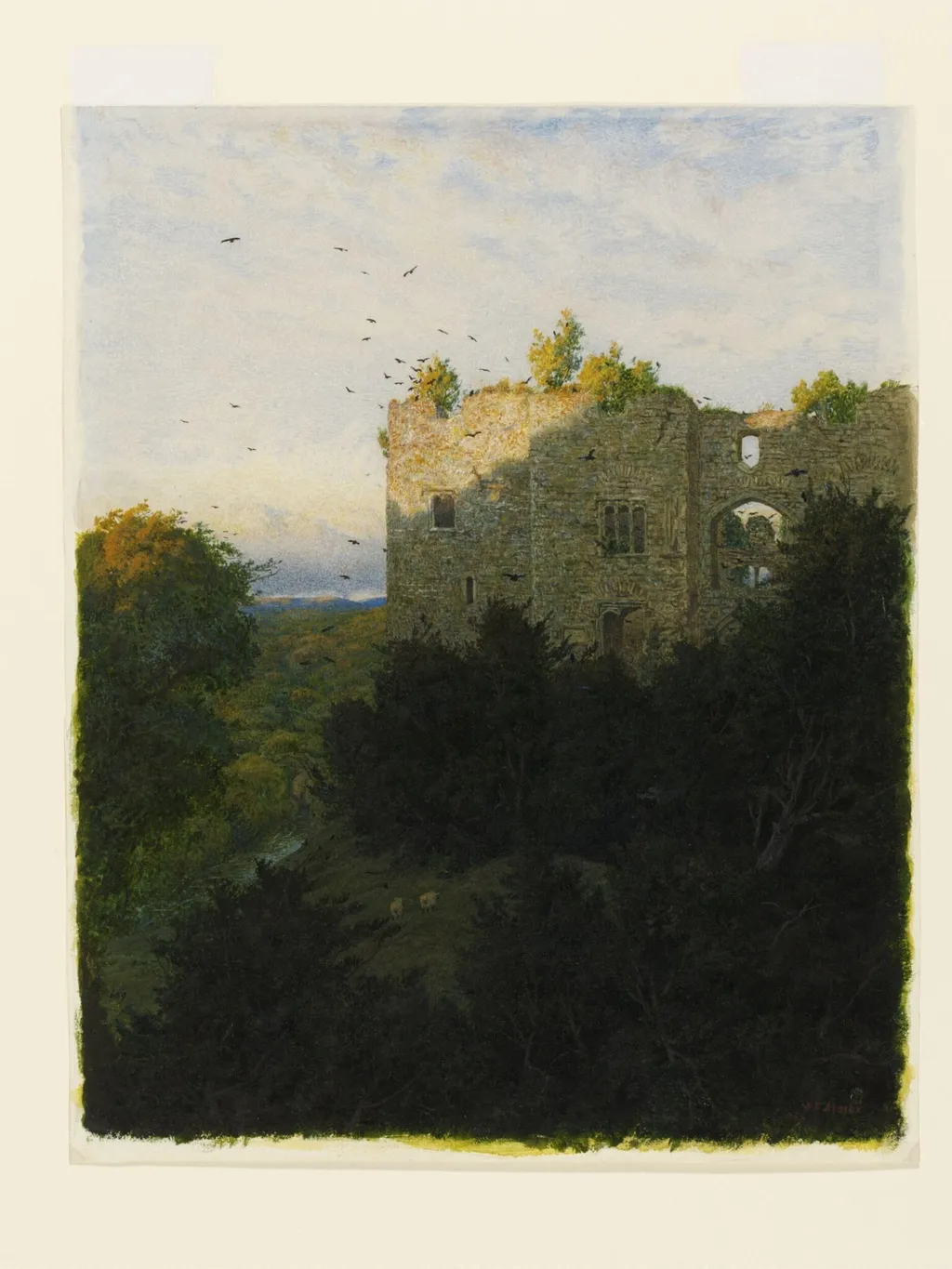
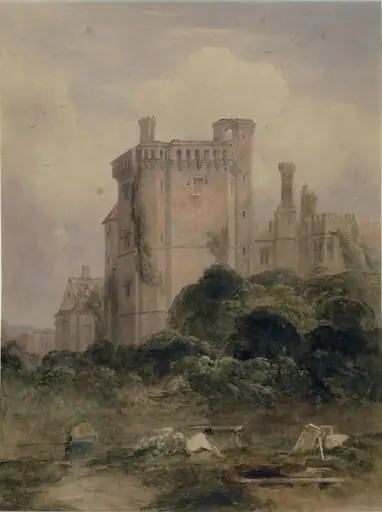
The Last Gleam is a watercolor work on paper by the British Romanticist artist Walter Fryer Stocks. It dates from 1866 and is held in the collection of the Victoria and Albert Museum.
About this work
Overview
The Last Gleam, a watercolour by Walter Fryer Stocks (1866), captures a serene, late-afternoon scene featuring a ruined stone structure, surrounded by woodland, with sheep in the foreground and birds in flight above.
Subject & Meaning
The painting contrasts the transience of light with the permanence of nature and decay. The ruin, overgrown with vegetation, symbolizes the passage of time, while the fleeting sunlight and flying birds underscore the ephemeral moment.
Technique & Style
Stocks employed loose, watery brushstrokes to convey the soft, fading light. The muted colour palette, dominated by greens, grays, and blues, imbues the scene with a quiet, dreamy atmosphere.
History & Provenance
The work is signed and dated by the artist (1866). Specific provenance details are not provided in the available information.
Context
The style and themes of The Last Gleam align with mid-19th-century British watercolour traditions, often characterized by landscapes that reflect on nature, time, and the human (or architectural) presence within the natural world.
Legacy
While specific influence or notable exhibitions of The Last Gleam are not detailed here, its style suggests a connection to the broader legacy of British watercolourists who explored the interplay of light, nature, and decay in their work.
Artist & collection
Artist
Walter Fryer Stocks painted quiet, detailed scenes in watercolor during the 1860s, a time when British art prized crisp realism over bold color.

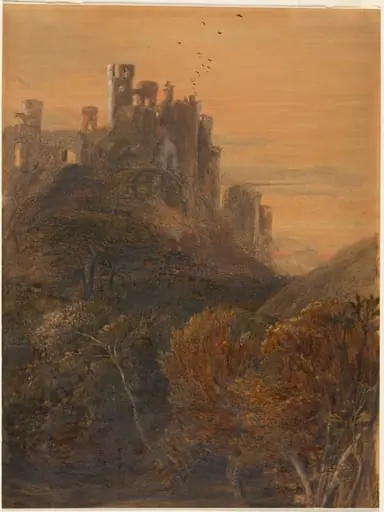 The Enchanted Castle at Dusk
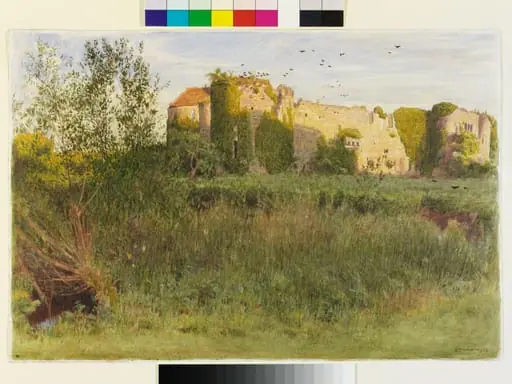 Allington Castle, near Maidstone, Kent
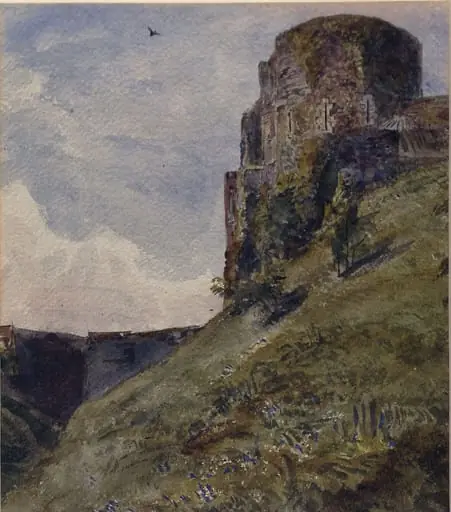 Dover Castle
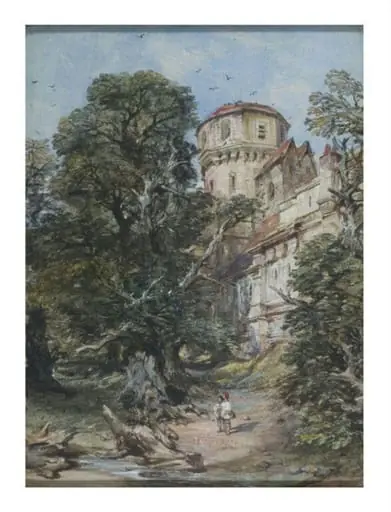 Landscape with Castle and Trees
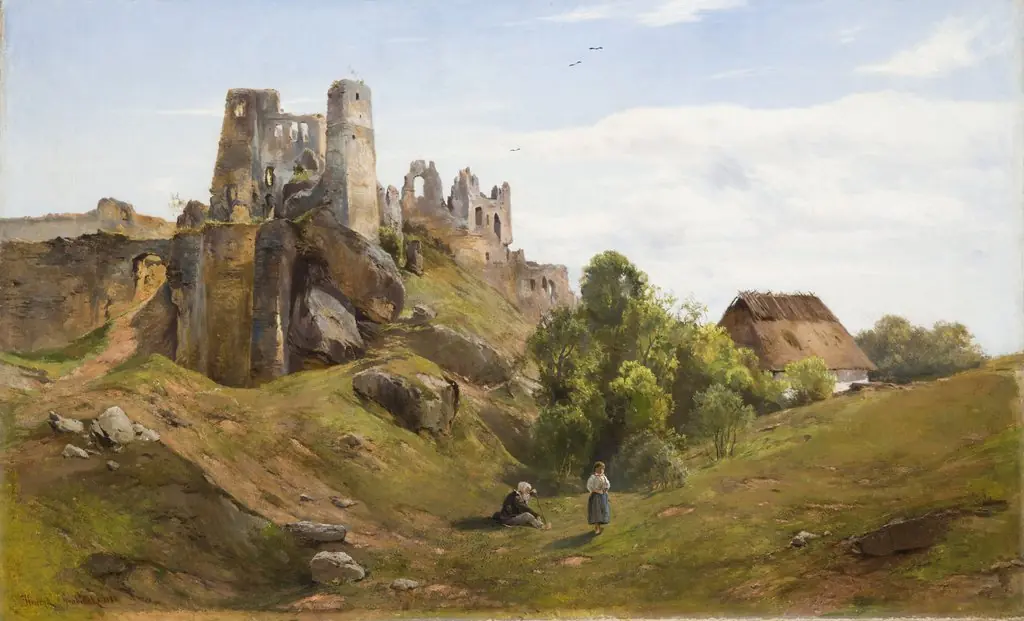 Ruins of Odrzykoń
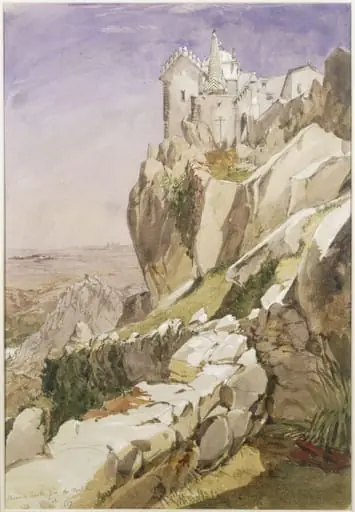 Moorish Castle from the Penha
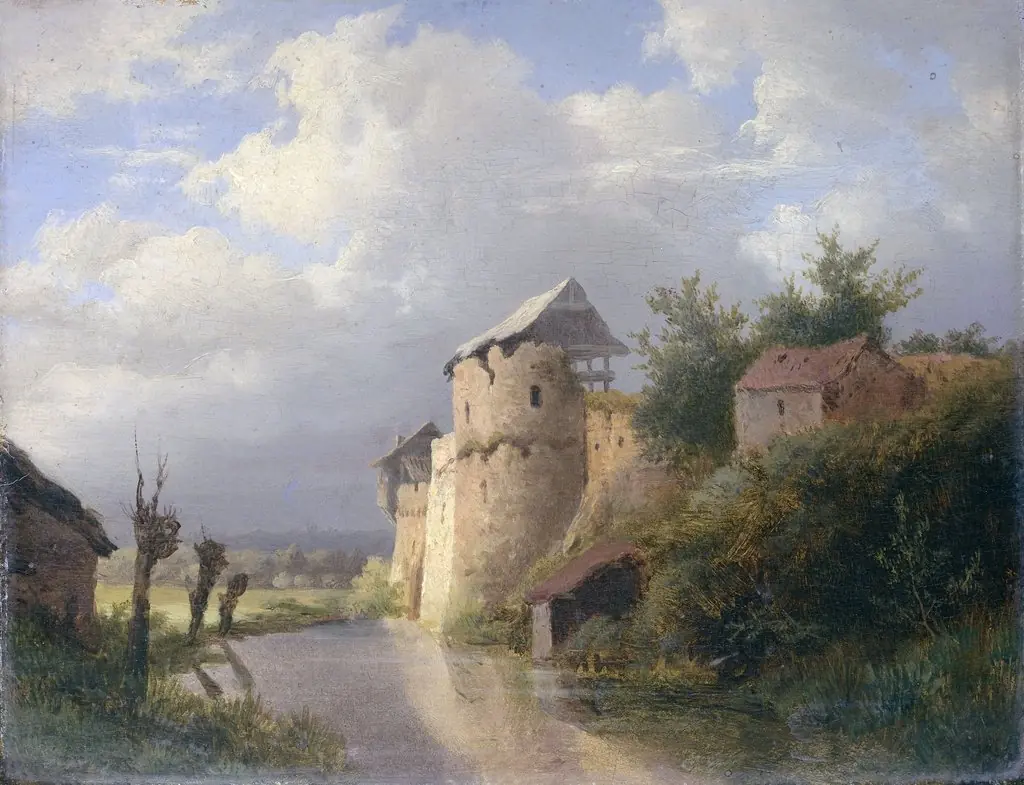 The Old Fortress
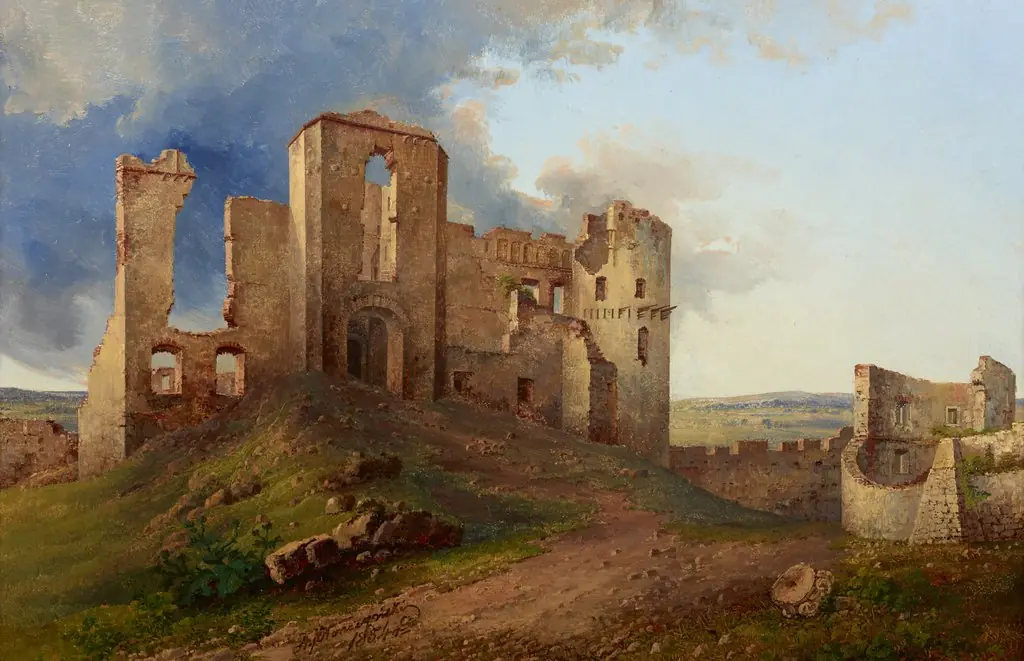 Ruins of the Tenczyn Castle
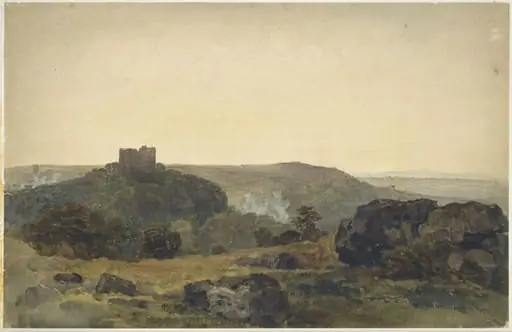 Conisborough Castle, Yorkshire
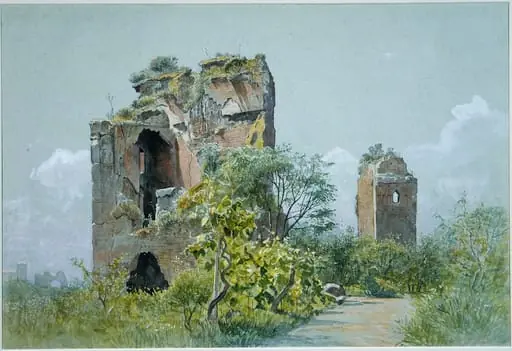 Baths of Trajan (Sette Sale, Villa Brancaccio, Rome)
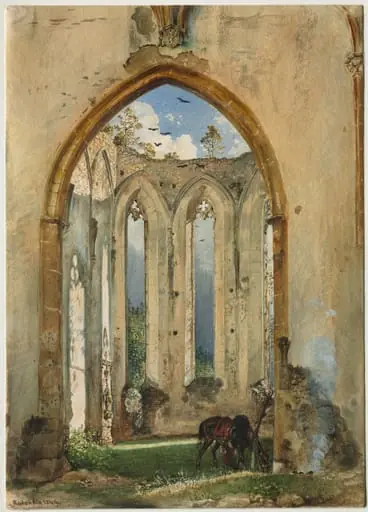 Ruin of a Church
 Thornbury Castle, Gloucestershire.