Artwork
Moorish Castle from the Penha
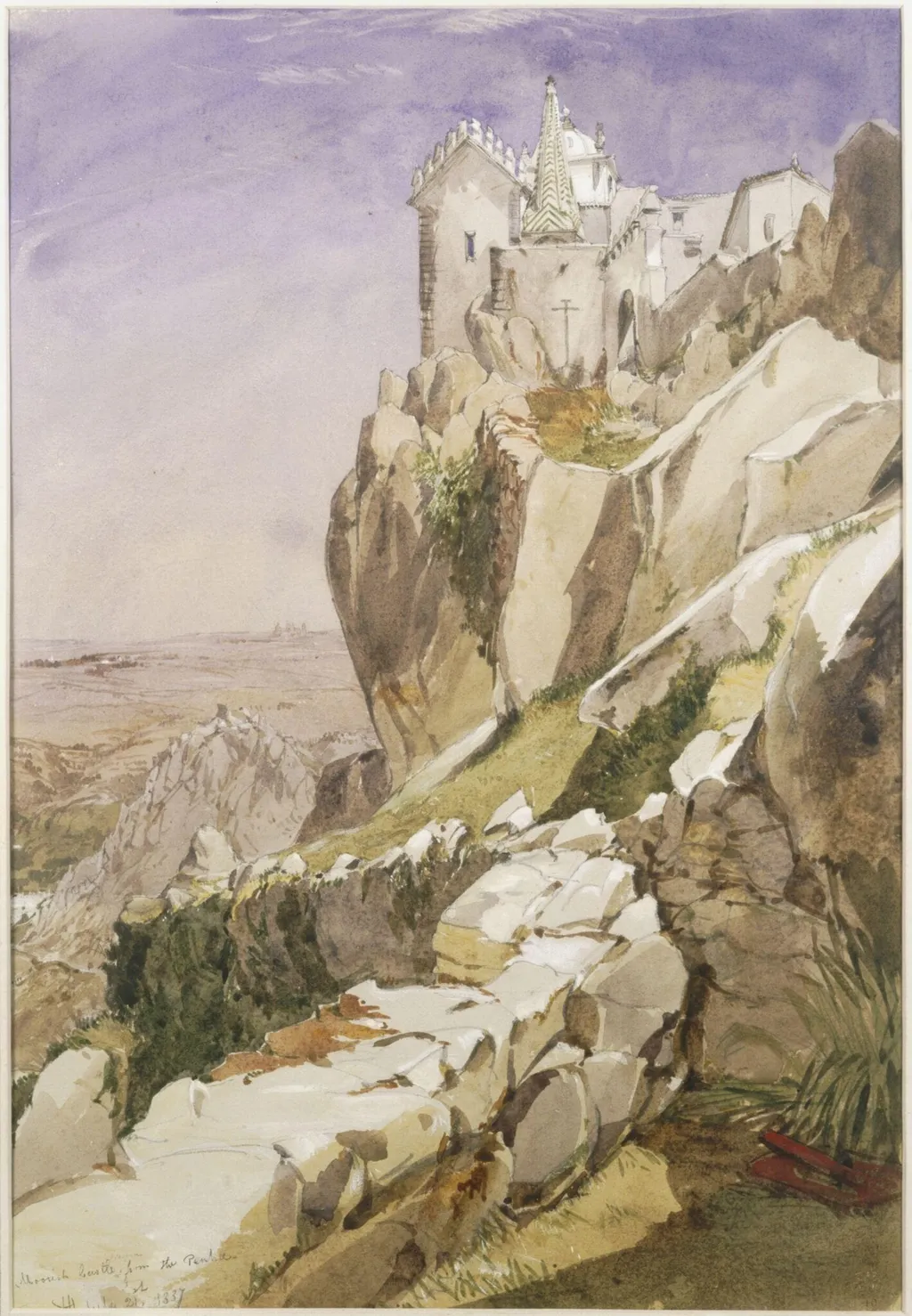
Moorish Castle from the Penha is a watercolor work on paper by the British Romanticist artist James Holland. It dates from 1837 and is held in the collection of the Victoria and Albert Museum.
About this work
Overview
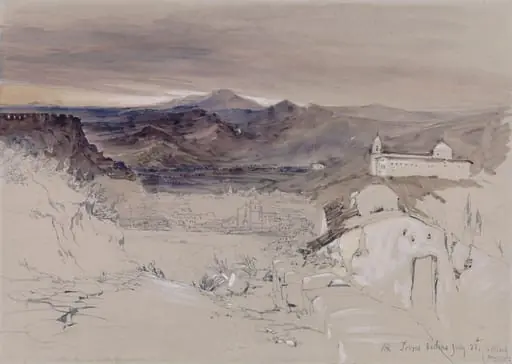
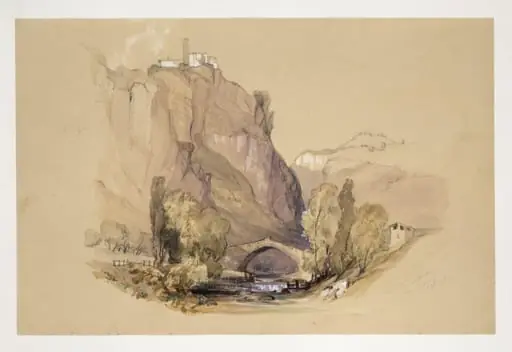
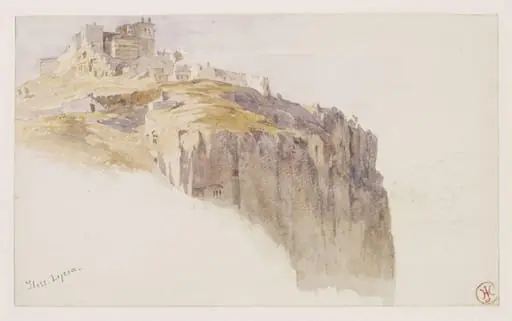
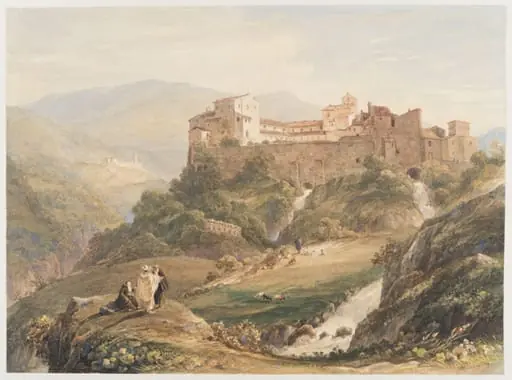
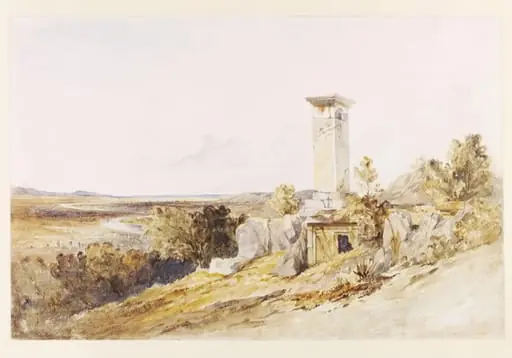
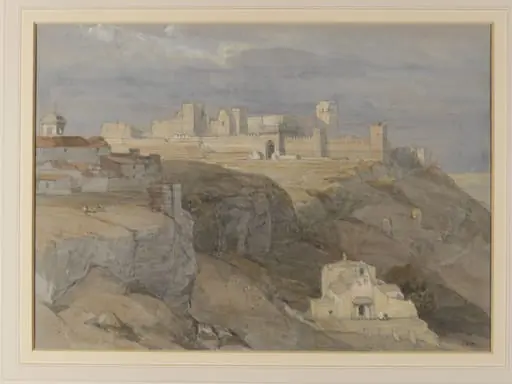
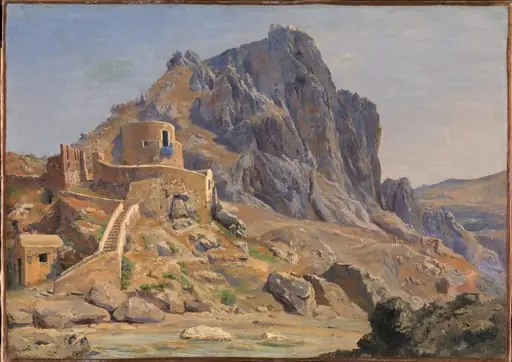
Painted in 1837 by James Holland, this watercolour captures a Moorish-style fortress perched on a rugged cliff. The work is signed and dated by the artist, affirming its origin. Rendered in delicate washes, the scene balances observed detail with atmospheric suggestion, reflecting Holland’s interest in topographical accuracy softened by poetic tone.
Subject & Meaning
The castle, though not tied to a specific historical site, evokes the architectural legacy of Islamic rule in Iberia. Its isolated position on a rocky outcrop, reached by a winding path, suggests solitude and endurance. The hazy horizon and distant water imply a contemplative distance, reinforcing a mood of quiet reverence rather than narrative drama.
Technique & Style
The technique avoids sharp definition, favoring a lyrical ambiguity characteristic of Romantic-era landscape practice.
Holland employed loose, fluid brushwork and translucent layers of watercolour to suggest texture and light. The white walls of the castle contrast subtly with muted greens and soft blues in the landscape, while the sky is rendered with minimal detail to enhance the sense of atmospheric depth. The technique avoids sharp definition, favoring a lyrical ambiguity characteristic of Romantic-era landscape practice.
History & Provenance
Created during Holland’s travels in southern Spain, the work belongs to a series of watercolours he produced after visiting historic sites in Andalusia. It was likely made for private collectors interested in exoticized European landscapes. The piece remained in private hands until entering a public collection in the late 20th century, with no record of public exhibition during the artist’s lifetime.
Context
Holland’s depiction aligns with early 19th-century European fascination with Moorish architecture, fueled by Orientalist curiosity and Romantic ideals of the sublime. While not a topographical study, the painting reflects contemporary travel literature’s emphasis on ruins and distant lands as vessels for emotional reflection, rather than historical documentation.
Legacy
Though not widely reproduced, the work exemplifies Holland’s contribution to British watercolour traditions that bridged topography and sentiment. It stands as a quiet testament to the period’s aesthetic preference for evocative landscape over literal representation, influencing later artists who sought emotional resonance in architectural ruins.
Own this work as a print
Artist & collection
Artist
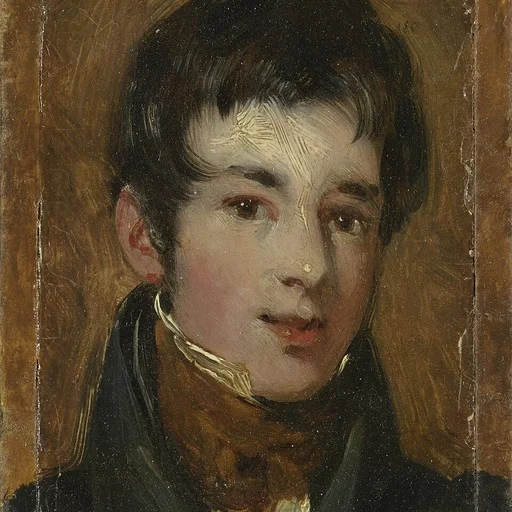
James Holland (18 October 1799 – 12 February 1870) was an English painter of flowers, landscapes, architecture, marine subjects, and a book illustrator.