Artwork
Song about the Destruction of Jerusalem
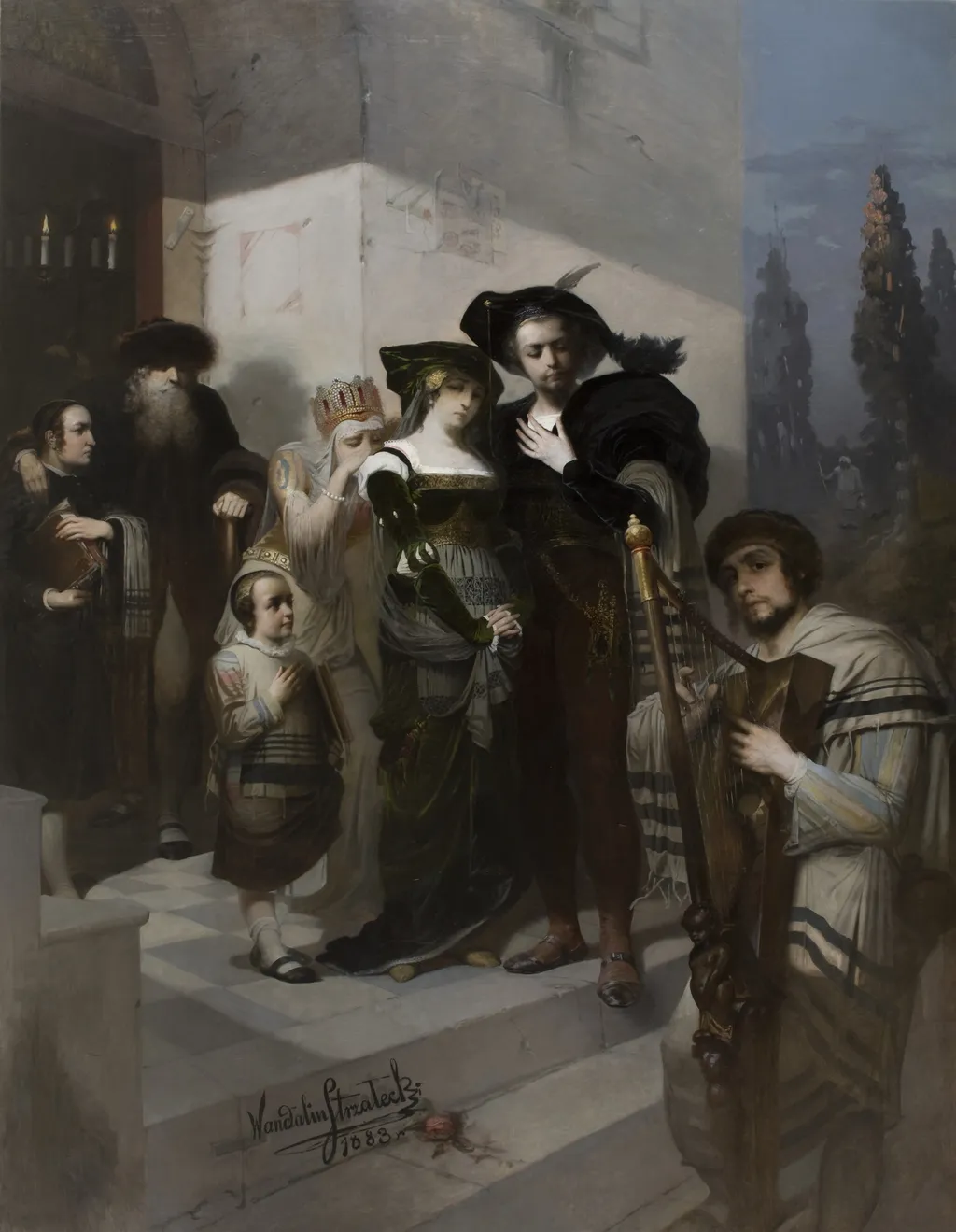
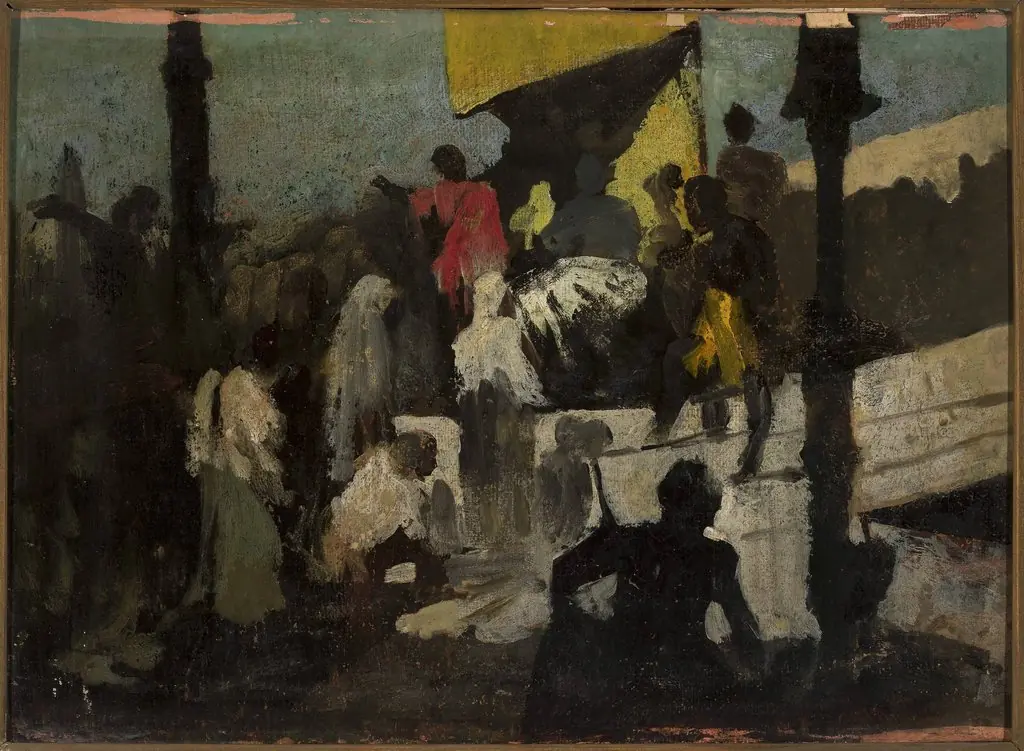
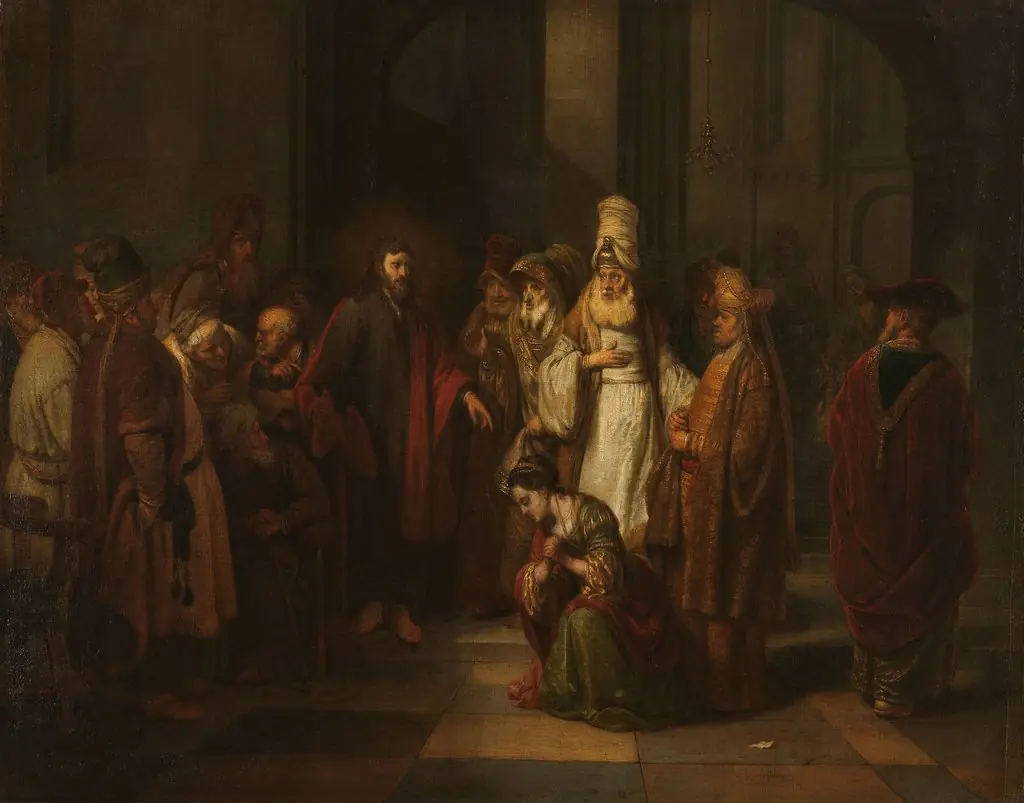
Song about the Destruction of Jerusalem is an oil painting by Wandalin Strzałecki. It dates from 1892 and is held in the collection of the National Museum in Kraków.
About this work
Overview
The painting’s title alludes to the fall of Jerusalem, though no literal cityscape appears—emotional weight replaces geography.
Painted in 1892 by Wandalin Strzałecki, this oil on canvas work depicts a quiet, mournful gathering on stone steps. The scene is framed by an ancient wall with a doorway and window, suggesting a ruined or sacred space. Figures in historical attire stand in stillness, their expressions conveying grief. The painting’s title alludes to the fall of Jerusalem, though no literal cityscape appears—emotional weight replaces geography.
Subject & Meaning
The painting evokes the lamentation over Jerusalem’s destruction through symbolic figures rather than narrative detail. A young girl crowned in the foreground may represent the city itself—once regal, now sorrowful. A man placing his hand on her shoulder suggests guardianship or mourning. Others hold a harp and wear garments of antiquity, reinforcing themes of lost glory and communal grief, rooted in biblical tradition but rendered in a secular, human key.
Technique & Style
Strzałecki employs muted tones and soft chiaroscuro to cultivate a somber mood. Brushwork is restrained, favoring smooth transitions over texture, enhancing the stillness of the figures. The composition is tightly grouped, drawing focus to the central pair. Lighting falls gently on the crowned girl and the man’s hand, subtly guiding the viewer’s attention to their connection, while the background recedes into shadow, deepening the sense of isolation.
History & Provenance
Completed in 1892, the painting entered the collection of the National Museum in Kraków shortly after its creation. It remained largely unremarked upon in broader art circles, reflecting its quiet, non-dramatic approach to a well-known historical subject. Its presence in Kraków aligns with Strzałecki’s ties to Polish cultural institutions, where it has been preserved as part of a regional tradition of historical allegory.
Context
In late 19th-century Poland, artists often turned to biblical and historical themes to express national sorrow under foreign partitions. Strzałecki’s work fits this trend, using the fall of Jerusalem as a metaphor for lost sovereignty. Unlike grand historical canvases, this piece avoids spectacle, instead offering an intimate, contemplative moment—reflecting a quieter, more introspective strain of Polish Romanticism.
Legacy
The painting has not entered mainstream art historical discourse but remains a quiet presence in the National Museum’s collection. It exemplifies a lesser-known tendency in Polish painting: allegory rendered with restraint, prioritizing emotional resonance over dramatic action. Its endurance lies in its understated power, offering viewers a space for reflection rather than narrative resolution.
Own this work as a print
Artist & collection

 Fortune Telling
 Esther before Ahasuerus
 A village sermon
 Juhlakulkue Roomassa
 Courtyard of a temple
 Het gesprek
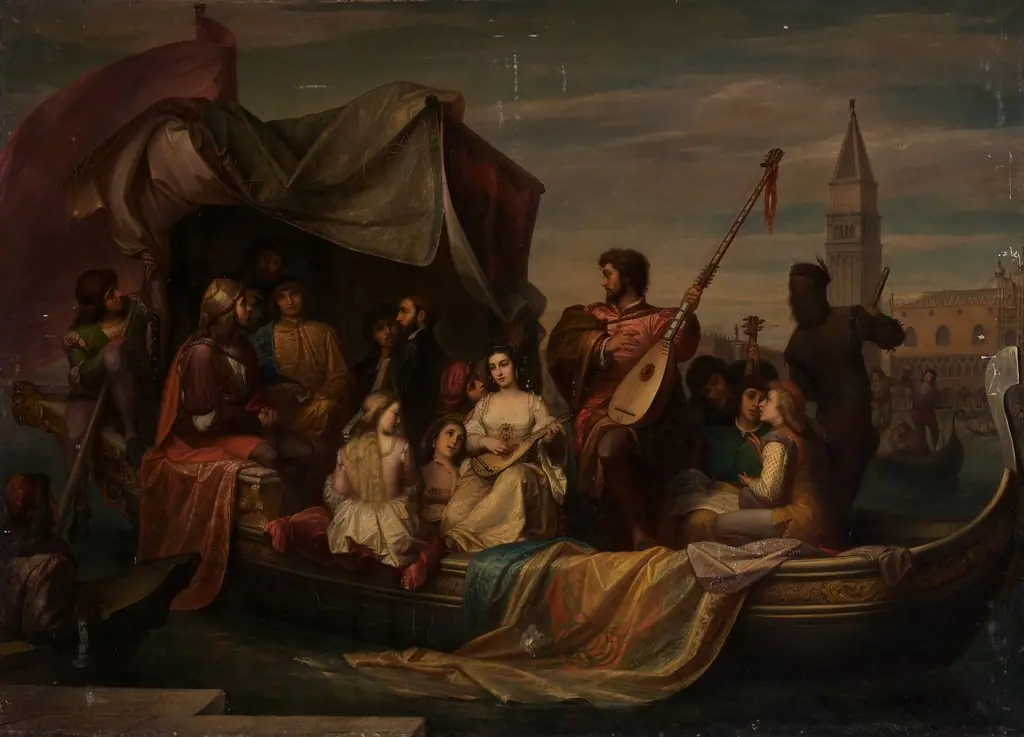 Giovanni Bellini and Albrecht Dürer are Celebrated by Venetian Artists
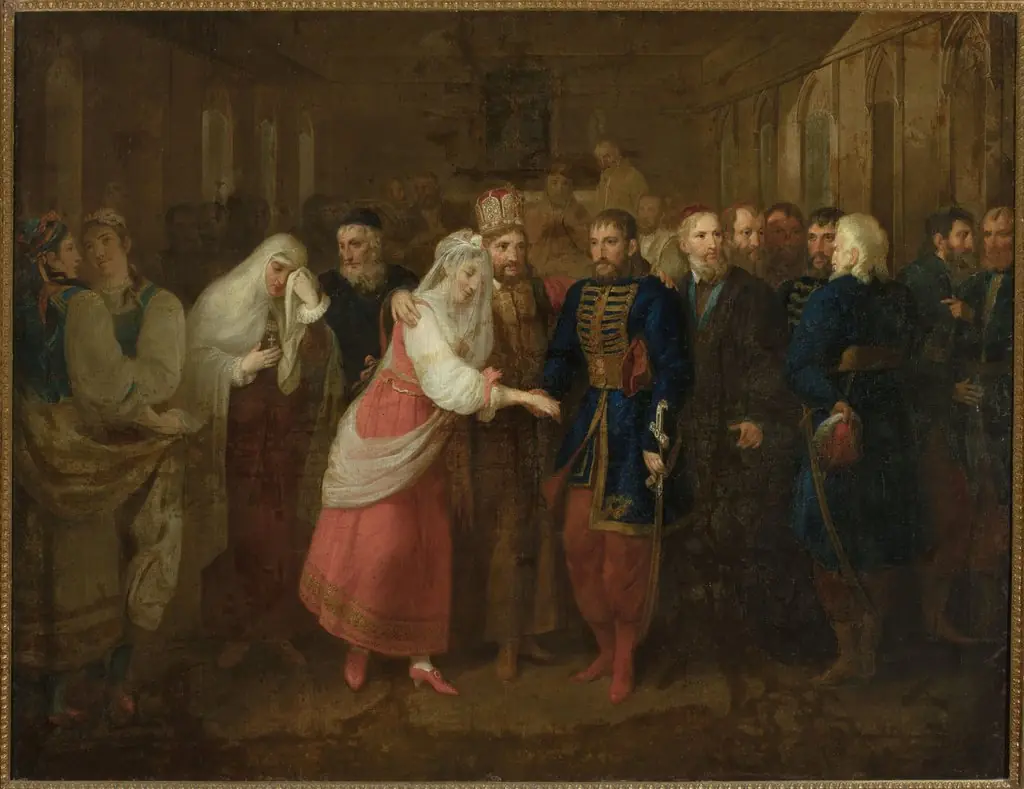 Marriage of Mieszko and Dobrawa
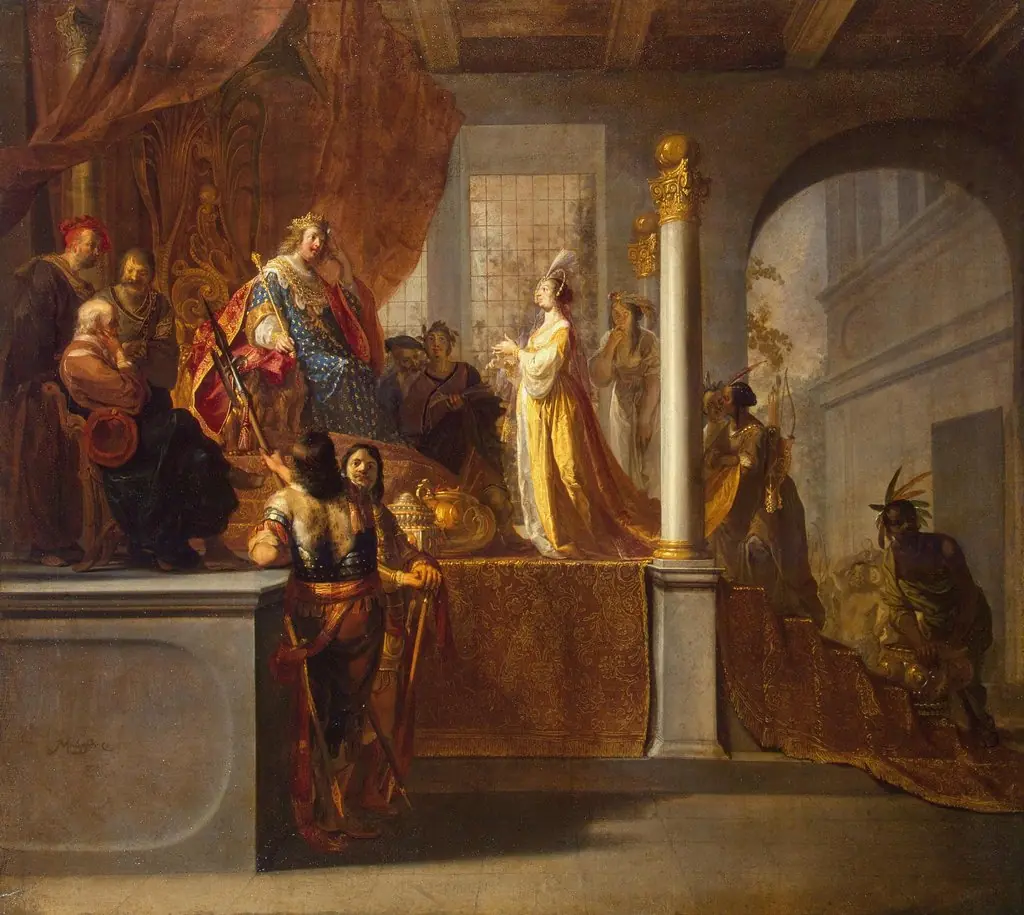 Queen of Sheba before Solomon
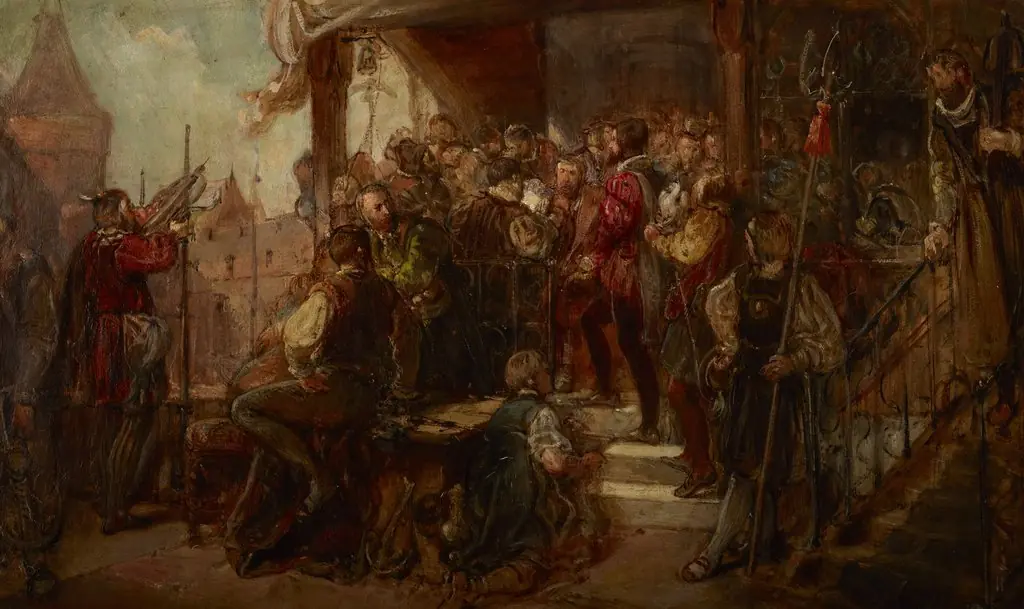 Presenting the Fowler to the Fowler Brotherhood (Sketch)
 Christus and the woman in adultery