Artwork
清 王槩 畫圖、李漁出版 《芥子園畫傳》 木版畫|Page from the Mustard Seed Garden Manual of Painting
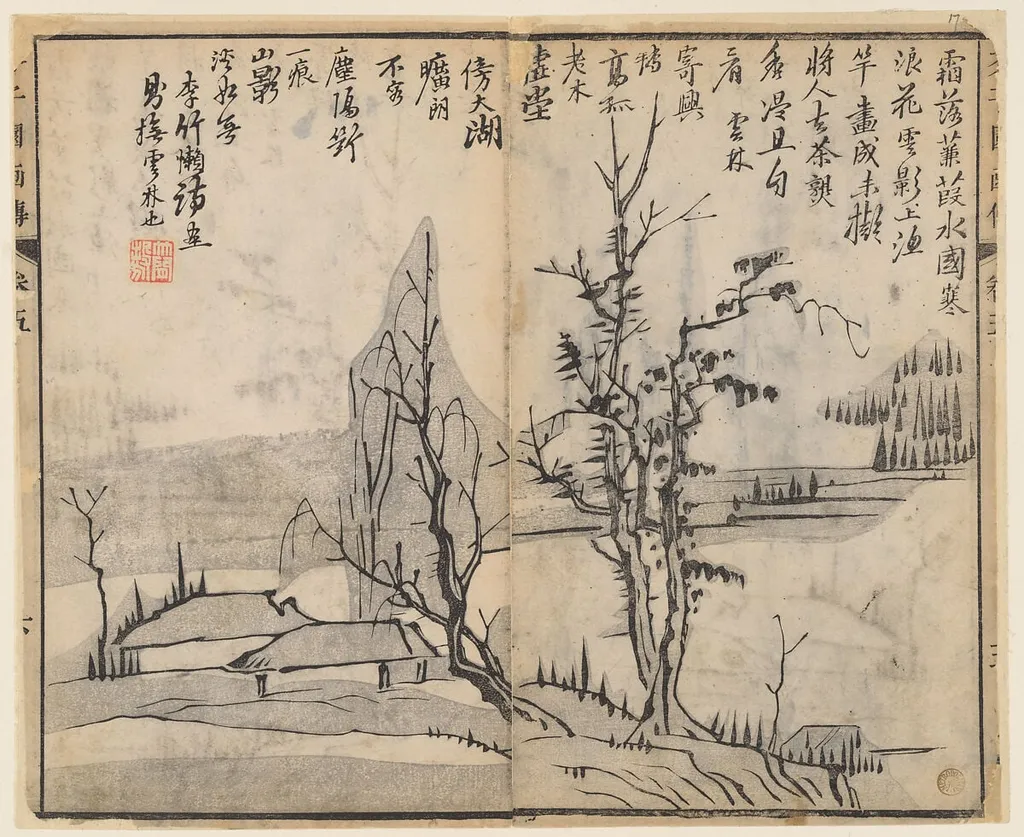
清 王槩 畫圖、李漁出版 《芥子園畫傳》 木版畫|Page from the Mustard Seed Garden Manual of Painting is an ink print by the Baroque artist Wang Gai. It dates from 1679 and is held in the collection of the Metropolitan Museum of Art.
About this work
The left side shows a tree with bare branches in front of a mountain, while the right side depicts a tree with leaves in front of a body of water and mountains.
This image is a page from an old book, featuring two illustrations side by side. The left side shows a tree with bare branches in front of a mountain, while the right side depicts a tree with leaves in front of a body of water and mountains.
The illustrations are done in black ink, with some color added to the background. The style is reminiscent of traditional Chinese art, with bold lines and simple shapes.
If you're interested in learning more about this style of art, you might want to check out the work of Wang Gai, a Chinese artist who was active during the 17th century.
Overview
This page originates from the 1679 edition of the Mustard Seed Garden Manual of Painting, a printed instructional text compiled by Wang Gai under the patronage of Li Yu. Produced using woodblock printing, the sheet features two side-by-side landscape studies rendered in ink with light color washes on paper. It was designed as a pedagogical tool for aspiring painters, part of a multi-volume series that systematized traditional Chinese compositional methods for reproduction and study.
Subject & Meaning
The left panel presents a bare-branched tree before a distant mountain, suggesting winter or solitude; the right shows a leafy tree beside water and layered peaks, evoking spring or vitality. Together, they illustrate contrasting seasonal moods and spatial arrangements common in literati painting. The images are not mere depictions but pedagogical models, teaching students how to structure elements like trees, mountains, and water to convey natural rhythm and balance.
Technique & Style
The illustrations employ bold, controlled ink lines typical of Ming-Qing brushwork, with subtle color applied sparingly to skies and water to enhance depth without overwhelming form. Woodblock carving allowed precise replication of brushstrokes, preserving the artist’s hand while enabling mass distribution. The compositions simplify nature into essential shapes—curved branches, angular cliffs, flowing water—reflecting the manual’s goal: to codify aesthetic principles for systematic learning.
History & Provenance
Commissioned by the publisher Li Yu and illustrated by Wang Gai, the Mustard Seed Garden Manual was first printed in Nanjing in 1679. It quickly became the most influential painting manual of its era, reprinted numerous times across East Asia. The Metropolitan Museum of Art’s copy is one of many surviving sheets from early print runs, reflecting its widespread use in artistic education during the late 17th and 18th centuries.
Context
During the early Qing dynasty, there was growing interest in preserving and transmitting classical painting techniques among scholar-amateurs. The manual responded to this demand by organizing knowledge into accessible, reproducible formats. Unlike earlier treatises, it combined visual examples with step-by-step guidance, bridging elite literati traditions and broader artistic practice, making formal instruction available beyond court circles.
Legacy
The Mustard Seed Garden Manual remained a foundational reference for Chinese painters well into the 20th century and influenced artists in Japan and Korea. Its structured approach to landscape composition shaped how generations learned to observe and render nature. Though later critics questioned its rigidity, its role in standardizing and disseminating traditional techniques ensured its enduring presence in East Asian art education.
Artist & collection

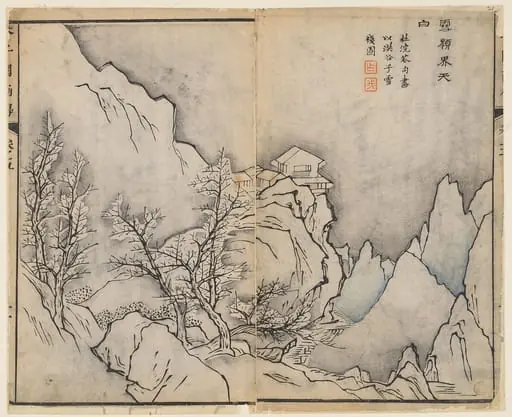 清 王槩 設計,李漁出版 芥子園畫傳 版本|Snowy Peaks Touching the Heavens, in the manner of Snow-covered Inn by Jing Hao (active ca. 870–ca. 930), from the Mustard Seed Garden Manual of Painting
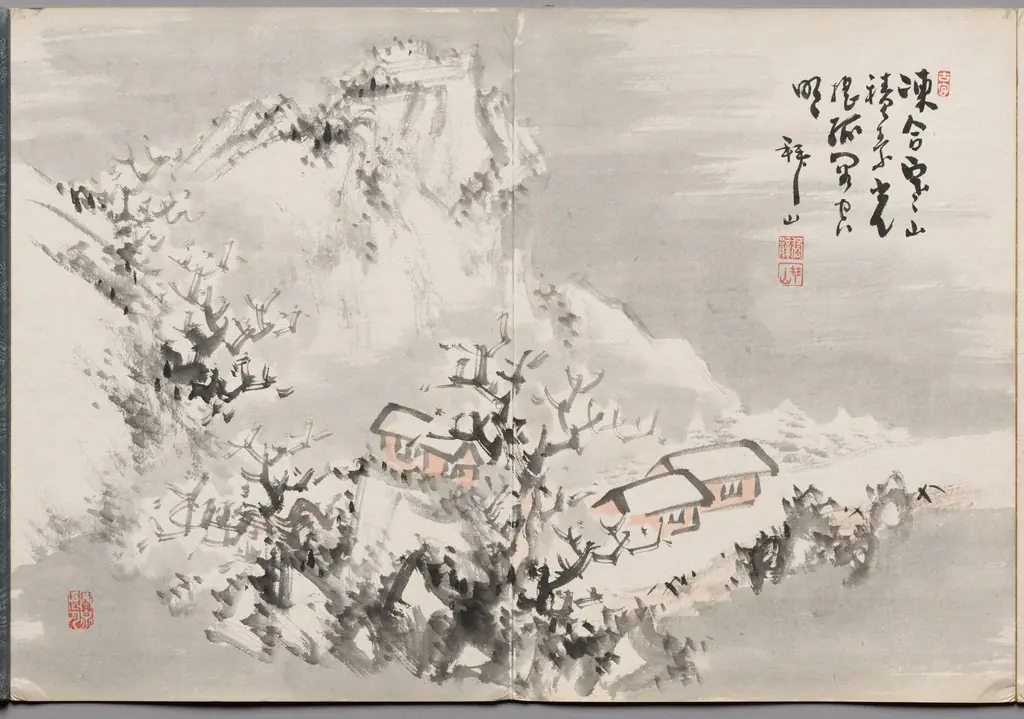 Painting Thirteen from Album of Paintings by Haizan
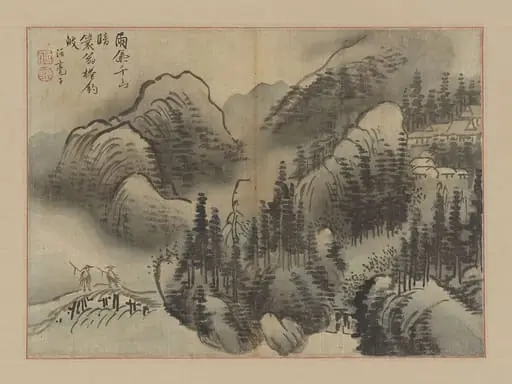 활호자 김수규 산수도 조선|活毫子 金壽奎 山水圖 朝鮮|Rainy Landscape
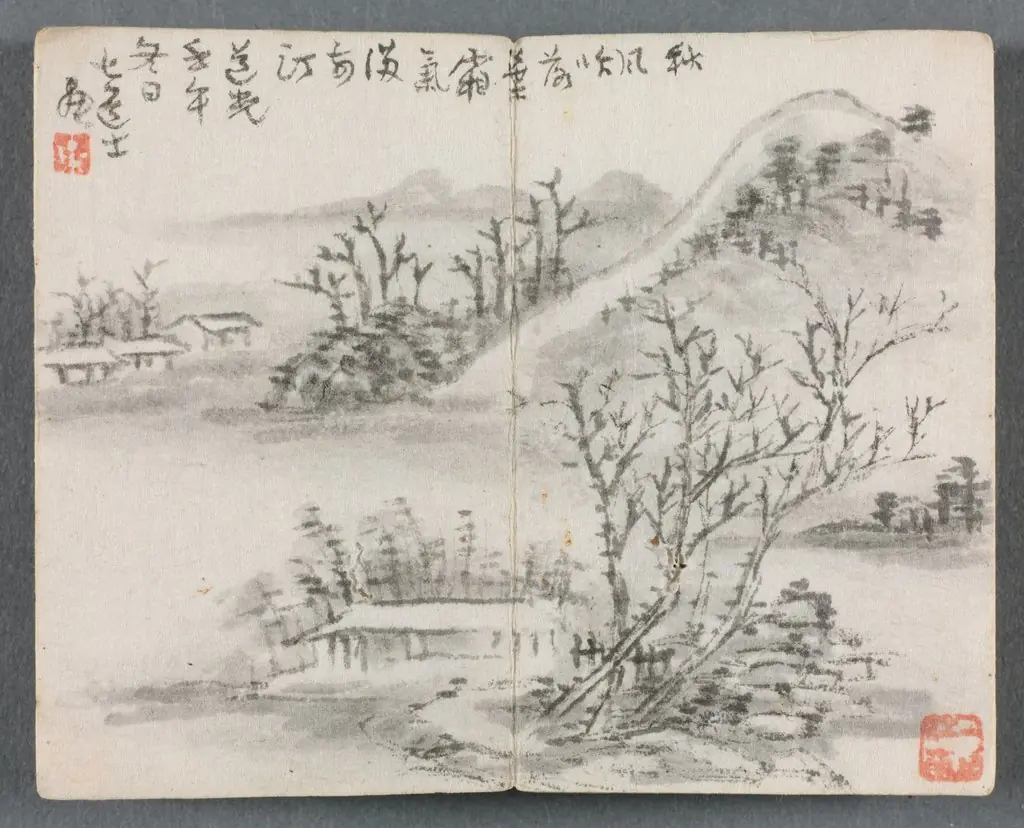 Miniature Album with Figures and Landscape (Landscape with Hill)
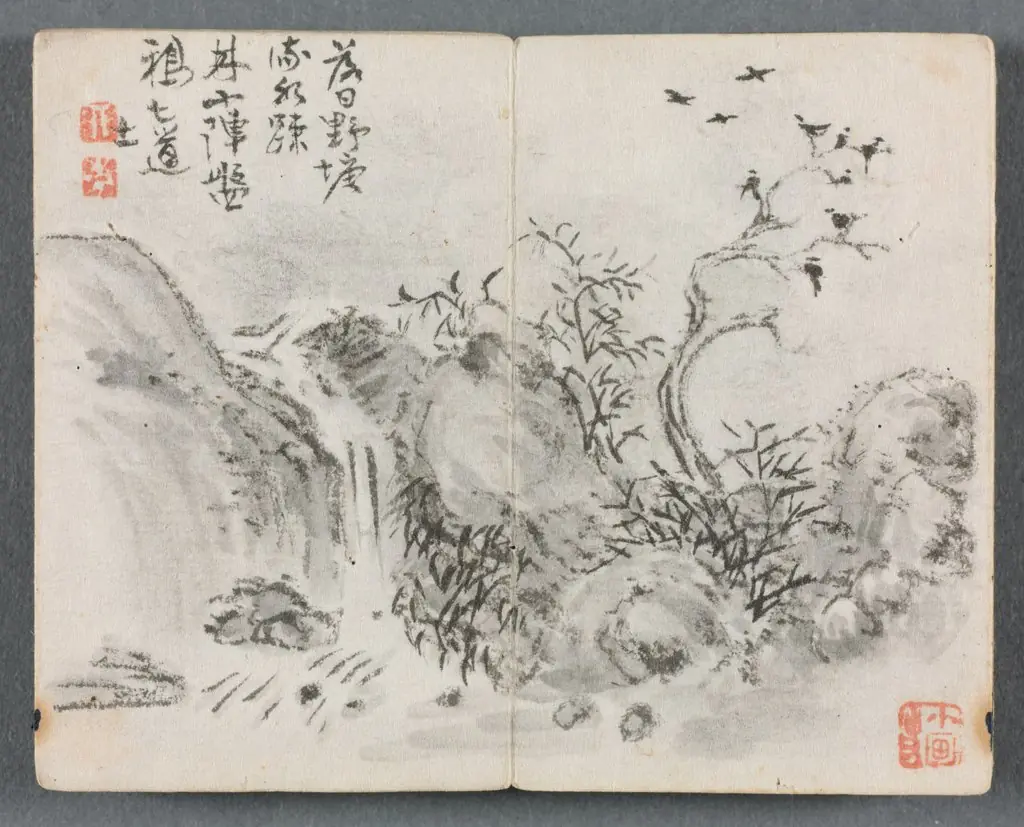 Miniature Album with Figures and Landscape (Waterfall Landscape)
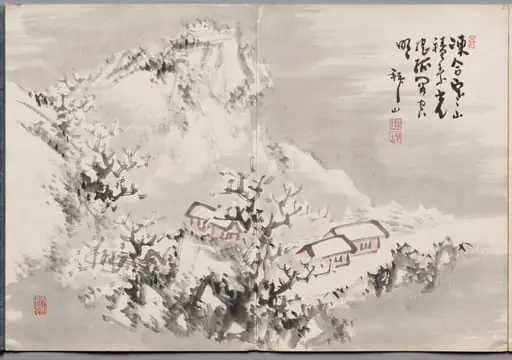 Painting Thirteen from Album of Paintings by Haizan
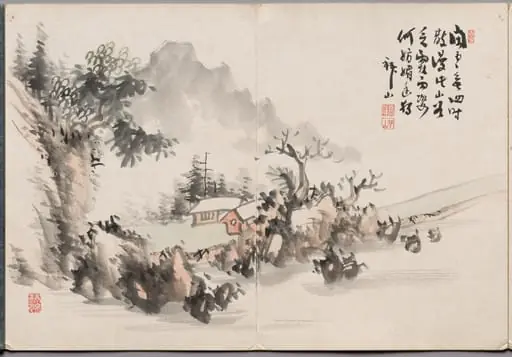 Painting Six from Album of Paintings by Haizan
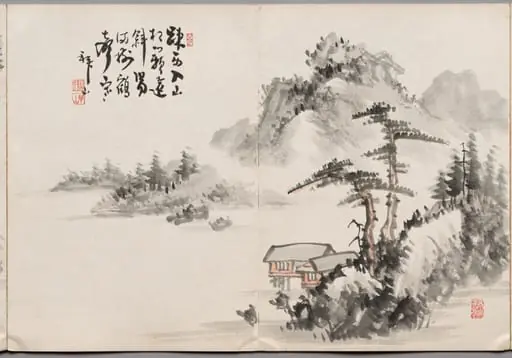 Painting One from Album of Paintings by Haizan
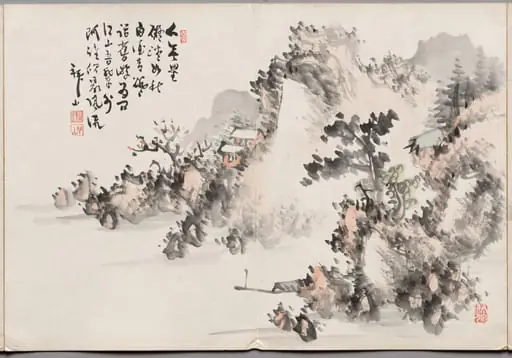 Painting Eight from Album of Paintings by Haizan