Artwork
Landscape after Wang Meng
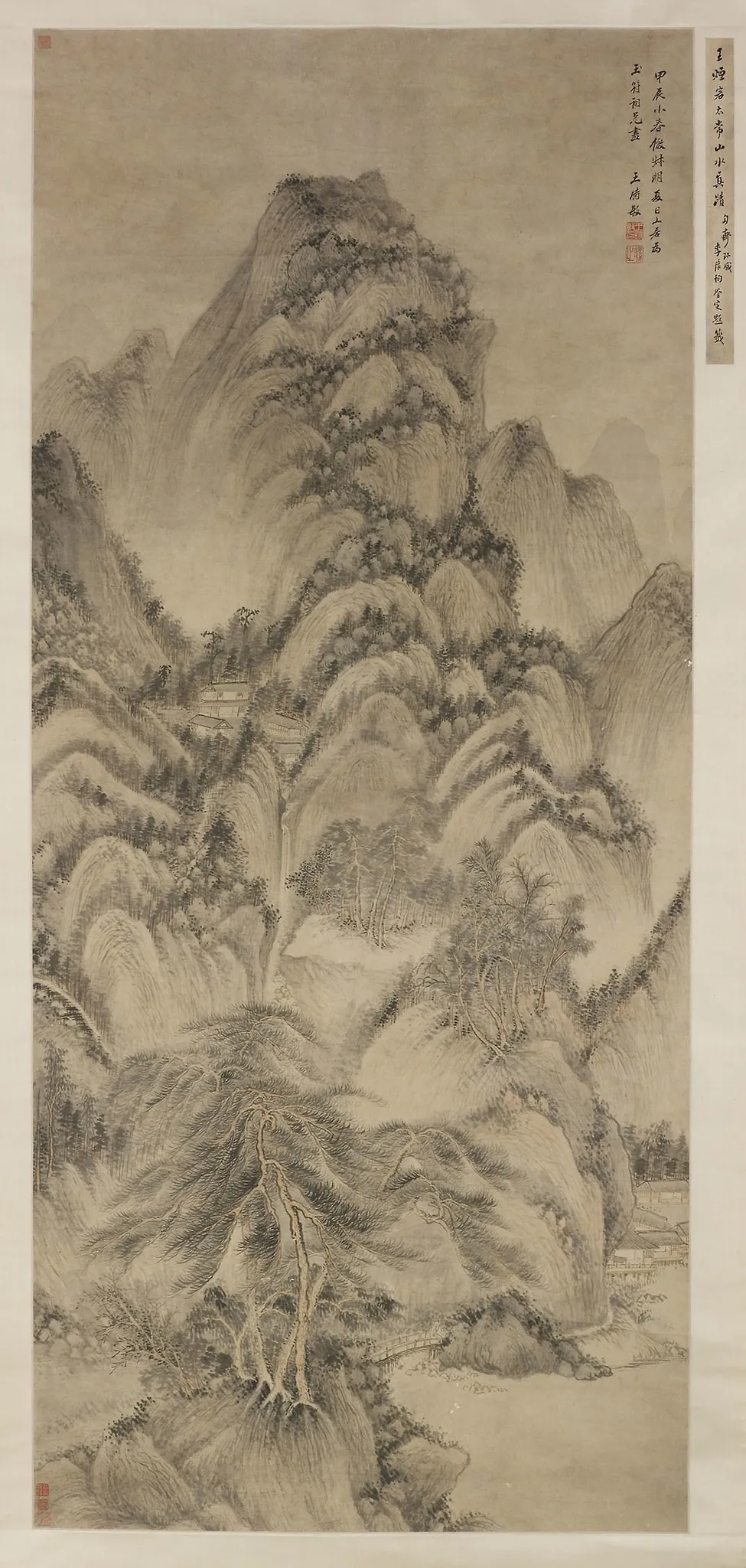
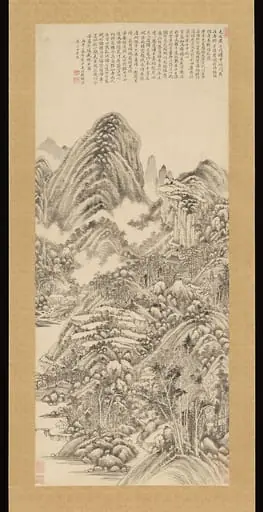
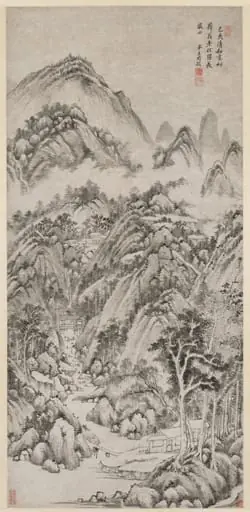
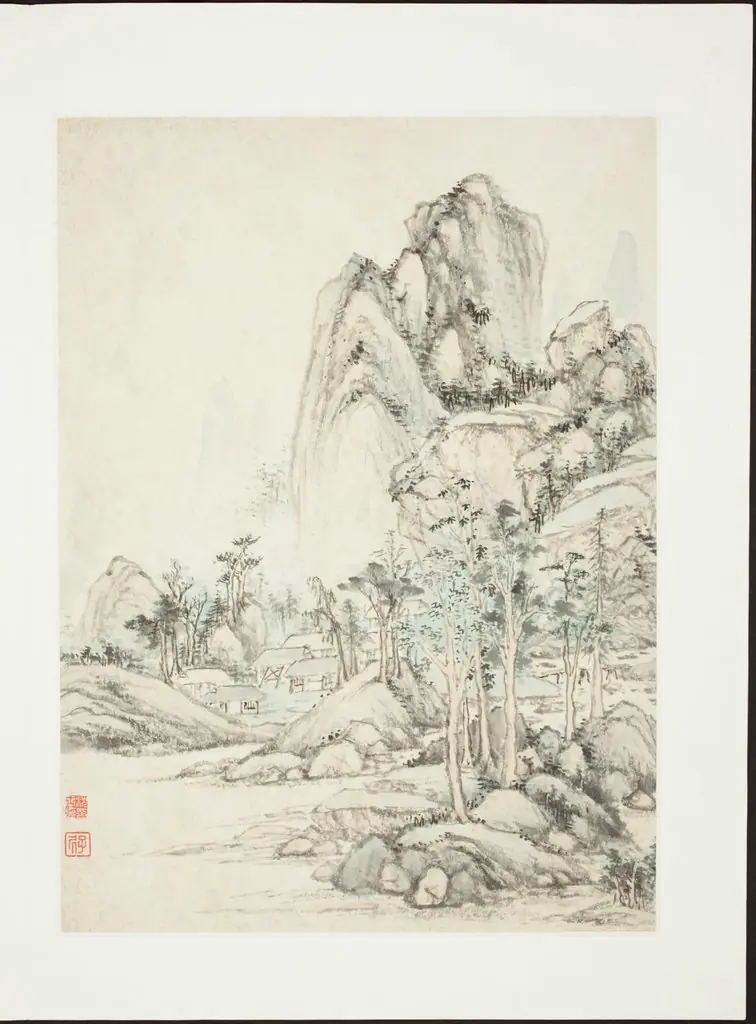
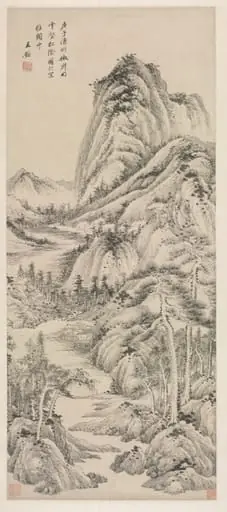
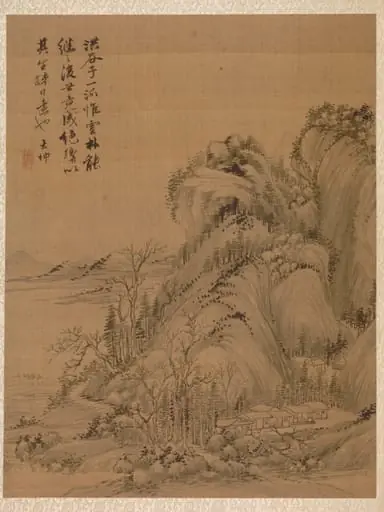
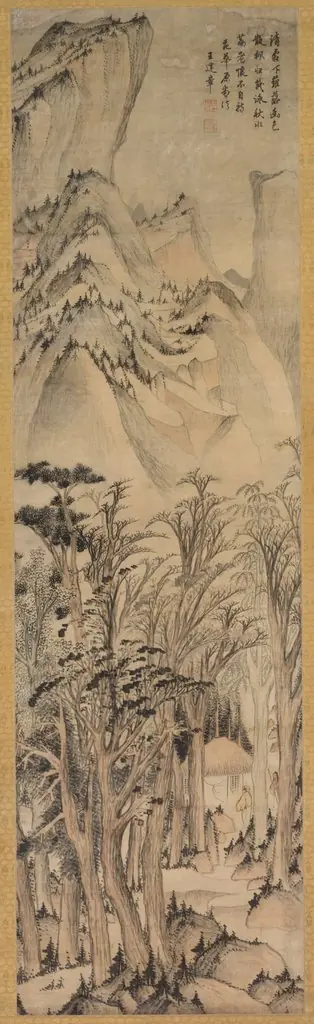
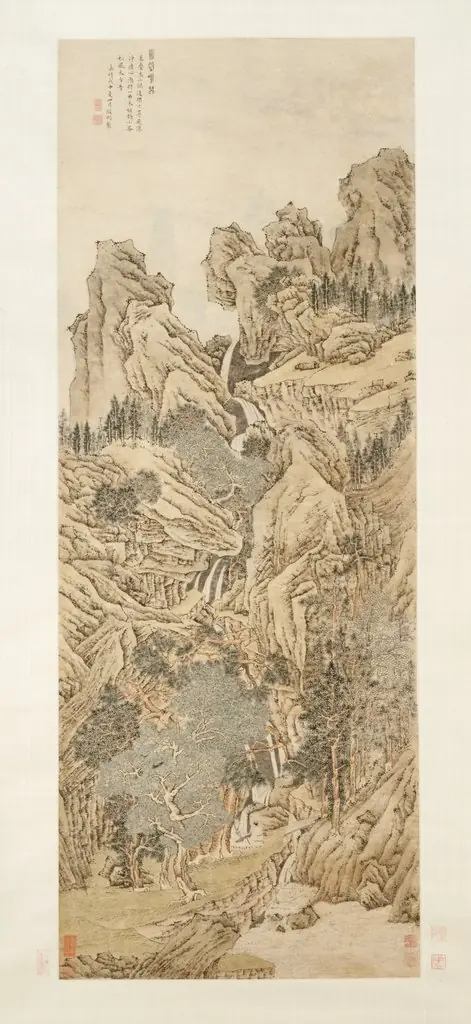
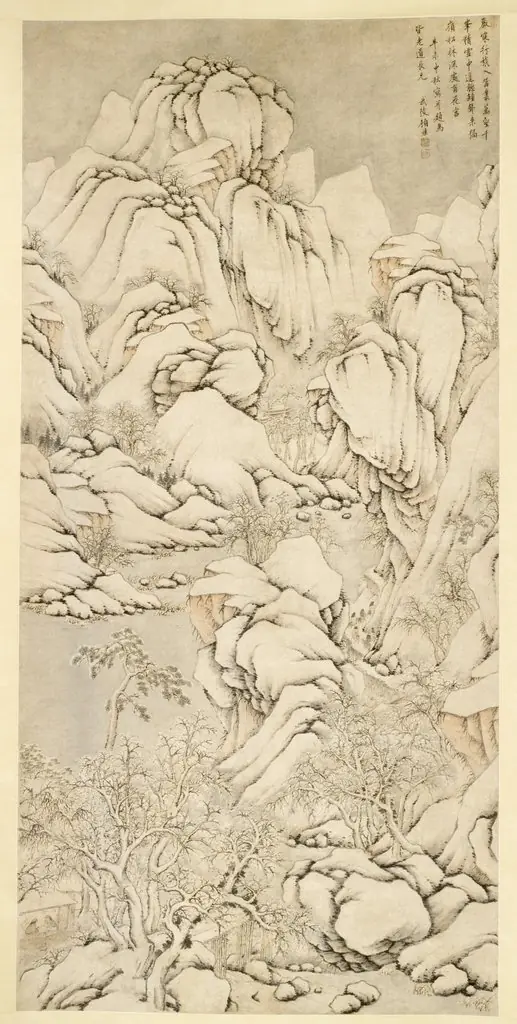
Landscape after Wang Meng is an unspecified painting by the Ming dynasty painting artist Wang Shimin. It dates from 1636 and is held in the collection of the Art Institute of Chicago.
About this work
Overview
Created in 1636 by Wang Shimin, a painter who worked during the transition from the Ming to the early Qing dynasty, *Landscape after Wang Meng* is a Chinese ink painting now owned by the Art Institute of Chicago. The work follows the literati tradition of the late Ming period, presenting a stylized natural scene rendered in monochrome brushwork.
Subject & Meaning
The composition centers on a steep, rugged mountain that dominates the lower edge of the picture plane, its craggy peaks outlined with dark, angular strokes. A meandering path winds through a sparsely treed valley, punctuated by modest structures that suggest human habitation within an otherwise untamed environment, evoking the Daoist appreciation of nature’s solitary grandeur.
Technique & Style
The ink is applied in varying concentrations, allowing areas of deep black to contrast with lighter washes that suggest atmospheric depth.
Wang Shimin employs swift, expressive brushstrokes to convey the texture of rock and the fleeting presence of clouds and mist. The ink is applied in varying concentrations, allowing areas of deep black to contrast with lighter washes that suggest atmospheric depth. This approach reflects the painter’s mastery of the “freehand” style associated with the earlier master Wang Meng, whose influence is explicitly acknowledged in the title.
History & Provenance
Born into a scholarly family in Jiangsu, Wang Shimin received early training in both painting and calligraphy before entering civil service. The painting remained in private collections for several centuries before being acquired by the Art Institute of Chicago, where it entered the museum’s Asian art holdings in the mid‑20th century.
Context
The work belongs to the late Ming literati movement, a period when scholar‑officials emphasized personal expression over formal representation. By referencing Wang Meng, a fourth‑generation master of the Yuan academy, Shimin aligns himself with a lineage that prized brush economy and the evocation of spirit rather than detailed realism, a stance that resonated with the cultural shifts of his era.
Artist & collection

Artist
Wáng Shímǐn (simplified Chinese: 王时敏; traditional Chinese: 王時敏; Wade–Giles: Wang Shih-min; c.