Artwork
H.K. Brown
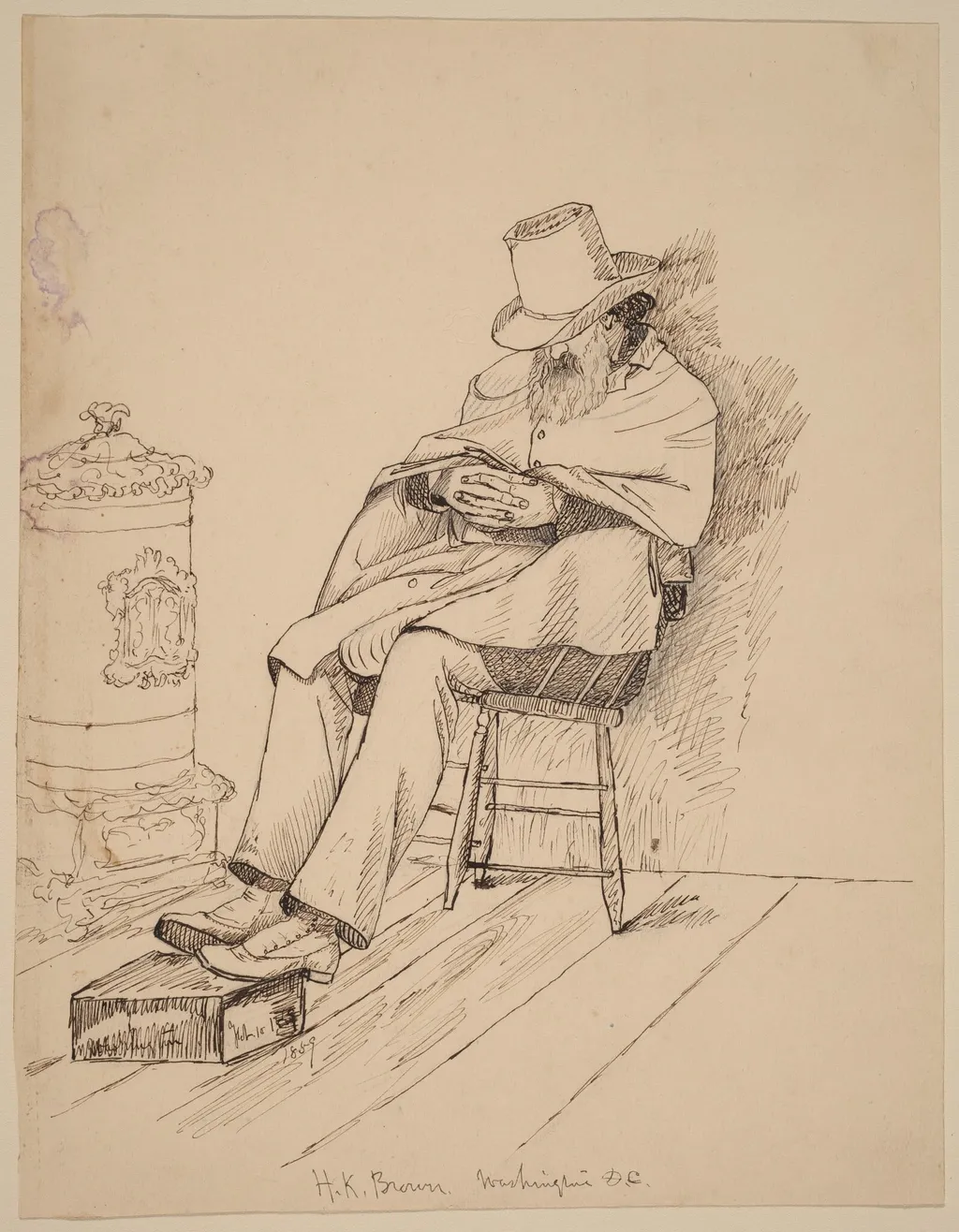
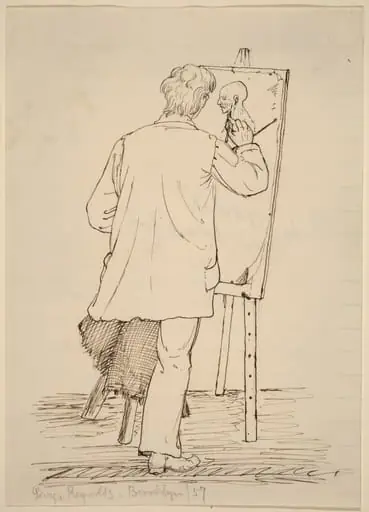
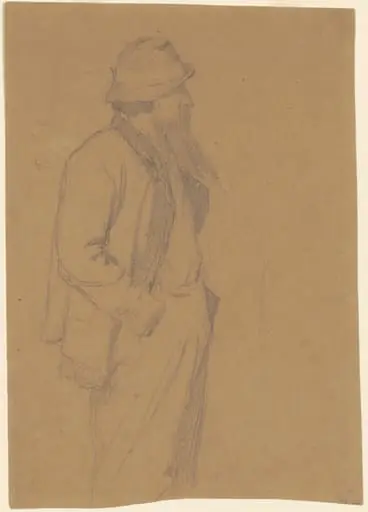
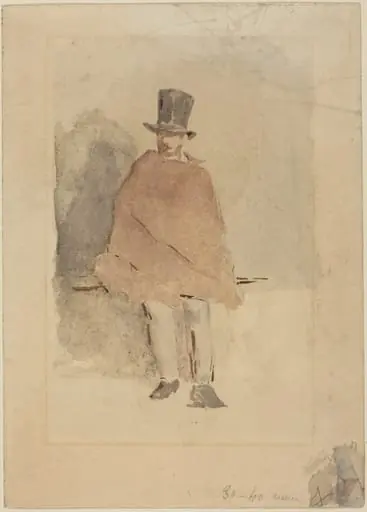
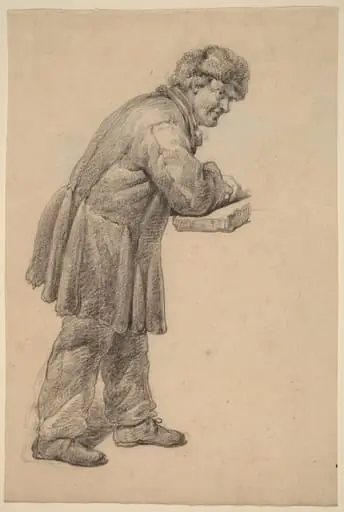
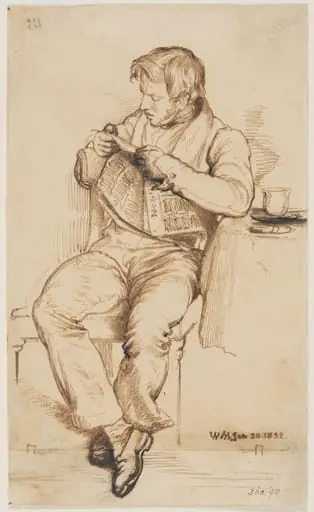
H.K. Brown is an ink drawing by the Impressionist artist John Quincy Adams Ward. It dates from 1859 and is held in the collection of the National Gallery of Art.
About this work
Overview
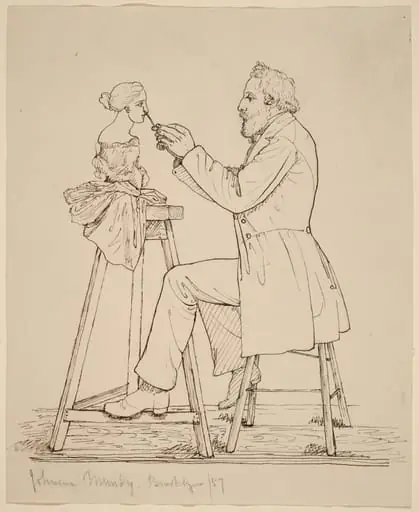
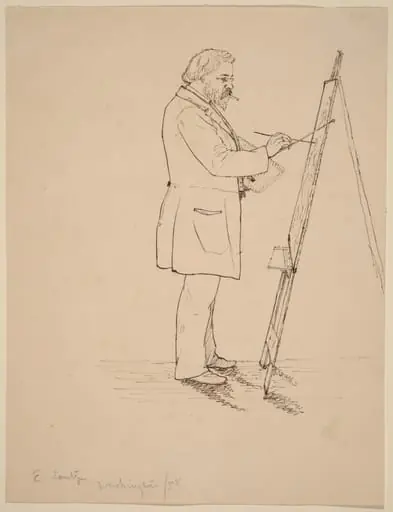
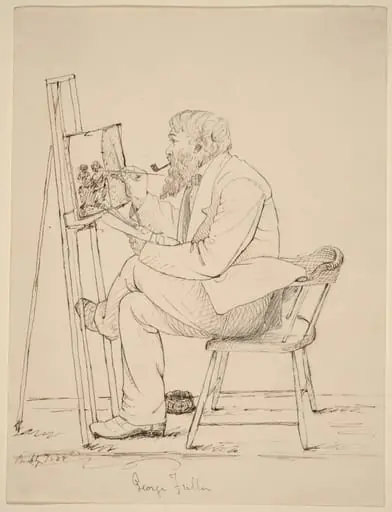
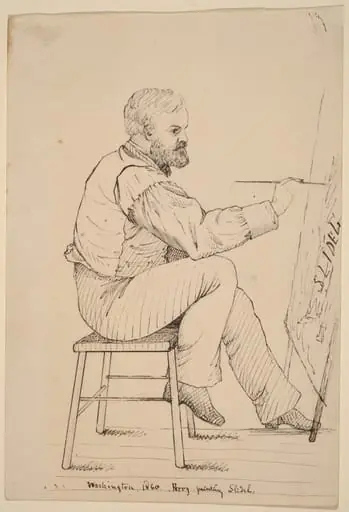
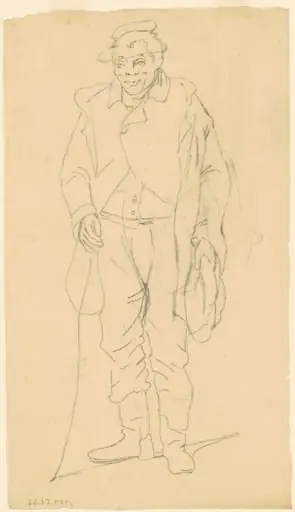
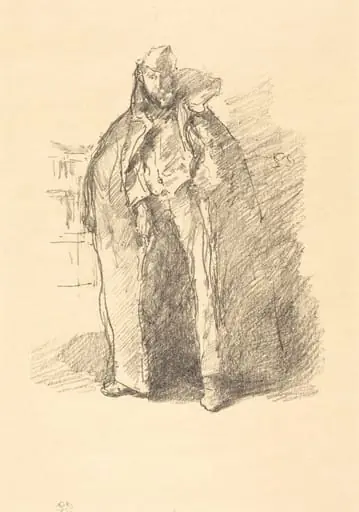
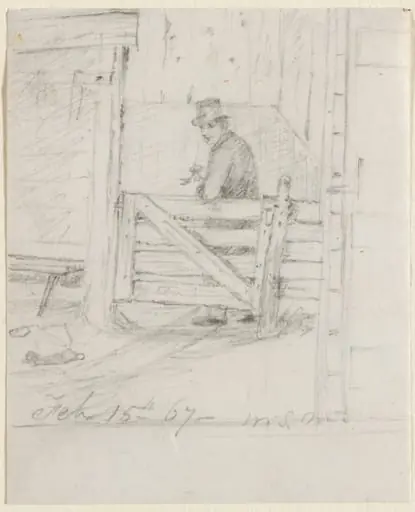
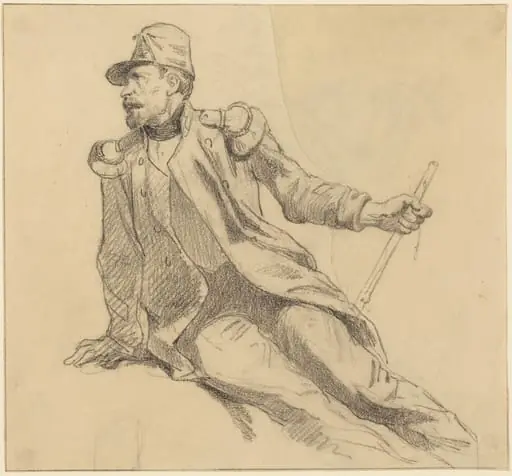
Created in 1859 by John Quincy Adams Ward, this drawing depicts a seated male figure rendered in pen and brown ink over graphite on wove paper. The work belongs to the National Gallery of Art in Washington, D.C., and exemplifies 19th-century American draftsmanship. Its modest scale and intimate focus suggest a study rather than a finished exhibition piece, emphasizing observation over grandeur.
Subject & Meaning
The subject is a bearded man in formal attire—coat, hat, and trousers—seated with crossed legs and hands clasped. His posture conveys quiet contemplation, while the presence of a cylindrical object with a lid to his left hints at a personal or occupational context, possibly a tool or container. The absence of narrative detail invites interpretation grounded in character rather than story.
Technique & Style
Ward employed fine pen lines and cross-hatching to model form and suggest texture across fabric, skin, and wood. The graphite underdrawing guided the ink work, allowing for subtle tonal gradations. The wove paper’s smooth surface enhanced precision, supporting a restrained realism that prioritizes anatomical accuracy and spatial clarity over dramatic effect.
History & Provenance
The drawing entered the National Gallery of Art’s collection as part of its broader acquisition of American works from the mid-19th century. Its provenance traces back to Ward’s studio practice, where such studies served as preparatory sketches for larger sculptures. Its preservation reflects early institutional interest in documenting the artistic process beyond final monuments.
Context
Created during the rise of American Realism, the drawing aligns with a cultural shift toward observing ordinary individuals with dignity. Ward, primarily known as a sculptor, used drawing to refine his understanding of form and expression. This work reflects the era’s emphasis on direct observation, contrasting with idealized academic traditions still prevalent in sculpture and painting.
Legacy
Though not widely exhibited, the drawing remains a key example of Ward’s preparatory methods and the role of drawing in 19th-century American art. It illustrates how sculptors engaged with two-dimensional media to explore volume and presence. Its inclusion in a major national collection underscores its value as a document of artistic practice rather than a standalone image.
Artist & collection

Artist
John Quincy Adams Ward (June 29, 1830 – May 1, 1910) was an American sculptor, whose most familiar work is his larger than life-size standing statue of George Washington on the steps of Federal Hall National Memorial in New York City.