Artwork
George Reynolds
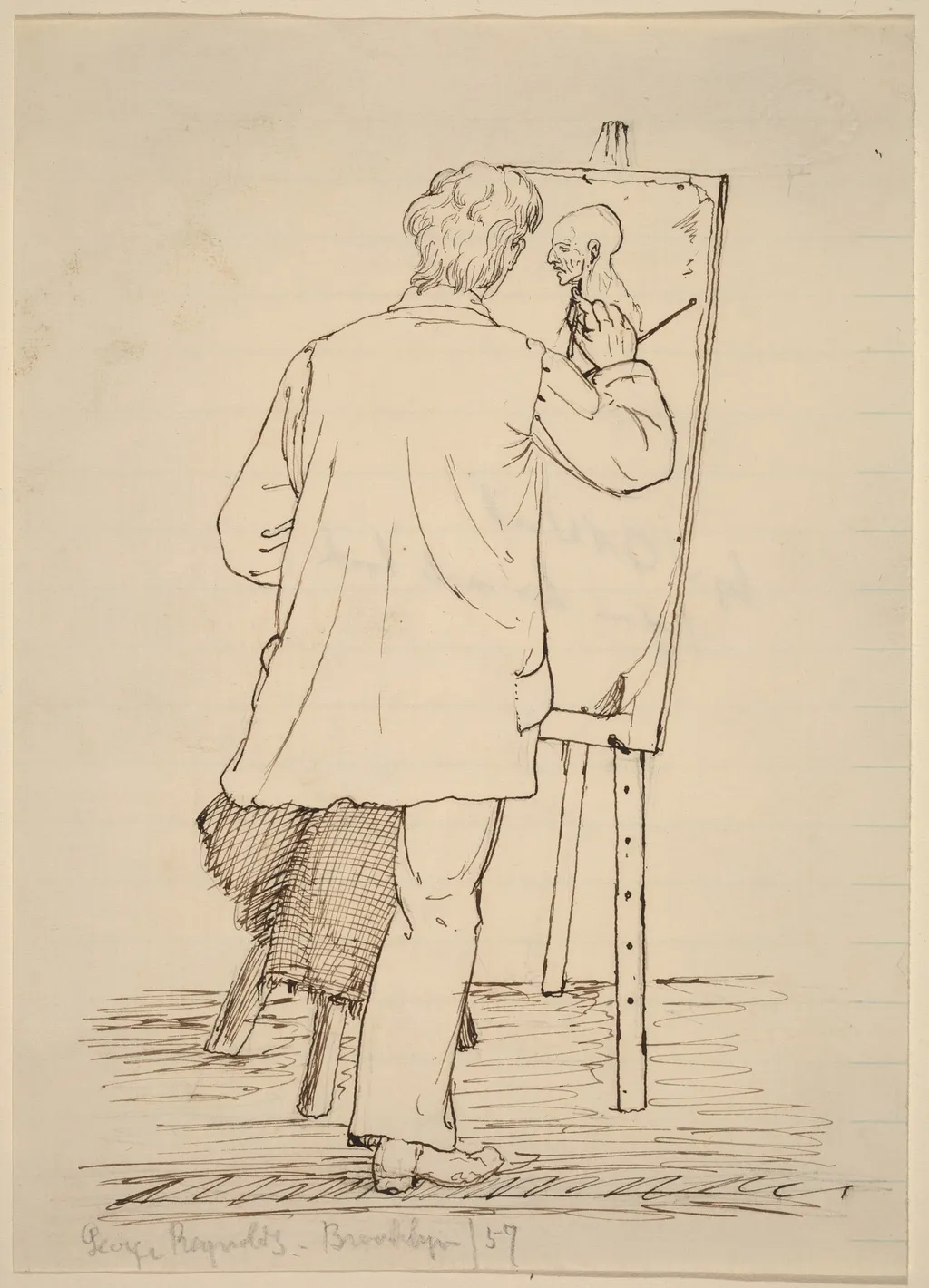
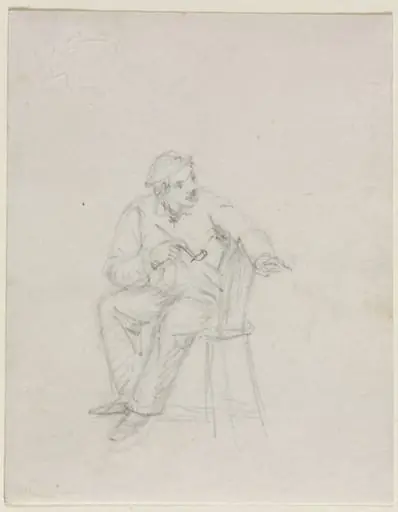
George Reynolds is a graphite drawing by the Impressionist artist John Quincy Adams Ward. It dates from 1859 and is held in the collection of the National Gallery of Art.
About this work
Overview
George Reynolds is a drawing created by John Quincy Adams Ward in 1859, rendered in pen and brown-black ink over graphite. The work depicts a scene of artistic creation, showcasing a man engaged in painting a portrait.
Subject & Meaning
The subject is a man, presumably George Reynolds, standing with his back to the viewer, intently focused on capturing the likeness of a partially visible sitter (only head and shoulders are discernible). His attire includes a suit jacket, plaid pants, and a hat.
Technique & Style
The drawing features quick, expressive lines that convey a sense of movement and vitality. The loose, sketchy style and the artist's slightly leaned posture suggest the rapid, dynamic process of artistic creation in a real-world setting.
History & Provenance
Created in 1859 by John Quincy Adams Ward, specific details about the drawing's history, ownership, or exhibition record before its current location are not provided in the available information.
Context
The piece reflects the mid-19th-century artistic practice of quickly sketching scenes from life, emphasizing the process of art-making. The use of pen and ink over graphite was a common technique for rapid yet detailed sketches during this period.
Legacy
While the broader impact or notable exhibitions of 'George Reynolds' are not detailed in the provided information, the drawing serves as an example of 19th-century sketching practices and the everyday depiction of artistic activity.
Artist & collection

Artist
John Quincy Adams Ward (June 29, 1830 – May 1, 1910) was an American sculptor, whose most familiar work is his larger than life-size standing statue of George Washington on the steps of Federal Hall National Memorial in New York City.

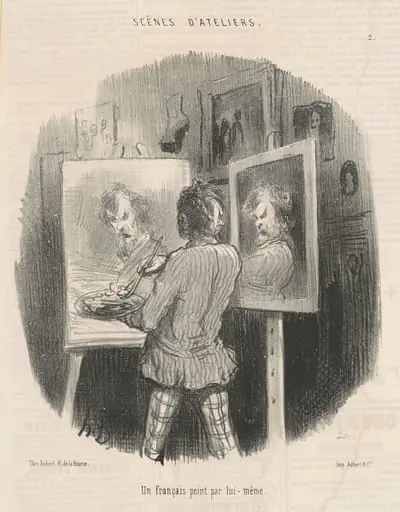 Un français peint par lui-même
 a) Print Connoisseur (recto); b) Sketch of Print Connoisseur (verso)
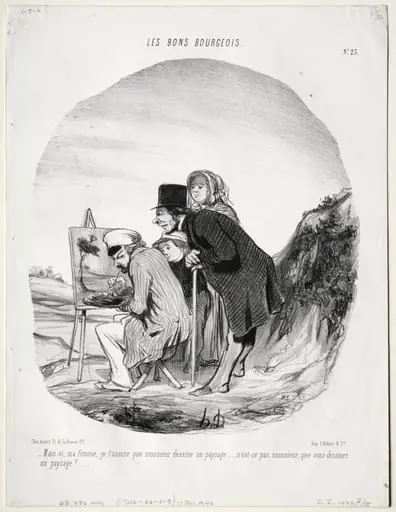 But yes, my dear, I assure you that this gentleman is drawing a landscape...
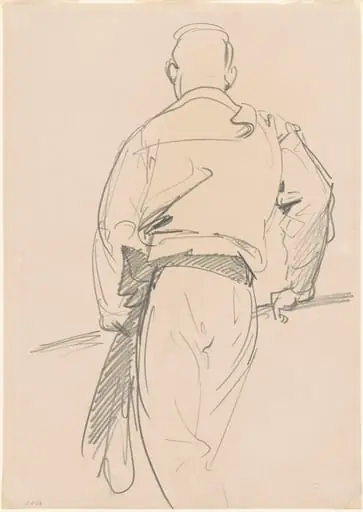 Gondolier, Venice
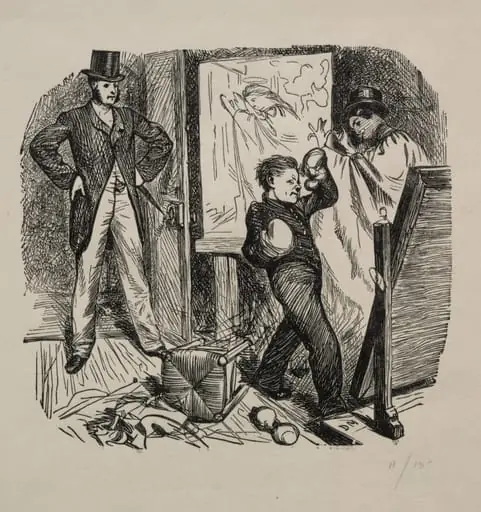 A Kettledrum in Mayfair
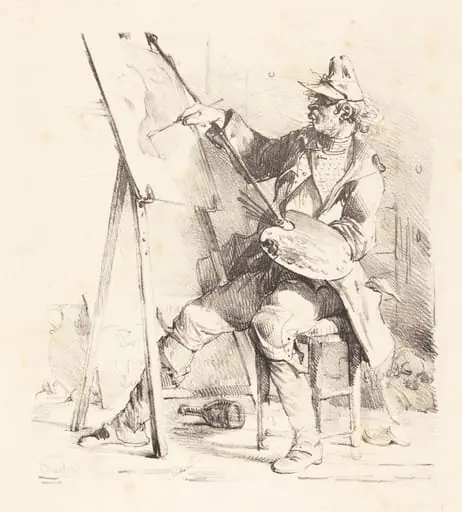 The Sign Painter (Le Peintre d'Enseignes)
 Man Smoking a Pipe
 Faudra que je vous fasse faire un jour...