Artwork
Maisema Lapista
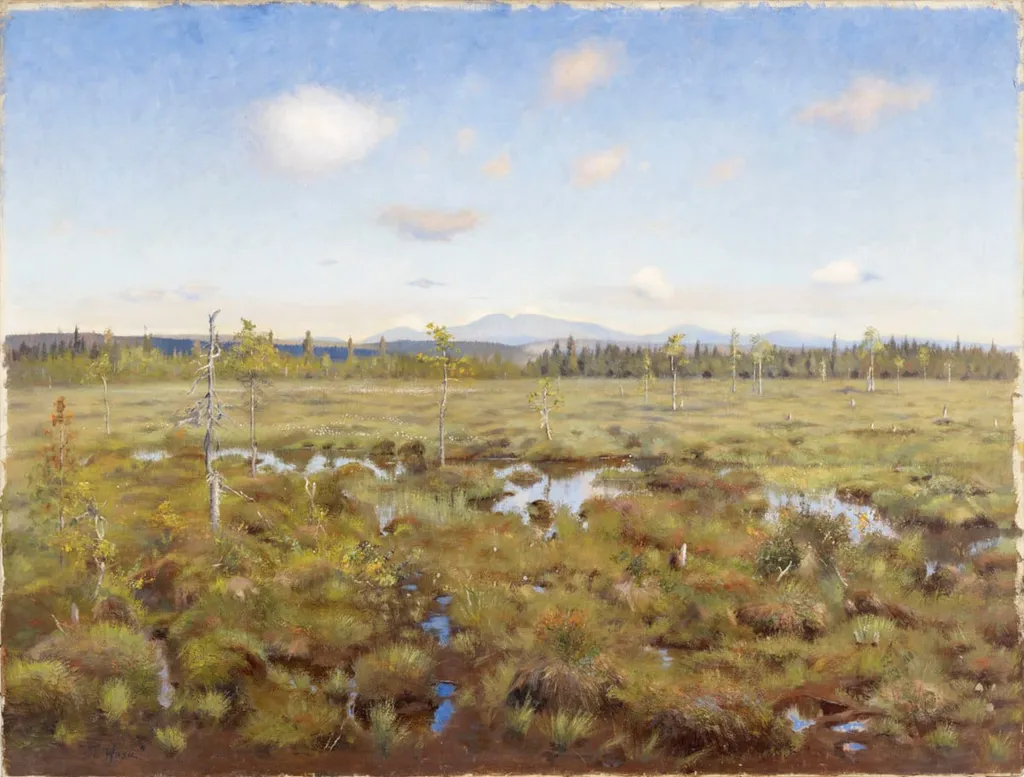
Maisema Lapista is an unspecified painting by Torsten Wasastjerna. It dates from 1903 and is held in the collection of the Finnish National Gallery.
About this work
Overview
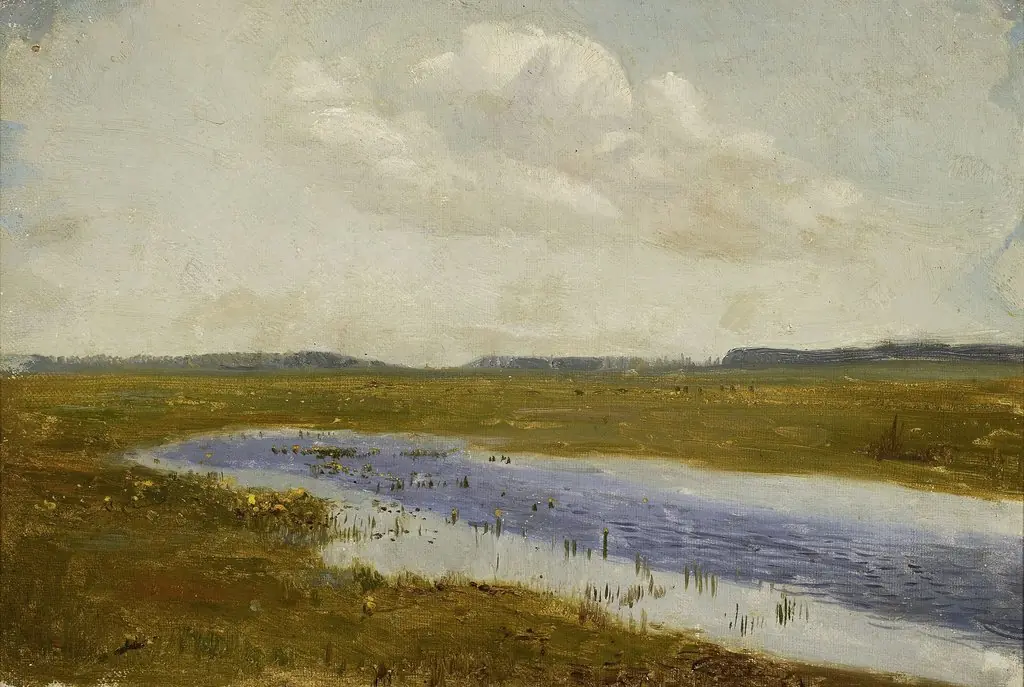
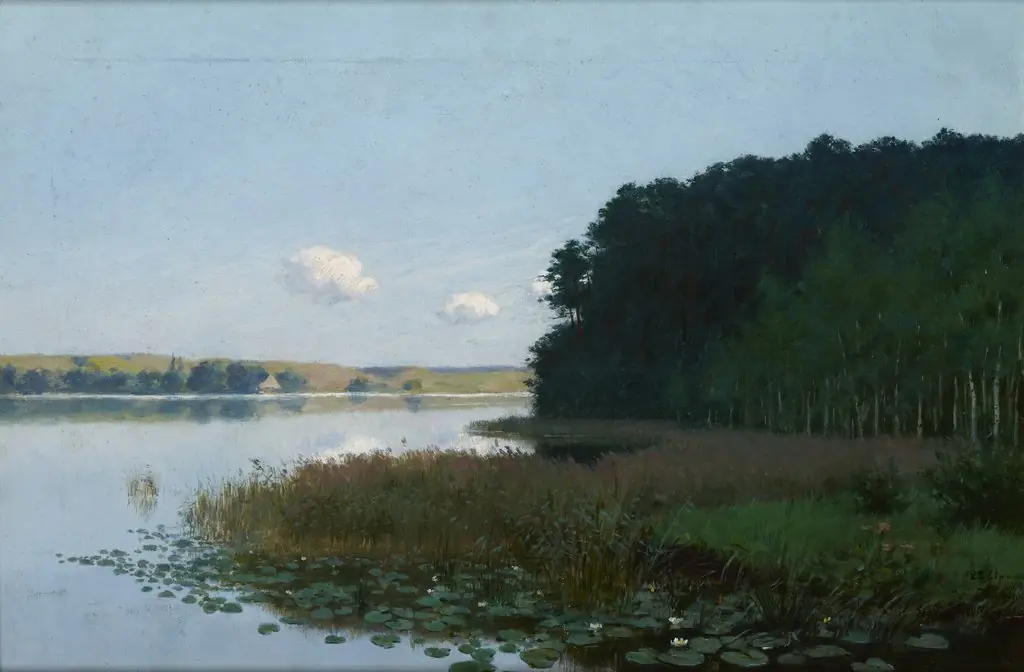
Painted around 1903 by Torsten Wasastjerna, Maisema Lapista is a quiet depiction of a Finnish wetland. The scene unfolds across a level expanse where damp earth meets scattered vegetation, rendered with restrained tones and gentle transitions. No figures or structures interrupt the stillness, emphasizing the land’s quiet autonomy under a broad, cloud-dappled sky.
Subject & Meaning
The painting captures a seasonal transition, likely late autumn or early spring, when water lingers in shallow depressions and trees stand leafless. The absence of human presence suggests a contemplative engagement with nature’s rhythms. The composition invites attention to subtle textures and atmospheric shifts rather than narrative or symbolism.
Technique & Style
Wasastjerna employed soft, layered brushwork to suggest the density of wet grass and the mirror-like surface of pooled water. Colors remain subdued—muted olives, earthy browns, and a distant wash of cool blue—creating depth without contrast. The brushstrokes are deliberate but unobtrusive, prioritizing mood over detail, aligning with Nordic landscape traditions of the era.
History & Provenance
The work emerged during Wasastjerna’s mature period, when he focused on Finnish rural scenery with increasing introspection. It was likely painted in or near his native region, where he spent years observing subtle shifts in light and terrain. Its early 20th-century origins place it within a broader movement of Finnish artists seeking national identity through landscape.
Context
In early 1900s Finland, landscape painting became a vehicle for cultural self-definition, especially under Russian imperial rule. Artists like Wasastjerna turned to unpopulated, natural scenes to express a quiet resilience. Maisema Lapista reflects this ethos—not through grandeur, but through attentive observation of ordinary, overlooked terrain.
Legacy
Though not widely exhibited outside Finland, the painting exemplifies Wasastjerna’s consistent approach: understated, meditative, and rooted in local topography. It contributes to a lineage of Nordic realism that values atmosphere and restraint, influencing later generations who favored emotional nuance over dramatic effect.
Artist & collection
Artist
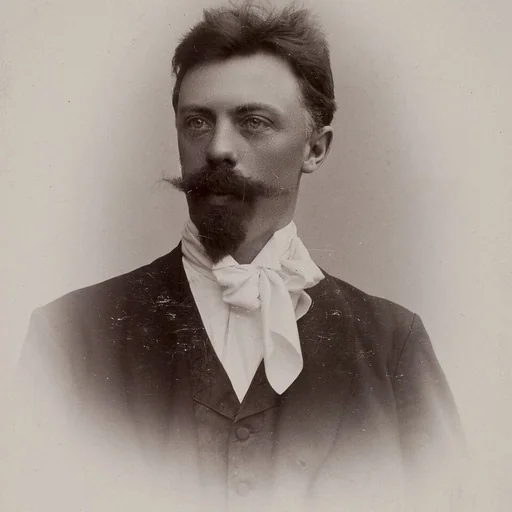
Torsten Gideon Wasastjerna (17 December 1863 – 1 July 1924) was a Finnish painter.

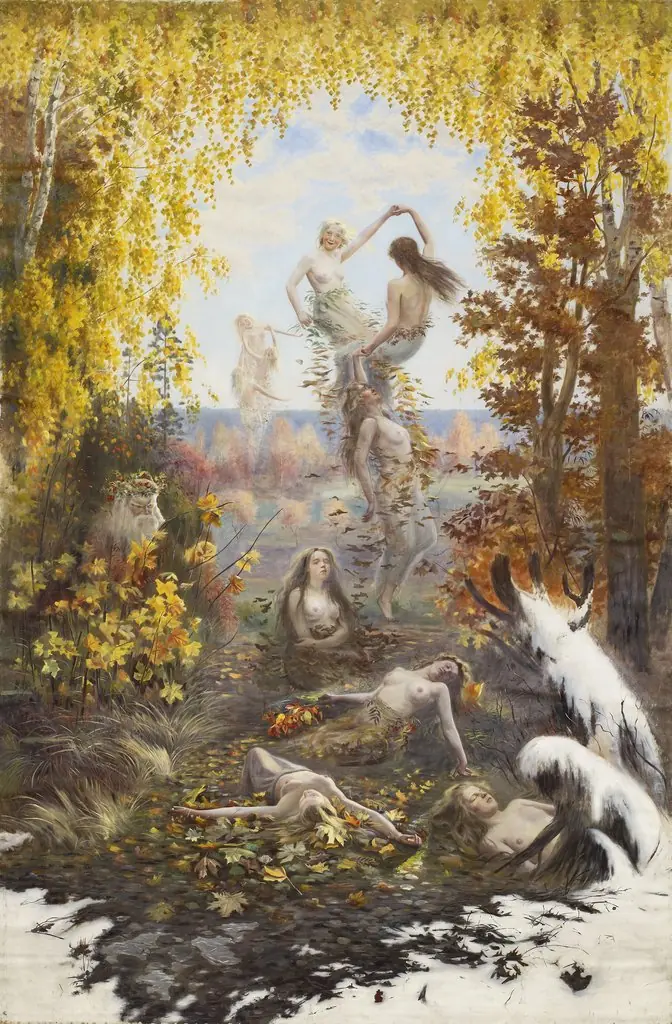 Falling Leaves; Dance of the Falling Leaves
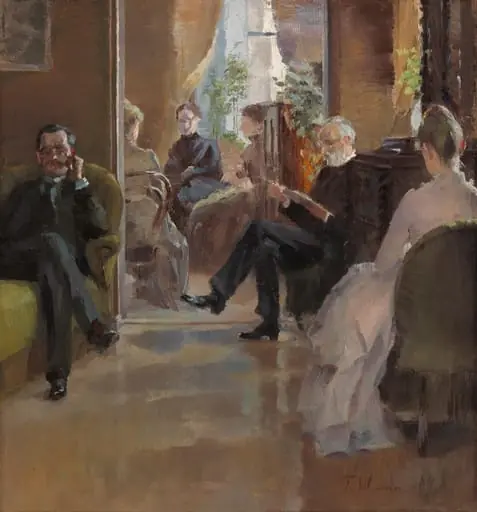 Sisäkuva Rudolfina Wasastjernan kodista, Pohjoisranta 6
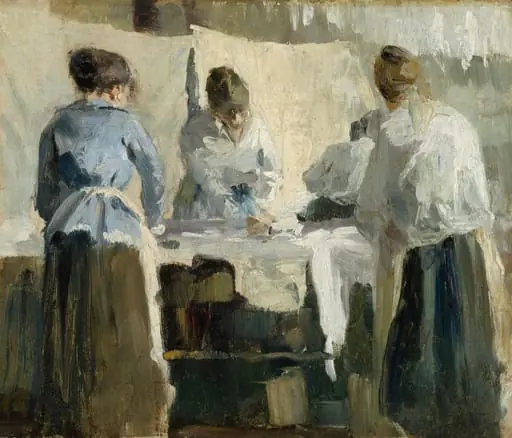 Ranskalaisia silittäjiä
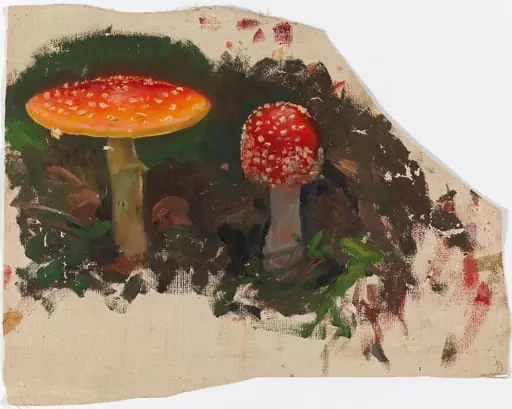 Kaksi kärpässientä, luonnos teokseen Sadun prinsessa
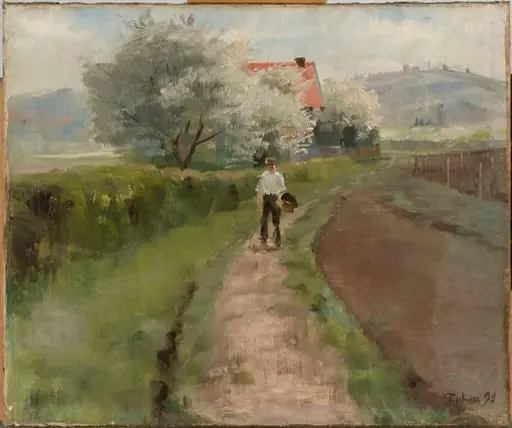 Montmorencysta
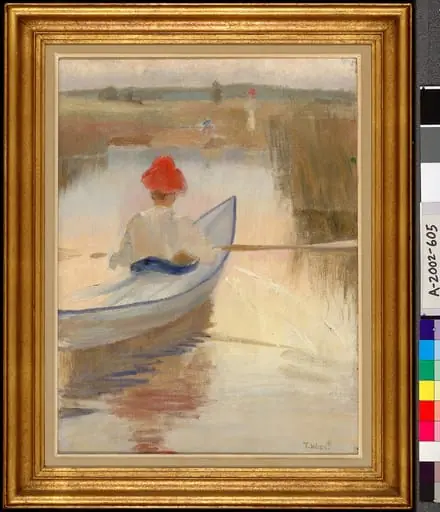 Soutava punahattuinen nainen
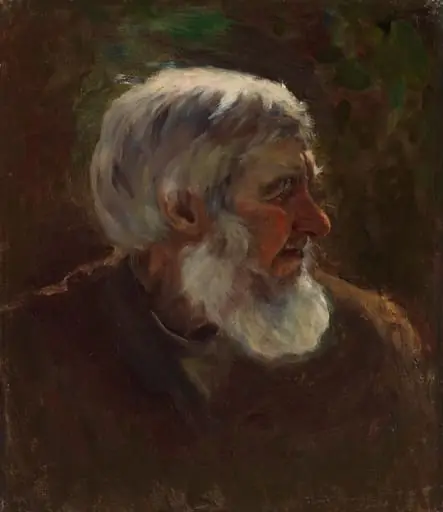 Vanha mies profiilissa, luonnos teokseen Sadun prinsessa
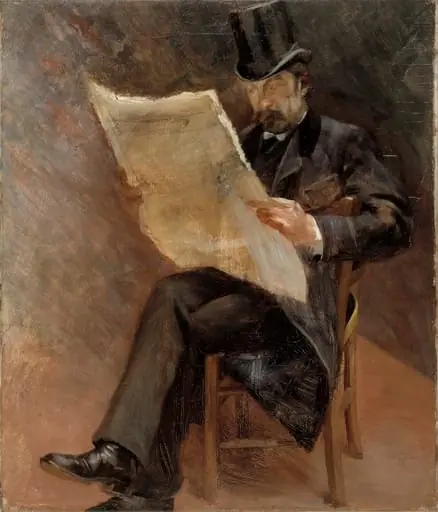 Sanomalehden lukija (Björn Wasastjerna)
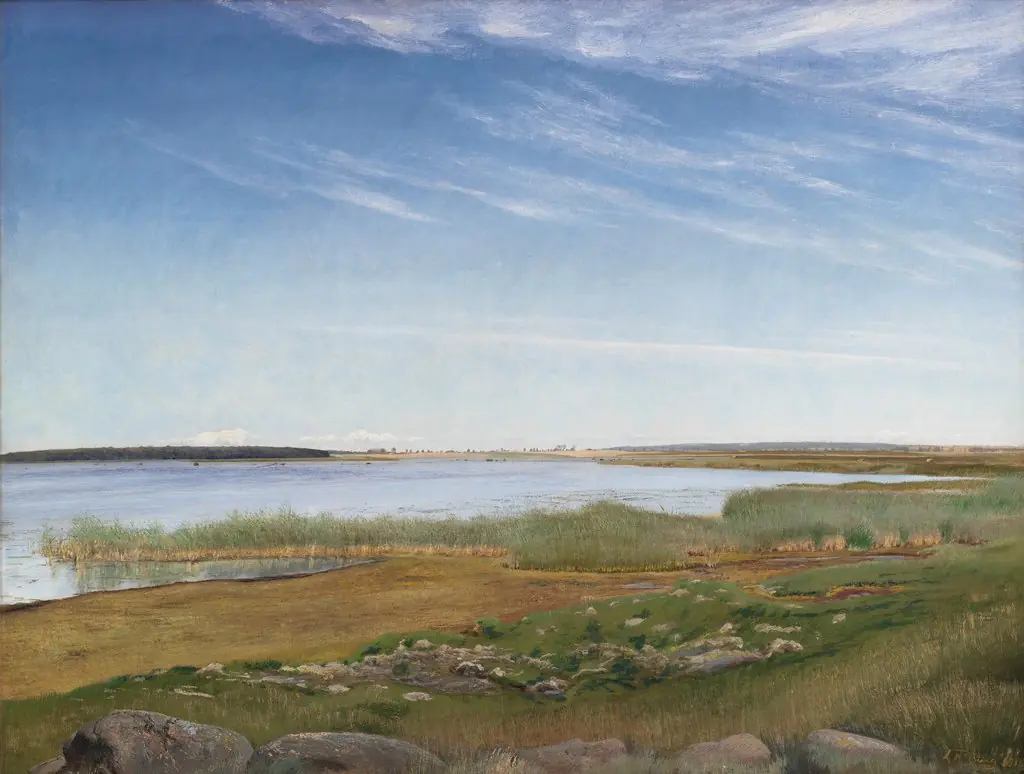 The Fjord near Karrebæksminde, Zealand
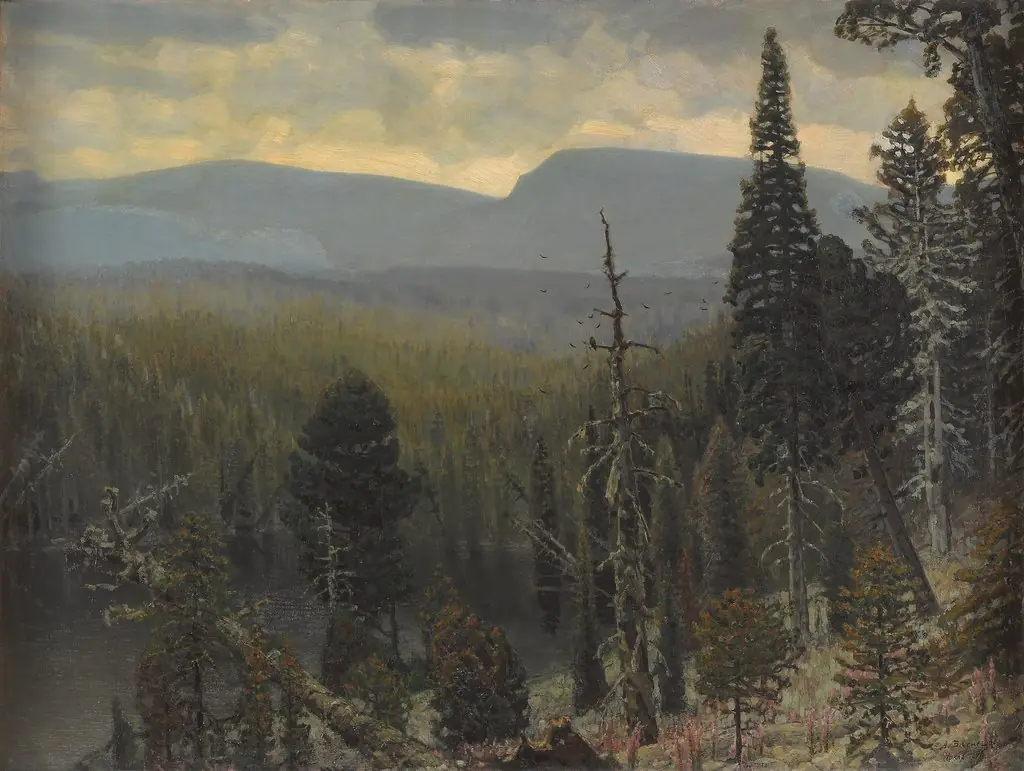 Тайга на Урале. Синяя гора
 Meadow with cowslips, sketch
 The Fjord near Karrebæksminde, Zealand
 Hiekkaranta, Niemenlautta
 Vettä ja rantoja
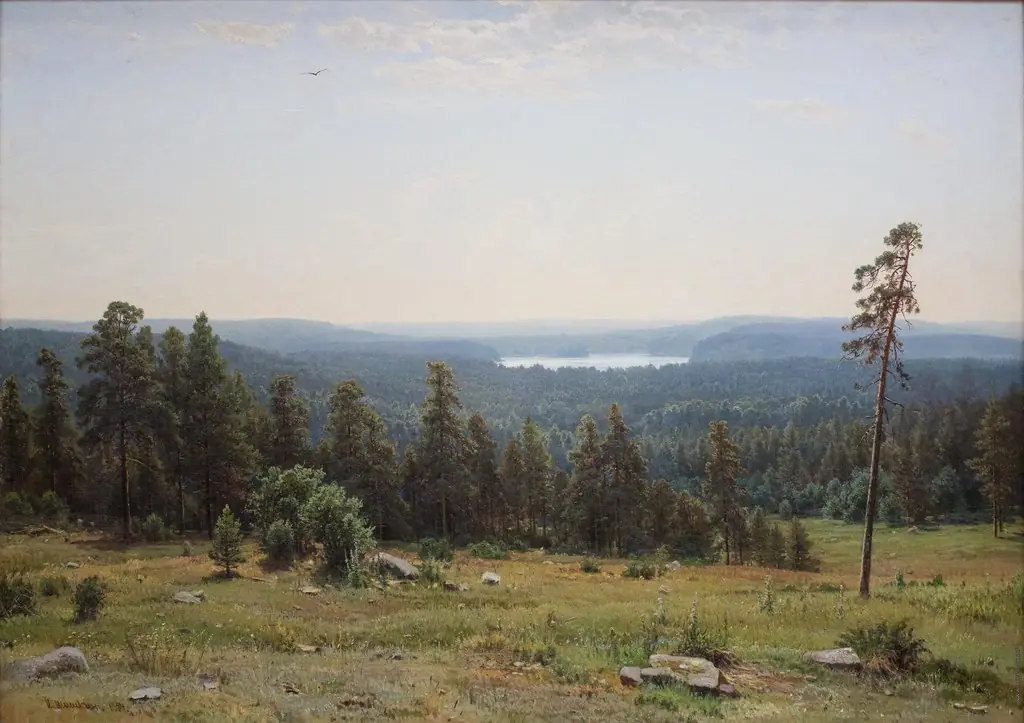 Forest distant views
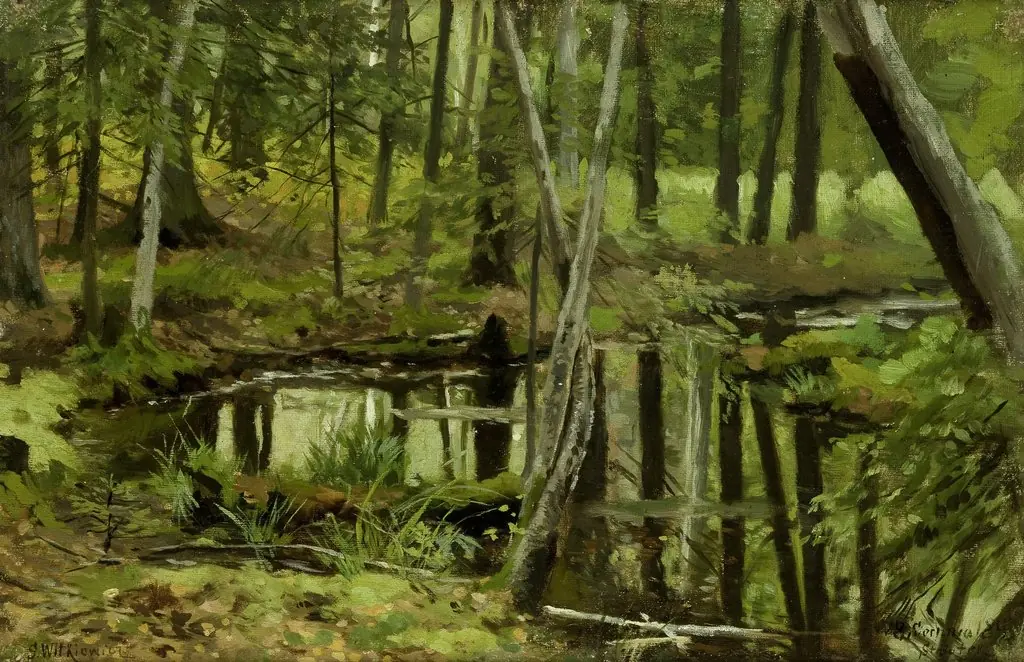 Pond in the Forest
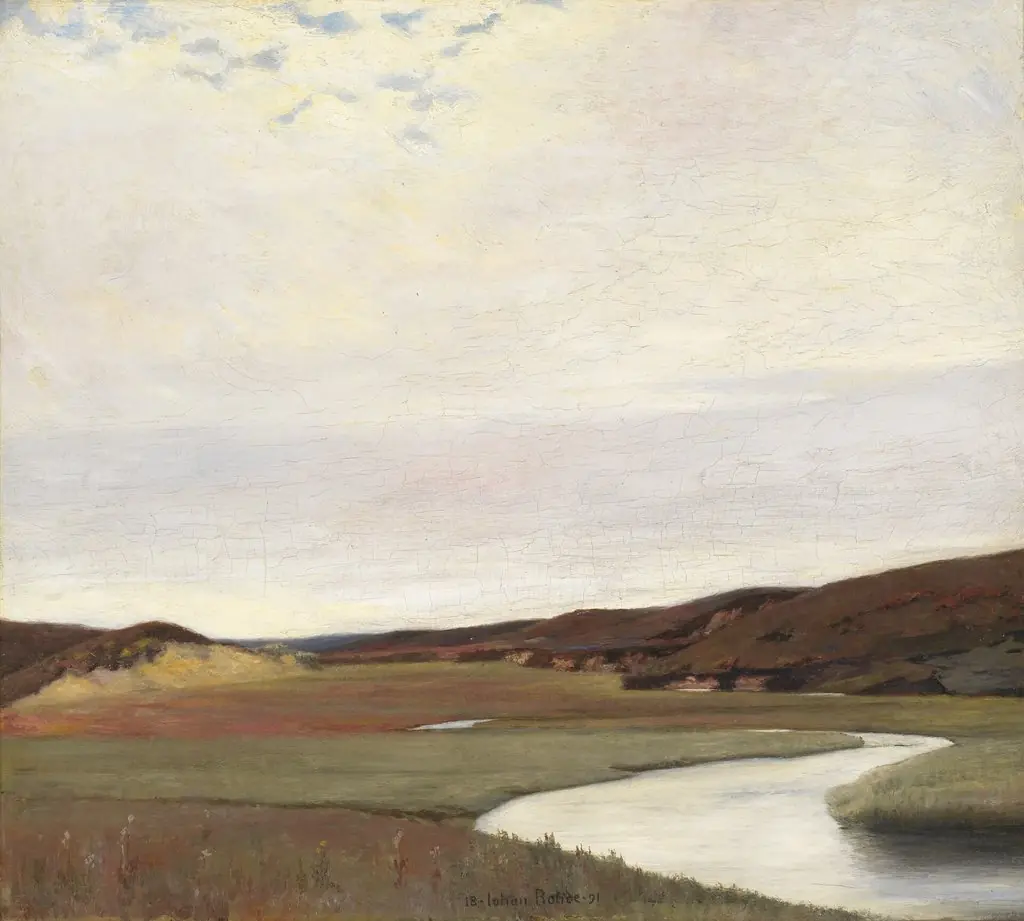 A Summer's Day by the River Karup, Jutland
 A Summer's Day by the River Karup, Jutland
 Lake with Water-Lilies
 Kaislikkoranta