Artwork
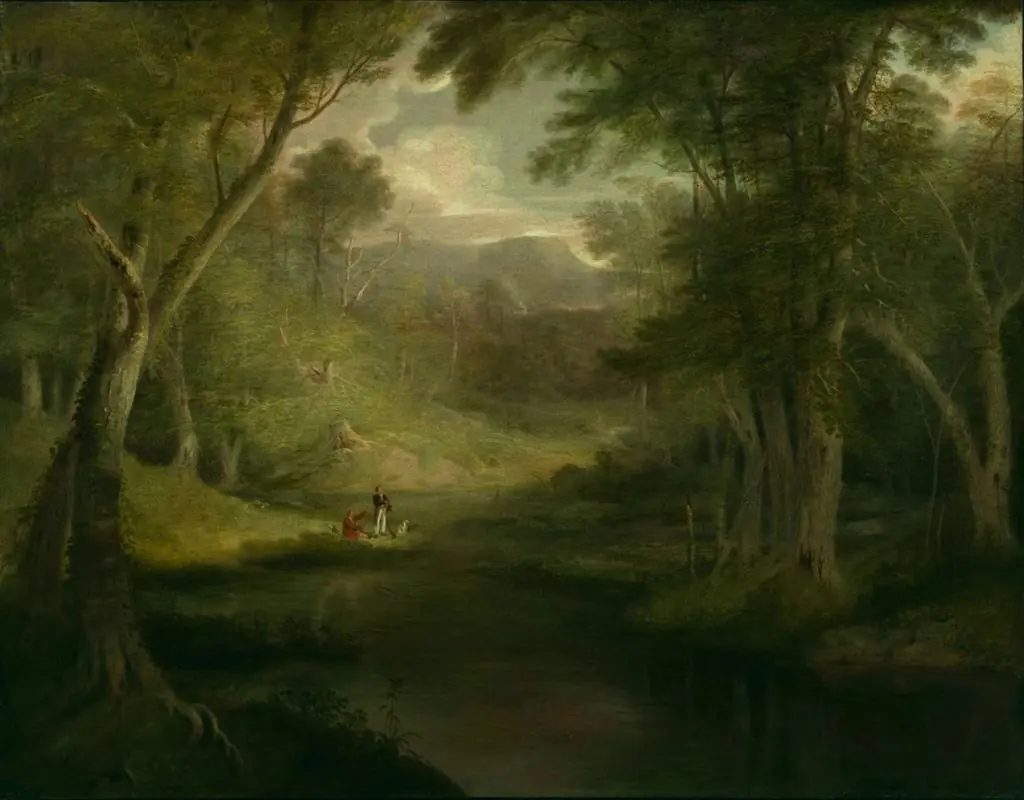
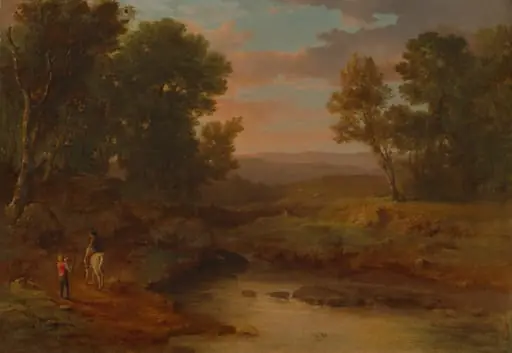
Landscape, American Scenery: Time, Afternoon, with a Southwest Haze
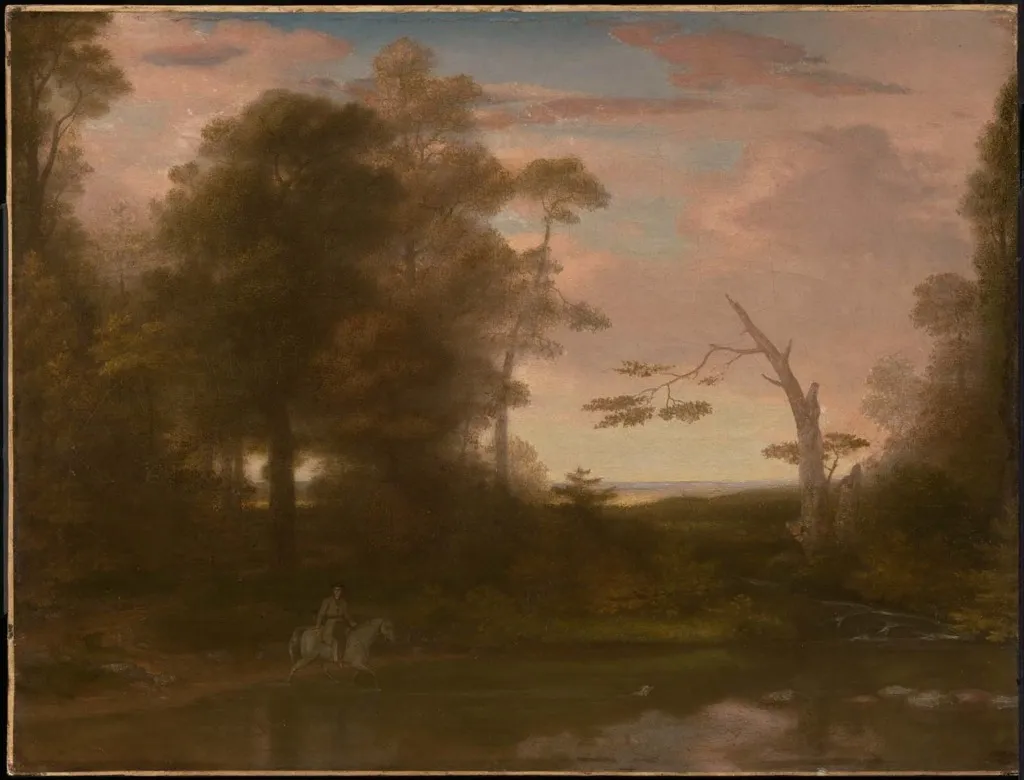
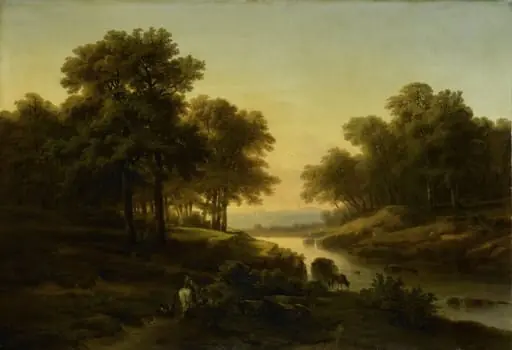
Landscape, American Scenery: Time, Afternoon, with a Southwest Haze is an oil painting by the American Impressionist artist Washington Allston. It dates from 1835 and is held in the collection of the Museum of Fine Arts Boston.
About this work
Overview
Painted in 1835 by Washington Allston, this oil-on-canvas work depicts a quiet woodland scene in the American landscape. It belongs to a series exploring natural time and atmosphere, and is currently held in the collection of the Museum of Fine Arts, Boston. The composition emphasizes solitude and the subtle passage of day, rendered through restrained color and layered shadows.
Subject & Meaning
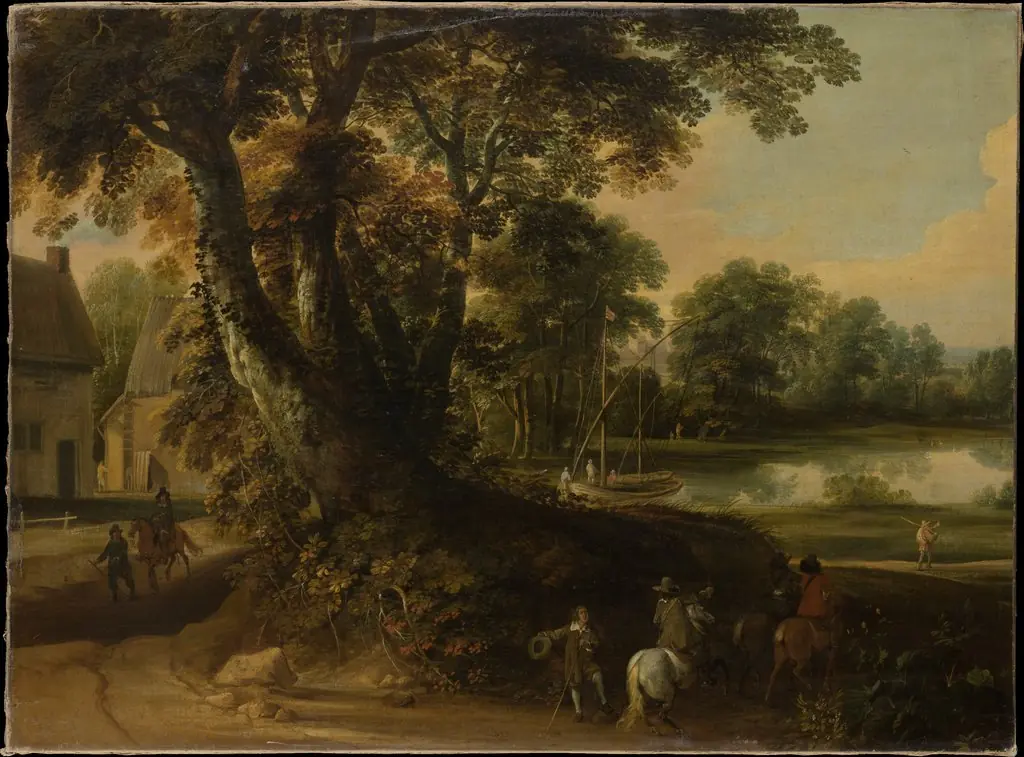
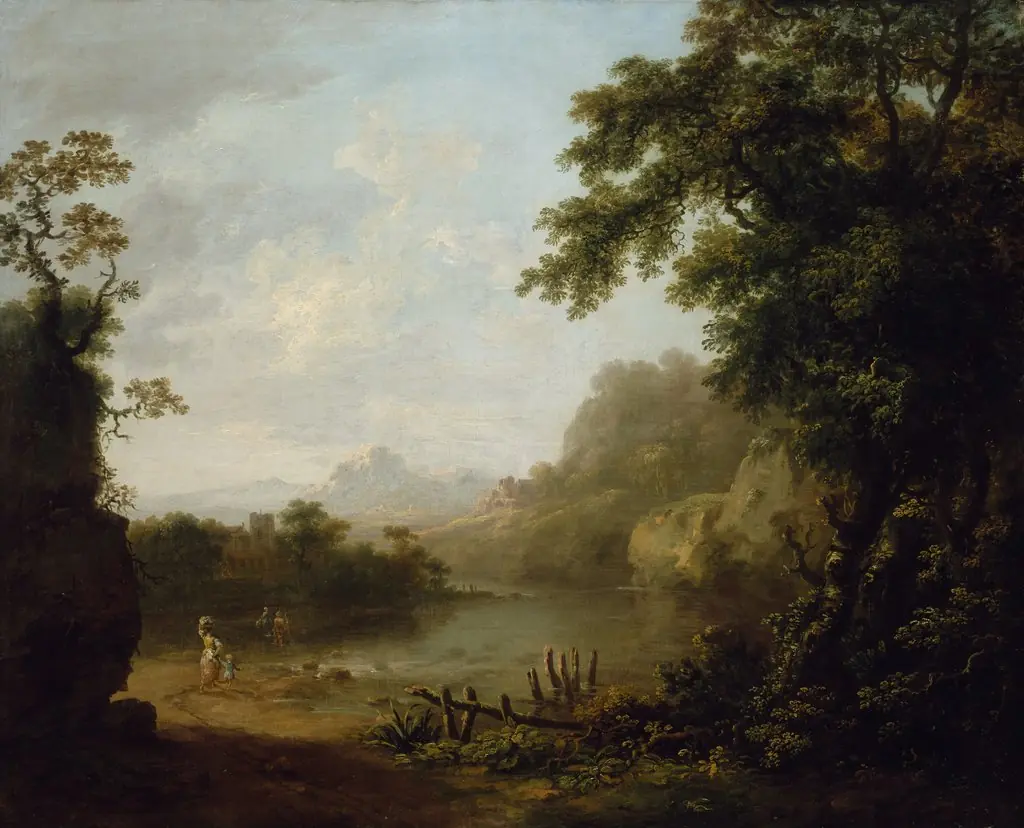
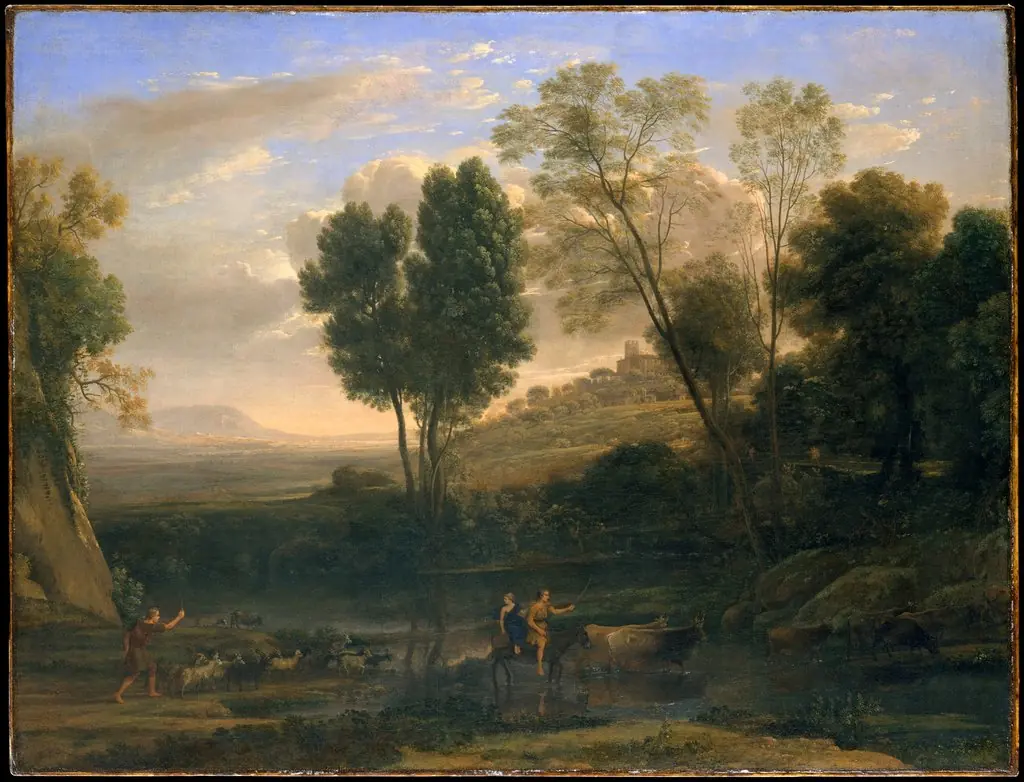
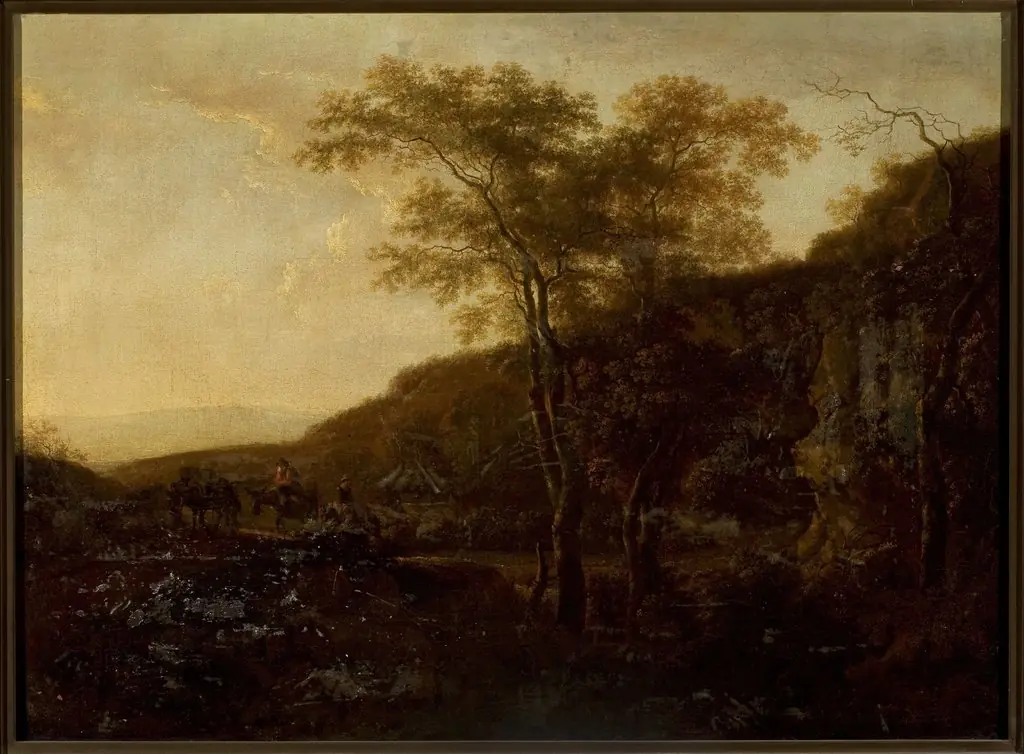
A solitary horseman moves through a dense forest at twilight, his presence diminished by the overwhelming scale of the trees. The figure is not the focus but a quiet witness to the landscape’s stillness. The painting suggests contemplation of time’s quiet march, evoking a mood of serene isolation rather than narrative action or human dominance over nature.
Technique & Style
Allston employs a muted palette of soft pinks, blues, and deep browns to suggest the hazy glow of late afternoon. Chiaroscuro is used subtly, with light filtering weakly through the canopy, casting elongated shadows that deepen the sense of depth. Brushwork is blended and smooth, avoiding sharp detail to preserve the atmosphere of dusk and the haze of the Southwest.
History & Provenance
Created during Allston’s later years, the painting reflects his ongoing interest in poetic landscapes influenced by Romanticism. It entered the Museum of Fine Arts, Boston, in the 19th century as part of a broader acquisition of American art. Its provenance remains unbroken since its creation, with no record of public exhibition beyond institutional holdings.
Context
In the 1830s, American artists began turning from European traditions to explore domestic landscapes as vessels for emotional and spiritual meaning. Allston, influenced by Coleridge and the sublime, sought to convey inner states through nature. This work aligns with early American Romanticism, where wilderness evoked contemplation rather than conquest.
Legacy
Though not widely exhibited today, the painting exemplifies a quiet strand of American landscape art that prioritized mood over spectacle.
Though not widely exhibited today, the painting exemplifies a quiet strand of American landscape art that prioritized mood over spectacle. It anticipates later 19th-century approaches to atmospheric light and solitude, influencing artists who valued introspection in nature. Its restrained tone distinguishes it from more dramatic contemporaries, offering a meditative counterpoint to the era’s grand vistas.
Artist & collection

Artist
American, Georgetown, South Carolina 1779–1843 Cambridgeport, Massachusetts

![A Study from Life [and] Study for Angel Releasing Saint Peter from Prison, by Washington Allston](https://artifactworldgallery.com/img/washington-allston--a-study-from-life-and-study-for-angel-releasing-saint-peter--13db111bb86c178e-w320.webp)