Artwork
Untitled
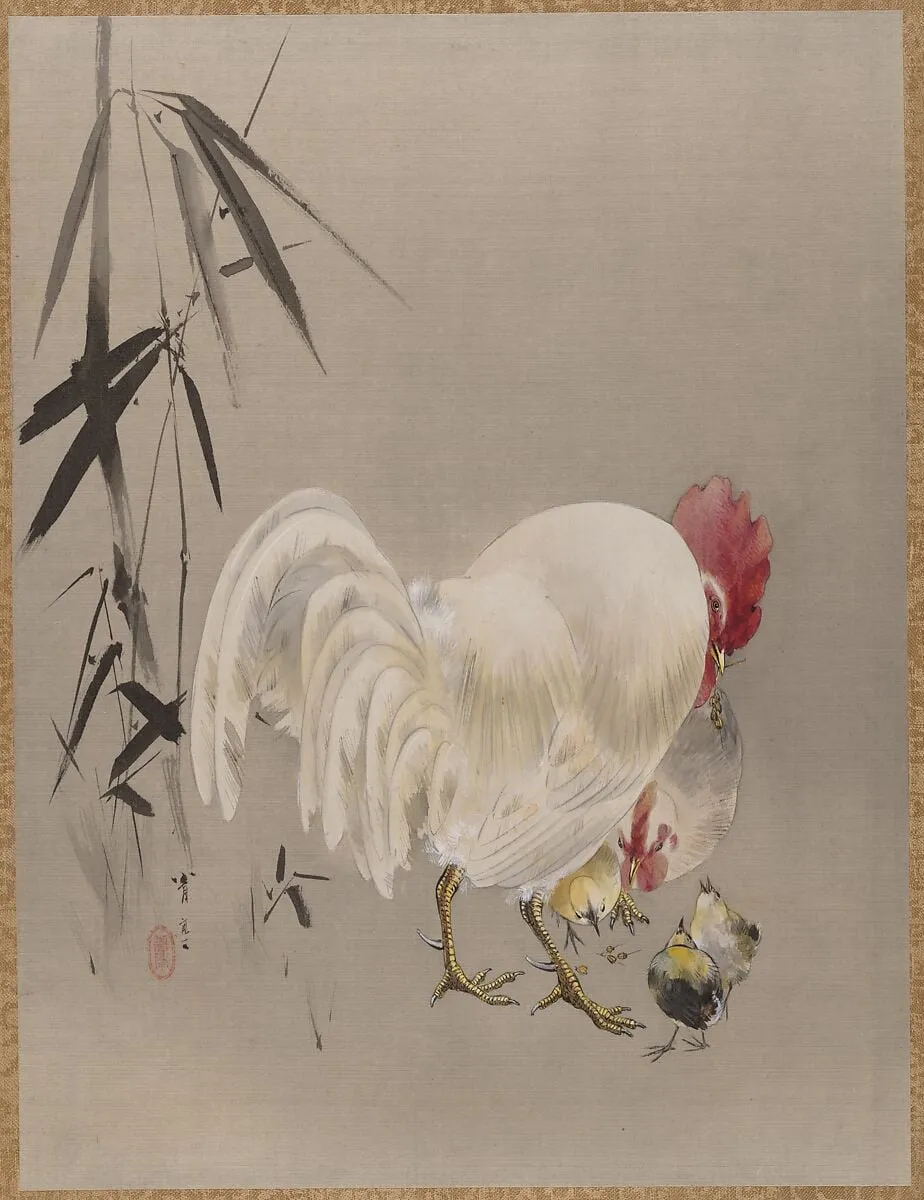
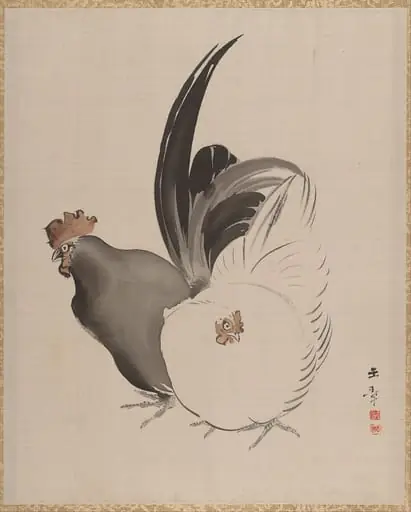
Untitled is an ink painting by the Impressionist artist Watanabe Seitei. It dates from 1887 and is held in the collection of the Metropolitan Museum of Art.
About this work
Overview
Seitei renders the birds with alert postures and ruffled feathers, capturing a moment of sudden attention as if reacting to an unseen sound.
Created in 1887 by Watanabe Seitei, this untitled album leaf depicts a rooster and two hens standing on a patch of earth. Executed in ink and color on silk, the work exemplifies the artist's synthesis of traditional Japanese bird-and-flower painting with emerging Western naturalism. Seitei renders the birds with alert postures and ruffled feathers, capturing a moment of sudden attention as if reacting to an unseen sound. The composition balances delicate, soft ink washes with pale coloration, emphasizing the texture of the plumage against the bare ground. Produced during the Meiji period, a time of significant cultural exchange and modernization in Japan, this piece reflects Seitei's role in bridging classical Nihonga techniques with the observational precision favored by Western audiences. The work stands as a representative example of his mature style, where the vitality of nature is preserved through refined brushwork rather than rigid formalism. As an album leaf, it was likely intended for intimate viewing and collection, showcasing the artist's ability to convey life and movement within a small, portable format.
Subject & Meaning
The piece focuses on three poultry figures—a dominant rooster and two more subdued hens—arranged in a simple, natural setting. By emphasizing the birds’ attentive posture and the texture of their feathers, the work reflects an interest in everyday animal life, offering a modest meditation on rural observation rather than a narrative tableau.
Technique & Style
Seitei employs delicate brushwork characteristic of traditional Japanese album painting, combined with a heightened realism that emerged during the Meiji period’s engagement with Western art. The rooster’s comb is rendered in a vivid red hue, contrasting with the muted, earth‑toned feathers of the hens, while the ink lines convey the ruffled plumage and the texture of the ground.
History & Provenance
Executed in the late nineteenth century, the leaf belongs to a body of work produced as Japan opened to foreign influences. Though specific ownership records are limited, the piece is representative of Seitei’s animal studies from this era, illustrating the artist’s adaptation of new visual approaches within established Japanese formats.
Artist & collection