Artwork
Flowers and Trees of the Four Seasons
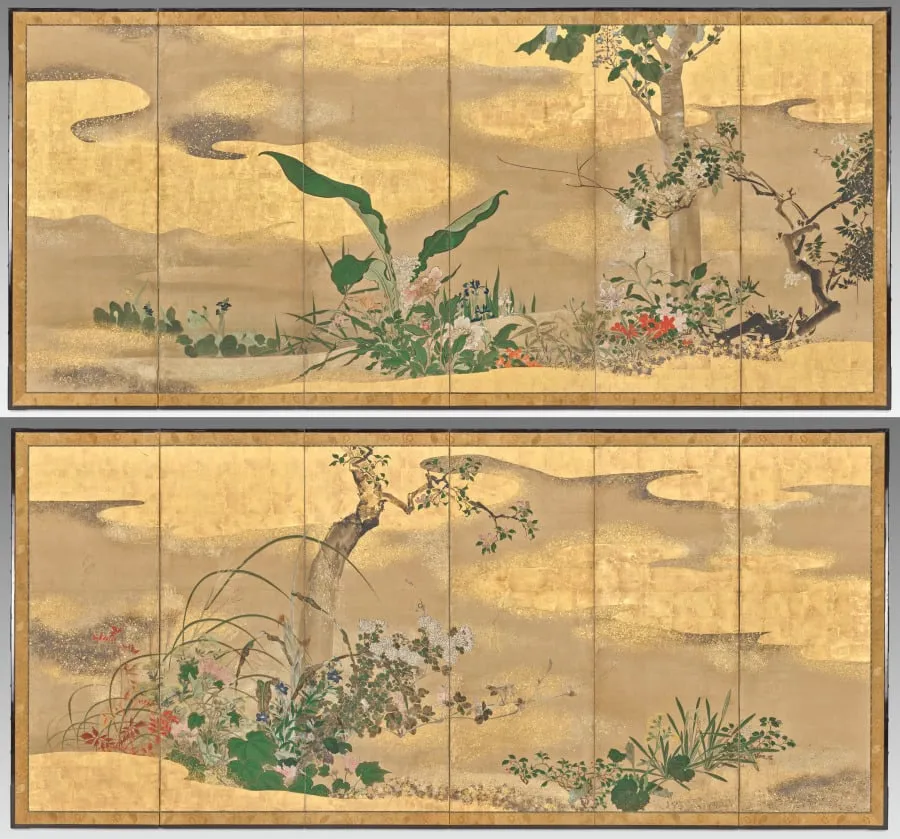
Flowers and Trees of the Four Seasons is an unspecified painting by the Baroque artist Watanabe Shikō. It dates from 1704 and is held in the collection of the Cleveland Museum of Art.
About this work
Overview
Commissioned by the scholar Konoe Iehiro, the work merges precise botanical observation with decorative techniques, including gold and silver leaf backgrounds.
Watanabe Shikō created a four-panel screen depicting seasonal flora in a distinctive synthesis of naturalism and ornamentation. Commissioned by the scholar Konoe Iehiro, the work merges precise botanical observation with decorative techniques, including gold and silver leaf backgrounds. The composition unfolds across panels, each representing a season through characteristic plants, arranged in rhythmic, flowing formations that suggest movement without narrative.
Subject & Meaning
The painting features cherry blossoms, plum branches, and bamboo—each tied to a specific season and traditional Japanese aesthetic associations. These plants are not arranged randomly but follow a cyclical progression, reflecting the passage of time and the harmony between nature and human perception. The selection emphasizes endurance and renewal, rooted in scholarly appreciation rather than purely ornamental intent.
Technique & Style
Shikō employed strong, controlled ink outlines to define each plant form, grounding the imagery in observational accuracy. Over this foundation, he applied subtle layers of gold and silver leaf to create luminous, non-naturalistic backgrounds that enhance the elegance of the branches without overwhelming them. The result is a balance between scientific detail and stylized refinement, characteristic of Kyoto’s refined artistic milieu.
History & Provenance
Commissioned by Konoe Iehiro, a prominent court noble and botanist, the work emerged from a collaborative environment where scholarly inquiry informed artistic practice. It was produced in early 18th-century Kyoto, a center for cultural innovation. The screen later entered the collection of The Cleveland Museum of Art, where it remains as a key example of Edo-period decorative painting.
Context
In early 18th-century Kyoto, artists increasingly engaged with natural sciences, influenced by Confucian and proto-Enlightenment ideals. Shikō’s approach reflected this trend, distinguishing his work from purely decorative traditions. His integration of botanical precision with aristocratic aesthetics resonated within elite circles, contributing to a broader shift in how nature was visually interpreted in Japanese art.
Legacy
Shikō’s fusion of empirical observation with decorative gold-ground composition influenced a generation of Kyoto painters who sought to elevate natural subjects beyond mere decoration. His method became a reference point for artists balancing scientific accuracy with aesthetic elegance, leaving a measurable imprint on the evolution of screen painting in the Edo period.
Artist & collection
Artist
Watanabe Shikō or Motooki (渡辺 始興; 1683 - 5 September 1755) was a Japanese painter of the Rinpa school. Also known by his common name Kyūma, his other art names included Shōken (松軒) and Soshin (素信).

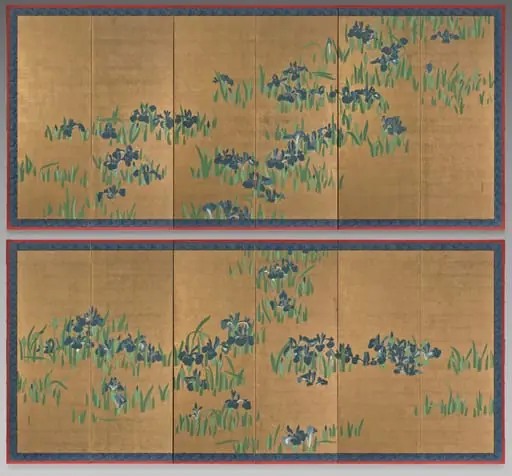
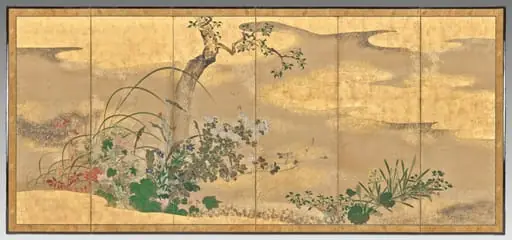
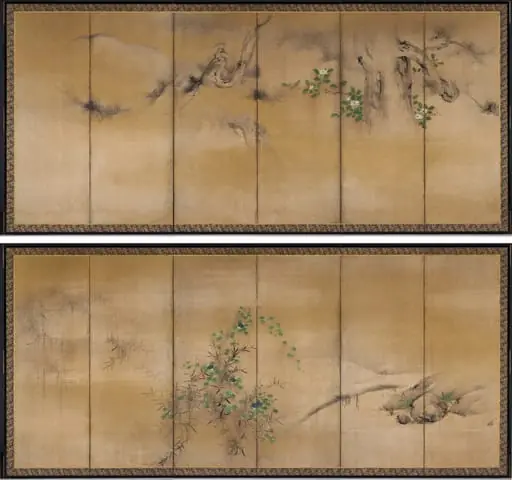 Winter and Summer Flowers
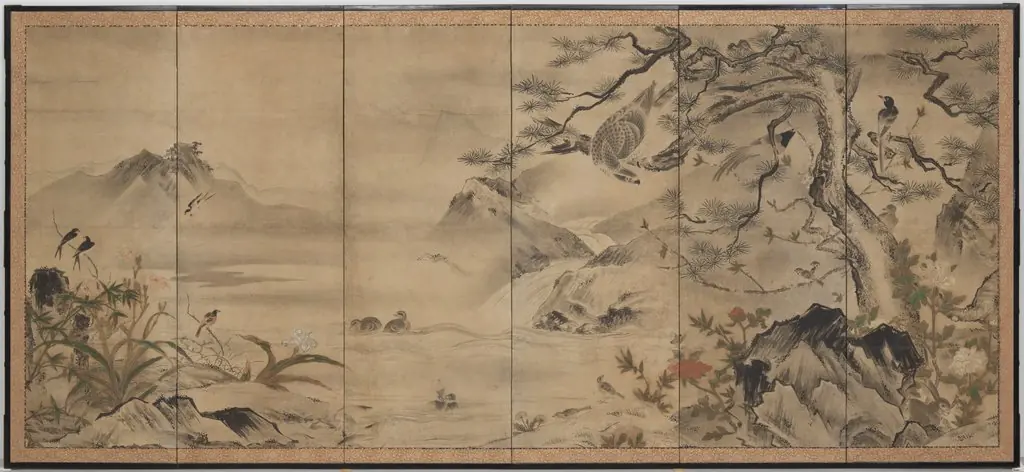 Flowers and Birds
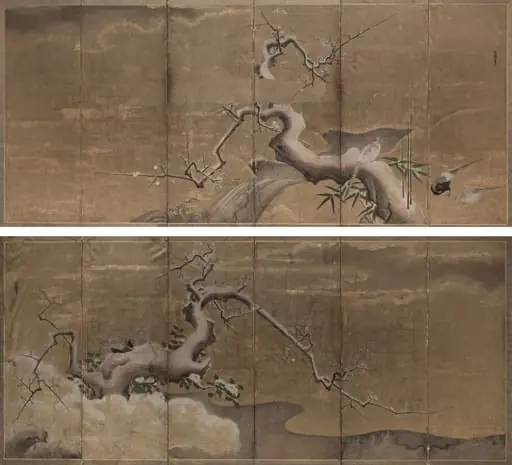 Winter Scene with Plum Trees and Pheasants
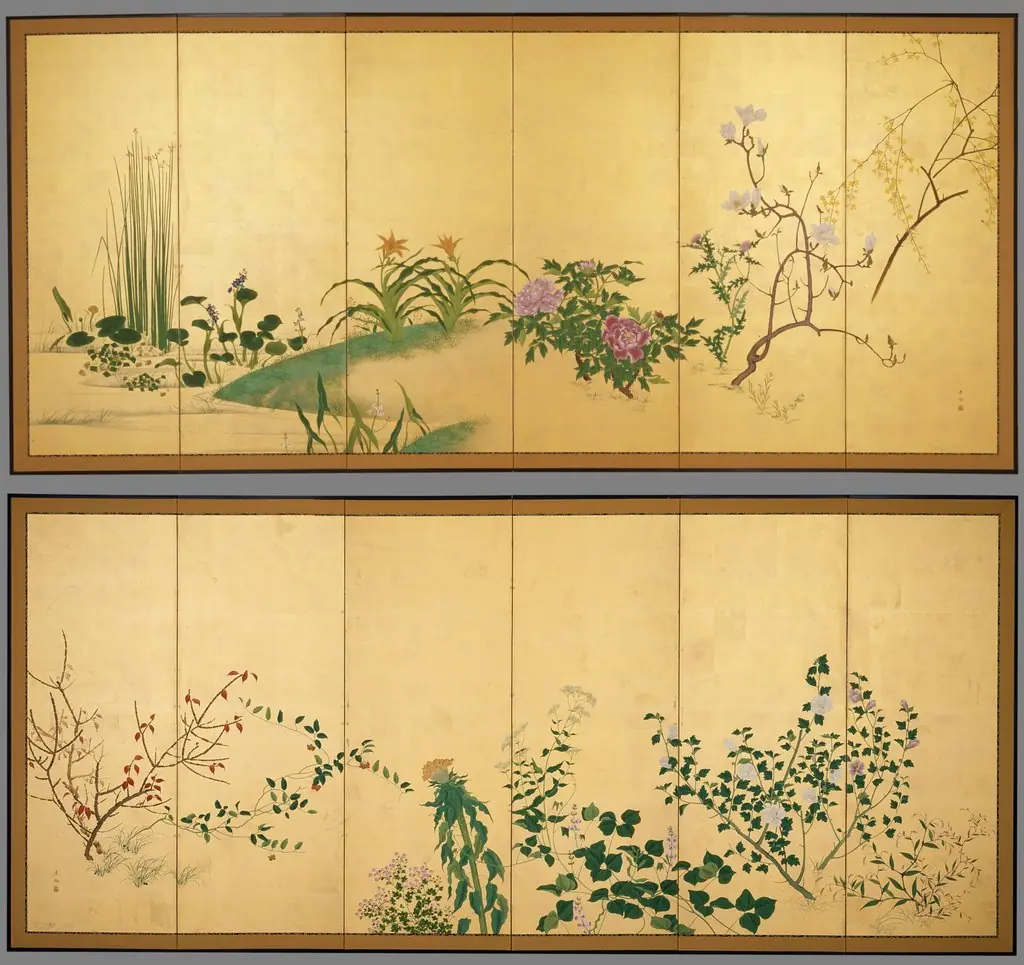 Flowers and Plants of the Four Seasons
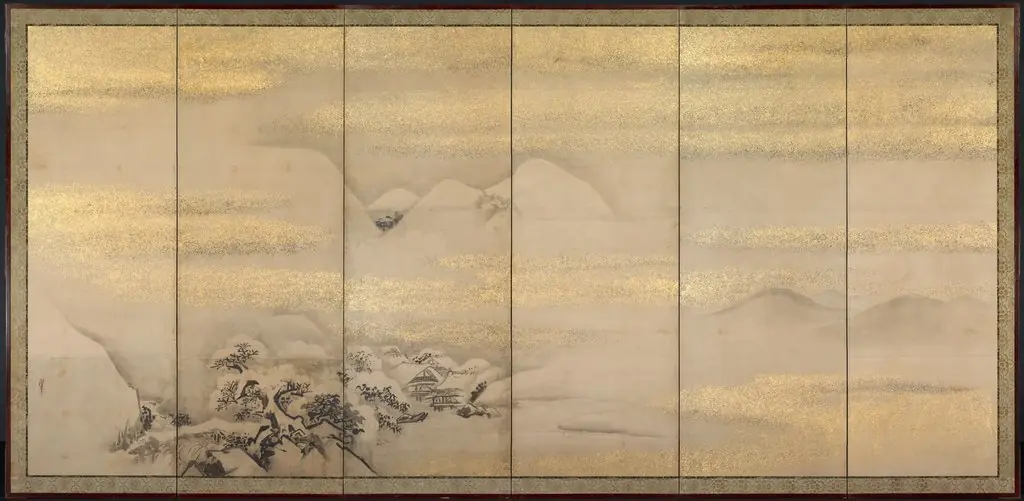 Summer and Winter Landscapes (one of a pair)
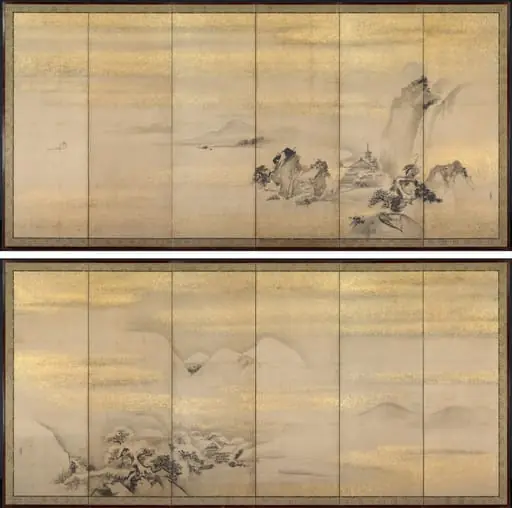 Summer and Winter Landscapes
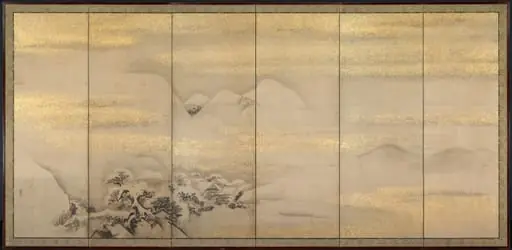 Summer and Winter Landscapes (one of a pair)
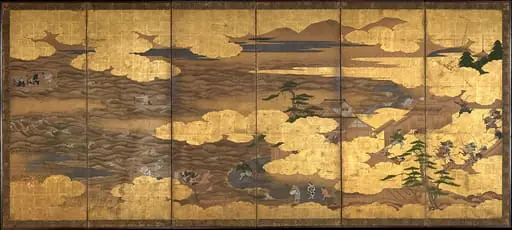 新曲図屏風|“Takebun,” from the Musical Drama “The New Piece” (“Shinkyoku”)