Artwork
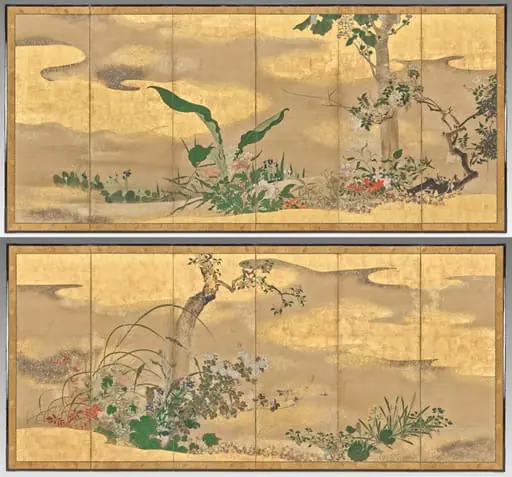
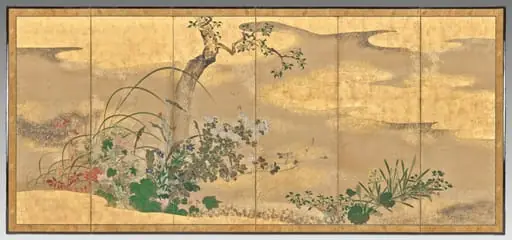
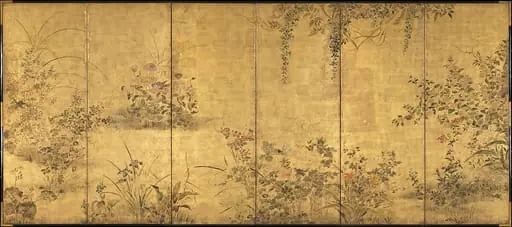
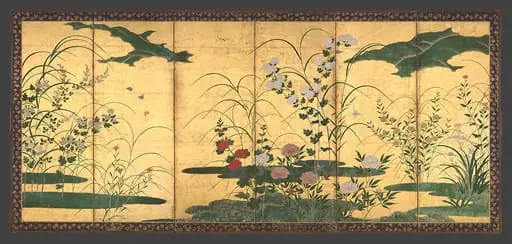
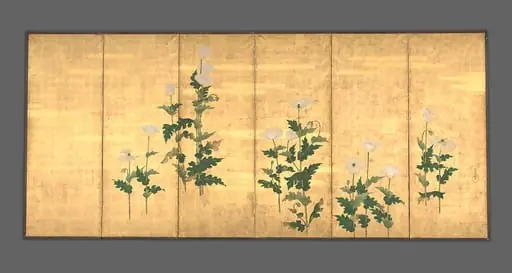
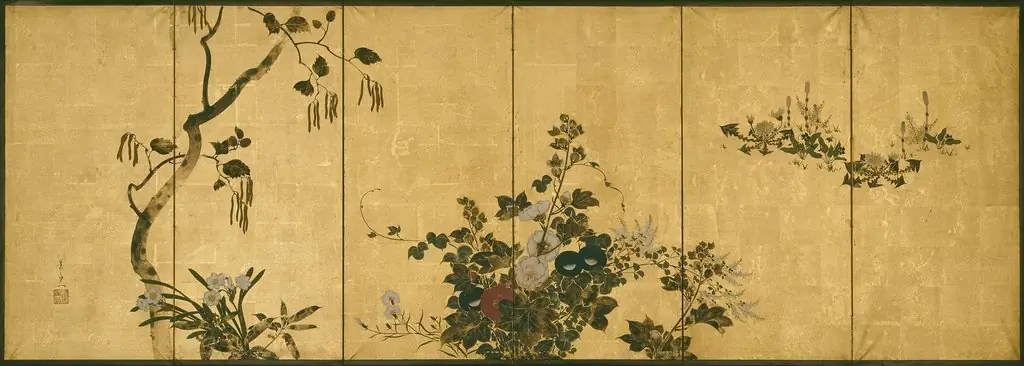
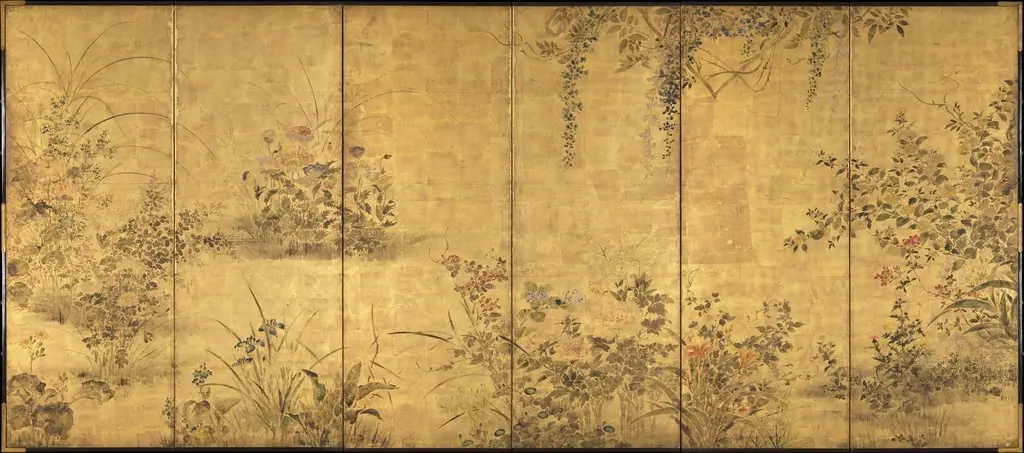
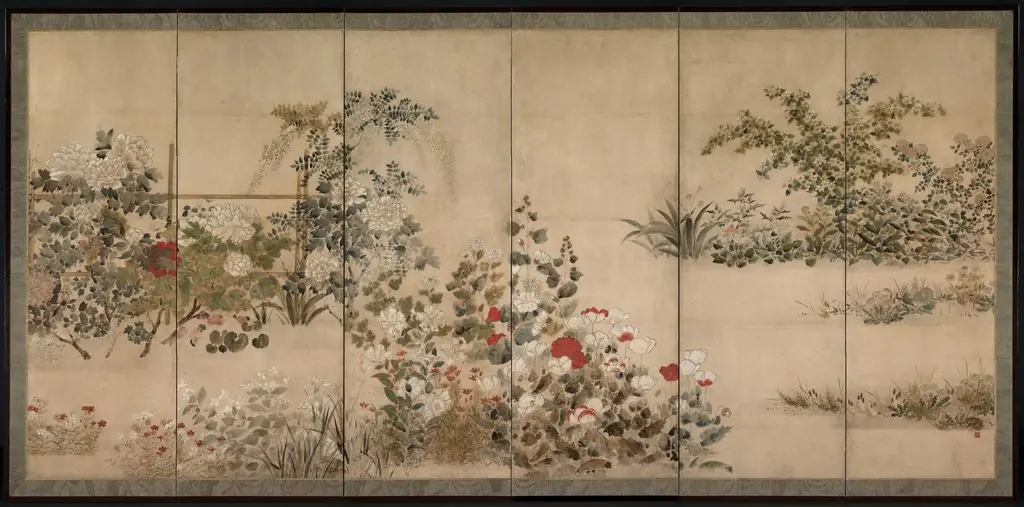
Flowers and Trees of the Four Seasons (right screen)
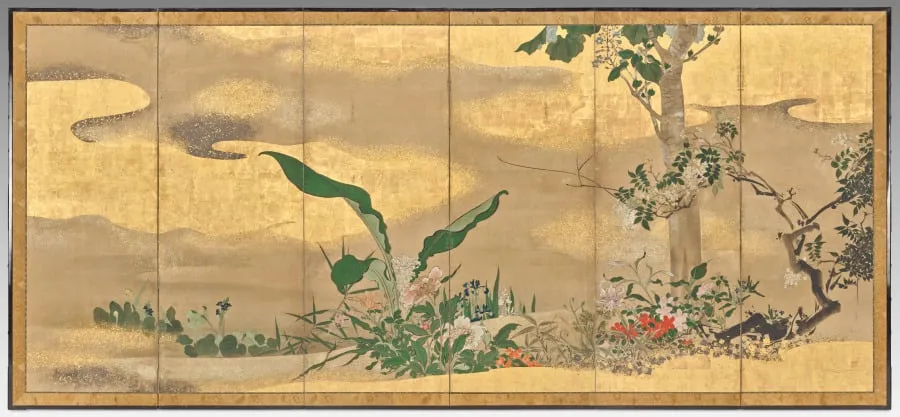
Flowers and Trees of the Four Seasons (right screen) is an unspecified painting by the Baroque artist Watanabe Shikō. It dates from 1704 and is held in the collection of the Cleveland Museum of Art.
About this work
Watanabe Shikō painted these plants so carefully that scholars once used his screens to identify real species.
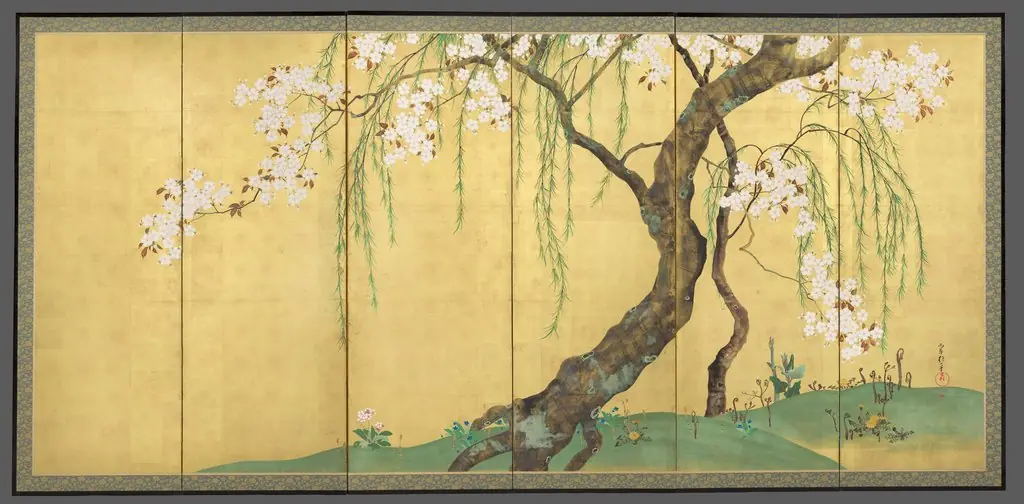
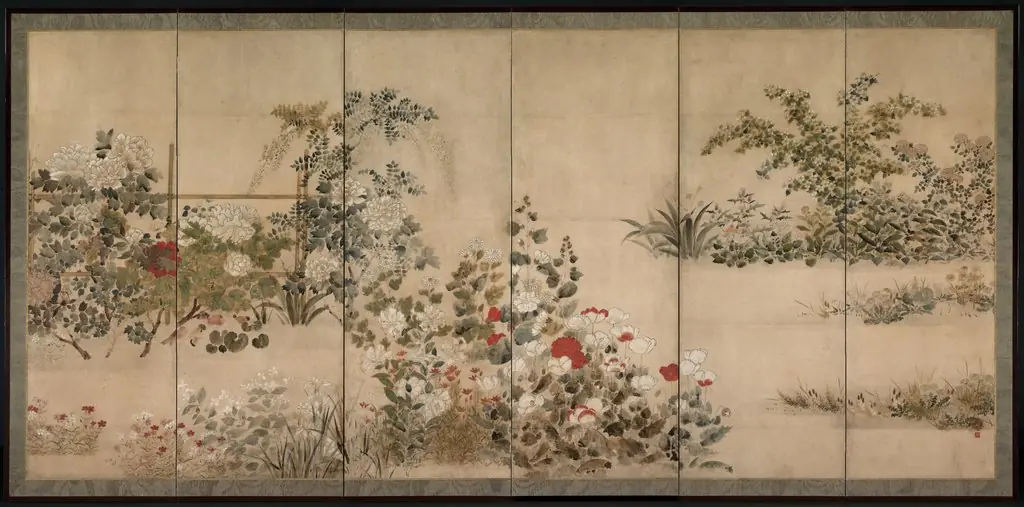
You see a tall folding screen covered in gold leaf, with bright flowers and trees from every season—cherries, pines, maples, and plums—all outlined in black ink.
Watanabe Shikō painted these plants so carefully that scholars once used his screens to identify real species. Yet he also added silver and gold to make the scene feel like a dream. His patron, a nobleman, wanted both science and beauty in the same picture.
To see how other Kyoto artists mixed nature and decoration, look up *japan, edo period (1615–1868)*.
Overview
Watanabe Shikō’s folding screen, titled *Flowers and Trees of the Four Seasons*, presents a vertical panorama of seasonal flora rendered on a gold‑leafed surface. Cherry blossoms, pine needles, maple leaves and plum buds are arranged across the panel, each delineated with precise black ink lines. The work exemplifies the artist’s blend of natural observation and decorative embellishment, characteristic of late‑Edo Kyoto.
Subject & Meaning
The composition gathers representative plants from each of Japan’s four seasons, offering a visual calendar of the natural cycle. By juxtaposing blossoms, evergreens, autumnal foliage and winter fruit, the screen conveys both the transience and continuity of the landscape, reflecting a cultural appreciation for seasonal change.
Technique & Style
Shikō employed meticulous brushwork to render botanical details with a level of accuracy that later scholars used for species identification. Strong ink outlines define each element, while applied gold and silver leaf introduce a luminous, almost ethereal quality. This synthesis of scientific observation and ornamental surface treatment marked a distinctive approach among Kyoto painters of the period.
History & Provenance
The screen was commissioned by the court noble Konoe Iehiro, whose patronage encouraged the integration of scholarly precision with aesthetic refinement. Produced in the mid‑Edo era, the piece circulated among Kyoto’s artistic circles, influencing contemporaries who adopted similar methods of combining realism with decorative motifs.
Context
During the Edo period, a growing interest in natural sciences intersected with traditional Japanese art. Artists in Kyoto increasingly explored realistic depictions of flora and fauna, while still adhering to decorative conventions of screen painting. Shikō’s work embodies this dual pursuit, situating it within broader trends of scientific curiosity and visual opulence.
Artist & collection
Artist
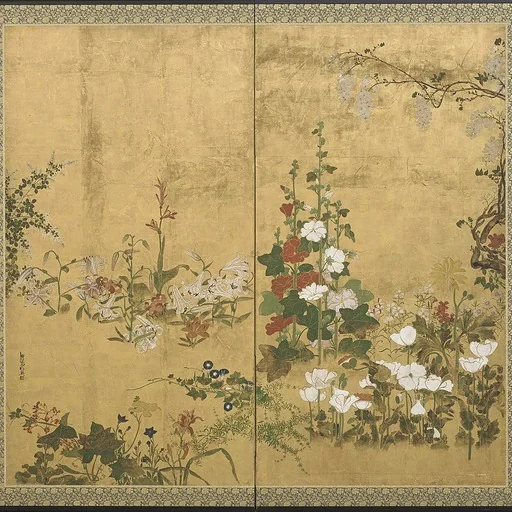
Watanabe Shikō or Motooki (渡辺 始興; 1683 - 5 September 1755) was a Japanese painter of the Rinpa school. Also known by his common name Kyūma, his other art names included Shōken (松軒) and Soshin (素信).