Artwork
Nonington Mill
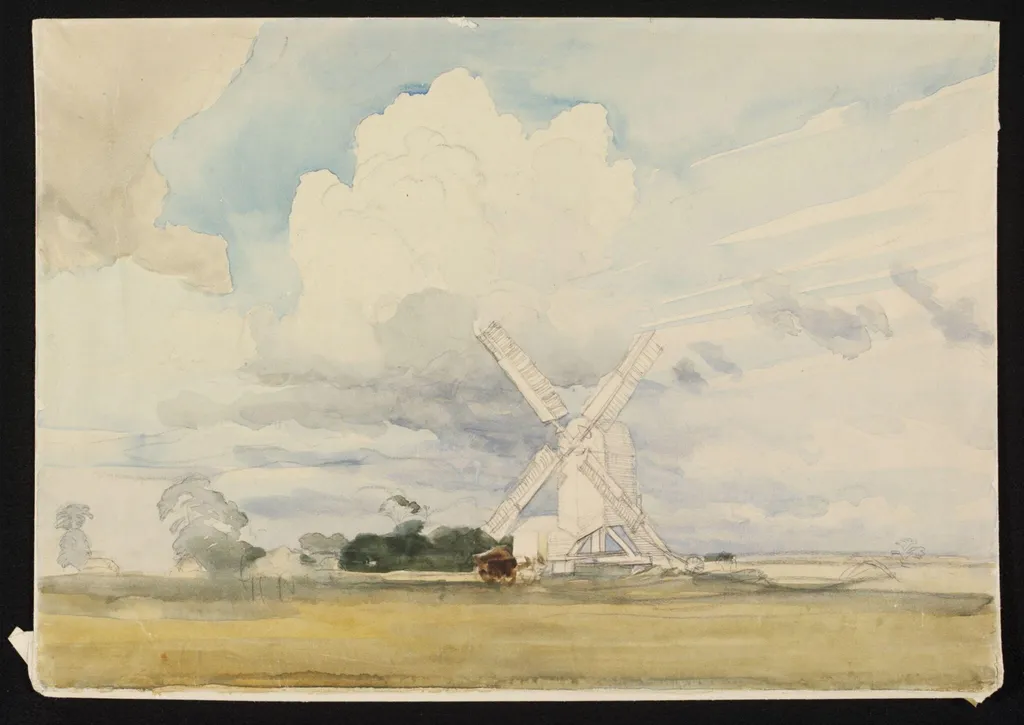
Nonington Mill is a watercolor work on paper by Waterfield. It dates from 1942 and is held in the collection of the Victoria and Albert Museum.
About this work
Overview
Created in 1942, this watercolour by Waterfield captures Nonington Mill in Kent, rendered with delicate washes and a restrained palette. It was produced as part of the Recording Britain project, a government-backed effort to visually archive the nation’s rural landscapes during the Second World War. The work reflects a quiet vigilance, preserving scenes deemed vulnerable to wartime disruption.
Subject & Meaning
The painting centers on a solitary windmill, its wooden sails angled as if caught mid-turn, standing against an open field.
The painting centers on a solitary windmill, its wooden sails angled as if caught mid-turn, standing against an open field. The structure, weathered yet solid, symbolizes enduring rural life. The surrounding landscape—softly graded greens and yellows, scattered trees, and a luminous sky—suggests tranquility, contrasting with the uncertainty of the era. The mill becomes a quiet emblem of continuity.
Technique & Style
Waterfield employed transparent watercolour washes to achieve a light, airy quality, avoiding heavy detail in favor of atmospheric suggestion. The sky is rendered with loose, fluid strokes, while the mill’s timber frame is defined by subtle tonal shifts. Minimalist brushwork and restrained color enhance the sense of stillness, aligning with the project’s emphasis on understated observation over dramatic effect.
History & Provenance
The painting was commissioned by the Recording Britain project, initiated in 1939 under Sir Kenneth Clark’s leadership. It entered the Victoria and Albert Museum’s collection alongside over 1,500 other works by 97 artists, all intended as a visual archive of Britain’s threatened countryside. The work remains part of this enduring collection, preserved as a historical record rather than a commercial artwork.
Context
During the war, fears of aerial bombardment and occupation spurred efforts to document Britain’s architectural and natural heritage. Recording Britain sought to capture places at risk of destruction or change, from windmills to village greens. Waterfield’s depiction of Nonington Mill reflects this mission: a quiet, unassuming scene, chosen not for grandeur but for its representation of ordinary, vulnerable English life.
Legacy
The Recording Britain collection endures as a vital historical resource, offering insight into wartime Britain’s cultural priorities. Waterfield’s watercolour, like others in the series, contributes to a collective memory of rural England before industrial and wartime transformations accelerated. It remains accessible in the V&A, where its modest scale and quiet detail invite contemplation rather than spectacle.
Artist & collection
Artist
This artist left a small group of watercolours around Kent from the early 1940s, all towering brick chimneys and spinning sails against low, soft skies.

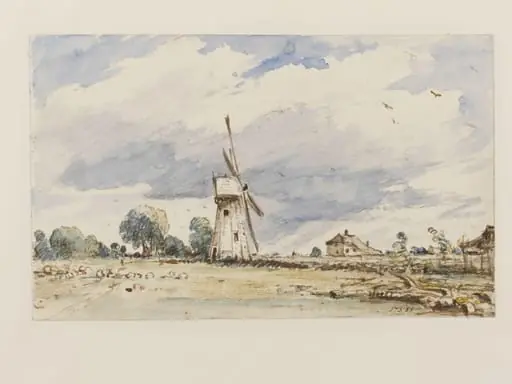 A windmill and a flock of sheep
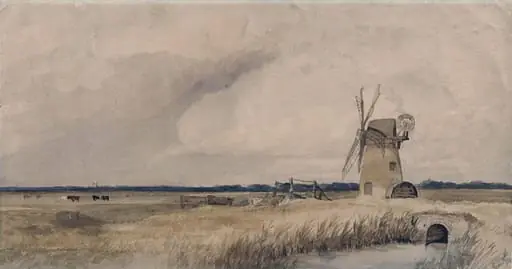 Landscape with windmill, stream and cattle
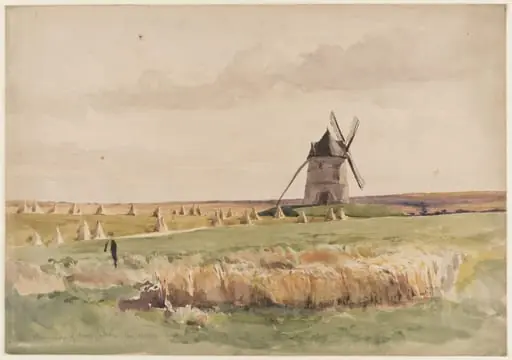 Untitled
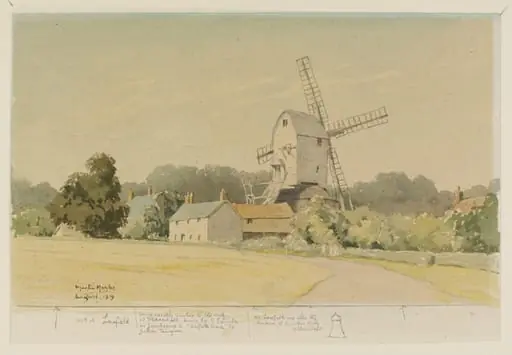 Laxfield Mill
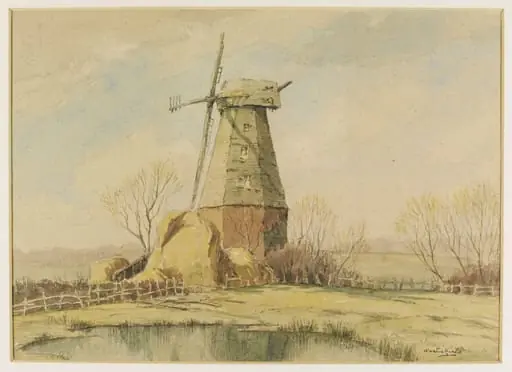 The Mill, Biddenden
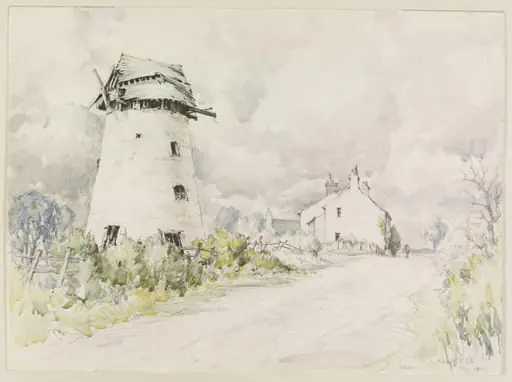 Windmill at Staining, near Blackpool
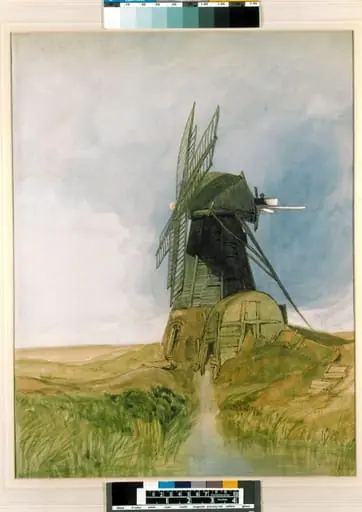 The Draining Mill
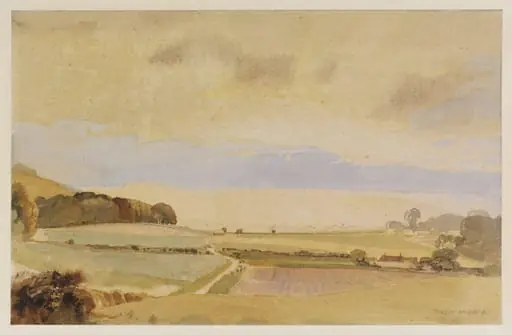 The Southdown, Underhill Road; Wolstonbury, showing Danny Farm
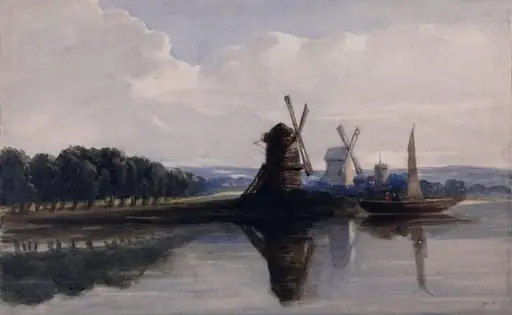 Windmills by a River
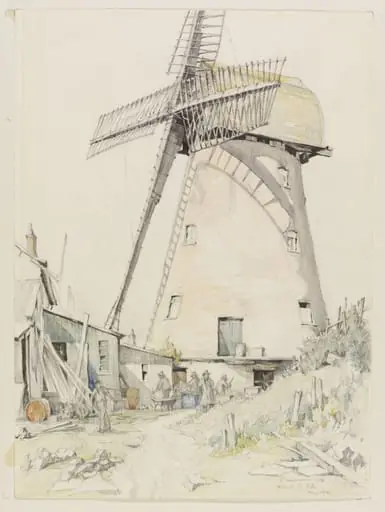 Windmill at Little Marton, near Blackpool
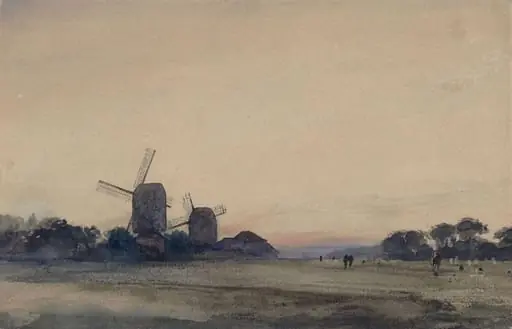 Windmill, Blackheath
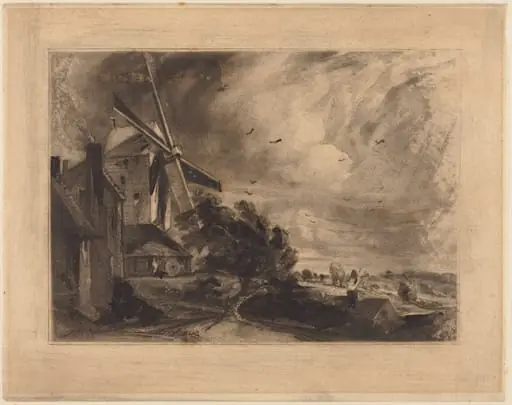 A Mill