Artwork
Market day, Valognes
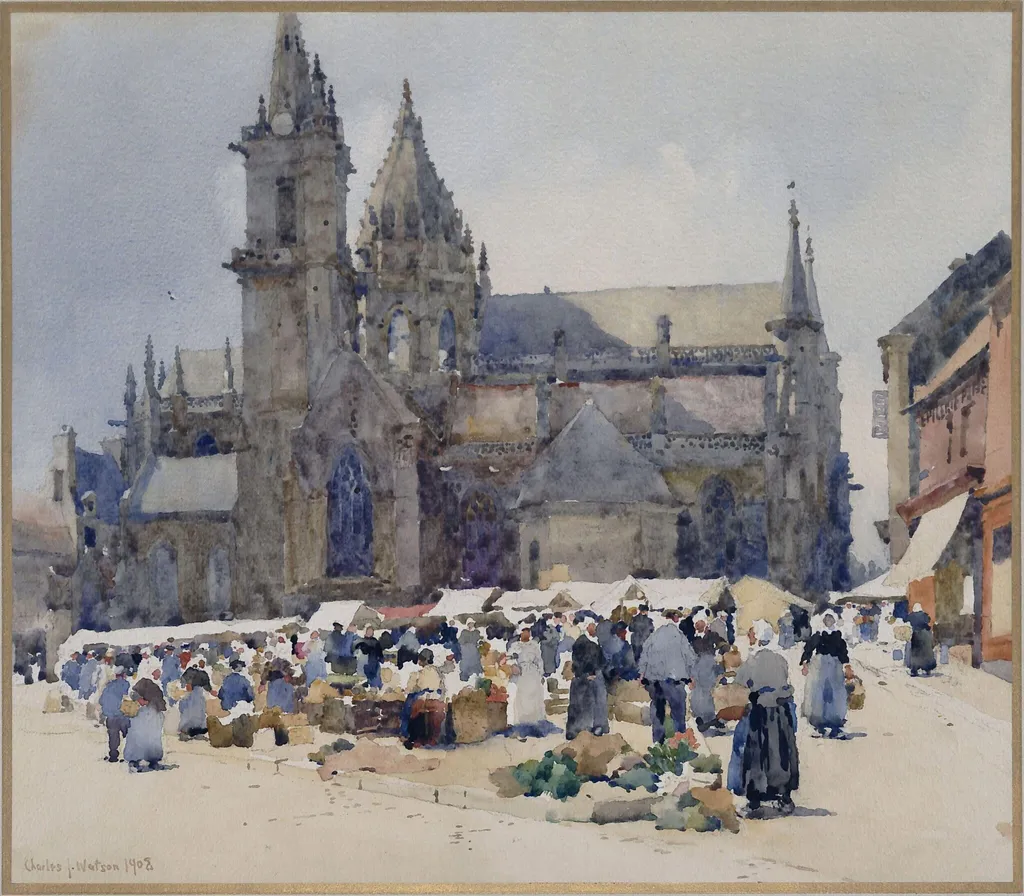
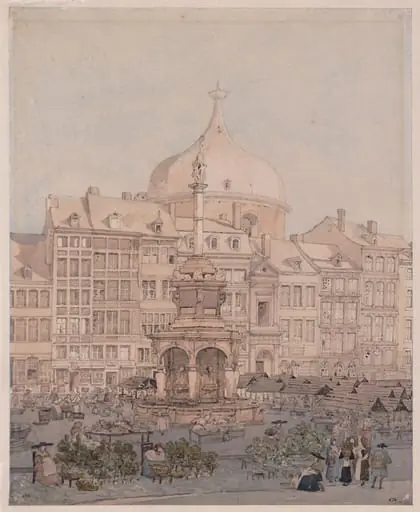
Market day, Valognes is a watercolor work on paper by the Post-Impressionist artist Charles John Watson. It dates from 1908 and is held in the collection of the Victoria and Albert Museum. This watercolour captures a bustling market scene in Valognes, France, rendered in loose, fluid brushwork.
About this work
Overview
The composition centers on ordinary people engaged in daily commerce, set against the imposing presence of a medieval church.
This watercolour captures a bustling market scene in Valognes, France, rendered in loose, fluid brushwork. The composition centers on ordinary people engaged in daily commerce, set against the imposing presence of a medieval church. The artist favors atmosphere over precision, using diluted pigments to suggest movement and texture without fine detail, creating a sense of transient, lived-in activity.
Subject & Meaning
The scene portrays the rhythm of rural market life in late 19th-century Normandy. Figures in traditional coats and hats move among stalls piled with goods, some carrying purchases, others pausing to converse. The church, a permanent fixture in the background, anchors the image in place and time, suggesting the interweaving of commerce and community within a longstanding social framework.
Technique & Style
The artist employs a rapid, wet-on-wet watercolour technique, allowing pigments to bleed and blend naturally. Forms are suggested rather than defined—buildings emerge from layered washes, crowds are indicated by smudged contours. This approach prioritizes immediacy and mood, rejecting polished finish in favor of a spontaneous, almost sketchlike quality that echoes the fleeting nature of the market.
History & Provenance
The work originates from the artist’s travels in Normandy during the 1880s, a period when watercolour was increasingly used for plein-air observation. It entered the Victoria and Albert Museum’s collection through a later donation, part of a broader group of works documenting regional French life. No record of private ownership prior to institutional acquisition survives.
Context
During the late 1800s, French artists turned to everyday scenes as alternatives to academic history painting. Valognes, a modest town in Normandy, offered a quiet counterpoint to Parisian urbanism. This watercolour aligns with a broader trend of documenting provincial life with sincerity, avoiding idealization in favor of unembellished observation.
Legacy
The work contributes to a modest but significant body of watercolours that record regional French markets before industrialization transformed rural economies. Though not widely exhibited, it remains a representative example of how 19th-century artists used watercolour to capture the quiet dignity of ordinary moments, influencing later documentary approaches in British and French art.
Artist & collection
Artist
Charles John Watson painted quiet French towns, their cobbled squares and stone façades softened by rain or sun.

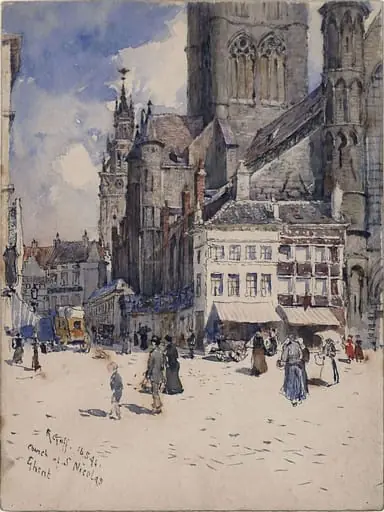 The Church of St. Nicholas, Ghent
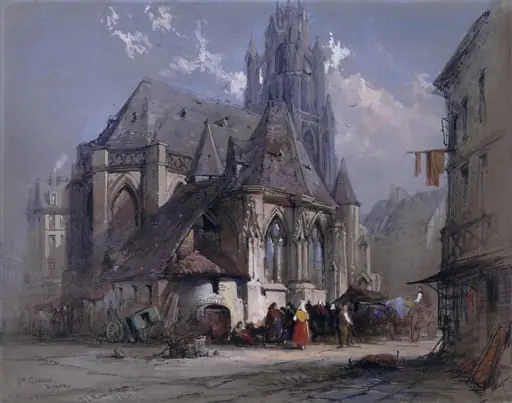 St. Godard, Rouen
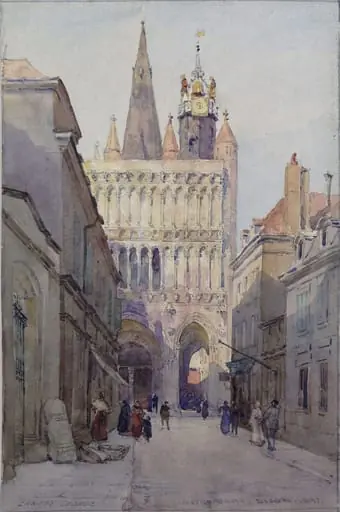 Notre Dame, Dijon
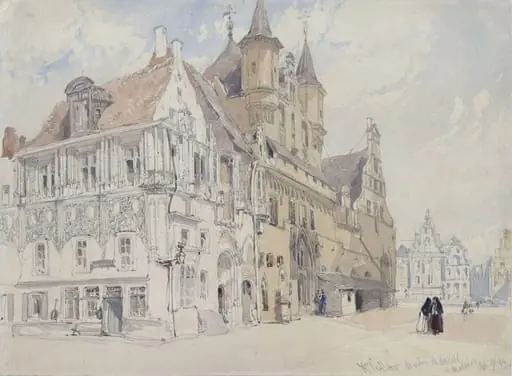 Malines, Maison du Conseil
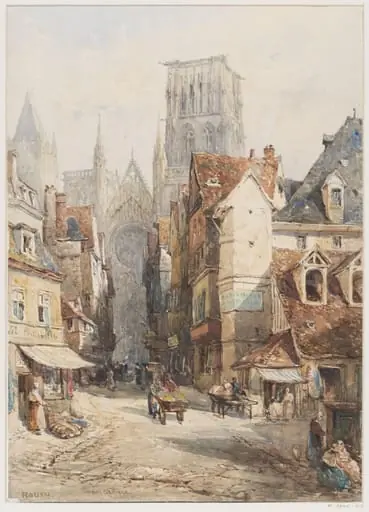 Rouen. The South Porch and Towers of the Cathedral, seen from Rue du Bac
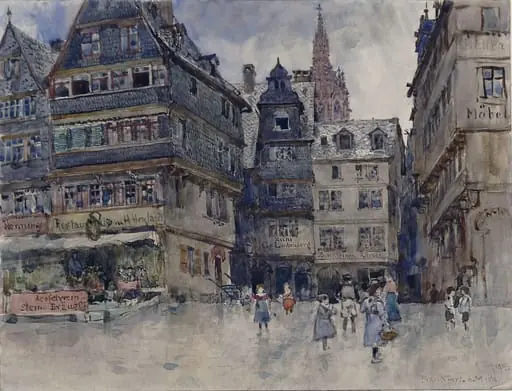 Frankfort-on-the-Main
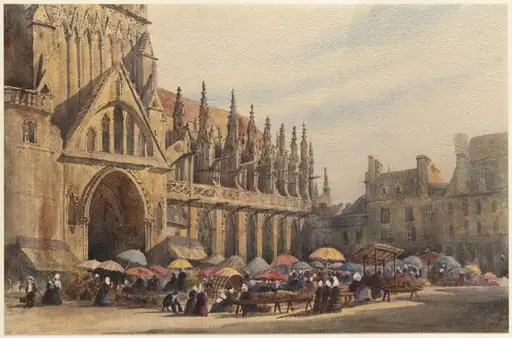 Dieppe Cathedral
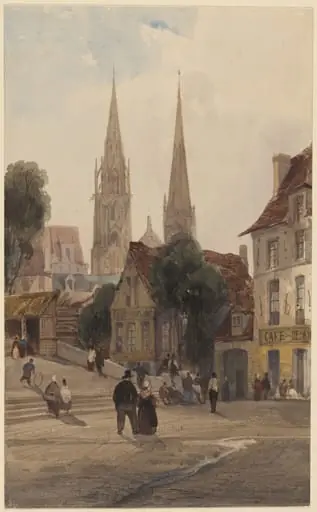 A Street in Chartres
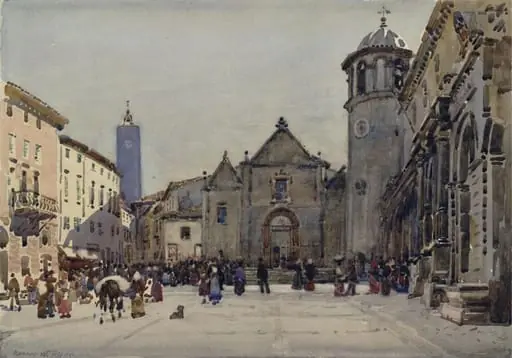 Piazza del Popolo, Orvieto
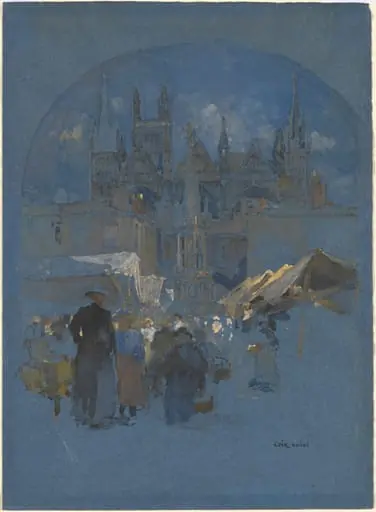 A Market Square before a Cathedral
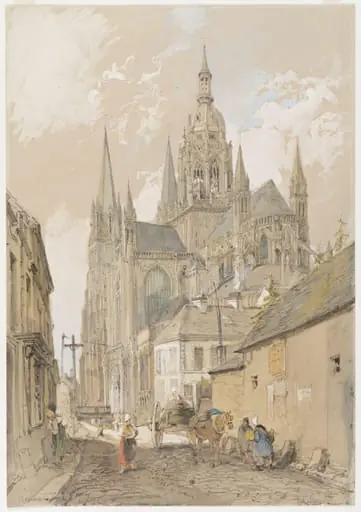 Bayeux Cathedral: View from the South-East
 The Market Place, Liège