Artwork
A Street in Chartres
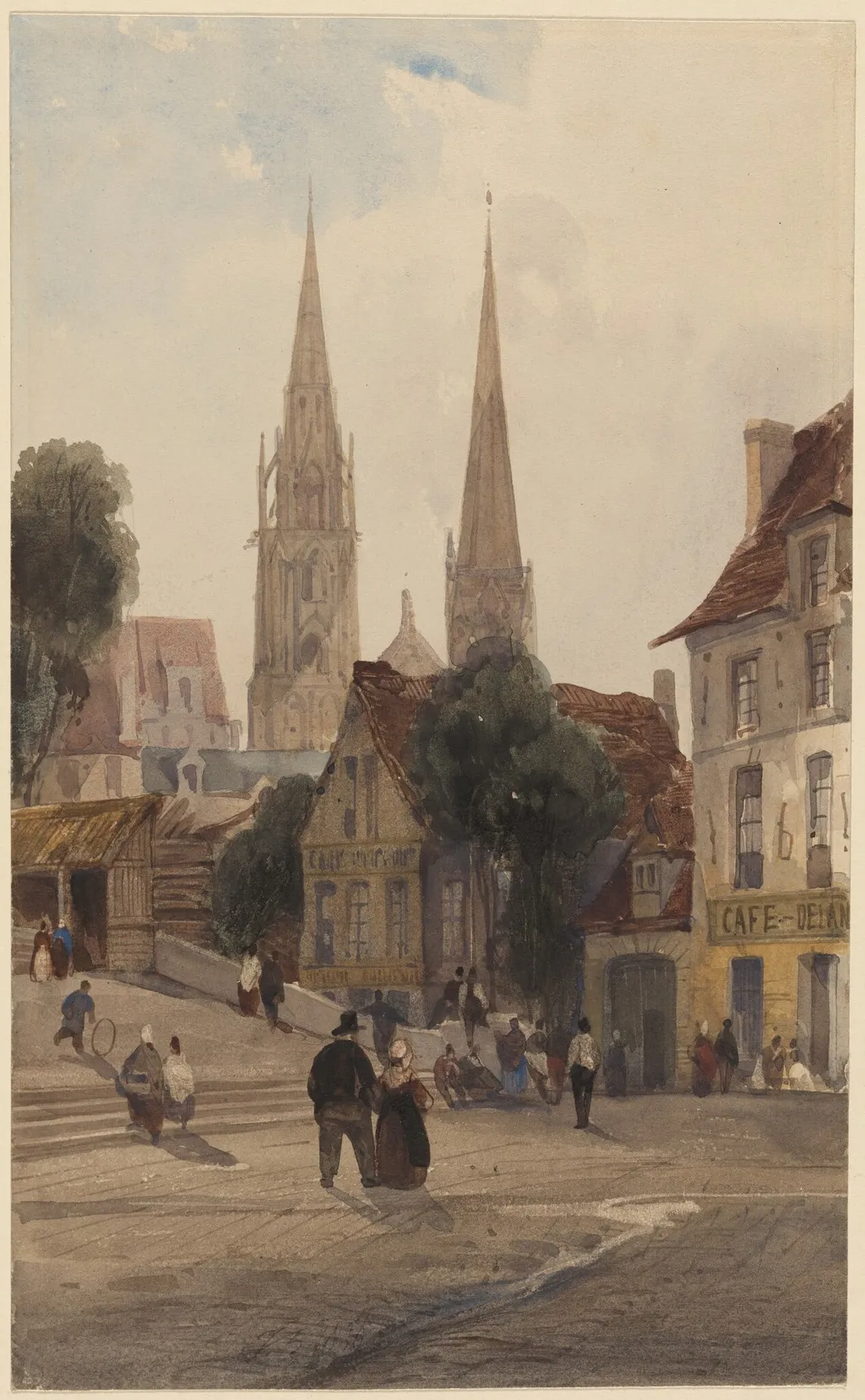
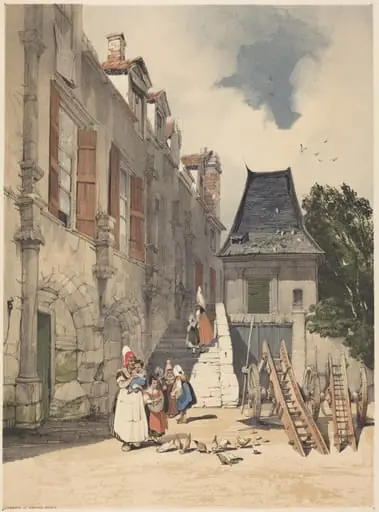
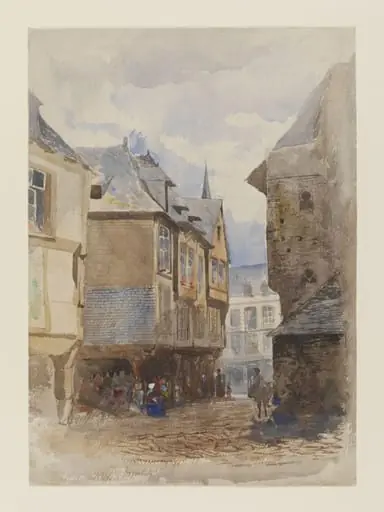
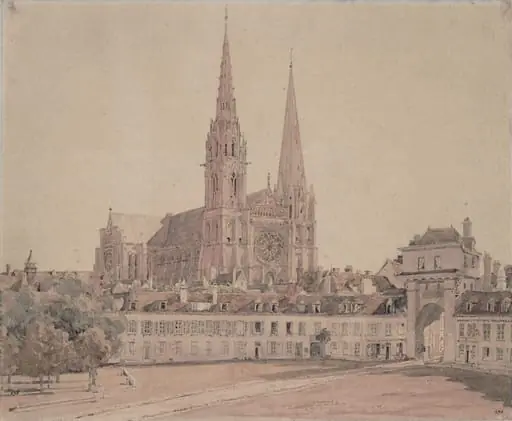
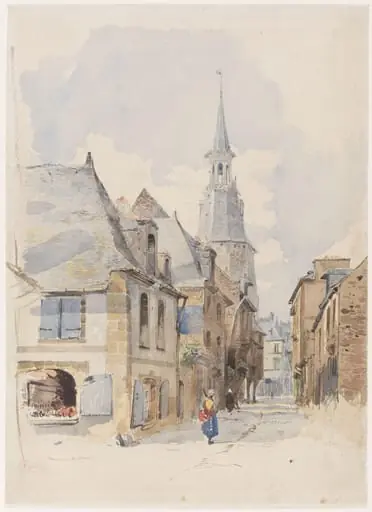
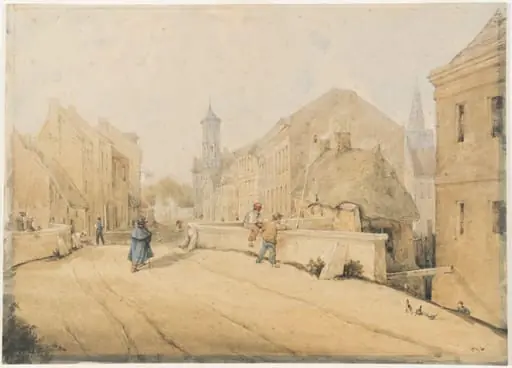
A Street in Chartres is a watercolor drawing by the Romanticist artist Thomas Shotter Boys. It dates from 1836 and is held in the collection of the National Gallery of Art. Created in 1836, *A Street in Chartre* is a modestly sized work on paper that combines watercolor, gouache and graphite.
About this work
Overview
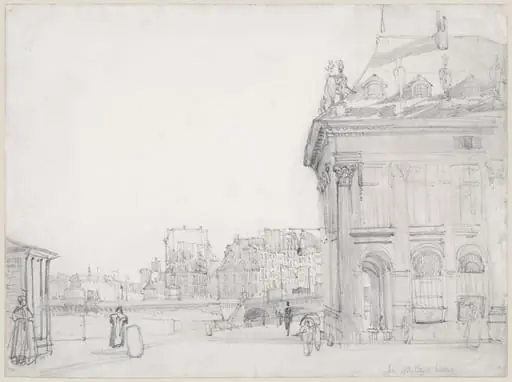
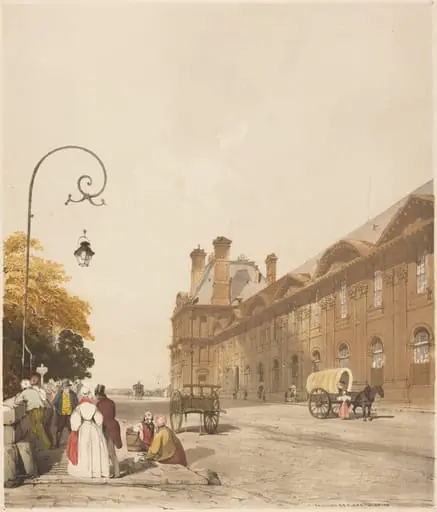
Created in 1836, *A Street in Chartre* is a modestly sized work on paper that combines watercolor, gouache and graphite. English artist Thomas Shotter Boys, known for his urban and architectural studies, rendered a quiet thoroughfare in the French town of Chartres. The composition captures a moment of everyday life, emphasizing the built environment over natural scenery.
Subject & Meaning
The scene presents a cobbled street framed by two soaring church towers, suggesting the centrality of religious architecture in the town’s layout. Figures in period dress move along the way, some bearing parcels or engaged in conversation, while a modest café and a market stall hint at the social and commercial rhythms of 19th‑century provincial life.
Technique & Style
Boys employed a light, fluid watercolor wash overlaid with opaque gouache to model the façades, while graphite sketches define the street’s perspective and the figures’ outlines. The palette stays restrained, favoring warm earth tones and muted blues that convey the soft daylight. Subtle scraping reveals underlying layers, adding texture and depth to the surface.
History & Provenance
The drawing was executed during Boys’ productive period in the 1830s, when he focused on European cityscapes for both private collectors and the burgeoning market for travel imagery. It entered a private collection shortly after its completion and has since been documented in several catalogues of British watercolorists, remaining in the hands of a European museum as of the early 2020s.
Artist & collection
Artist
Thomas Shotter Boys (1803–1874) was an English watercolour painter and lithographer, mostly producing cityscapes and images of buildings, although he produced some rural landscapes and marine subjects.