Artwork
A Fête Galante with Falconers
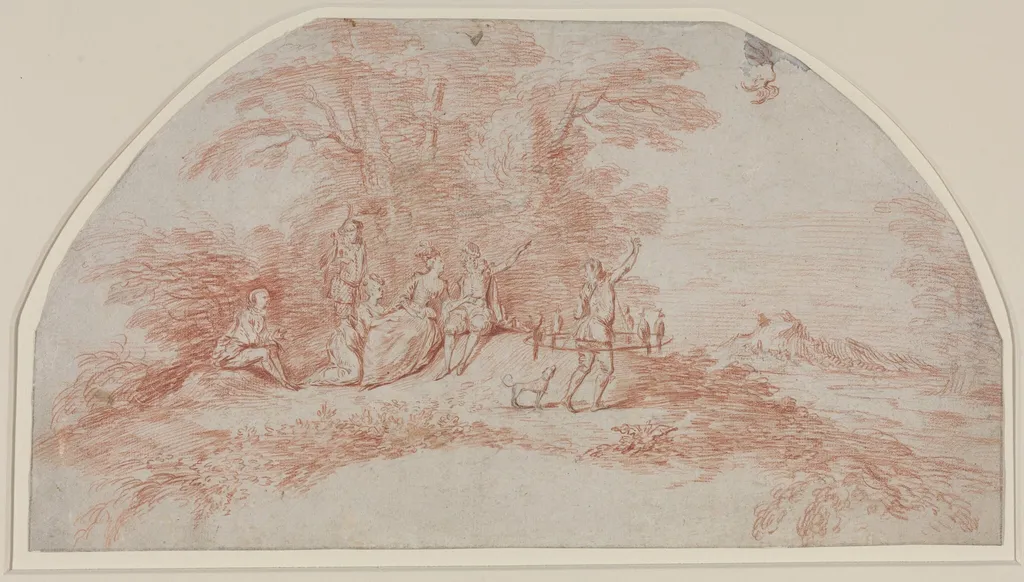
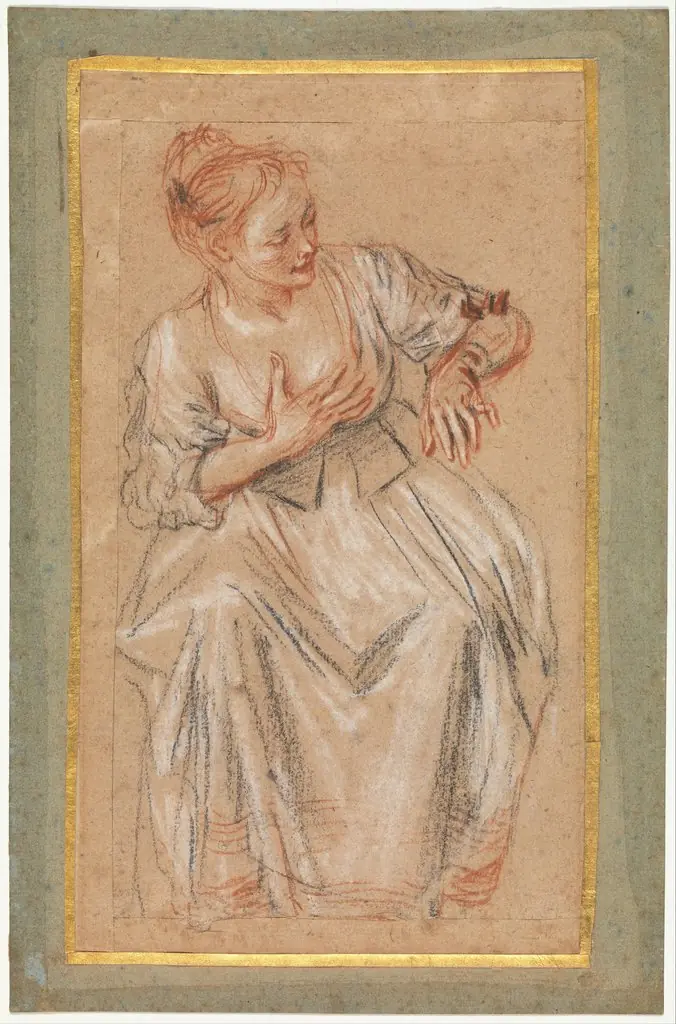
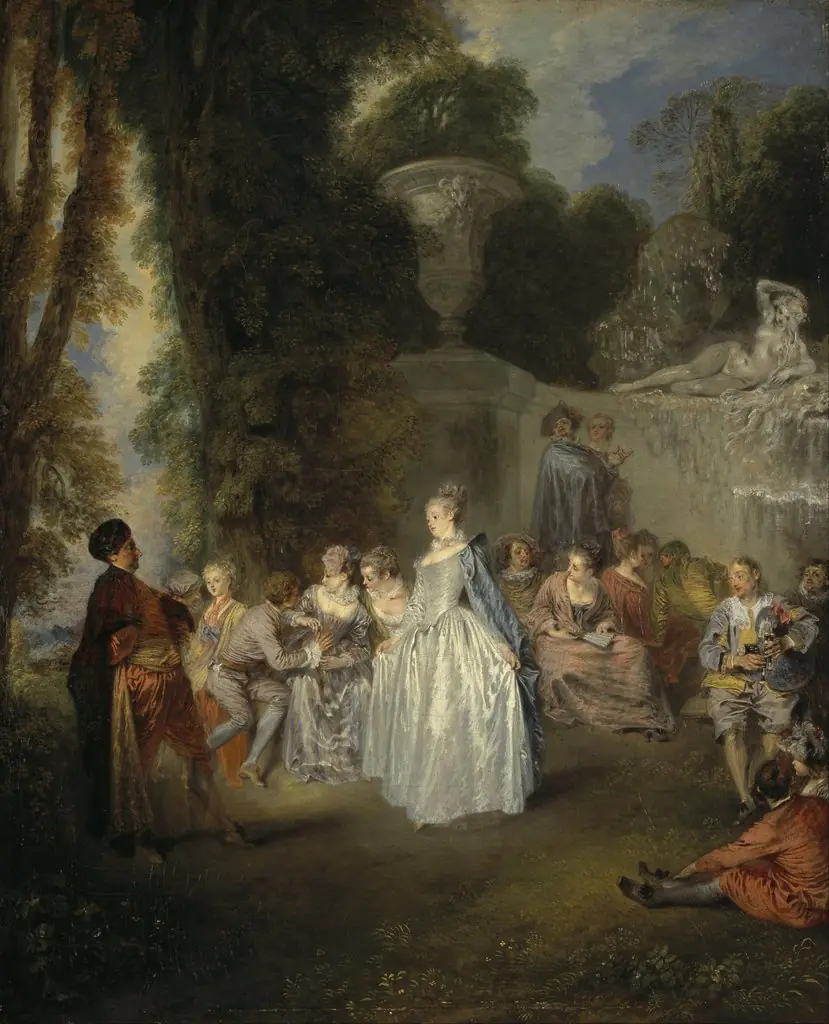
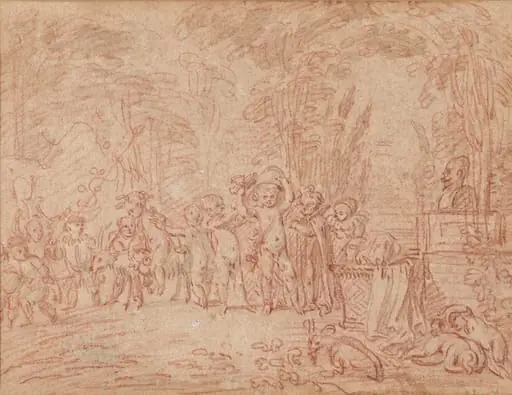
A Fête Galante with Falconers is a graphite drawing by the Baroque artist Jean Antoine Watteau. It dates from 1712 and is held in the collection of the National Gallery of Art. Created around 1712, this drawing by Antoine Watteau is executed in red chalk over graphite on laid paper.
About this work
Overview
Created around 1712, this drawing by Antoine Watteau is executed in red chalk over graphite on laid paper. It captures a quiet moment in an outdoor setting, featuring a small gathering of figures engaged in the aristocratic pastime of falconry. The work is part of a series of preparatory sketches Watteau made to explore composition and atmosphere before developing larger paintings.
Subject & Meaning
The scene depicts a group of elegantly dressed individuals in a naturalistic park, centered on a woman and a man with a falcon on his glove. Others linger nearby, some seated, others standing, with a dog resting at their feet. The imagery evokes leisure and refined social interaction, characteristic of the fête galante genre, which idealized moments of quiet amusements among the French elite.
Technique & Style
Watteau employed red chalk with fluid, gestural strokes, allowing the medium to create soft transitions and subtle tonal variations. Graphite underdrawing guided the composition, but the final effect is deliberately loose and atmospheric. Details are minimized; forms emerge through suggestive lines rather than precise definition, emphasizing mood over realism.
History & Provenance
The drawing is one of several studies Watteau produced during the early 1710s, a period when he was refining his signature style. While its exact early ownership is undocumented, it entered a major public collection in the 19th century and has since been recognized as a key example of his graphic work, reflecting his transition from preparatory sketch to independent art form.
Context
Watteau’s drawings like this one emerged amid the cultural shift toward intimate, lyrical depictions of aristocratic life in early 18th-century France. The fête galante, a genre he helped define, responded to the tastes of a post-Louis XIV society seeking softer, more personal expressions of leisure, distinct from the grandeur of courtly art.
Legacy
This drawing exemplifies Watteau’s influence on the evolution of graphic art, demonstrating how sketches could function as autonomous works rather than mere studies. His use of chalk to convey atmosphere and movement inspired later artists, particularly in the Romantic tradition, who valued expressive line and emotional tone over finish and detail.
Artist & collection
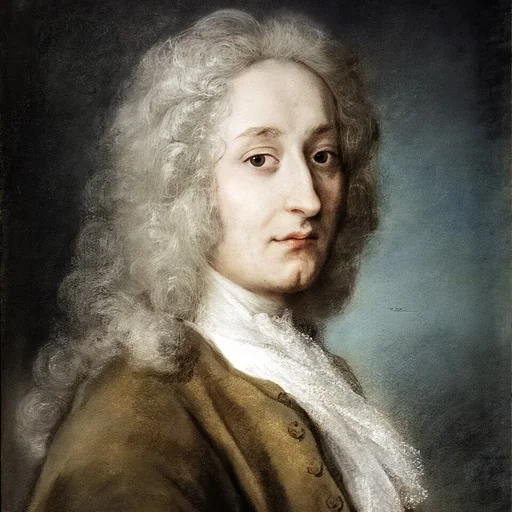
Artist
Jean-Antoine Watteau was a French painter and draughtsman whose brief career spurred the revival of interest in colour and movement, as seen in the tradition of Correggio and Rubens.

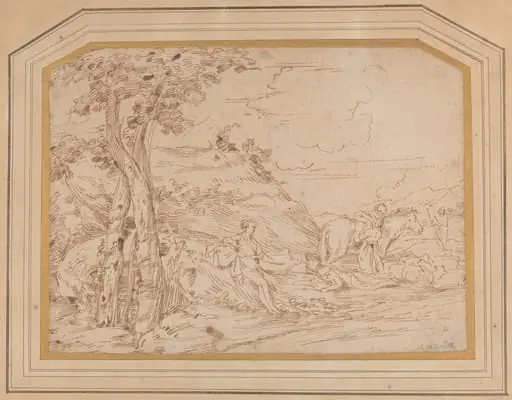 A Wooded Landscape with a Shepherd and His Family
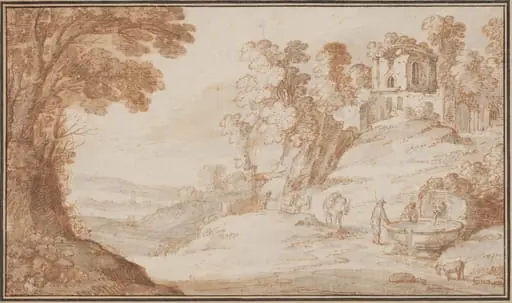 Classical Landscape with a Fountain
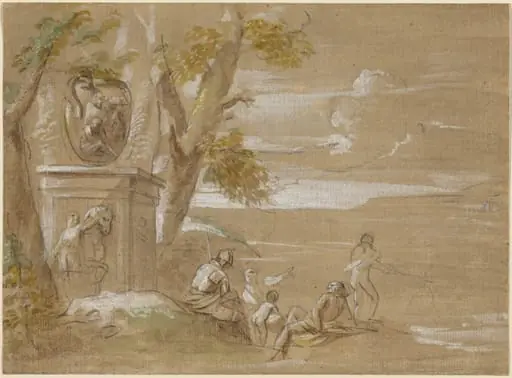 A Landscape with Seated Soldiers and Fishermen
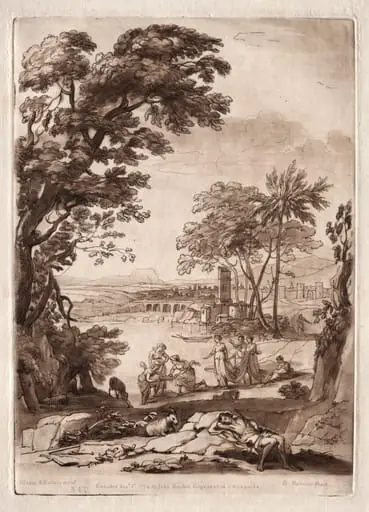 Liber Veritatis: No. 47, A River Scene with the Finding of Moses
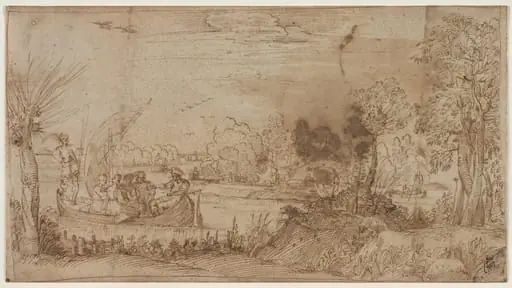 River Landscape with Boats
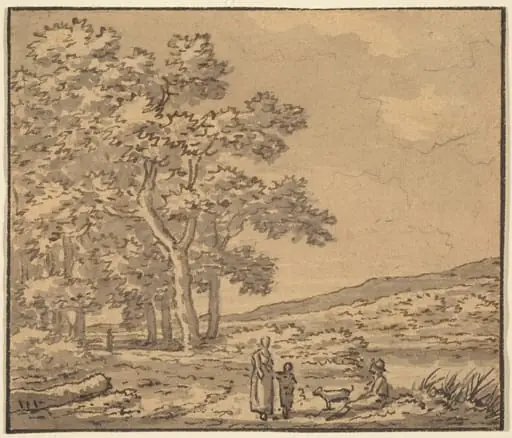 A Landscape with Three Figures and a Dog
 Children Parodying a Triumph of Bacchus
 Hunters Resting by a River
 Pool at the Edge of a Wood
 Peasants at the Edge of a Wood
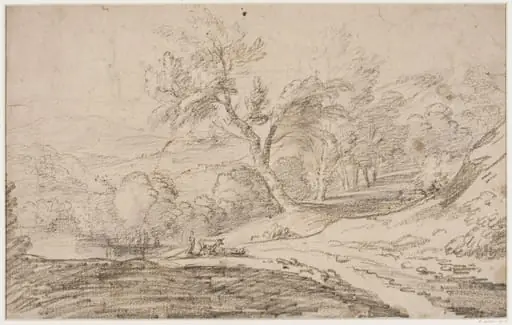 Landscape with lake
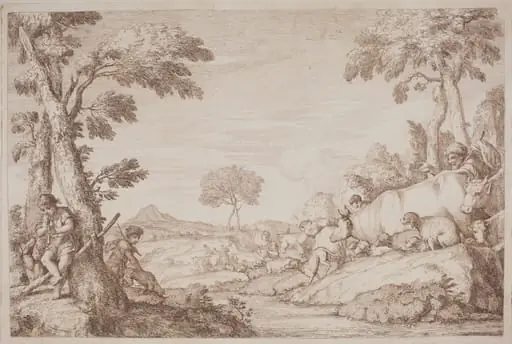 A Pastoral Journey with a Boy Playing His Flute by a Tree