Artwork
Trees by the River at Castle Bromwich
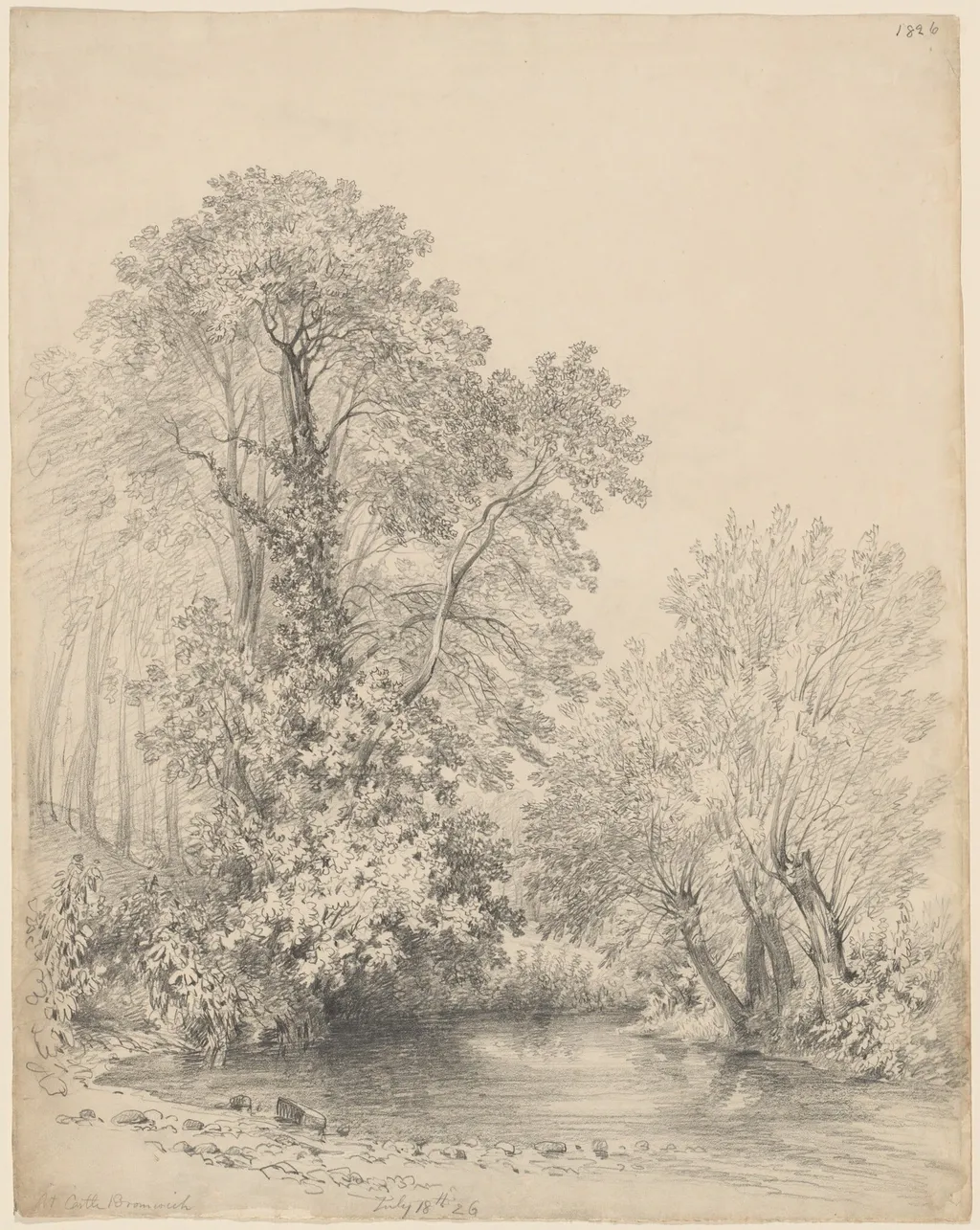
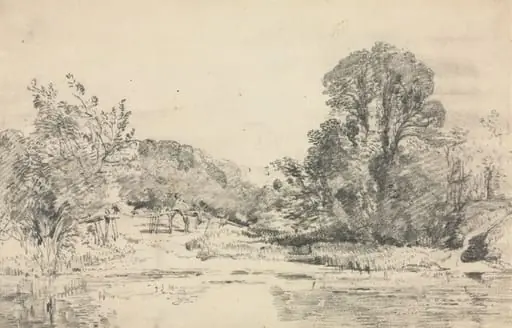
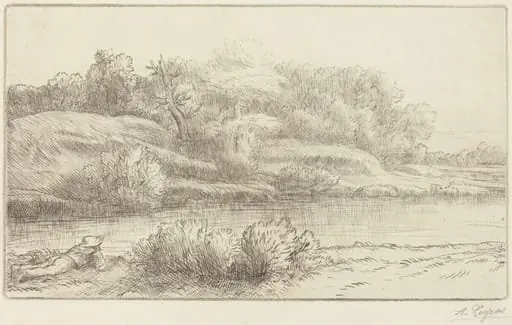
Trees by the River at Castle Bromwich is a graphite drawing by the Romanticist artist Frederick William Watts. It dates from 1826 and is held in the collection of the National Gallery of Art.
About this work
Overview
Created in 1826, this graphite drawing by Frederick William Watts depicts a riverside landscape near Castle Bromwich. Executed on laid paper, the work belongs to a series of early topographical studies the artist produced during his formative years, capturing quiet natural scenes with careful observation rather than dramatic composition.
Subject & Meaning
The drawing presents a group of trees along a gentle riverbank, their forms rendered with subtle tonal variation. There is no human presence or architectural element, emphasizing the quiet autonomy of the natural environment. The scene reflects a contemplative engagement with rural England’s landscape, typical of early 19th-century sketching practices.
Technique & Style
Watts employed graphite with restrained precision, using light hatching and delicate shading to suggest texture and depth. The paper’s laid texture subtly informs the surface quality, enhancing the tactile sense of the foliage and earth. The composition avoids theatricality, favoring a quiet, observational approach characteristic of amateur topographical drawing at the time.
History & Provenance
The drawing was likely made during Watts’s travels in the West Midlands, possibly as part of a personal sketchbook. It remained in private hands until the mid-20th century, when it entered a public collection. Its survival is notable, as many such early works by lesser-known artists were lost or discarded.
Context
In the 1820s, amateur artists frequently documented local landscapes as a scholarly or recreational pursuit. Watts’s work aligns with this trend, reflecting the period’s growing interest in natural detail and regional identity, independent of academic tradition or public exhibition.
Legacy
Though Watts did not achieve lasting fame, this drawing contributes to the understanding of early 19th-century British drawing practices. It exemplifies how non-professional artists contributed to the visual record of the English countryside, preserving quiet moments that later movements would revalue.
Own this work as a print
Artist & collection


 Little Pond (La petite mare)
 A Beech Wood with a Resting Traveler
 Old Bridge at Weaverton
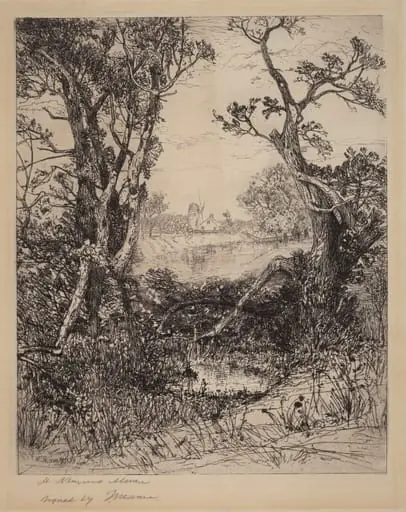 Summer—Easthampton
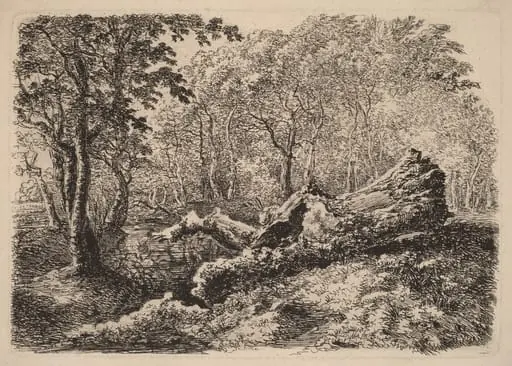 Mouldering Tree Trunk
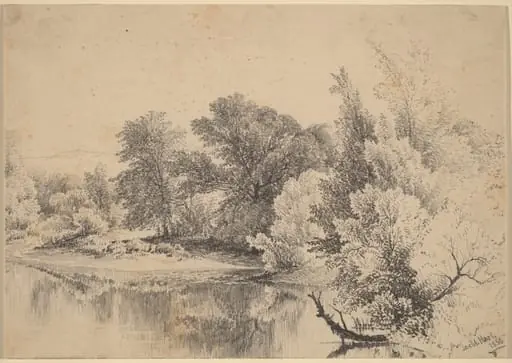 Pond Edge
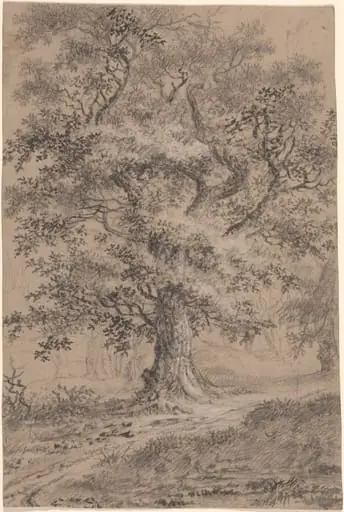 A Leafy Oak by a Woodland Path
 Landscape with Trees Surrounding a Pond
 A Glade of Trees
 The Trees, Bedford, New York
 River scene with a temple or palace in the clouds
 Banks of the Venelle (Bord de la Venelle)