Artwork
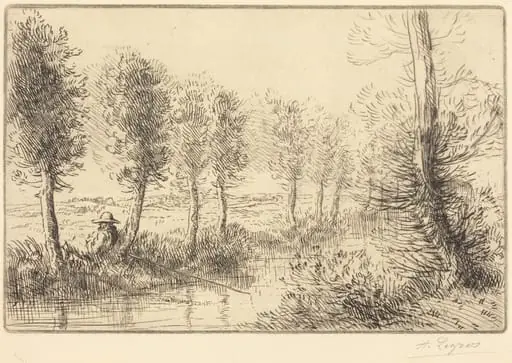
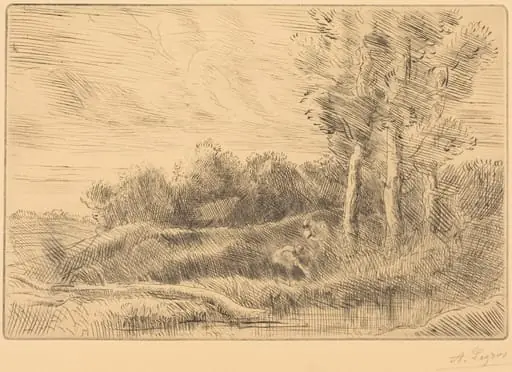
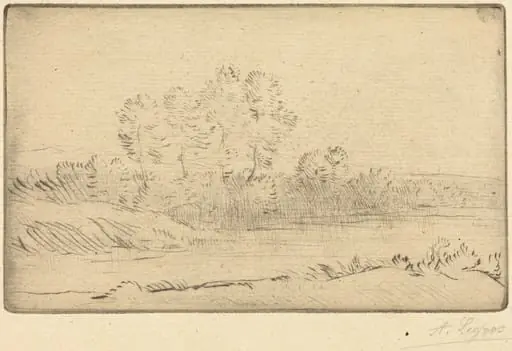
Banks of the Venelle (Bord de la Venelle)
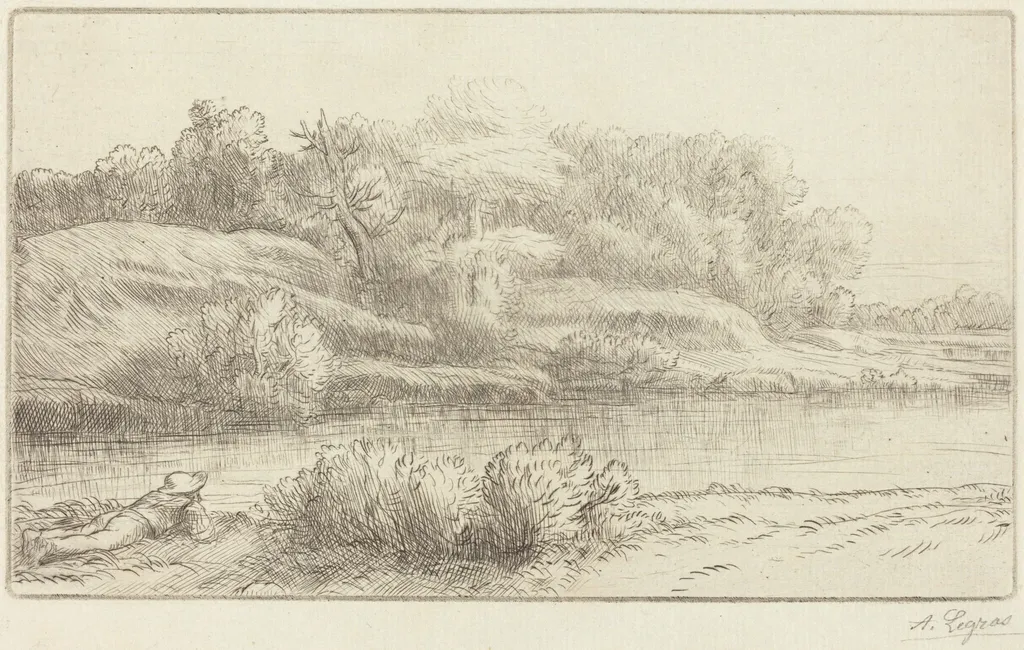
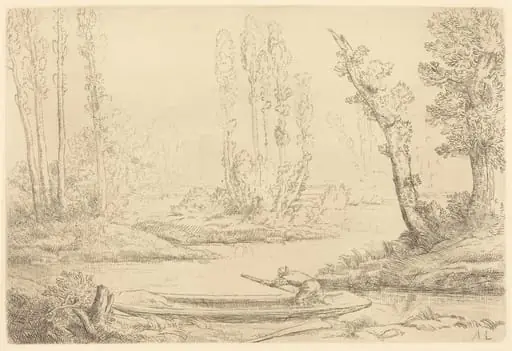
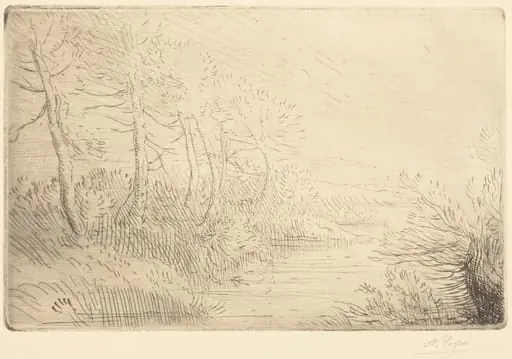
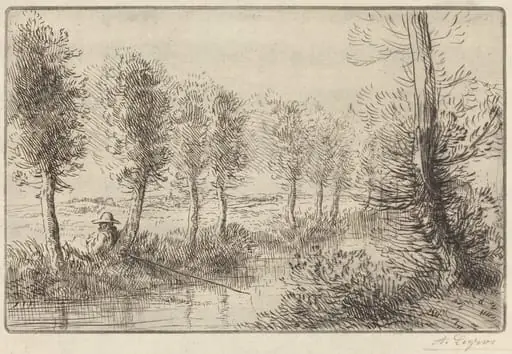
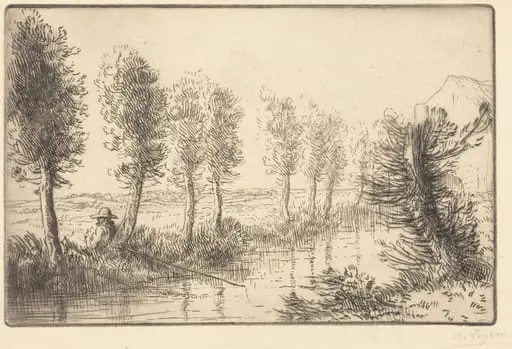
Banks of the Venelle (Bord de la Venelle) is an ink print by the Impressionist artist Alphonse Legros. It dates from 1888 and is held in the collection of the National Gallery of Art.
About this work
Overview
Executed in etching and drypoint, the work reflects his deep engagement with printmaking as both an artistic and pedagogical practice.
Created in 1888, *Banks of the Venelle (Bord de la Venelle)* is a print by Alphonse Legros, a French-born artist who lived and taught in London from 1863 onward. Executed in etching and drypoint, the work reflects his deep engagement with printmaking as both an artistic and pedagogical practice. Legros was instrumental in reinvigorating interest in intaglio techniques among British artists during the late nineteenth century.
Subject & Meaning
The scene captures a quiet, unremarkable stretch of riverbank, likely in rural France or southern England. Sparse vegetation, uneven earth, and distant trees suggest a moment of stillness rather than narrative. There is no human presence; the focus lies in the quiet observation of natural forms and the subtle play of light, conveying a meditative tone rather than symbolic intent.
Technique & Style
Legros employed drypoint to create dense, textured lines by scratching directly into a metal plate, producing a characteristic burr that holds ink and yields soft, velvety shadows. Etching provided finer, controlled contours. Together, these methods rendered the landscape with a tactile immediacy—grass, rocks, and foliage emerge through layered, hesitant strokes that mirror the irregularity of the terrain.
History & Provenance
The print was made during Legros’s tenure at the Slade School of Fine Art, where he influenced a generation of British printmakers. While specific early ownership records are sparse, the work aligns with his broader output of intimate landscape prints, often circulated among artists and collectors interested in the revival of traditional etching practices in late Victorian Britain.
Context
In the late 1880s, British art saw a renewed appreciation for handcrafted prints, moving away from mass-produced imagery. Legros, trained in France but embedded in London’s artistic circles, bridged continental techniques with British sensibilities. His focus on modest, everyday landscapes countered the grandeur of academic painting, aligning with broader trends toward realism and direct observation.
Legacy
Legros’s prints, including *Banks of the Venelle*, helped establish etching and drypoint as legitimate mediums for serious artistic expression in Britain. His technical rigor and emphasis on direct observation influenced students and contemporaries, contributing to the enduring revival of intaglio printmaking in the early twentieth century.
Own this work as a print
Artist & collection

Artist
Alphonse Legros (French pronunciation: ; 8 May 1837 – 8 December 1911) was a French, later British, painter, etcher, sculptor, and medallist.