Artwork
Euterpe Ionides
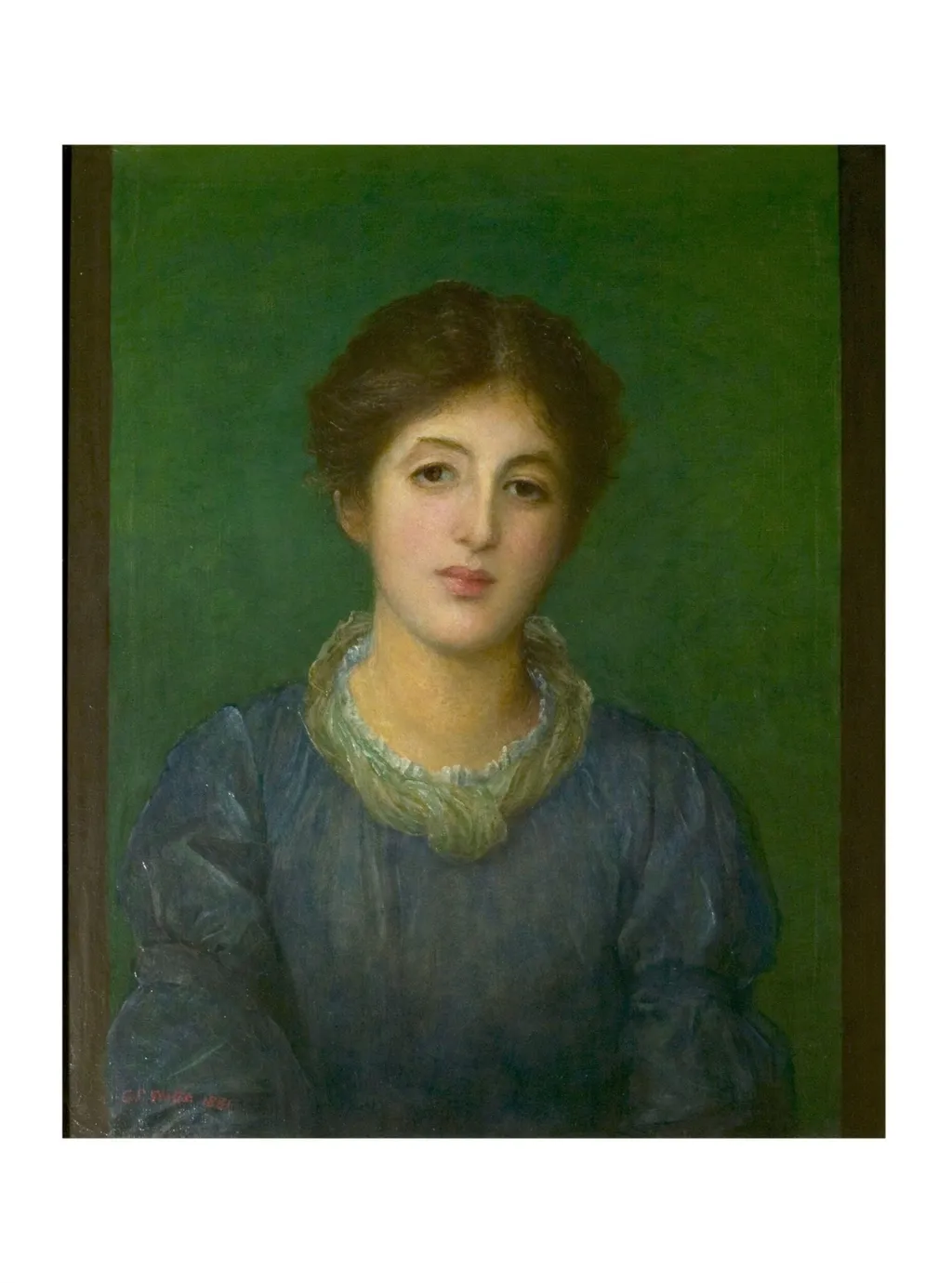
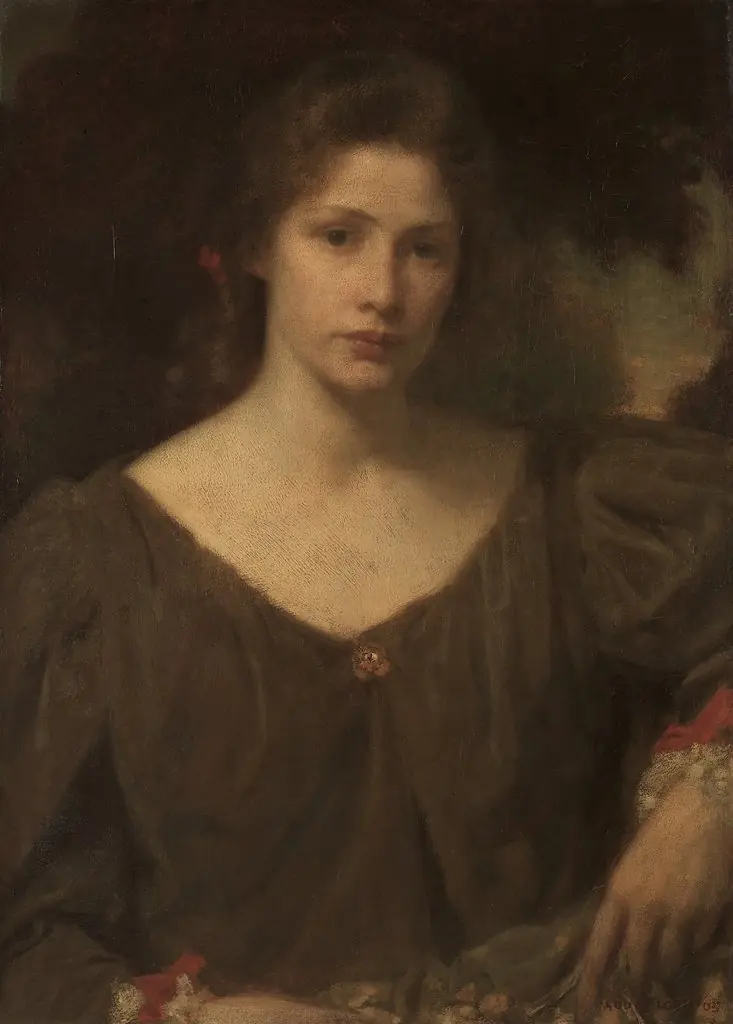
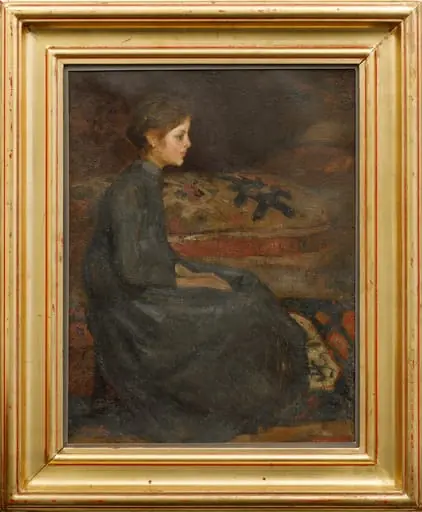
Euterpe Ionides is an oil painting by the Impressionist artist George Frederick Watts. It dates from 1881 and is held in the collection of the Victoria and Albert Museum.
About this work
Overview
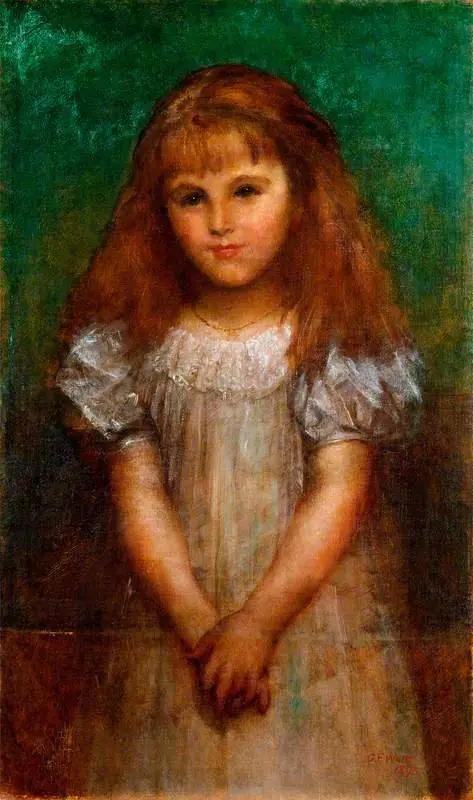
This oil painting by George Frederic Watts depicts Euterpe Ionides, born in 1861, as a young girl. Painted in the late 19th century, it belongs to a series of portraits Watts created of members of the Ionides family, close friends of the artist. The work is distinguished by its restrained palette and the custom frame Watts designed himself, reflecting his holistic approach to portraiture.
Subject & Meaning
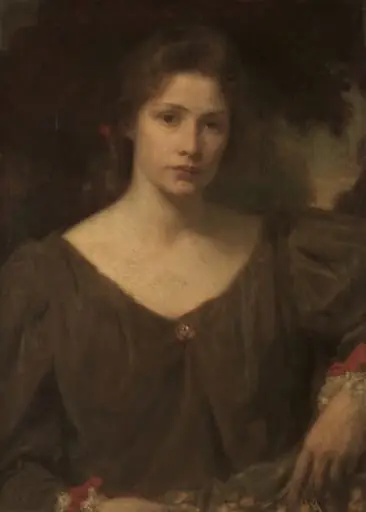
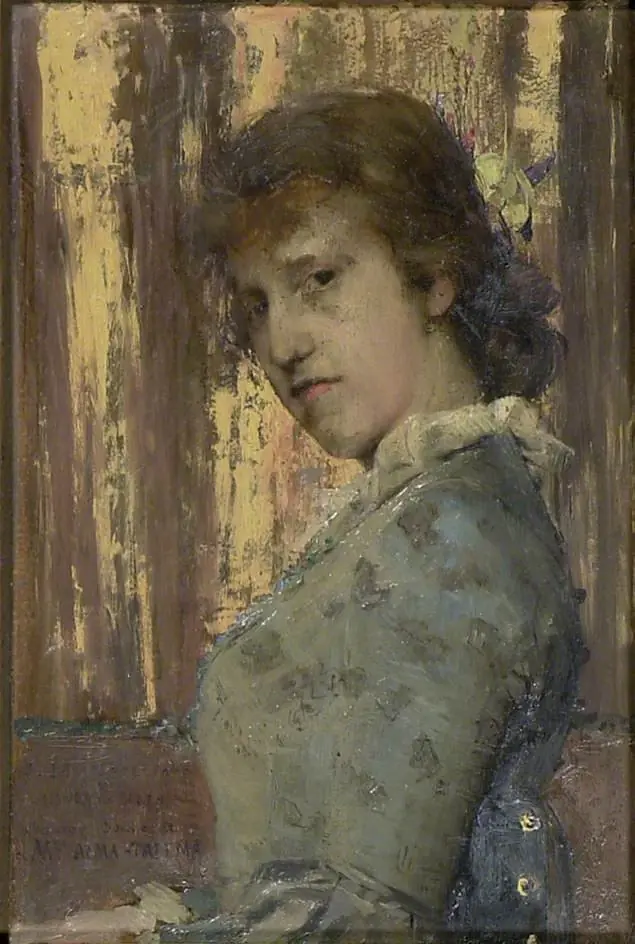
Euterpe, the eldest child of Constantine and Agathonike Ionides, is portrayed with a quiet introspection. Her gaze, neither directed outward nor inward, suggests a moment of stillness—perhaps contemplation or anticipation. Watts avoids theatricality, instead emphasizing inner presence over narrative, aligning with his interest in psychological depth rather than social display.
Technique & Style
Watts employed loose, fluid brushwork that hints at Impressionist influence, particularly in the soft rendering of the gray dress and the blurred edges of the background. Yet the overall tone remains subdued, with muted earth tones dominating the composition. The lack of detail in the setting focuses attention on the sitter’s expression and posture, reinforcing a sense of quiet dignity.
History & Provenance
It remained within the family until entering the collection of the Victoria and Albert Museum, where it is now held.
The painting was created during Watts’s frequent engagement with the Ionides family, who were patrons and friends. It remained within the family until entering the collection of the Victoria and Albert Museum, where it is now held. The original frame, carved by Watts with minimal linear ornamentation, has been preserved, underscoring his belief in the unity of painting and frame as a single artistic unit.
Context
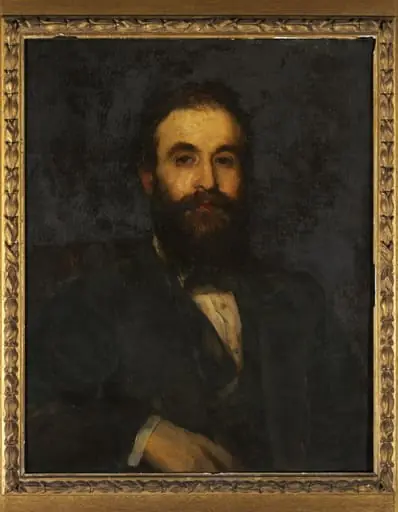
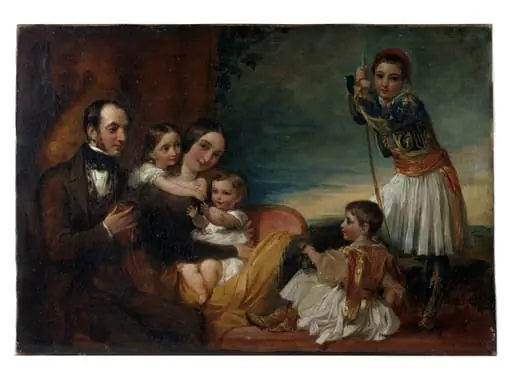
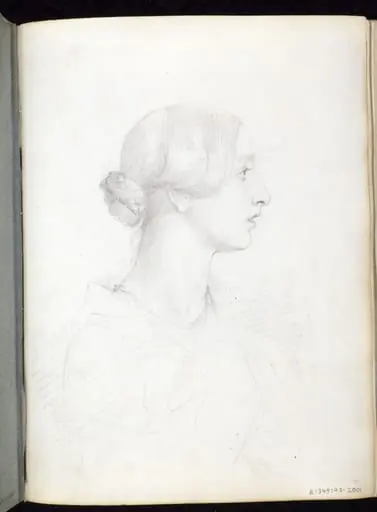
Watts painted numerous portraits of the Ionides family during the 1860s and 1870s, a period when he was developing his symbolic and psychological approach to portraiture. These works reflect his broader interest in capturing character beyond social status. The Ionides, prominent collectors and cultural figures, provided Watts with both patronage and intellectual companionship during his formative years.
Legacy
The portrait of Euterpe Ionides exemplifies Watts’s commitment to introspective portraiture and his integration of design elements into the final work. Though less celebrated than his allegorical paintings, these family portraits reveal his sensitivity to individual presence and his influence on later British artists who valued emotional restraint over spectacle.
Artist & collection
Artist
George Frederick Watts painted portraits and family scenes in 19th-century Britain.