Artwork
Railroad on the Dalles of the St. Louis
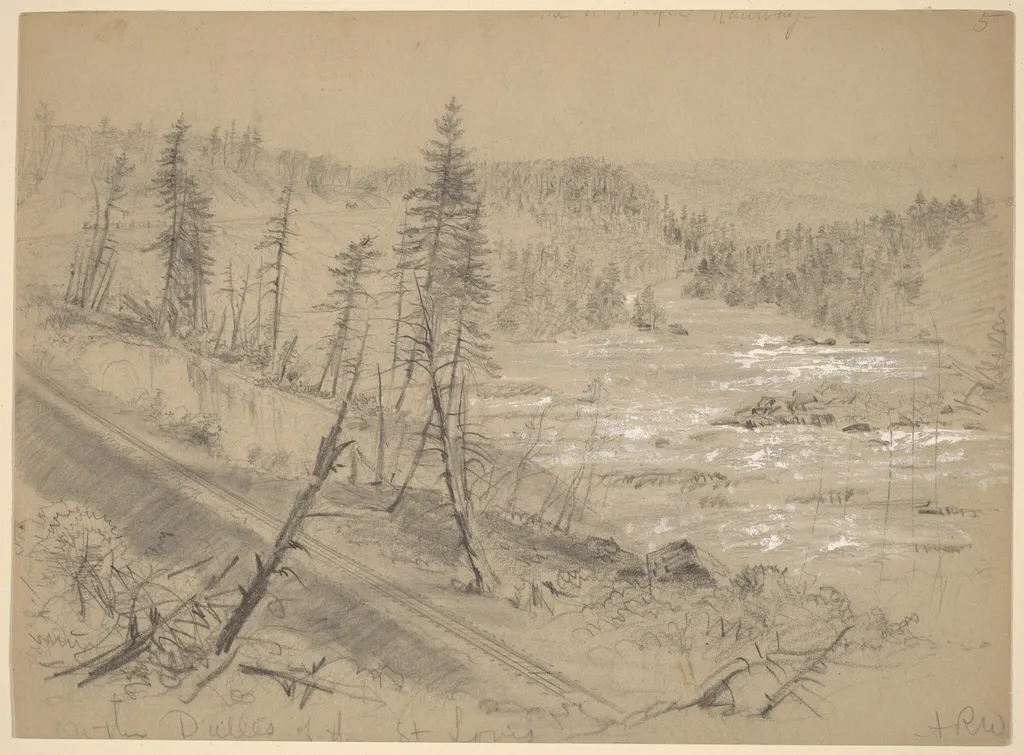
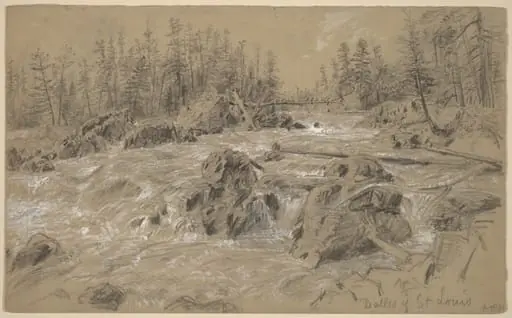
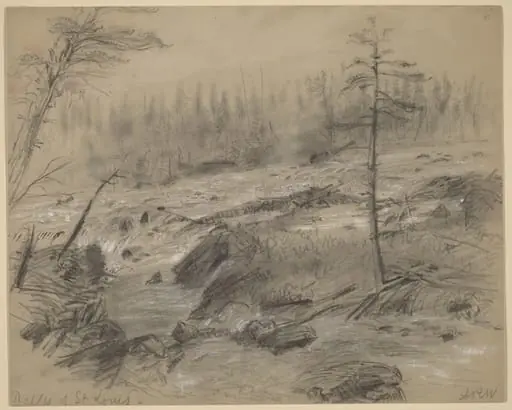
Railroad on the Dalles of the St. Louis is a chalk drawing by the Impressionist artist Alfred R. Waud. It dates from 1882 and is held in the collection of the National Gallery of Art. Created in 1882 by Alfred R.
About this work
Overview
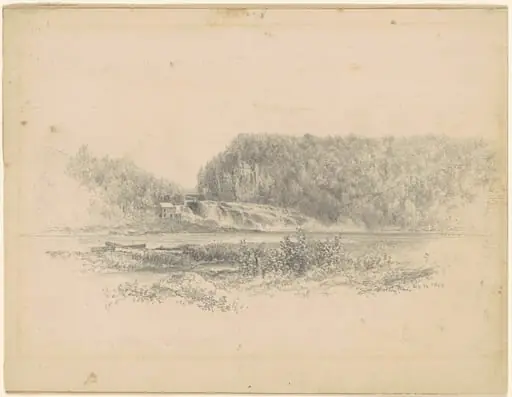
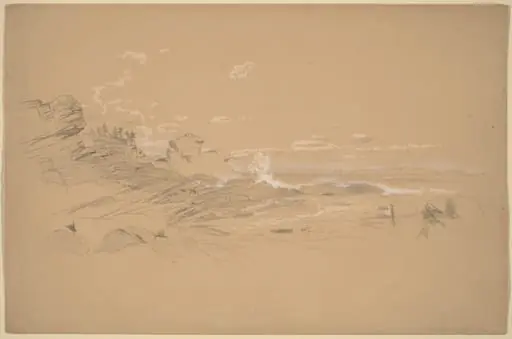
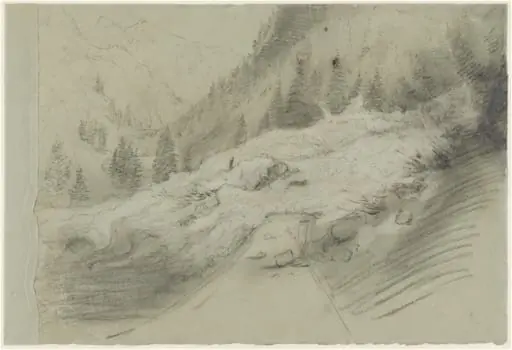
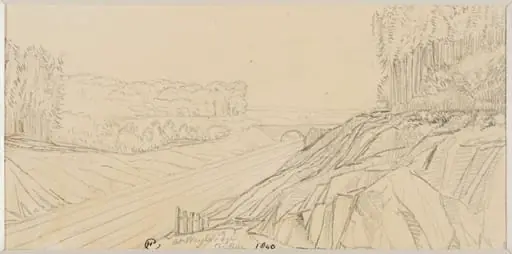
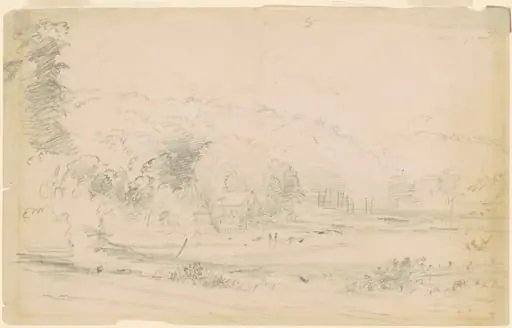
Created in 1882 by Alfred R. Waud, this drawing captures a quiet stretch of the Mississippi River near the Dalles. Executed in graphite with white highlights on light green paper, it conveys a restrained yet precise observation of the landscape. The medium’s subtlety enhances the naturalism of the scene, avoiding overt drama in favor of measured detail.
Subject & Meaning
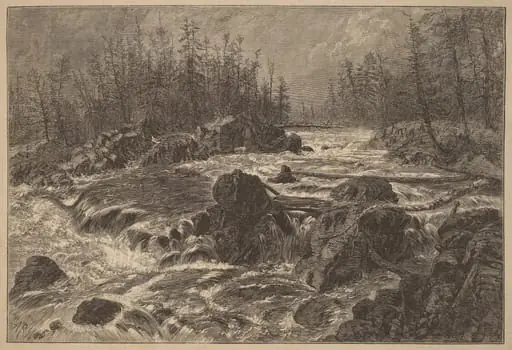
The drawing portrays a railroad track tracing the riverbank, flanked by sparse vegetation and open water. The absence of figures or machinery suggests a moment of pause, as if the landscape has reclaimed temporary human intrusion. The composition invites contemplation of infrastructure’s quiet integration into the natural environment, without overt commentary.
Technique & Style
Waud employed graphite for tonal gradations, lifting highlights with white pigment to suggest light on foliage and water. The green paper serves as a mid-tone base, unifying the scene and reducing the need for heavy shading. The technique emphasizes texture over line, with delicate strokes implying foliage and ripple without definition.
History & Provenance
Made during Waud’s later years, this work reflects his continued engagement with American landscapes after his Civil War-era illustrations. It was likely produced for private circulation or as a study, not for public exhibition. Its survival offers insight into his post-war artistic practice, distinct from his journalistic output.
Context
In 1882, railroads had become embedded in the American countryside, altering geography and perception of space. Waud’s depiction avoids industrial spectacle, instead focusing on the river’s continuity and the track’s subdued presence. This reflects a broader cultural shift toward quiet reflection on progress’s quieter consequences.
Legacy
The drawing stands as a quiet counterpoint to Waud’s more famous war illustrations. Its restrained aesthetic anticipates later American landscape traditions that valued understatement and material sensitivity. It remains a modest but significant record of how one artist observed the changing American terrain with patience and precision.
Artist & collection