Artwork
S 24 - Casă la Sulina
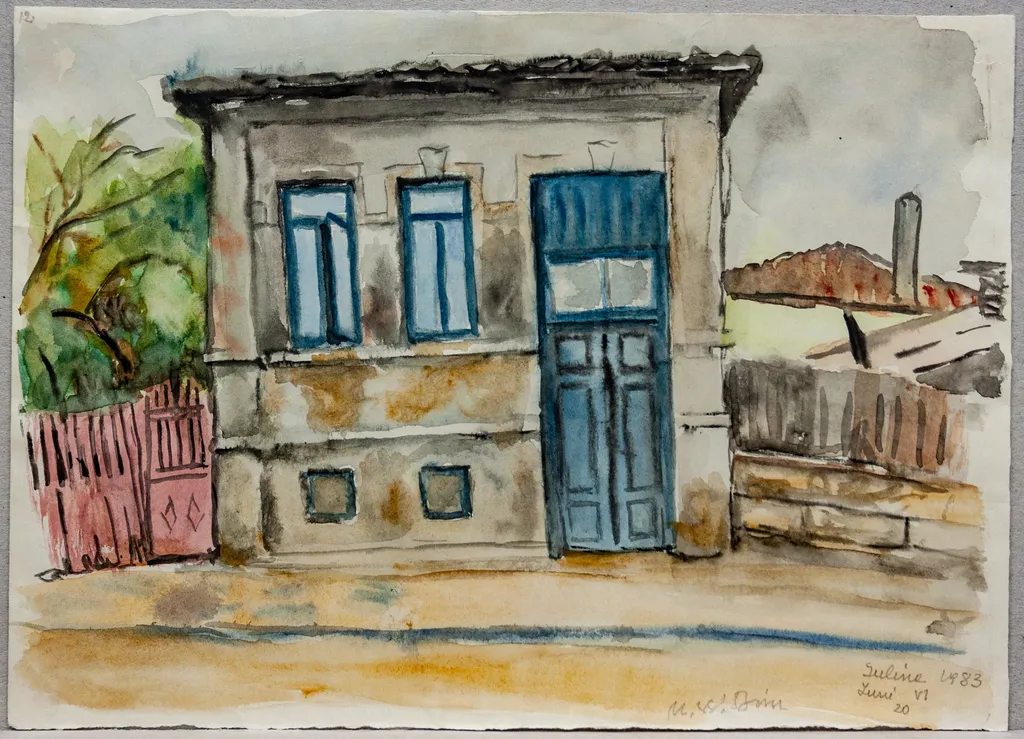
S 24 - Casă la Sulina is a print by Medi Wechsler Dinu. It dates from 1958 and is held in the collection of the Gavrila Simion Eco-Museum Research Institute Tulcea.
About this work
Overview
Created around 1958 by Romanian painter Medi Wechsler Dinu, *S 24 - Casă la Sulina* is a representational oil painting capturing a modest dwelling in Sulina, a port settlement at the mouth of the Danube Delta. The work belongs to the Museum of Ethnography’s collection and reflects the artist’s sustained interest in Romania’s rural architecture and quiet landscapes during the mid-20th century.
Subject & Meaning
The scene conveys no narrative beyond the presence of the house, emphasizing solitude and the quiet endurance of vernacular architecture in a remote region.
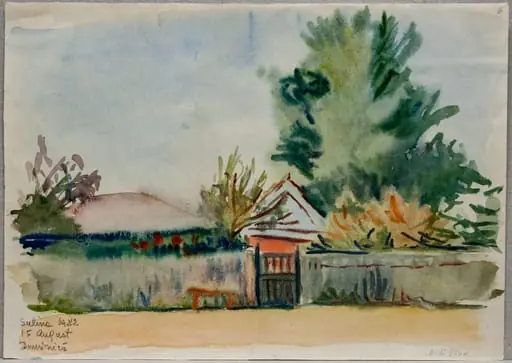
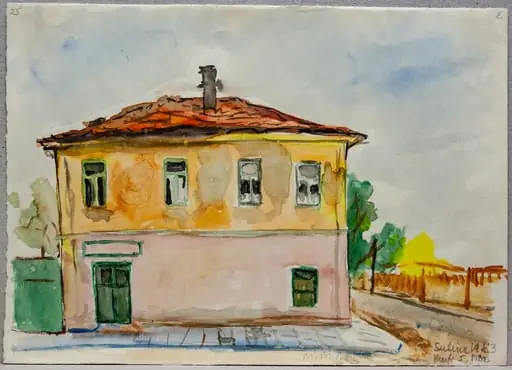
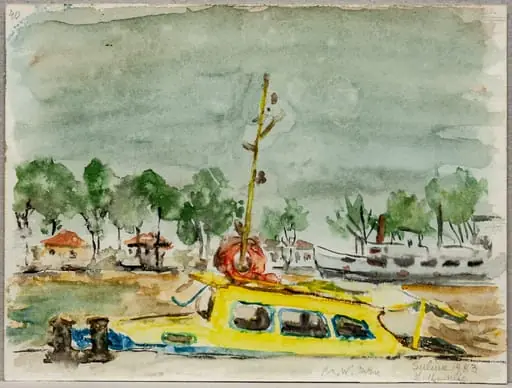
The painting portrays a single, weathered house with a blue door and two windows, set against a muted backdrop of earth tones and soft blues. A red wooden fence and a distant tree frame the structure, suggesting a secluded, lived-in environment. The scene conveys no narrative beyond the presence of the house, emphasizing solitude and the quiet endurance of vernacular architecture in a remote region.
Technique & Style
Wechsler Dinu employed a loose, expressive brushwork that prioritizes atmosphere over precision. Visible strokes build texture in the walls and foliage, while layered pigments create subtle shifts in light and shadow. The palette is restrained, favoring earthy grays, ochres, and muted blues, with the red fence acting as a quiet accent. The handling suggests spontaneity, aligning with a classical realist tradition tempered by personal observation.
History & Provenance
The painting entered the Museum of Ethnography’s holdings after its completion in 1958, likely through direct acquisition or donation by the artist. Wechsler Dinu, born in 1909 and active through the late 20th century, maintained a consistent focus on Romanian subjects throughout her career. The work’s preservation in a cultural institution underscores its role as a document of regional architectural character during a period of social change.
Context
In the late 1950s, Romania’s cultural landscape was shaped by state-supported realism, yet Wechsler Dinu’s approach remained personal and observational rather than propagandistic. Sulina, a remote Danube Delta town, offered a subject untouched by industrialization. Her focus on such locations reflects a broader interest among Romanian artists in preserving the visual memory of rural life amid urbanization and political shifts.
Legacy
Wechsler Dinu’s work, including *S 24 - Casă la Sulina*, contributes to a quiet but significant body of Romanian representational painting that values place and materiality over grandeur. Though not widely exhibited beyond institutional collections, her paintings remain valuable for their unembellished documentation of vernacular architecture and the sensitivity with which everyday environments were rendered.
Artist & collection
Artist
Margareta "Medi" Dinu, née Wechsler (January 4, 1909 – July 18, 2016) was a Romanian classical painter of Jewish origin.
Museum
Gavrila Simion Eco-Museum Research Institute Tulcea
Continue through works from the same source collection.
 S 38 - Peisaj la Sulina (Stradă cu case și pomi)
 S6 - Peisaj la Sulina (Malul Dunării și case)
 S 28 - Peisaj la Sulina (Intrare de casă cu flori)
 S 9 - Peisaj la Sulina
 S 12 - Peisaj la Sulina (Stradă și 2 case)
 S4 - Peisaj la Sulina (Ochi de apă cu bărci și case)
 S 19 - Peisaj la Sulina (Casă și copaci)
 S 27 - Peisaj la Sulina (Dunăre, vapor în prim plan, case în planul doi)