Artwork
S 27 - Peisaj la Sulina (Dunăre, vapor în prim plan, case în planul doi)
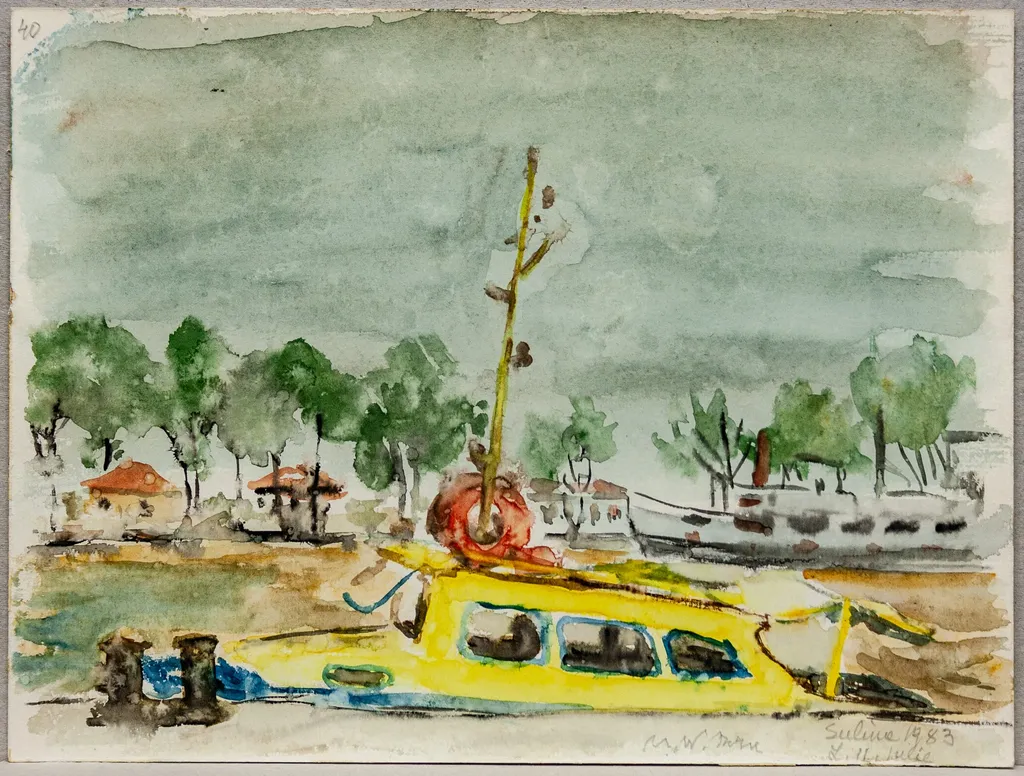
S 27 - Peisaj la Sulina (Dunăre, vapor în prim plan, case în planul doi) is an unspecified painting by Medi Wechsler Dinu. It dates from 1958 and is held in the collection of the Gavrila Simion Eco-Museum Research Institute Tulcea.
About this work
Overview
The work is part of the Museum of Ethnography’s collection, where it contributes to documentation of regional environments and daily rhythms.
Created around 1958 by Romanian painter Medi Wechsler Dinu, this landscape captures a quiet moment on the Danube at Sulina. The composition centers on a moored steamboat in the foreground, with modest dwellings and trees receding into the distance. Rendered in subdued tones, the scene reflects a restrained, observational approach to rural river life in postwar Romania. The work is part of the Museum of Ethnography’s collection, where it contributes to documentation of regional environments and daily rhythms.
Subject & Meaning
The painting presents Sulina’s riverside as a place of quiet utility rather than grandeur. The steamboat, identifiable by its mast and red life ring, suggests transport or trade along the Danube, while the clustered houses imply a small, settled community. No human figures appear, emphasizing solitude and the persistence of place over time. The absence of drama or narrative invites contemplation of ordinary life shaped by geography and waterways.
Technique & Style
Wechsler Dinu employs loose, fluid brushwork to suggest form without rigid definition. Colors are muted—earthy greens, browns, and ochres—conveying a gray, overcast sky and the dampness of the riverside. The boat’s yellow hull stands as the only warm accent, drawing the eye without disrupting the overall tonal harmony. The brushstrokes imply motion in the water and wind, lending the scene a sense of transient atmosphere rather than static stillness.
History & Provenance
Painted in the late 1950s, the work emerged during a period of state-supported cultural documentation in Romania. It entered the Museum of Ethnography’s holdings, likely as part of efforts to record regional landscapes and vernacular life. Its inclusion reflects institutional interest in depicting Romania’s geographic and social diversity, even as artistic expression remained under political constraints.
Context
Sulina, at the Danube Delta’s mouth, was a minor port town with limited infrastructure. Wechsler Dinu’s depiction aligns with broader mid-century Romanian art trends that favored quiet realism over ideological grandeur. The scene avoids political symbolism, focusing instead on the physical and atmospheric qualities of a place shaped by river traffic and modest habitation, offering a counterpoint to more propagandistic imagery of the era.
Legacy
Though not widely exhibited beyond institutional circles, the painting contributes to a quieter strand of Romanian modernism that valued observation over spectacle. It preserves a specific moment in Sulina’s landscape, now altered by time and environmental change. As such, it serves as a subtle historical record, valued more for its authenticity than its prominence in art historical narratives.
Artist & collection
Artist
Margareta "Medi" Dinu, née Wechsler (January 4, 1909 – July 18, 2016) was a Romanian classical painter of Jewish origin.
Museum
Gavrila Simion Eco-Museum Research Institute Tulcea
Continue through works from the same source collection.
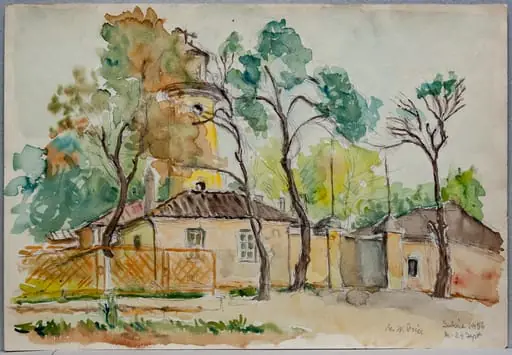 S 38 - Peisaj la Sulina (Stradă cu case și pomi)
 S6 - Peisaj la Sulina (Malul Dunării și case)
 S 28 - Peisaj la Sulina (Intrare de casă cu flori)
 S 9 - Peisaj la Sulina
 S 12 - Peisaj la Sulina (Stradă și 2 case)
 S4 - Peisaj la Sulina (Ochi de apă cu bărci și case)
 S 19 - Peisaj la Sulina (Casă și copaci)
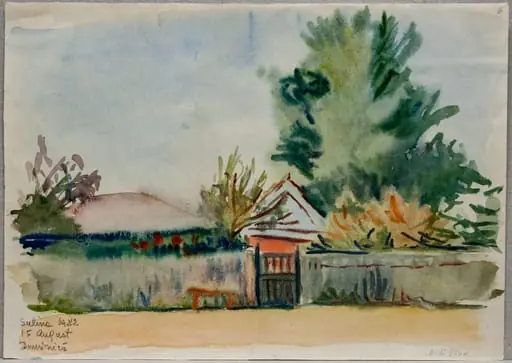 S 22 - Peisaj la Sulina (Casă, gard, copac)
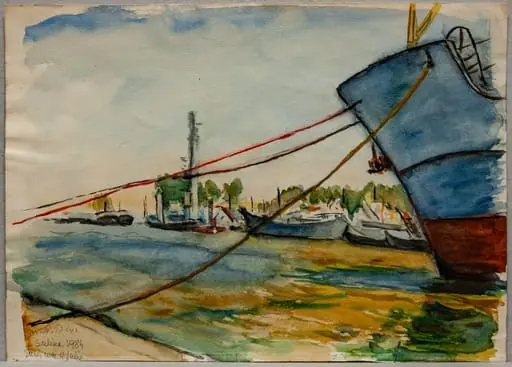 S 34 - Peisaj la Sulina (Dunăre și fund de vapor legat la cheu)
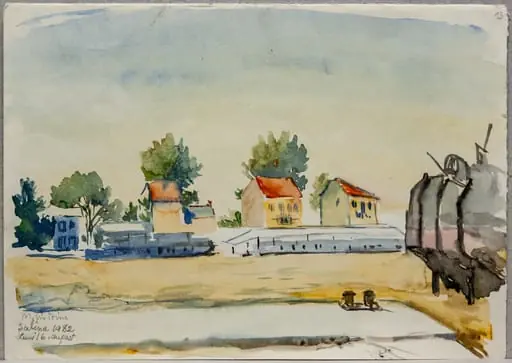 S 10 - Peisaj la Sulina (Cheu și case)
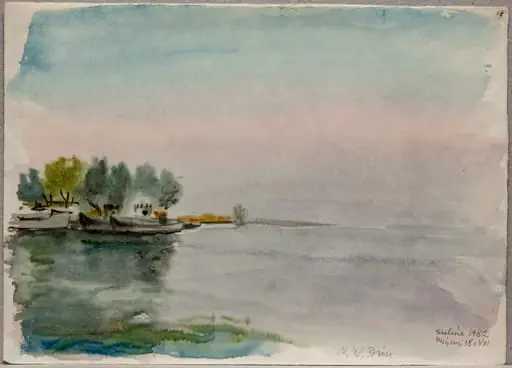 S 11 - Peisaj la Sulina (Dunăre și mal cu bărci)
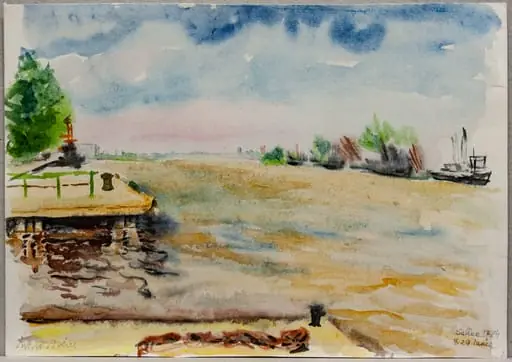 S 31 - Peisaj la Sulina (Dunăre și cheu)
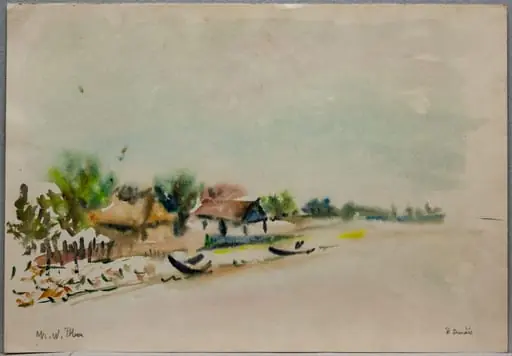 D 5 - Peisaj pe Dunăre (Mal de Dunăre cu case și bărci)
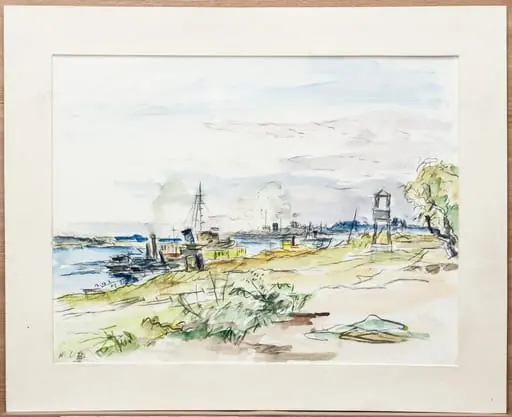 Peisaj cu vapoare
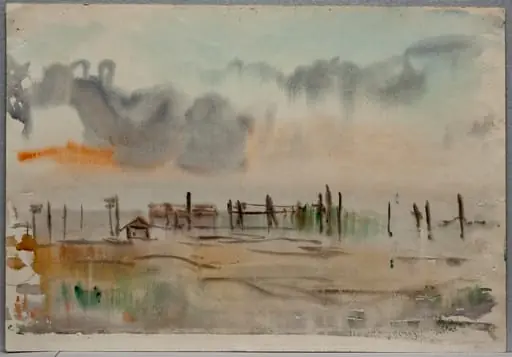 D 4 - Peisaj pe Dunăre (Dunăre și siluete de case pe mal)