Artwork
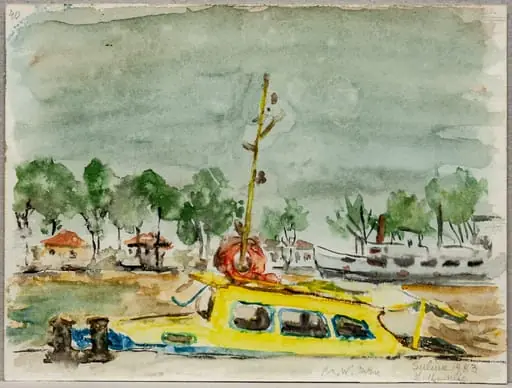
S 34 - Peisaj la Sulina (Dunăre și fund de vapor legat la cheu)
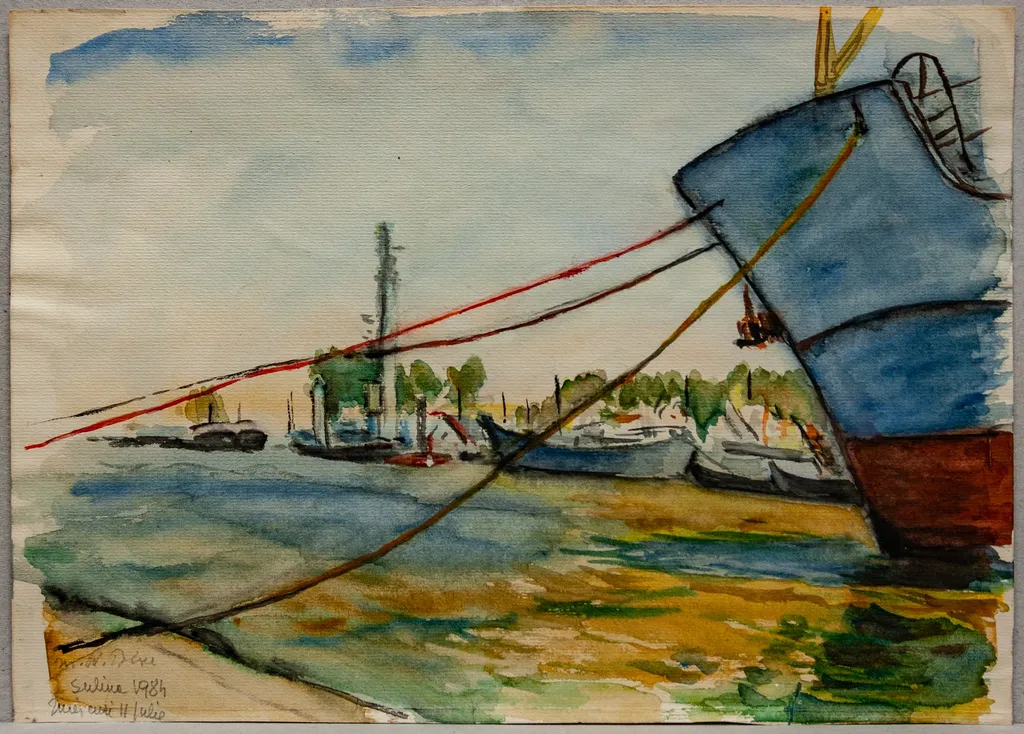
S 34 - Peisaj la Sulina (Dunăre și fund de vapor legat la cheu) is an unspecified painting by Medi Wechsler Dinu. It dates from 1958 and is held in the collection of the Gavrila Simion Eco-Museum Research Institute Tulcea.
About this work
Overview
The work is part of the Museum of Ethnography’s collection and reflects Wechsler’s interest in everyday scenes of river life during the mid-20th century.
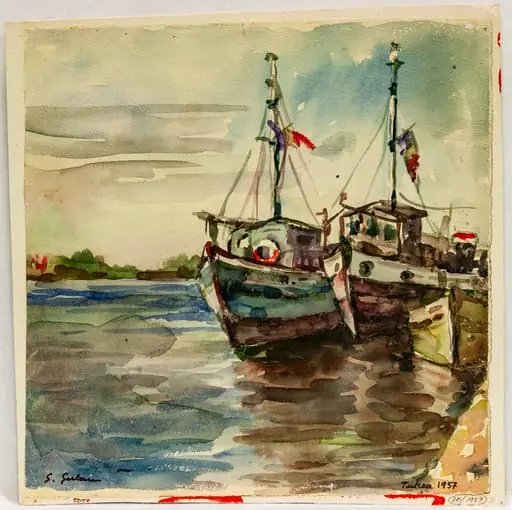
S 34 - Peisaj la Sulina (Dunăre și fund de vapor legat la cheu) is a landscape painting by Romanian artist Dinu Medi Wechsler, completed around 1958. It captures a quiet moment along the Danube River at Sulina, focusing on moored vessels and the surrounding waterfront. The work is part of the Museum of Ethnography’s collection and reflects Wechsler’s interest in everyday scenes of river life during the mid-20th century.
Subject & Meaning
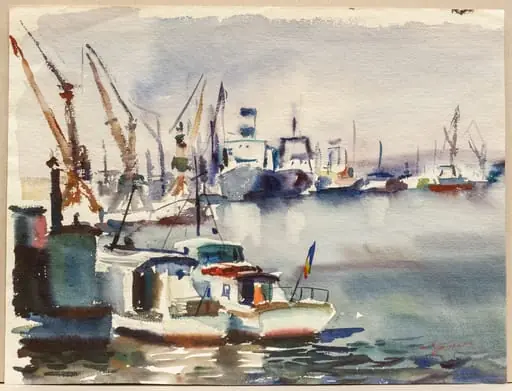
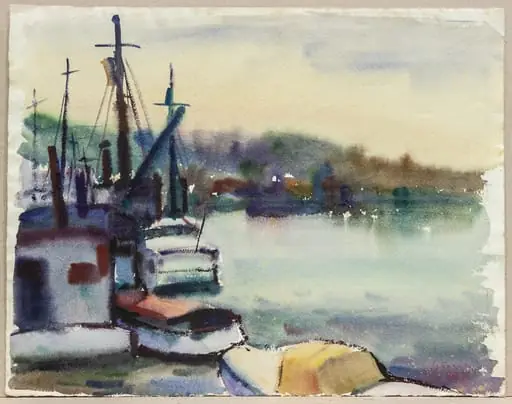
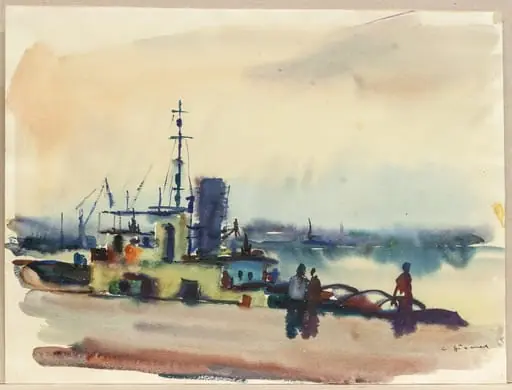
The painting depicts a cluster of steamboats tied to a quay, their hulls resting quietly against the riverbank. The scene conveys stillness and routine, emphasizing the functional role of river transport in regional life. No human figures are present, allowing the vessels and natural elements to stand as silent witnesses to daily labor and the rhythms of the Danube.
Technique & Style
Wechsler employed loose, swift brushwork to suggest the texture of water, foliage, and wooden hulls. The sky is rendered in pale blue with minimal cloud detail, while the river reflects soft greens and yellows. Thick black ropes anchor the boats, adding structural contrast. The signature is faintly visible, suggesting a modest, unassuming approach to authorship and composition.
History & Provenance
Created in the late 1950s, the painting entered the collection of the Museum of Ethnography in Romania, where it remains today. Its inclusion suggests institutional interest in documenting regional landscapes and vernacular maritime culture during the socialist period. No earlier ownership records are publicly documented, and the work appears to have been retained by the artist or acquired directly from her studio.
Context
Sulina, at the mouth of the Danube, was a key port for river trade and fishing in Romania. In the mid-20th century, such scenes were increasingly shaped by state-controlled transport and modest industrialization. Wechsler’s depiction avoids grandeur, instead focusing on the quiet accumulation of vessels — a subtle record of economic life under shifting political conditions.
Legacy
The painting contributes to a modest but significant body of work by Dinu Medi Wechsler that documents Romania’s riverine environments. Though not widely exhibited, its presence in a national ethnographic collection affirms its value as a visual archive of local maritime practice. It stands as a quiet testament to the overlooked rhythms of everyday water-based life in postwar Romania.
Artist & collection
Artist
Margareta "Medi" Dinu, née Wechsler (January 4, 1909 – July 18, 2016) was a Romanian classical painter of Jewish origin.
Museum
Gavrila Simion Eco-Museum Research Institute Tulcea
Continue through works from the same source collection.
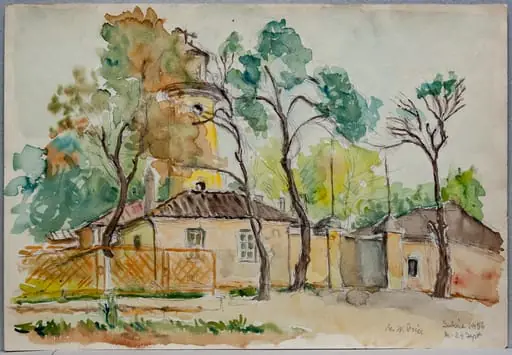 S 38 - Peisaj la Sulina (Stradă cu case și pomi)
 S6 - Peisaj la Sulina (Malul Dunării și case)
 S 28 - Peisaj la Sulina (Intrare de casă cu flori)
 S 9 - Peisaj la Sulina
 S 12 - Peisaj la Sulina (Stradă și 2 case)
 S4 - Peisaj la Sulina (Ochi de apă cu bărci și case)
 S 19 - Peisaj la Sulina (Casă și copaci)
 S 27 - Peisaj la Sulina (Dunăre, vapor în prim plan, case în planul doi)