Artwork
Moonlight
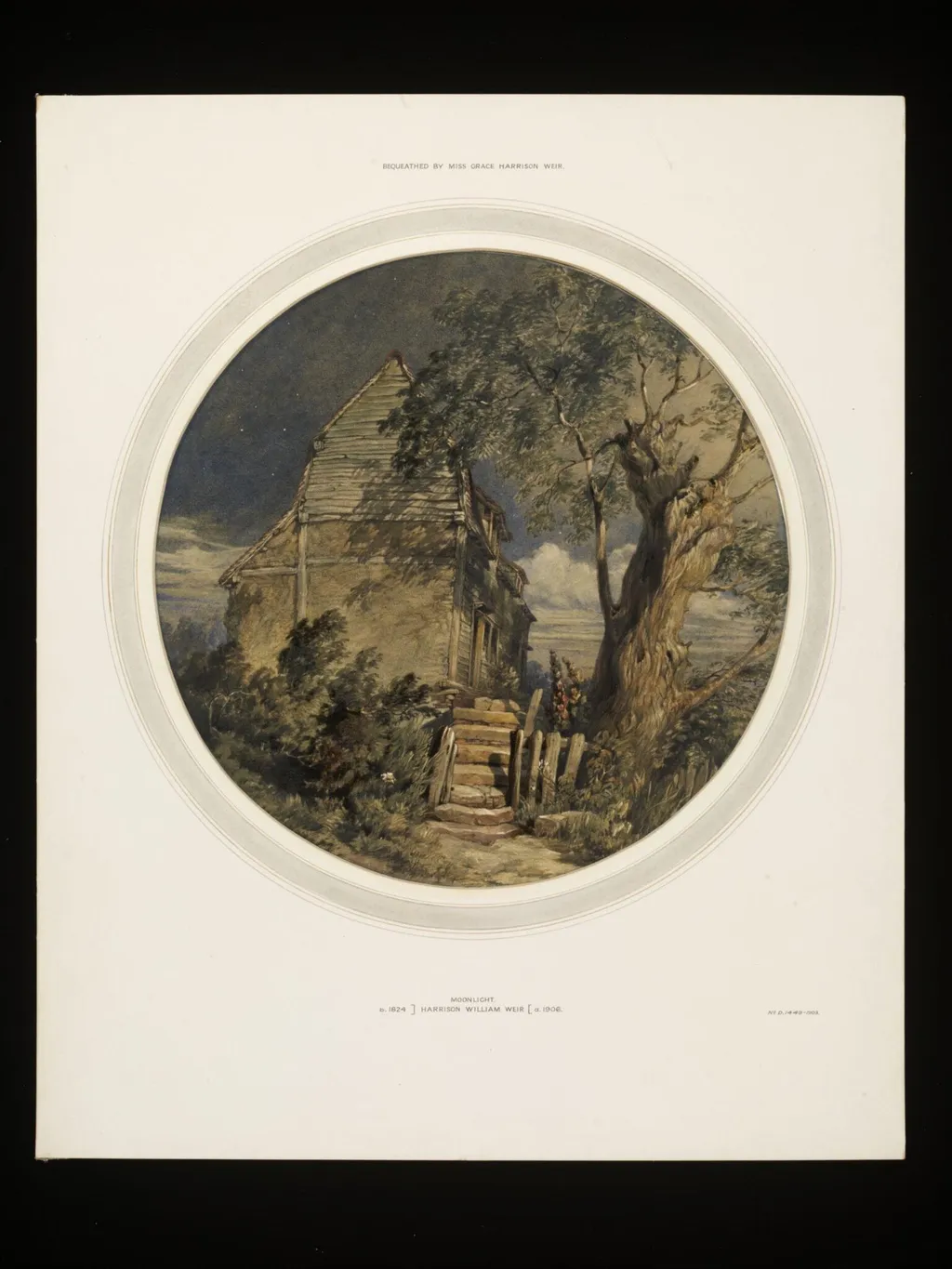
Moonlight is a watercolor work on paper by Harrison William Weir. It is held in the collection of the Victoria and Albert Museum. This circular watercolor portrays a quiet nocturnal landscape centered on a modest, weathered structure.
About this work
Overview
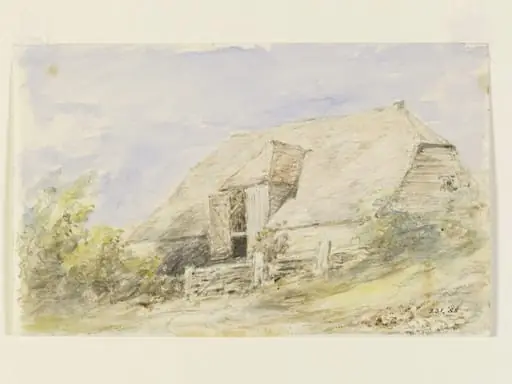
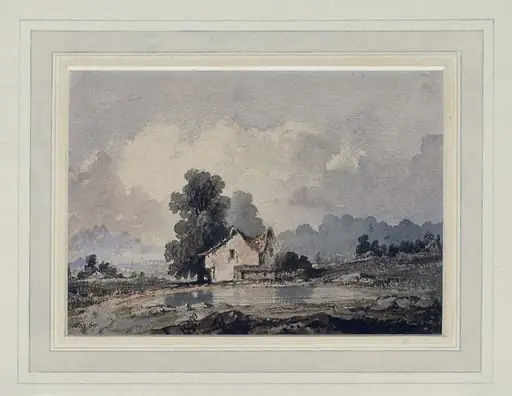
This circular watercolor portrays a quiet nocturnal landscape centered on a modest, weathered structure. The building, with its steep roof and wooden fence, stands beside a set of steps leading to its entrance. A large tree dominates the right side, casting a broad shadow across the scene. Above, a dark sky holds faint stars, suggesting the presence of moonlight without depicting it directly.
Subject & Meaning
The scene evokes solitude and stillness, focusing on a humble architectural form nestled within nature. The absence of human figures and the muted tones emphasize introspection rather than narrative. The path and doorway invite contemplation, suggesting transition or arrival, while the enclosing shadows imply isolation or quiet refuge under nightfall.
Technique & Style
The artist employs delicate watercolor washes to build subtle gradations of tone, using minimal pigment to suggest form and depth. Light is carefully modulated to highlight the building and steps, contrasting with the deep shadows of the tree and surrounding foliage. The circular format concentrates attention inward, enhancing the sense of intimacy and enclosed atmosphere.
History & Provenance
The work is attributed to an artist active in the late 18th or early 19th century, known for small-scale landscape watercolors. Its circular format aligns with popular decorative conventions of the period. The piece remained in private collections until the mid-20th century, when it entered a public collection, where it has since been studied for its quiet mastery of atmospheric effect.
Context
Such works often served as personal studies or gifts, valued for their emotional resonance rather than public display.
Created during a time when landscape watercolors gained favor among amateur and professional artists alike, this work reflects a broader interest in intimate, nocturnal scenes. It shares affinities with Romantic-era sensibilities that valued mood and natural subtlety over grandeur. Such works often served as personal studies or gifts, valued for their emotional resonance rather than public display.
Legacy
Though not widely exhibited, the painting is recognized for its restrained use of light and its ability to convey atmosphere with minimal means. It exemplifies how watercolor could achieve depth and emotional nuance without bold strokes or dramatic contrasts. Its quiet composition continues to inform studies of tonal harmony in 19th-century British watercolor practice.
Artist & collection
Artist
Harrison William Weir painted British country life in quiet watercolors. His Moonlight shows moonlit farmyards and sleeping livestock, rendered in soft blues and grays. Weir worked in the 19th century, when artists…