Artwork
明/清 文止 疏影橫斜 扇|Plum Blossoms
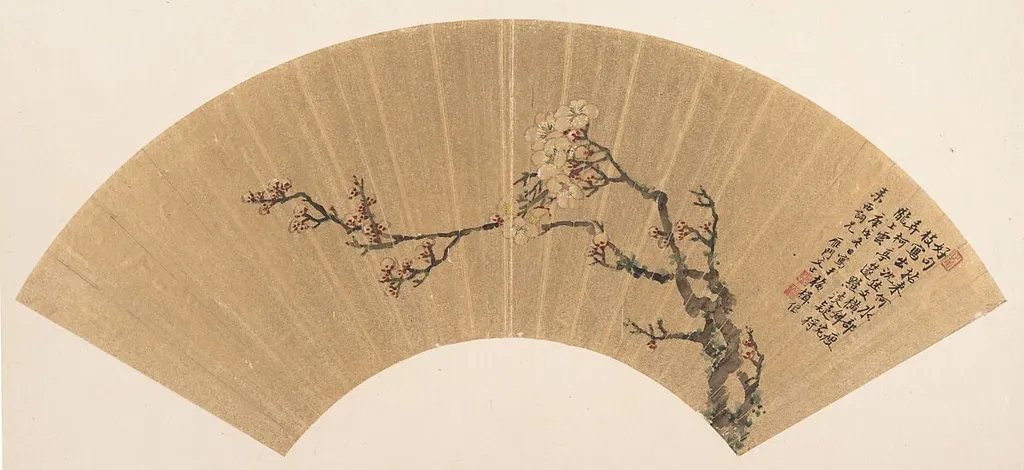
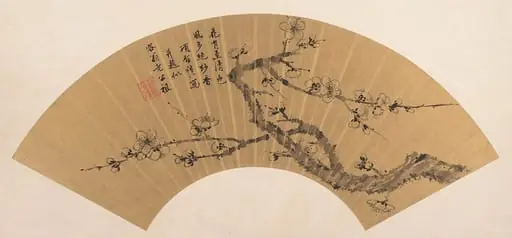
明/清 文止 疏影橫斜 扇|Plum Blossoms is an ink painting by the Baroque artist Wen Zhi. It dates from 1670 and is held in the collection of the Metropolitan Museum of Art.
About this work
The gold paper glows under the ink, making the flowers feel alive in candlelight.
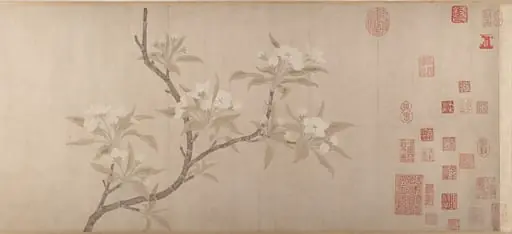
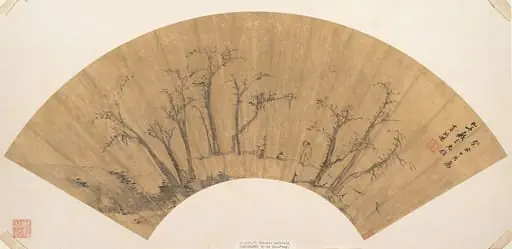
You see a single branch of plum blossoms stretching across a small gold fan. The petals are soft pink, the twigs dark and gnarled.
Wen Zhi painted this in 1670, when fans were everyday objects, not just art. The gold paper glows under the ink, making the flowers feel alive in candlelight. It’s quiet—no birds, no snow—just the branch and its shadow.
If you like this, look up other works in the subject: flowers, china, flower.
Overview
Created in 1670 by the painter Wen Zhi, this work is a folding fan rendered as an album leaf. Executed with ink and color on a sheet of gold‑toned paper, the piece presents a solitary plum branch that stretches diagonally across the fan’s surface. The composition is restrained, focusing solely on the branch and its delicate blossoms without any surrounding narrative elements.
Subject & Meaning
The image centers on a single plum branch, its gnarled twigs supporting soft pink blossoms. In Chinese artistic tradition, plum blossoms often symbolize resilience and renewal, emerging early in winter. By isolating the branch against a luminous background, the work emphasizes the quiet endurance of the plant, inviting contemplation of nature’s subtle vitality.
Technique & Style
Wen Zhi employed brushwork that balances ink’s fluidity with subtle color washes. The gold paper serves as a reflective ground, allowing the pigments to shimmer as light passes over the surface, a quality especially apparent under candlelight. The diagonal arrangement of the branch creates a sense of movement while maintaining compositional harmony.
History & Provenance
Fans in the seventeenth century functioned as everyday accessories as well as carriers of artistic expression. This particular fan, mounted as an album leaf, reflects that dual purpose. Though specific ownership records are scarce, the piece exemplifies the type of portable artwork that circulated among literati circles during the late Ming and early Qing periods.
Artist & collection