Artwork
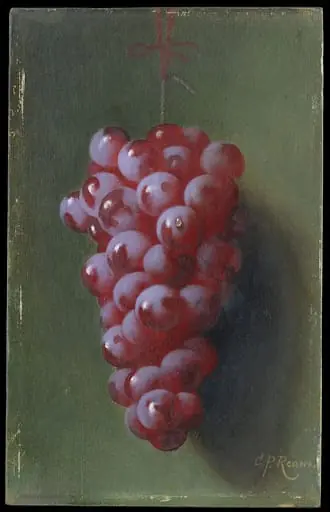
Hanging Bunch of Grapes
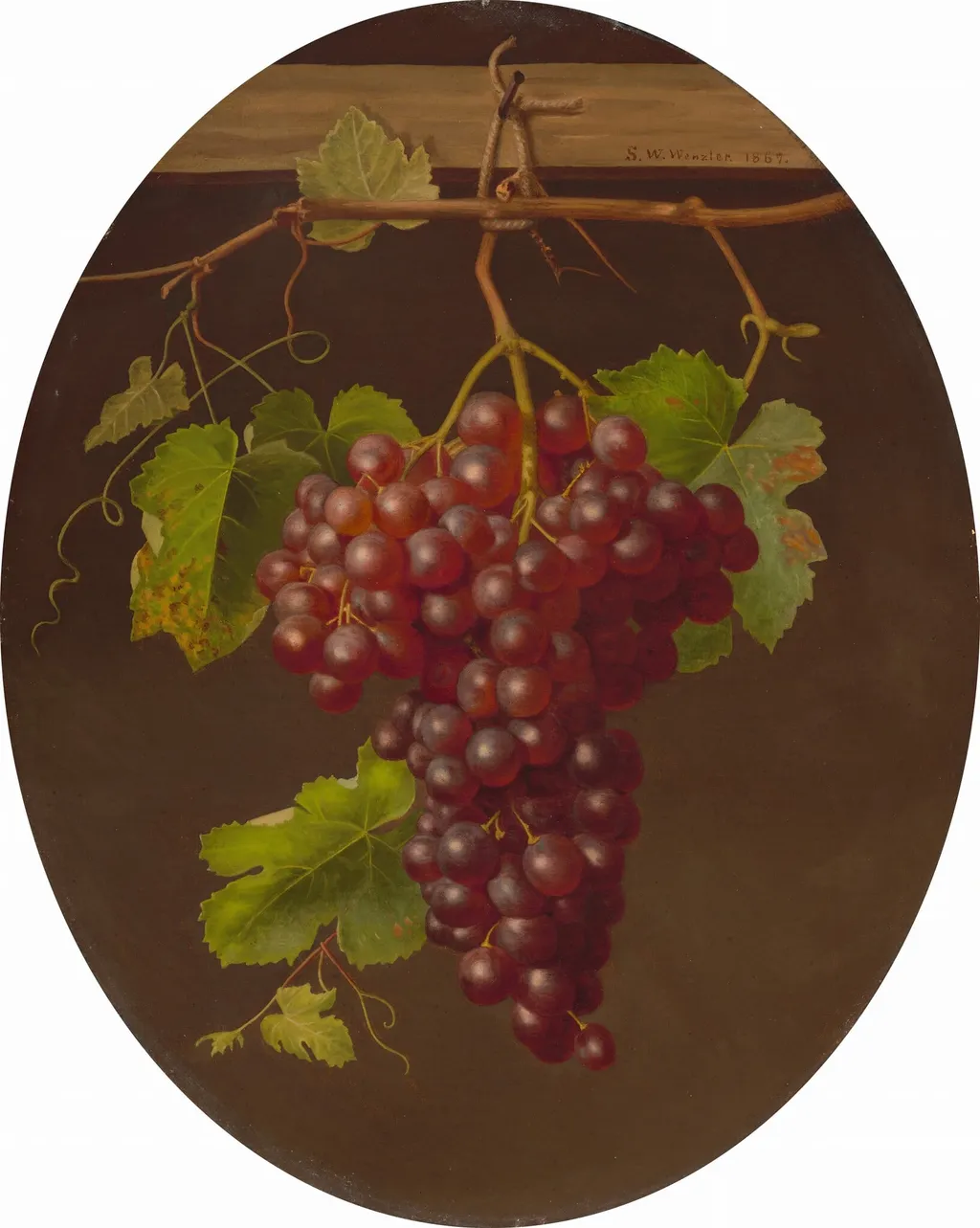
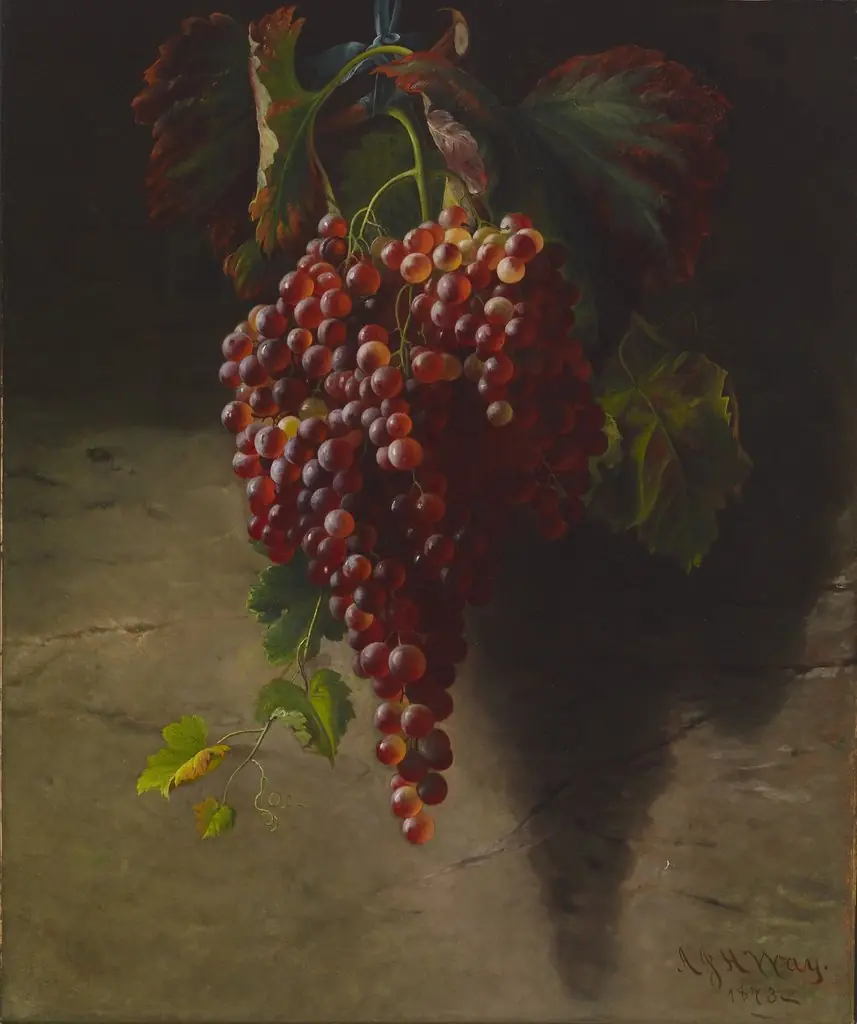
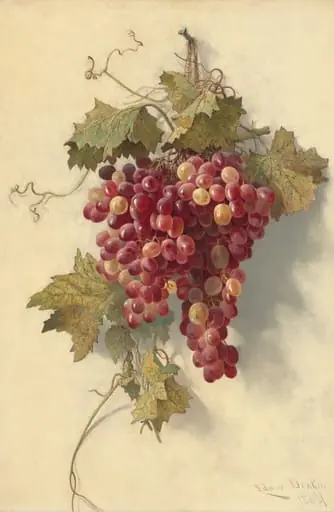
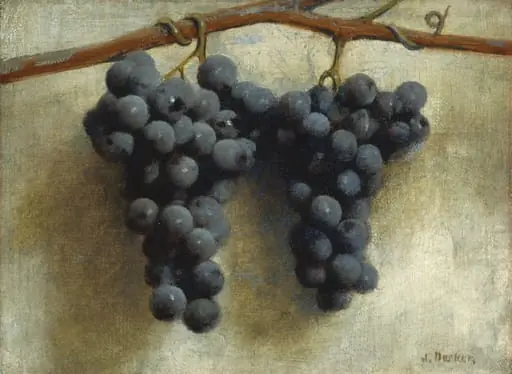
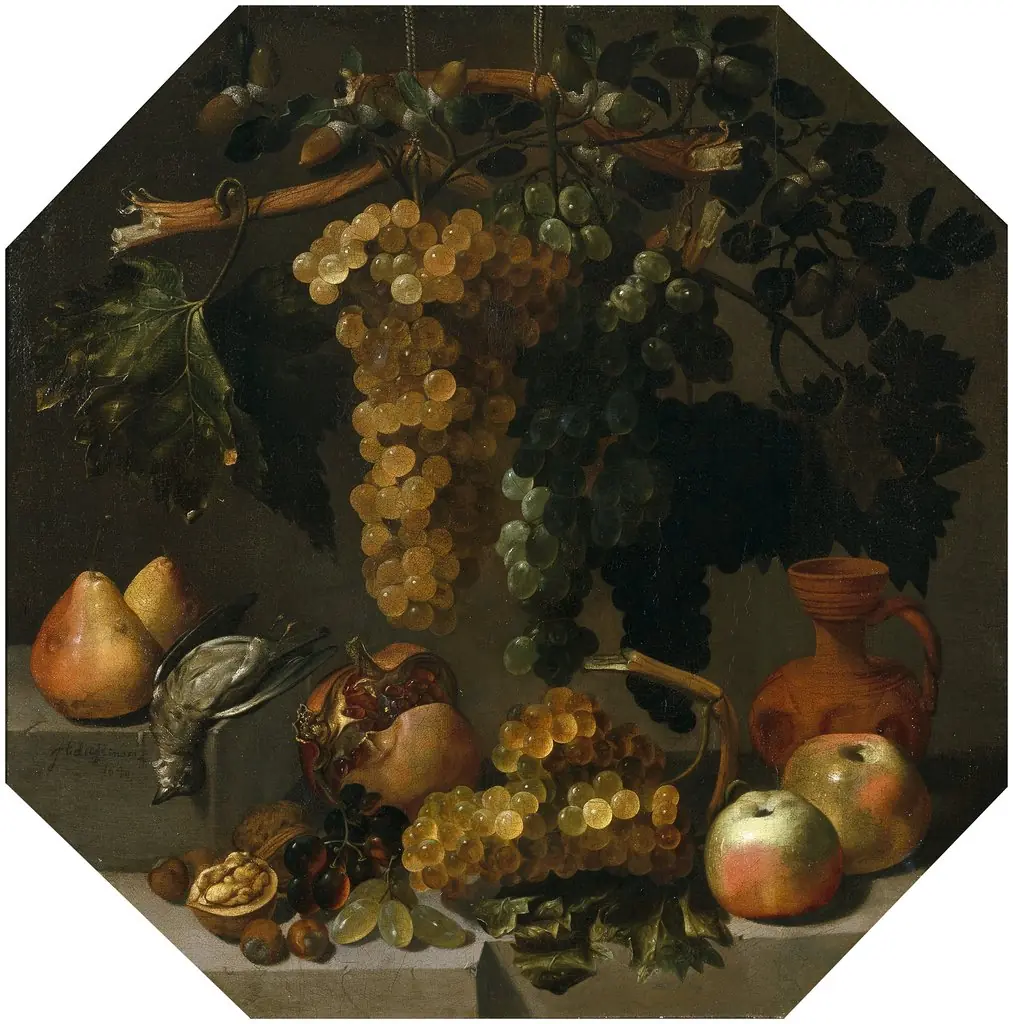
Hanging Bunch of Grapes is an oil painting by the Impressionist artist Sarah Wilhelmina Wenzler. It dates from 1867 and is held in the collection of the National Gallery of Art.
About this work
Overview
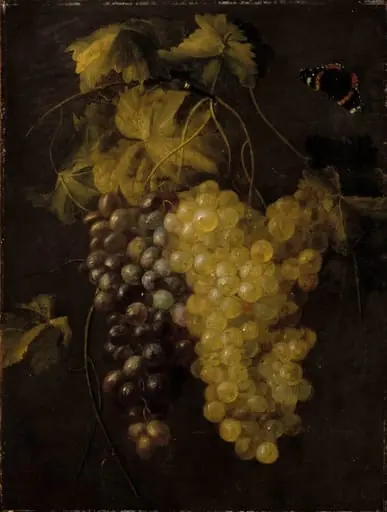
Sarah Wilhelmina Wenzler’s 1867 oil on canvas, titled Hanging Bunch of Grapes, presents a solitary cluster of green grapes suspended from a slender brown stalk. The fruit is set against a deep, almost black background, isolating it and emphasizing its form and texture.
Subject & Meaning
The work focuses exclusively on the natural detail of the grapes, inviting contemplation of their materiality and the fleeting quality of harvest. By isolating the fruit, the painting underscores a quiet, almost meditative observation of everyday objects, a common concern among mid‑nineteenth‑century still‑life painters.
Technique & Style
Wenzler employs a smooth, controlled brushwork that renders the grapes with a lifelike sheen, suggesting the cool, taut skin of the fruit. The limited palette and subtle modeling contrast with the dark ground, creating a sense of depth without relying on the thick, textured impasto often associated with later still‑life treatments.
History & Provenance
Created in the year of the artist’s premature death at age twenty‑eight, Hanging Bunch of Grapes is among the scant surviving pieces attributed to Wenzler. The painting’s provenance is limited, with few documented exhibitions, reflecting the artist’s brief career and the scarcity of her oeuvre in public collections.
Context
The painting emerges during a period when European and American artists were revisiting traditional still‑life motifs, emphasizing realism and the study of light on organic forms. Wenzler’s focus on a single fruit cluster aligns with this broader interest in detailed observation and the scientific study of nature prevalent in the 1860s.
Legacy
Although Wenzler’s name remains relatively obscure, this work offers insight into the capabilities of a young artist working within the still‑life genre. It contributes to the limited record of women painters of the era, providing a tangible example of their participation in the academic art practices of the time.
Artist & collection