Artwork
Octagonal Still Life with Bunches of Grapes
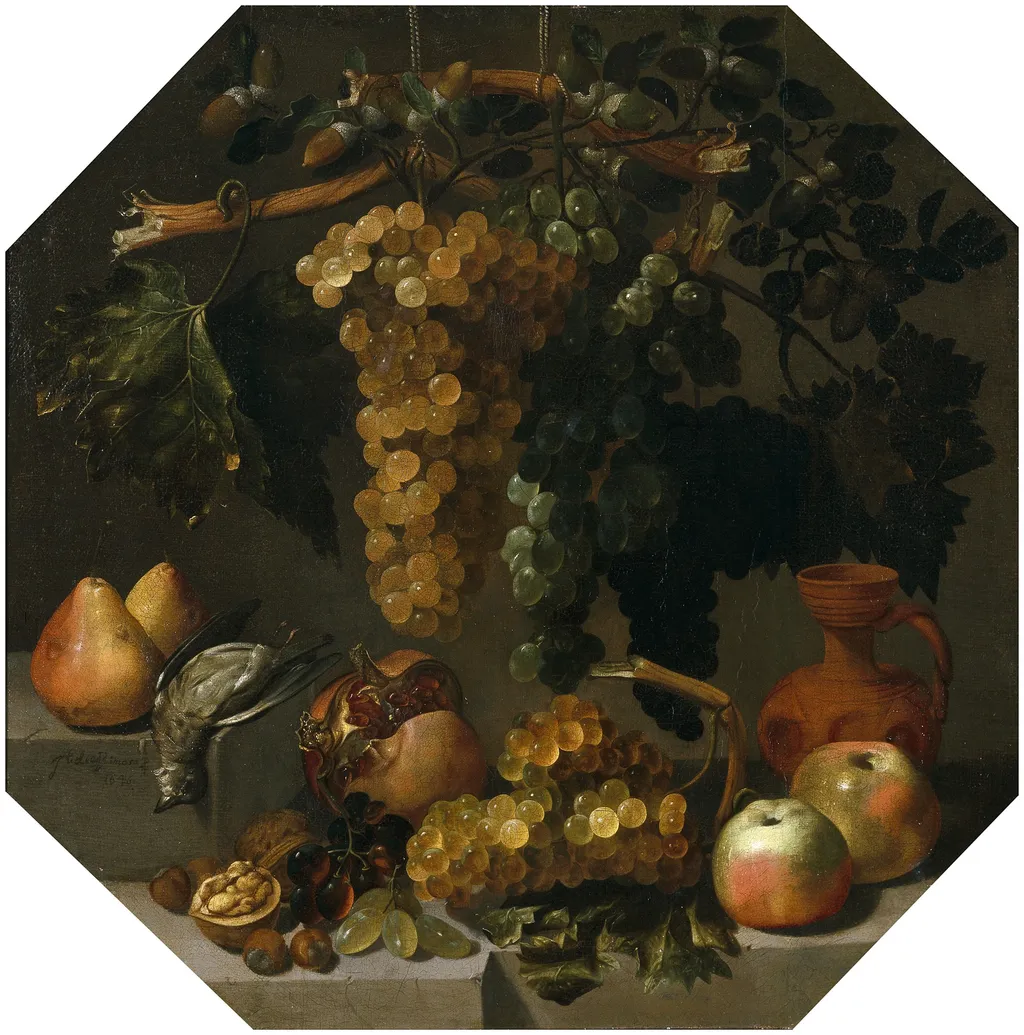
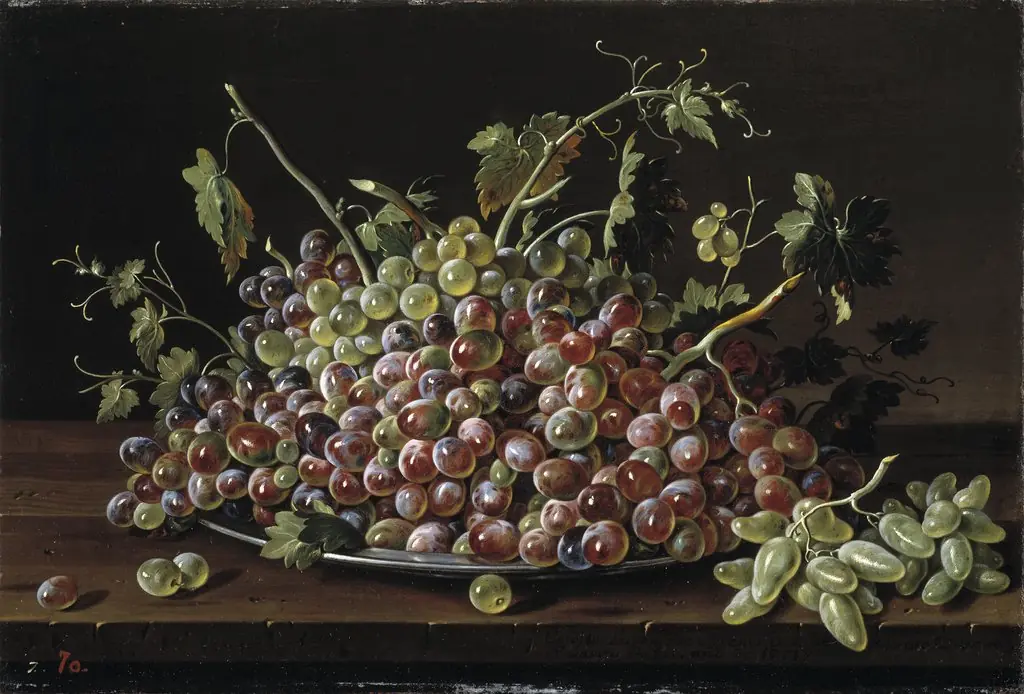
Octagonal Still Life with Bunches of Grapes is an oil painting by the Early Baroque Italian artist Juan Bautista de Espinosa. It is held in the collection of the Museo del Prado. Created in 1646, this oil painting presents a compact still‑life arrangement of grapes set within an octagonal border.
About this work
Overview
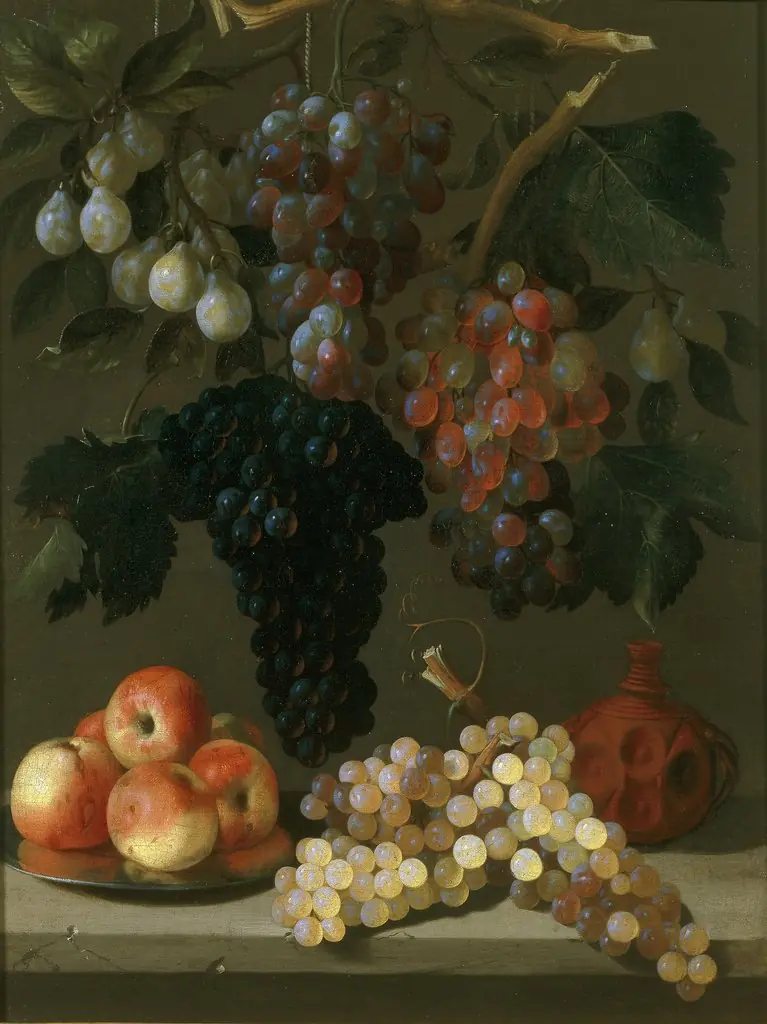
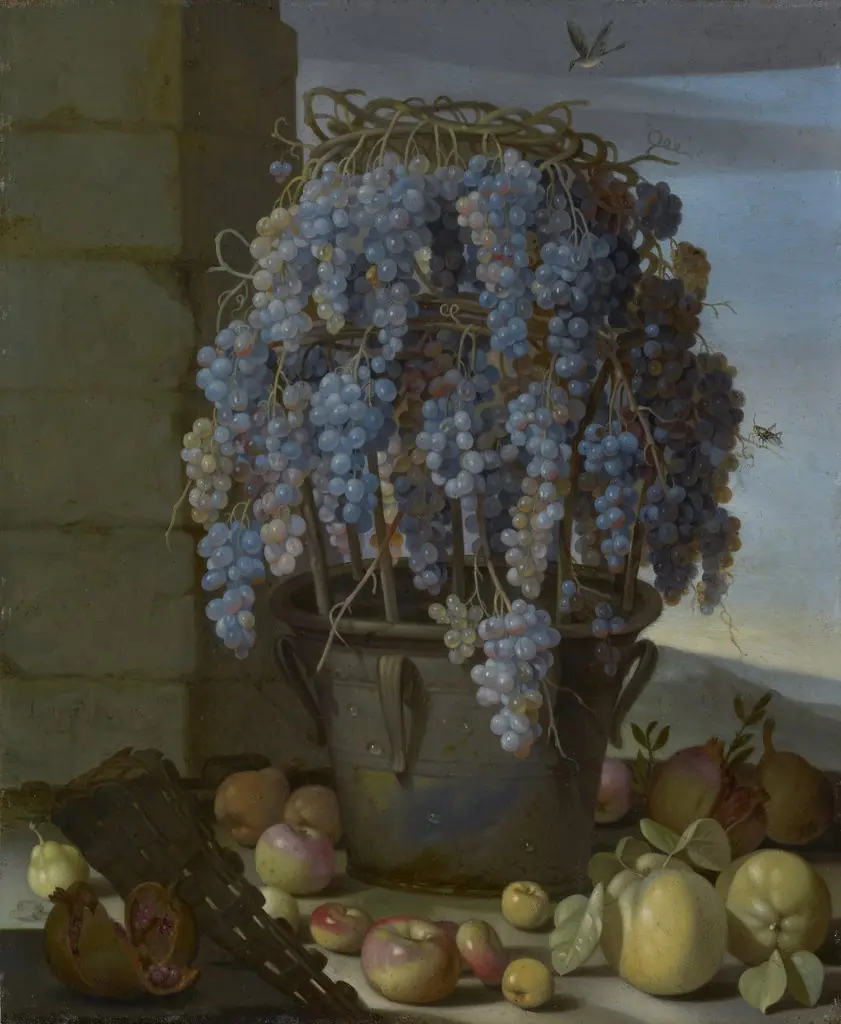
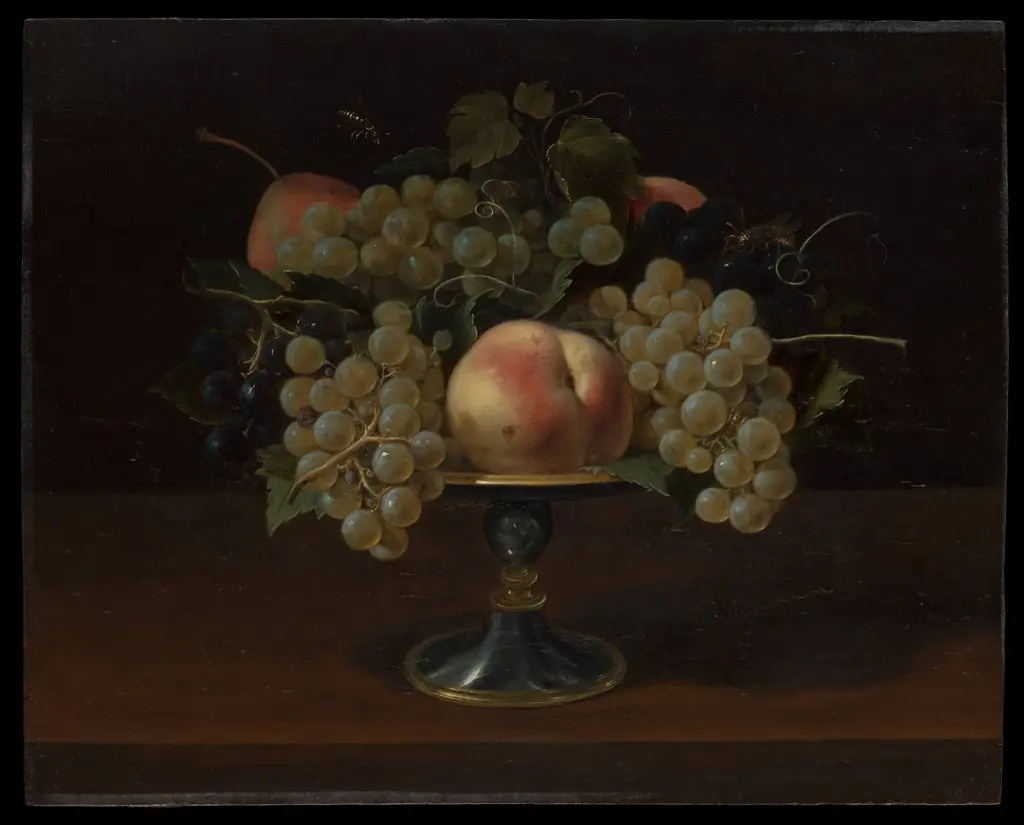
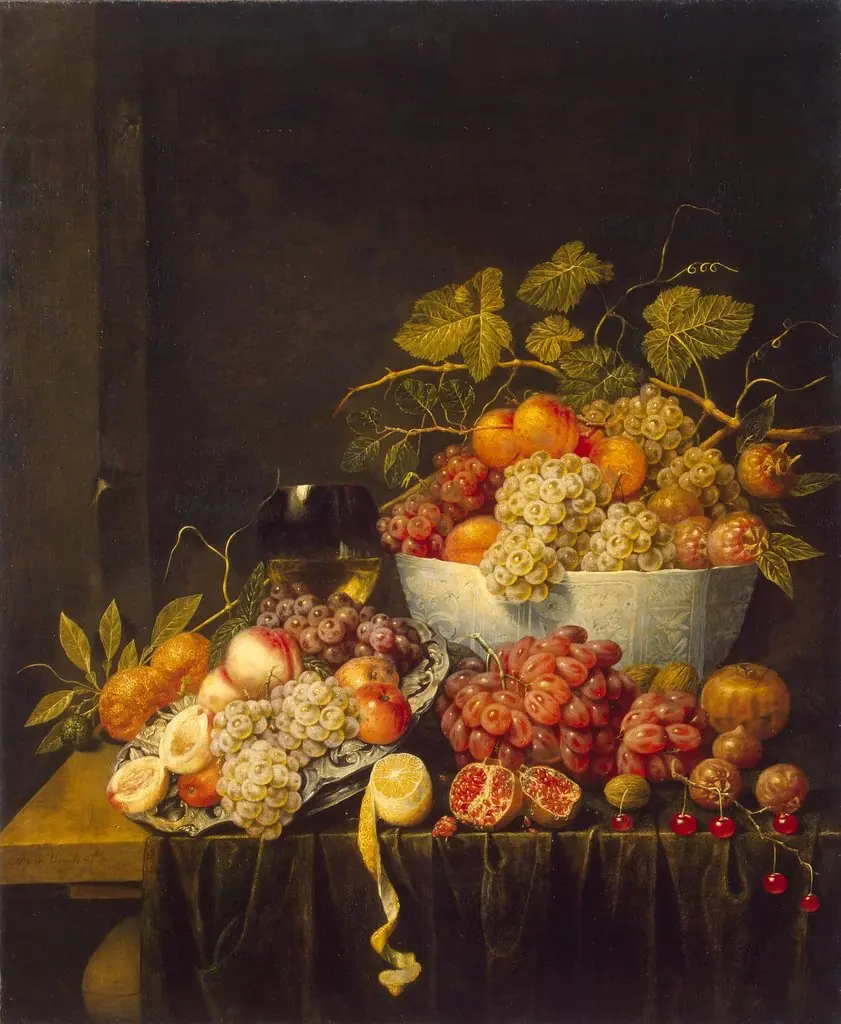
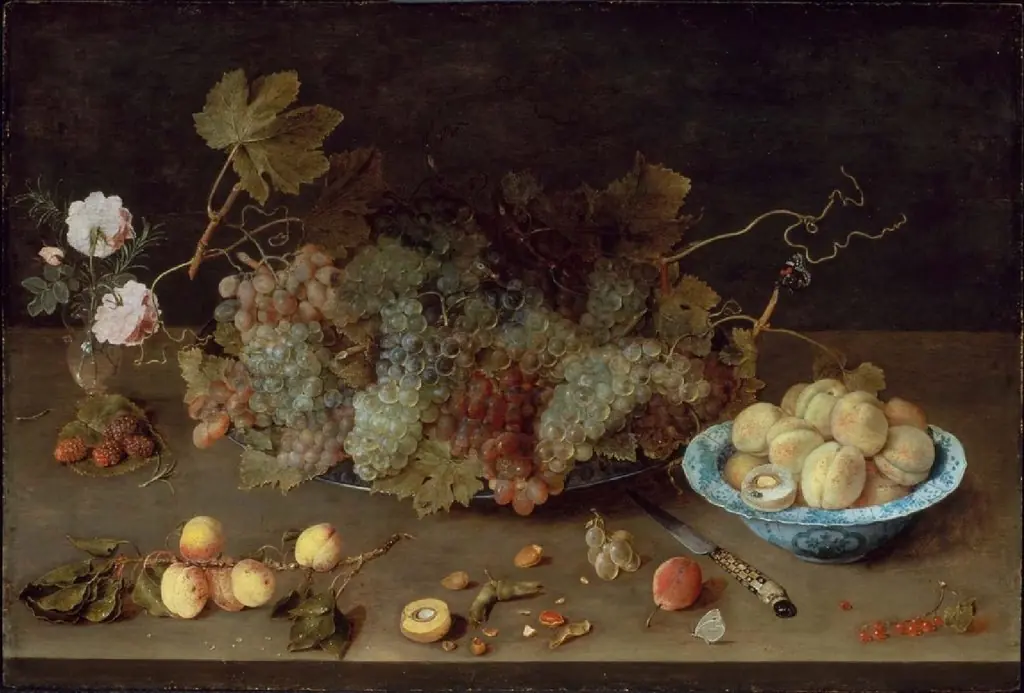
Created in 1646, this oil painting presents a compact still‑life arrangement of grapes set within an octagonal border. The composition balances clusters of fruit with foliage, rendered in subdued earth tones that convey a quiet domestic atmosphere. The work exemplifies the restrained elegance of early Baroque still‑life painting and is part of the Prado Museum’s collection in Madrid.
Subject & Meaning
The focal point consists of several bunches of grapes, some dangling from a slender branch while others rest in a shallow bowl or on a modest tabletop. Accompanying leaves and stems introduce a naturalistic element, suggesting the abundance of a harvest and inviting contemplation of the transience of material pleasure through the simple, unadorned setting.
Technique & Style
Executed in oil on canvas, the artist employs a muted palette of greens, browns, and yellows, allowing subtle tonal variations to model form and surface texture. The careful handling of light creates a gentle chiaroscuro that defines the fruit’s rounded volume, while the precise rendering of foliage demonstrates a meticulous attention to botanical detail characteristic of early Baroque realism.
History & Provenance
The painting is attributed to Juan Bautista de Espinosa, a Spanish painter active in the first half of the 17th century, whose oeuvre is largely limited to still‑life subjects. Surviving works are scarce; this piece is among the few securely documented examples and has been held by the Museo del Prado in Madrid since its acquisition, confirming its status within the museum’s Spanish Baroque holdings.
Context
Espinosa’s still lifes reflect the influence of Italian early Baroque models, particularly the emphasis on compositional balance and restrained color.
Espinosa’s still lifes reflect the influence of Italian early Baroque models, particularly the emphasis on compositional balance and restrained color. The octagonal frame frames the fruit in a geometric order that echoes contemporary decorative trends, while the subdued tonality aligns with the period’s shift toward naturalism and the moralizing symbolism often associated with fruit in Spanish art.
Artist & collection
Artist
Juan Bautista de Espinosa (1590–1641) was a Spanish painter. Much of his work, which included religious paintings and portraits, is now untraced, and his few known extant paintings are all still lifes.