Artwork
Four Regents of the Groot-Kramergild
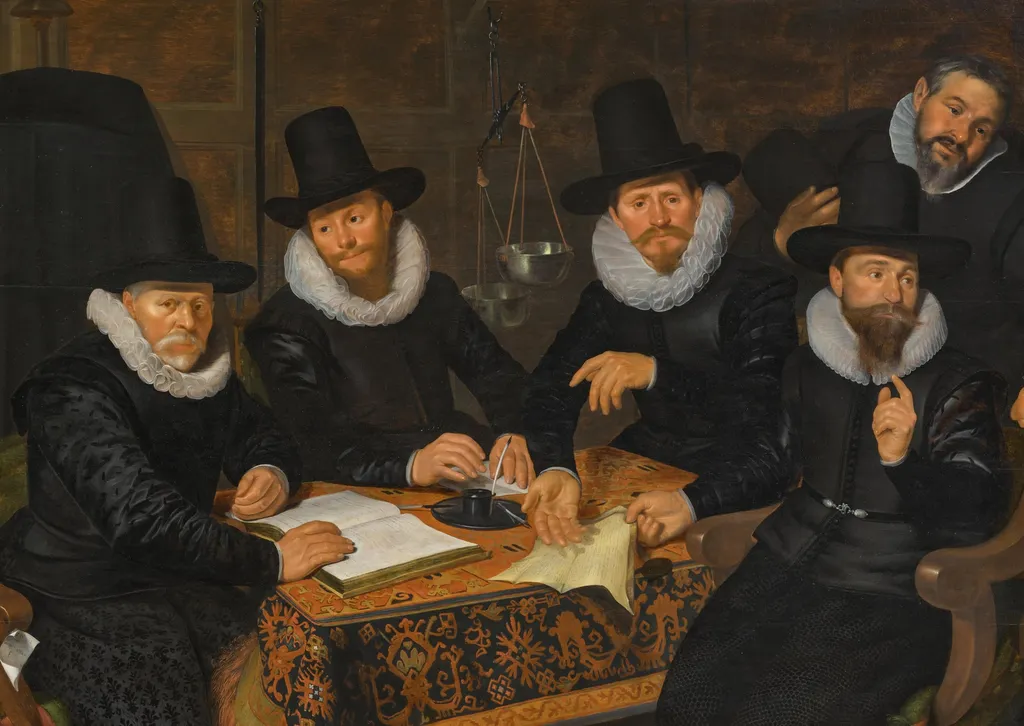
Four Regents of the Groot-Kramergild is an oil painting by Werner van den Valckert. It dates from 1622 and is held in the collection of the Gemäldegalerie Berlin.
About this work
Overview
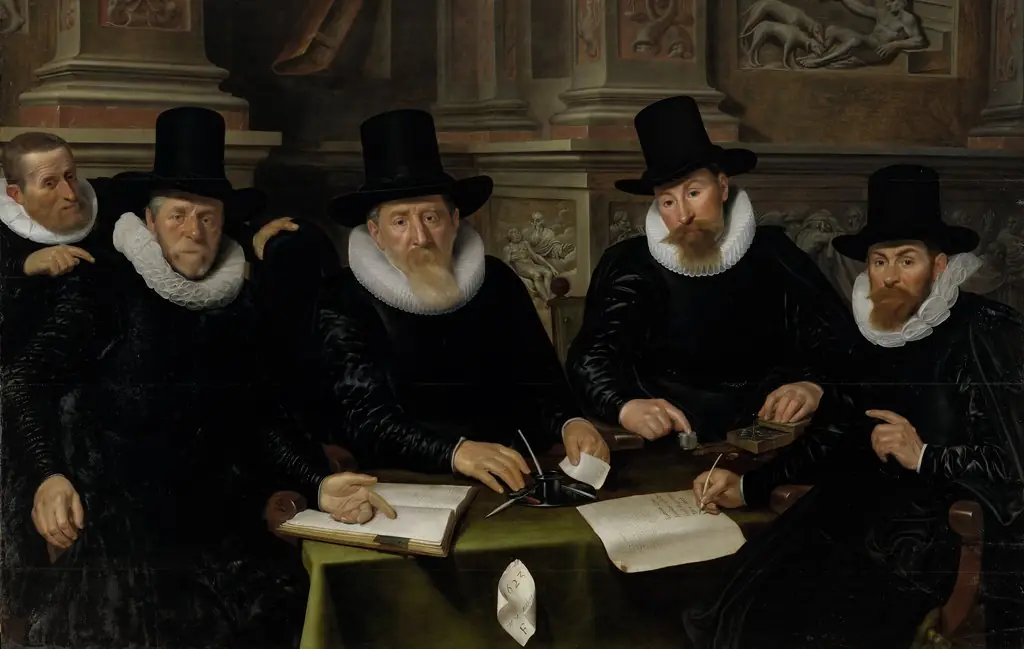
Painted in 1622 by Werner van den Valckert, this work depicts six men associated with the Groot-Kramergild, a Amsterdam-based guild for textile merchants.
Painted in 1622 by Werner van den Valckert, this work depicts six men associated with the Groot-Kramergild, a Amsterdam-based guild for textile merchants. The painting is part of a tradition of group portraiture commissioned by civic and professional organizations. It resides in the Gemäldegalerie, Berlin, where it is recognized for its precise rendering and restrained composition, reflecting the values of its subjects and era.
Subject & Meaning
The six figures are regents—elected officials—of the Groot-Kramergild, gathered in a formal meeting. Their focused expressions and orderly arrangement suggest duty and authority. One man writes in a ledger, another holds a document, and the presence of a scale, book, and inkwell underscores their role in regulating trade, record-keeping, and commerce. The direct gaze of the subjects asserts their public responsibility and collective identity.
Technique & Style
Van den Valckert employs fine brushwork to capture textures: the crispness of linen collars, the sheen of silk, and the weave of the tablecloth. The palette is muted, dominated by blacks and grays, with subtle highlights on white lace and metal objects. Lighting is even and directional, modeling forms without dramatic contrast. The composition is tightly structured, emphasizing order and gravitas over individual expression.
History & Provenance
Commissioned by the guild in 1622, the painting likely hung in their meeting hall as a symbol of institutional continuity. It entered the collection of the Gemäldegalerie Berlin in the 19th century, possibly through acquisition from a private Dutch collection. Its survival through centuries reflects its enduring significance as a record of civic leadership in the Dutch Republic.
Context
In early 17th-century Amsterdam, guilds wielded considerable economic and social influence. Portraits of regents were common, serving both as commemoration and assertion of legitimacy. This work aligns with similar group portraits by artists like Frans Hals, though van den Valckert’s approach is more formal and less animated, reflecting the conservative tone of this particular organization.
Legacy
The painting remains a valuable document of Dutch civic life and portraiture conventions. While not widely known outside specialist circles, it contributes to the understanding of how professional associations visualized authority. Its preservation allows ongoing study of material culture, dress, and the visual rhetoric of governance in the Dutch Golden Age.
Own this work as a print
Artist & collection
Artist
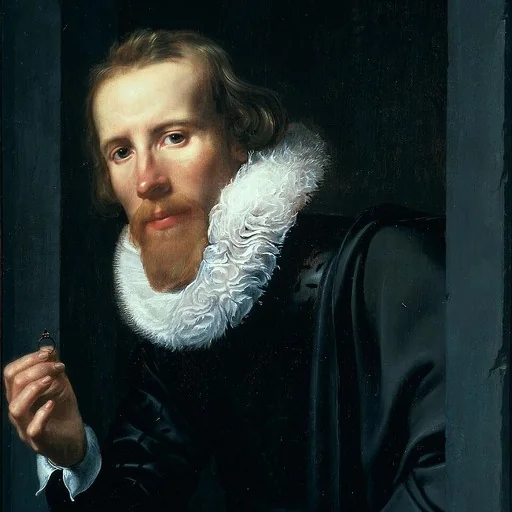
Werner van den Valckert (1585–1635) was an artist, born in The Hague.

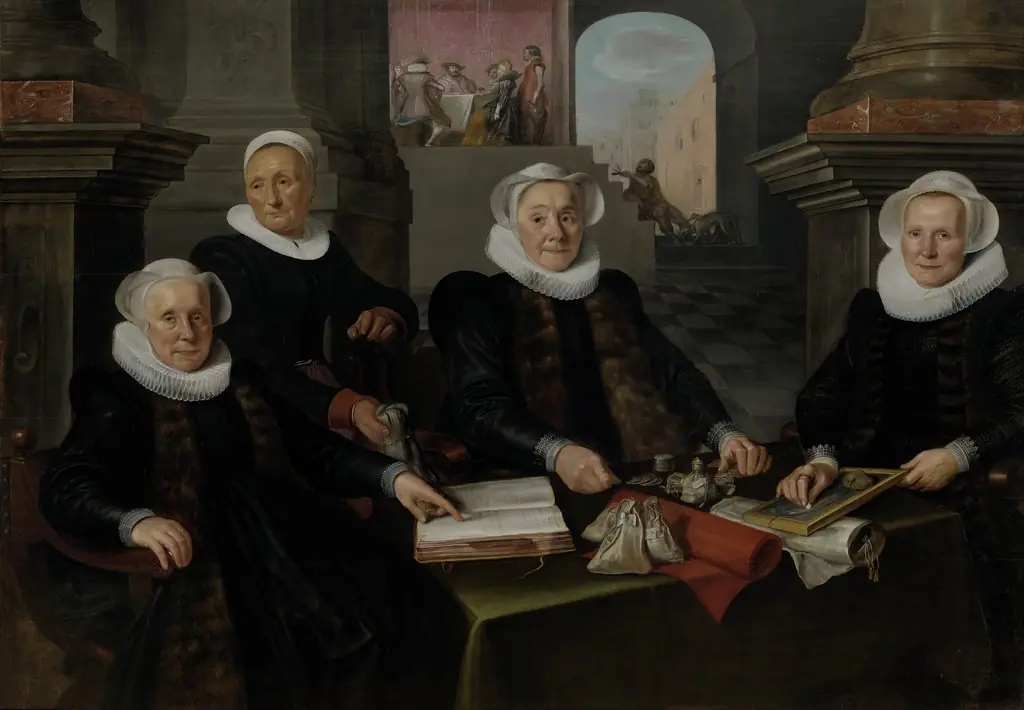

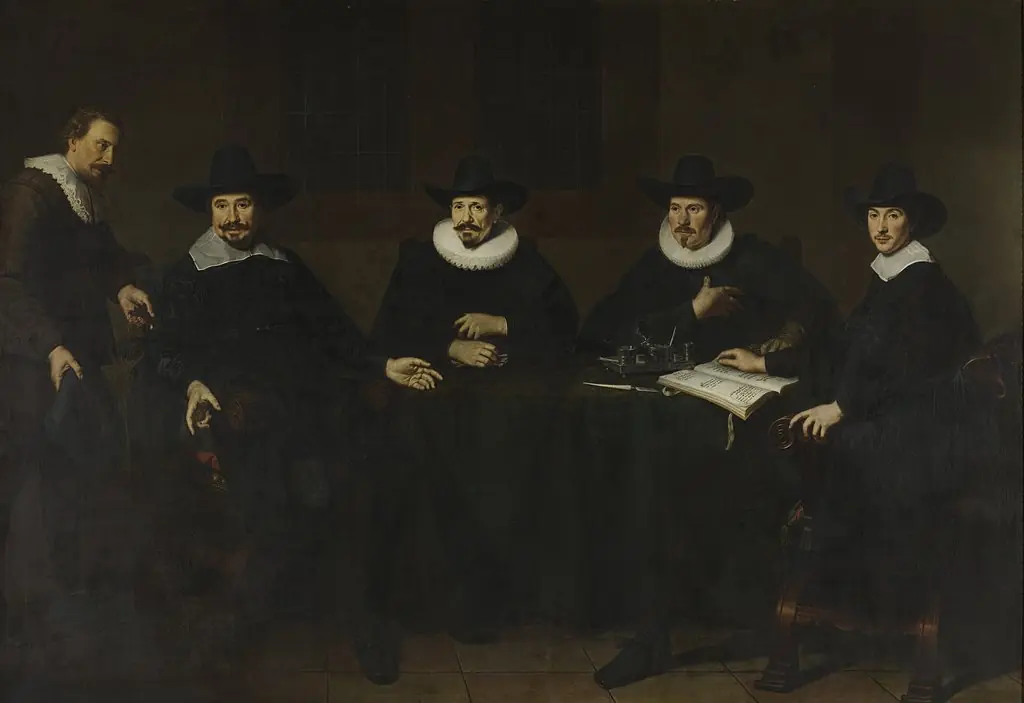 The directors of the serge cloth industry, Amsterdam, 1643
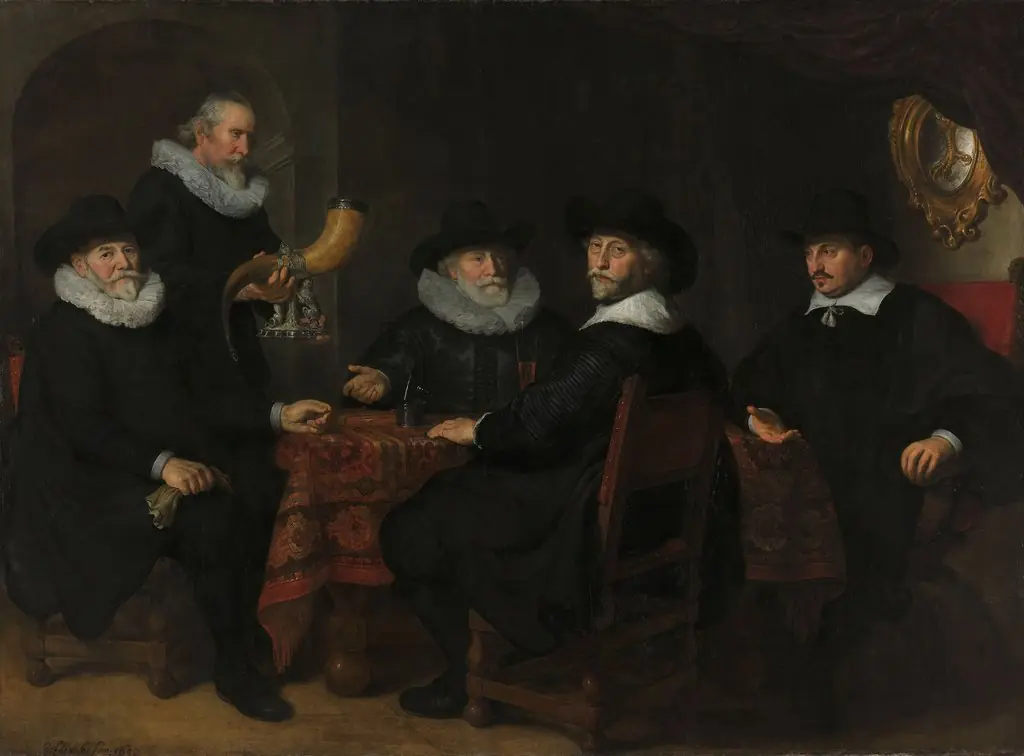 Four directors of the arquebusier's guild, Amsterdam, 1642
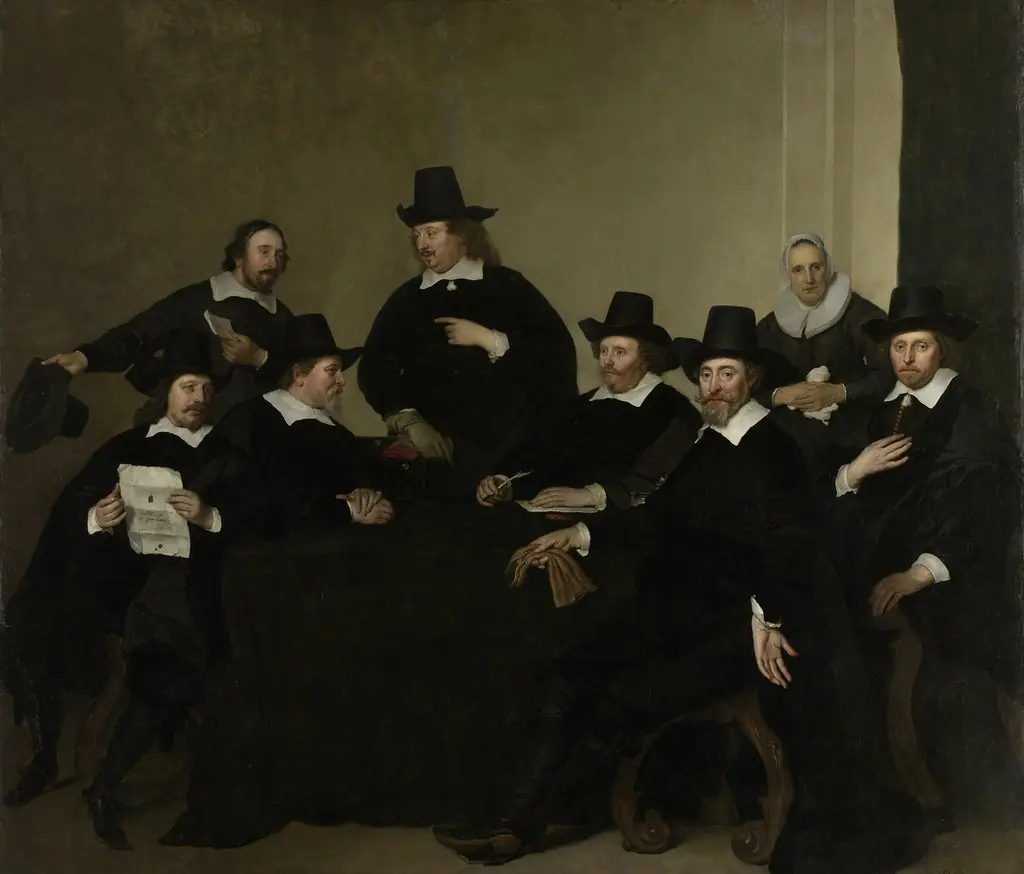 The regents of the Nieuwe Zijds institute for the outdoor relief of the poor, Amsterdam, ca 1650
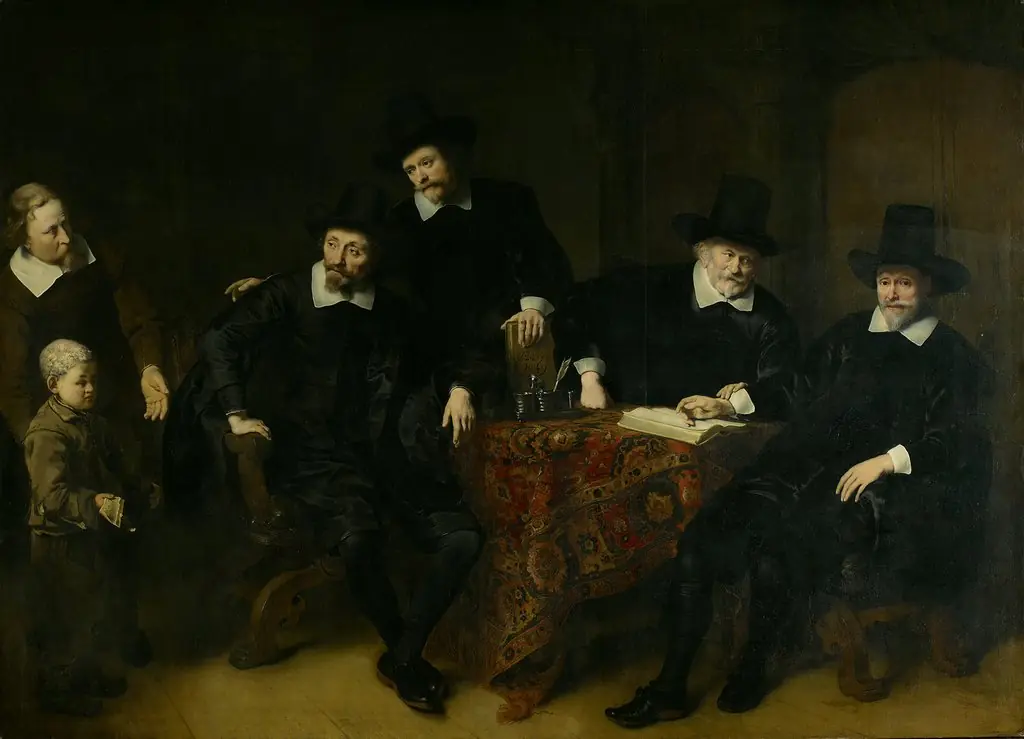 The Regents of the Leper's house in Amsterdam in 1649
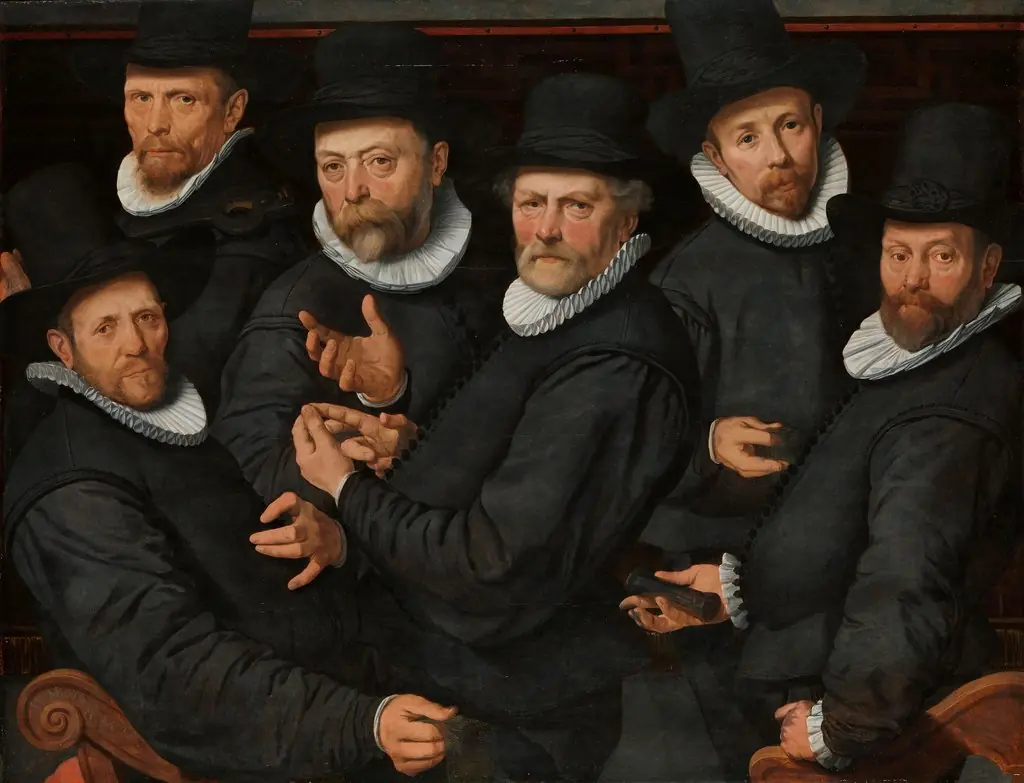 Six Wardens of the Drapers’ Guild
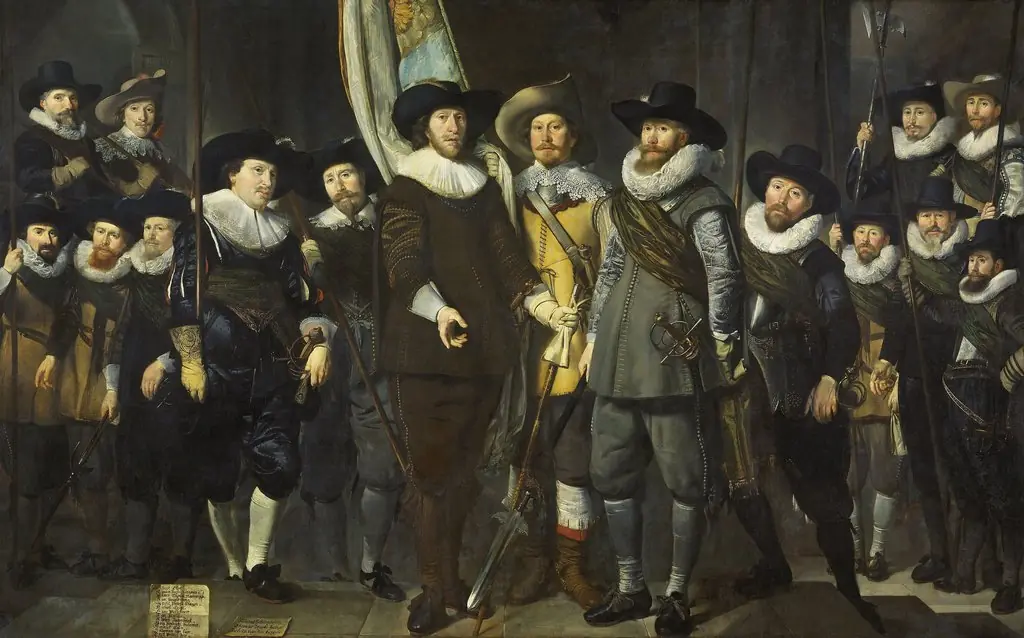 Officers and other civic guardsmen of the IIIrd District of Amsterdam, under the command of Captain Allaert Cloeck and Lieutenant Lucas Jacobsz Rotgans
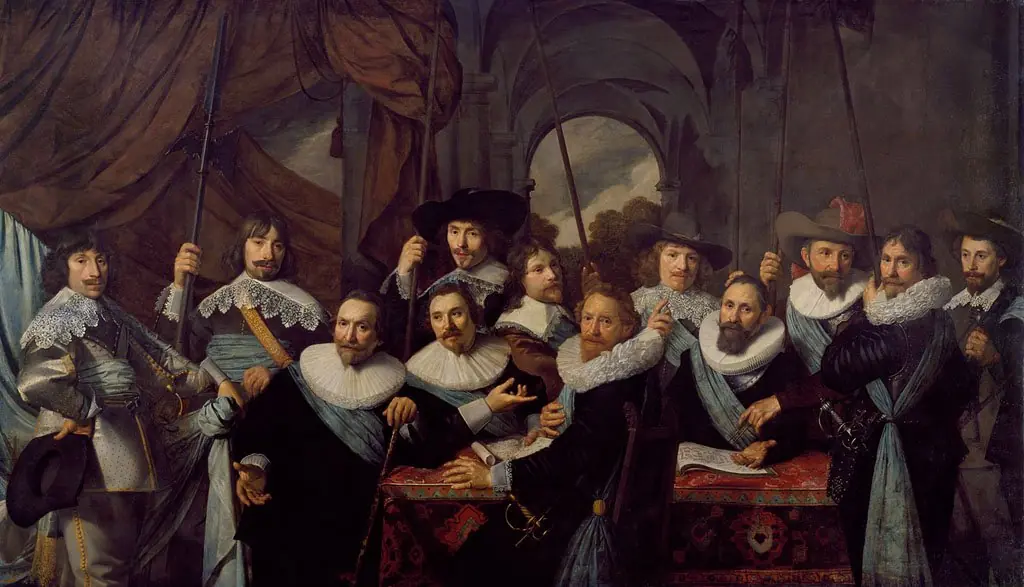 Members of the civic guard company of Captain Dirck Tholinx and Lieutenant Pieter Adriaenszn Raep
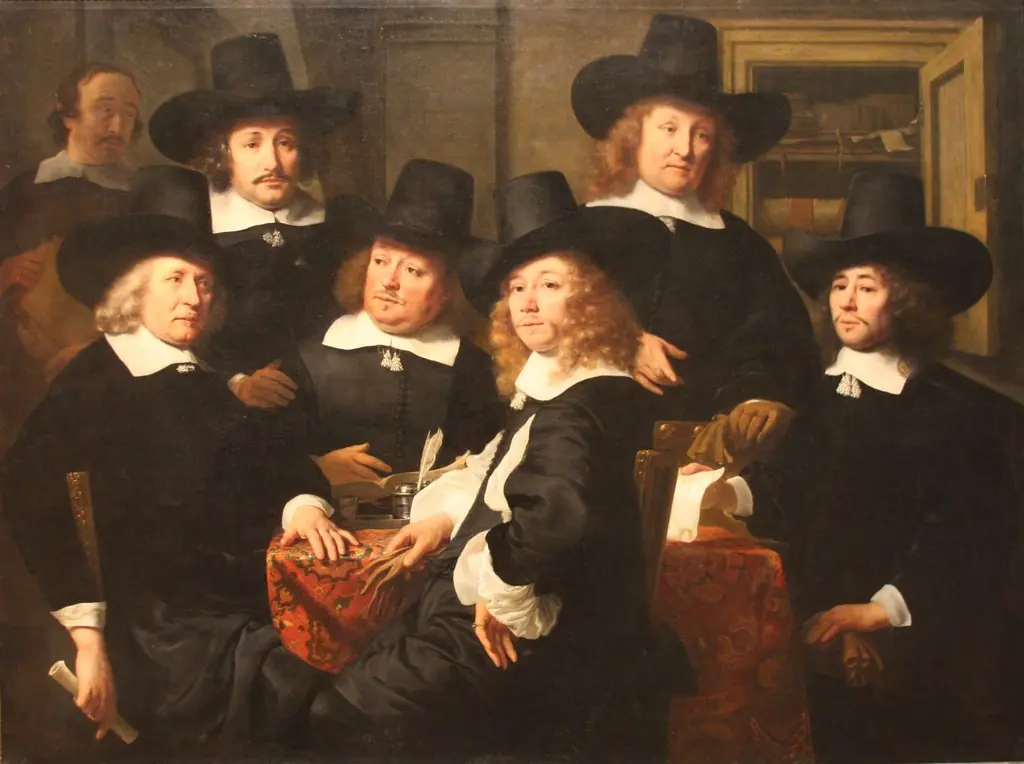 Six regents and the beadle of the Nieuwe Zijds institute for the outdoor relief of the poor