Artwork
The Flight into Egypt
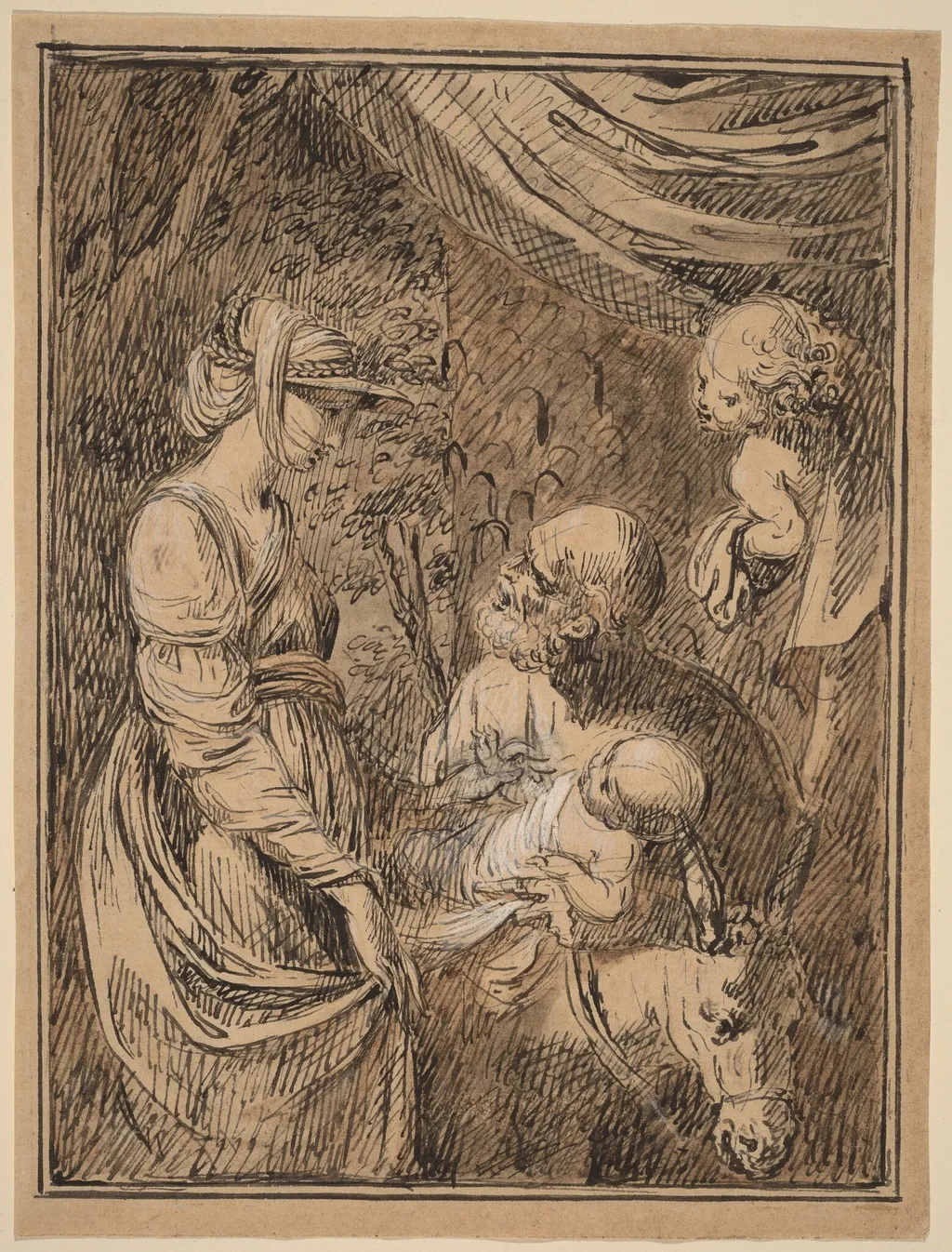
The Flight into Egypt is an ink drawing by the Romanticist artist Benjamin West. It dates from 1800 and is held in the collection of the National Gallery of Art. This drawing, dated around 1800, depicts the biblical episode of the Holy Family’s journey to Egypt.
About this work
Overview
The composition focuses on two figures moving through a subdued landscape, rendered with delicate tonal gradations and selective highlights.
This drawing, dated around 1800, depicts the biblical episode of the Holy Family’s journey to Egypt. Executed in pen and brown ink with wash and heightened by white gouache on laid paper, it belongs to the tradition of preparatory or finished graphic works rather than oil painting. The composition focuses on two figures moving through a subdued landscape, rendered with delicate tonal gradations and selective highlights.
Subject & Meaning
The figures represent the Virgin Mary and the infant Jesus during their flight from Herod’s persecution. Mary, draped in a modest robe and head covering, carries or walks beside the child, who is swaddled and appears at rest. The quiet intimacy of the moment underscores themes of protection, endurance, and divine purpose. The absence of dramatic action or external threat emphasizes inner stillness over narrative urgency.
Technique & Style
The artist employs layered ink washes to build atmospheric depth, while white gouache adds luminous accents to fabric folds and the child’s swaddling. Fine pen lines define contours with restraint, avoiding sharp detail. The background is suggested rather than described—faint, indistinct shapes imply trees or distant architecture. The overall effect is hazy and contemplative, aligning with early Romantic sensibilities that favored mood over clarity.
History & Provenance
Attributed to Benjamin West, this work emerged during his later years in London, when he increasingly turned to religious subjects and graphic media. Though not widely exhibited in his lifetime, it likely served as a study or devotional piece. Its survival suggests it was valued within private or ecclesiastical circles, though its exact early ownership remains undocumented.
Context
In early 19th-century Britain, religious themes remained central to academic art, even as Romanticism emphasized emotion and the sublime. West, a former president of the Royal Academy, balanced classical training with emerging sentimental modes. This drawing reflects a shift toward intimate, psychologically resonant biblical scenes, distinct from grand historical narratives favored earlier in his career.
Legacy
Though not among West’s most celebrated works, this drawing exemplifies his late engagement with quiet, personal spirituality in graphic form. It contributes to the broader understanding of how academic artists adapted religious subjects to Romantic sensibilities, using restraint and tonal nuance to evoke reverence rather than spectacle. Its preservation offers insight into the private devotional practices of the period.
Artist & collection

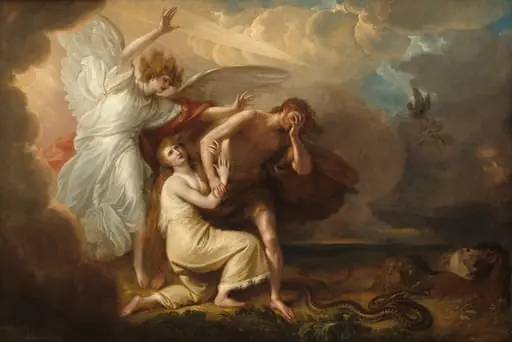 The Expulsion of Adam and Eve from Paradise
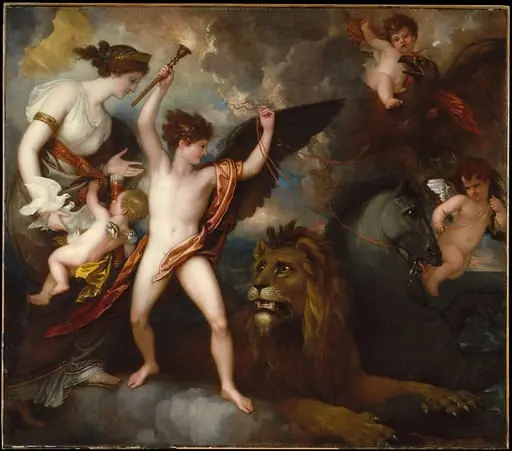 Omnia Vincit Amor, or The Power of Love in the Three Elements
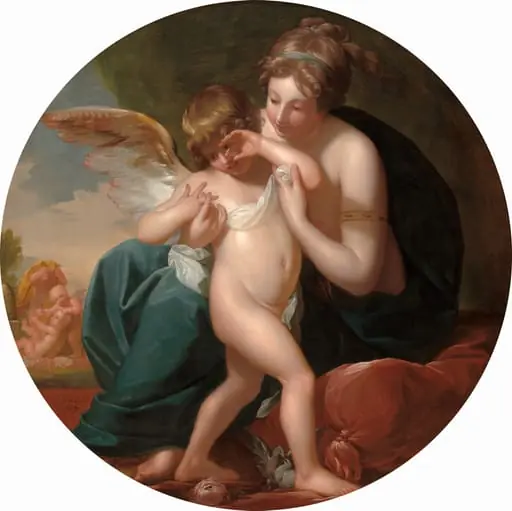 Cupid, Stung by a Bee, Is Cherished by his Mother
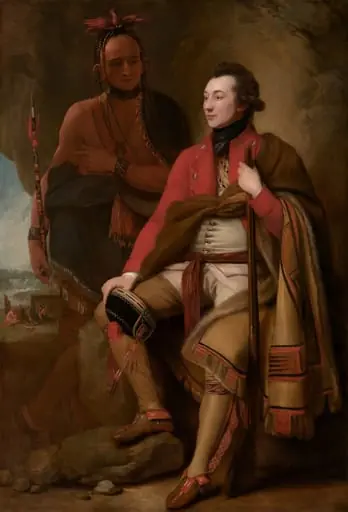 Colonel Guy Johnson and Karonghyontye (Captain David Hill)
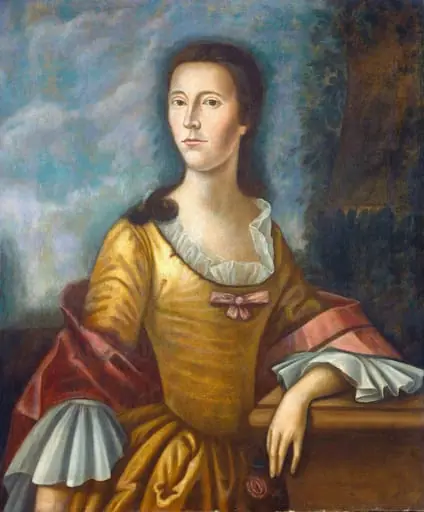 Mary Bethel Boude (Mrs. Samuel Boude)
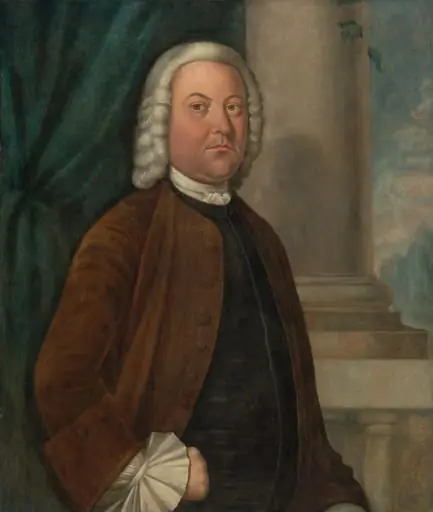 Dr. Samuel Boude
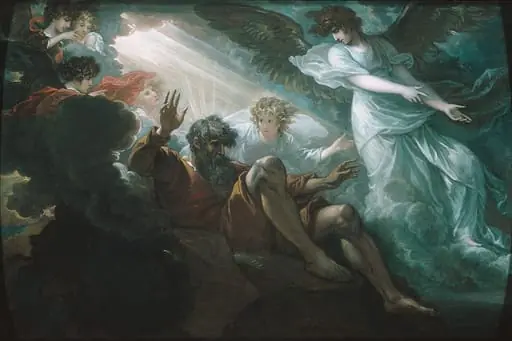 Moses Shown the Promised Land
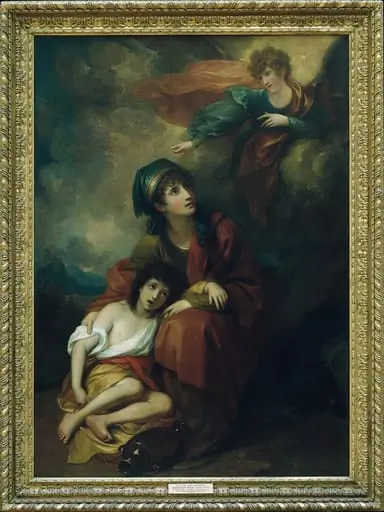 Hagar and Ishmael
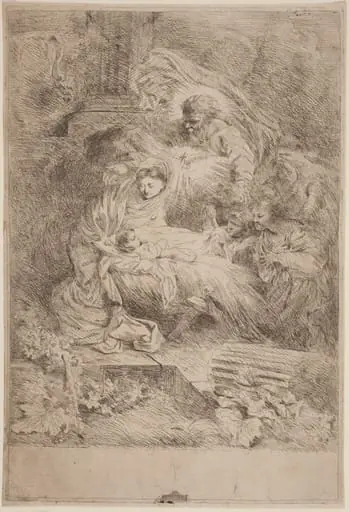 The Nativity with God the Father and the Holy Spirit
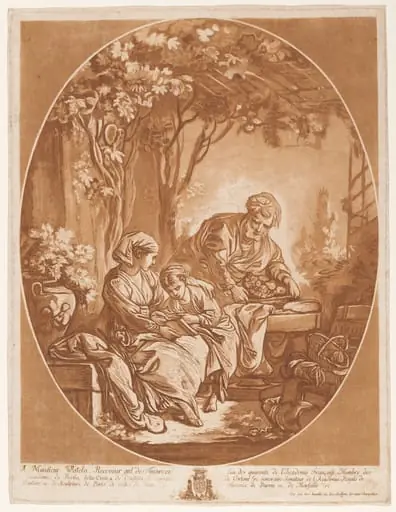 Education of the Virgin
![Holy Family [recto], by Donato Creti](https://artifactworldgallery.com/img/donato-creti--holy-family-recto--7e3a584f7b6c5852-w320.webp) Holy Family [recto]
Holy Family [recto]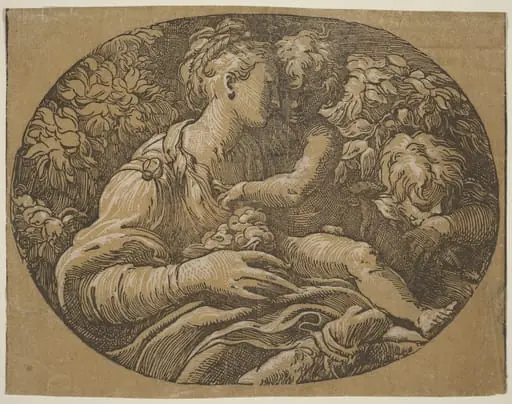 The Virgin with the Rose
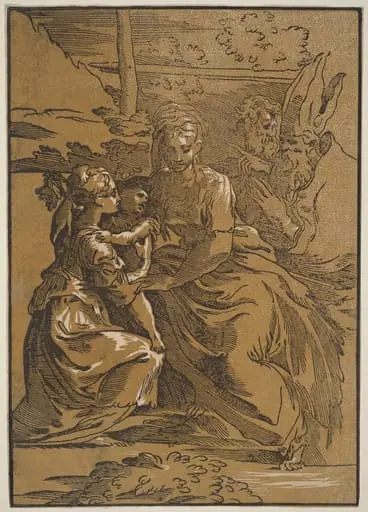 The Holy Family with Two Saints
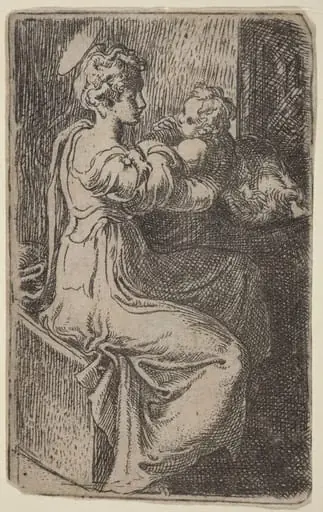 Virgin and Child
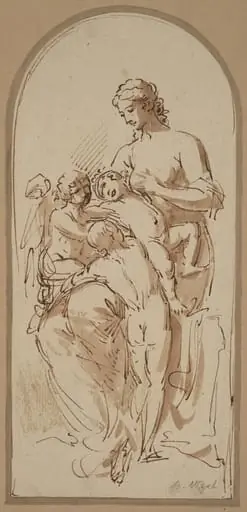 Charity
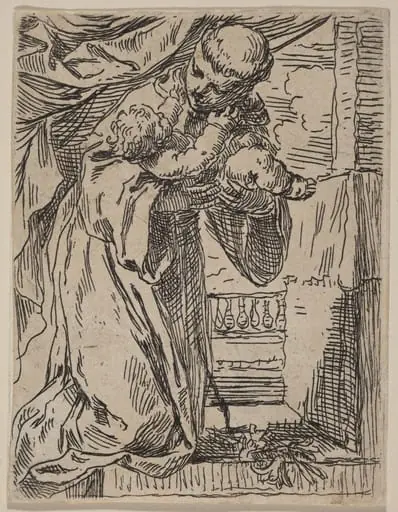 Saint Anthony of Padua Holding the Christ Child
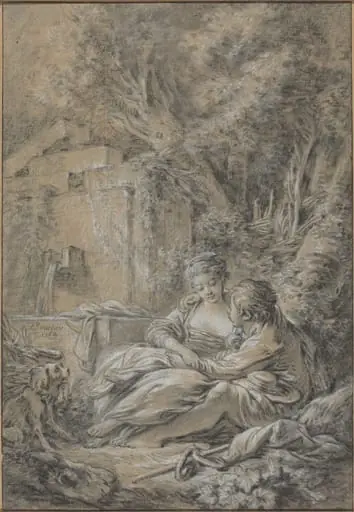 Tête-à-tête
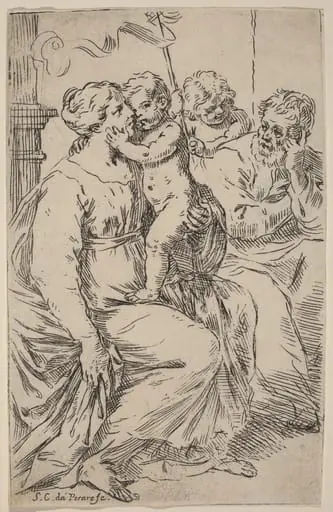 The Holy Family
![The Apotheosis of Saint Mark [recto and verso], by Pietro Roselli](https://artifactworldgallery.com/img/pietro-roselli--the-apotheosis-of-saint-mark-recto-and-verso--cd3a4ec627f729de-w320.webp) The Apotheosis of Saint Mark [recto and verso]
The Apotheosis of Saint Mark [recto and verso]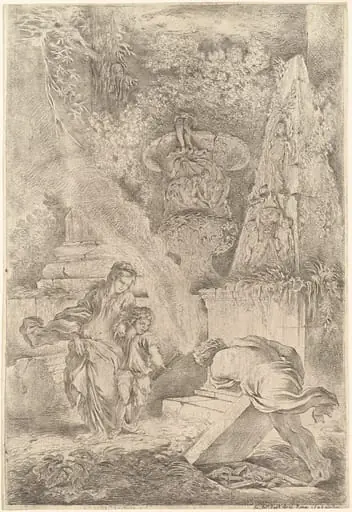 Theseus Finding Aegeus' Arms