Artwork
The Virgin with the Rose
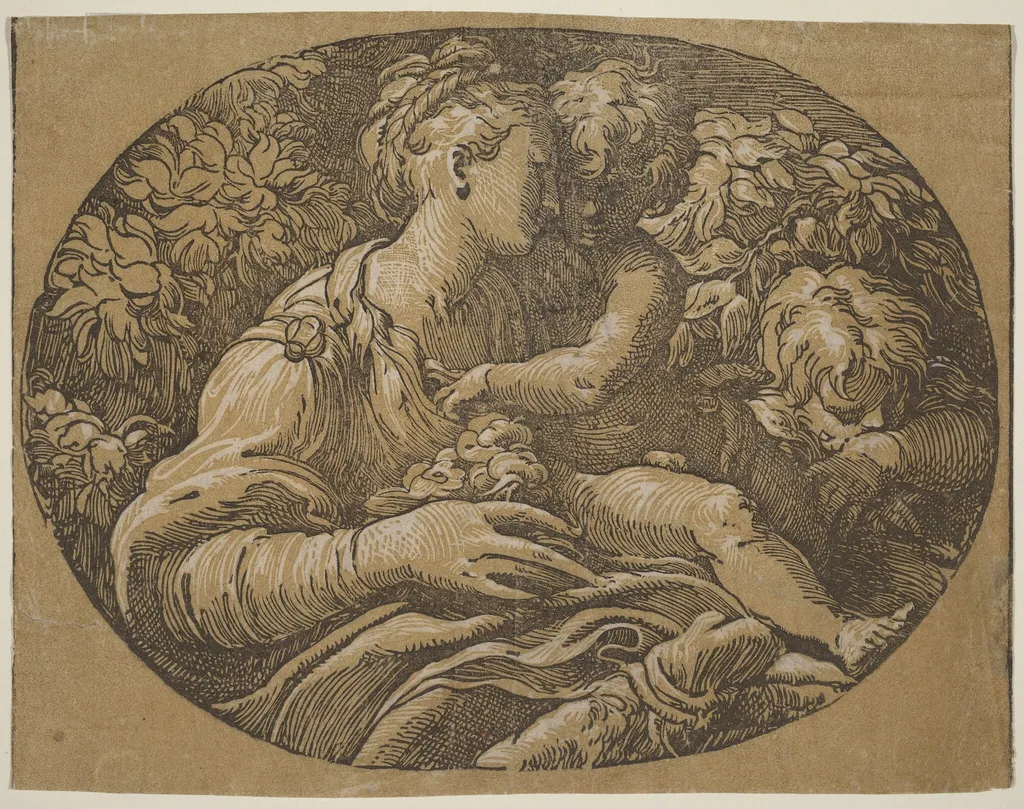
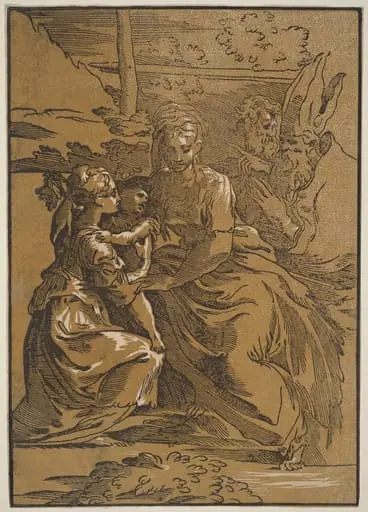
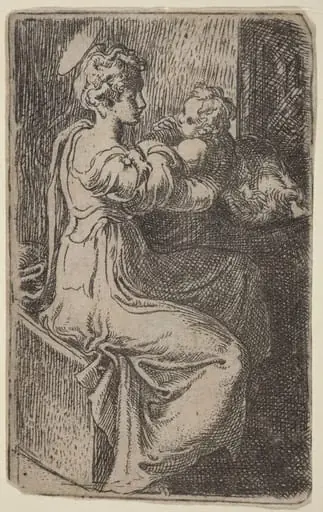
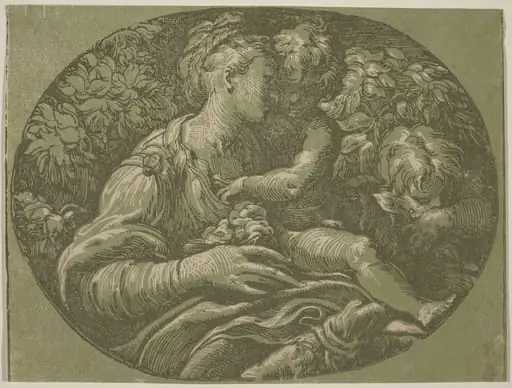
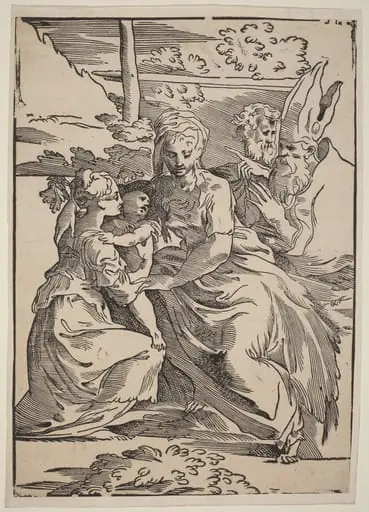
The Virgin with the Rose is an ink print by the Renaissance artist Antonio da Trento. It dates from 1529 and is held in the collection of the National Gallery of Art.
About this work
Overview
This technique allowed for a layered rendering of light and shadow, distinguishing it from single-block prints.
Antonio da Trento’s 1529 chiaroscuro woodcut, *The Virgin with the Rose*, employs three distinct woodblocks to achieve subtle gradations of tone in black and brown ink. This technique allowed for a layered rendering of light and shadow, distinguishing it from single-block prints. The work belongs to a small but significant body of religious prints produced in early 16th-century Italy, where da Trento refined the chiaroscuro method beyond its earlier applications.
Subject & Meaning
The image presents the Virgin Mary in quiet contemplation, holding a single rose—a symbol of purity and divine love. Dressed in modest garments, she is rendered without ornate halos or elaborate settings, focusing attention on her serene expression and the delicate gesture of the flower. The simplicity of the composition underscores spiritual intimacy rather than ceremonial grandeur, aligning with devotional ideals of the period.
Technique & Style
Da Trento’s use of multiple woodblocks—outline, shadow, and mid-tone—enabled a nuanced modulation of light across the figure. The dark background isolates the Virgin, enhancing her three-dimensionality through controlled contrasts. Unlike earlier woodcuts that emphasized line, this method prioritized atmospheric depth, reflecting influences from contemporary painting and the emerging Mannerist interest in tonal subtlety.
History & Provenance
Born in Trento in 1508, Antonio da Trento trained under Ugo da Carpi, a pioneer of chiaroscuro printing. He later absorbed stylistic elements from Parmigianino and may have worked in France with artists linked to the School of Fontainebleau. His prints circulated among collectors and religious institutions, though few signed works survive. This print is among the better-documented examples of his mature output.
Context
In the 1520s, Italian printmakers sought to emulate the tonal richness of oil paintings through woodcut. Da Trento’s work emerged amid a broader revival of devotional imagery following the Reformation, when visual piety remained vital in Catholic regions. His prints offered accessible, portable objects of contemplation, bridging the gap between high art and private devotion.
Legacy
Though his career was relatively brief, da Trento’s technical innovations influenced later chiaroscuro practitioners in Italy and northern Europe. His ability to convey emotional restraint through light and shadow set a precedent for religious prints that prioritized quiet introspection over dramatic spectacle. His works remain studied for their precision and understated elegance within the printmaking tradition.
Artist & collection

Artist
Antonio da Trento (1508–1550) was an Italian printmaker, born in Trento. He specialized in chiaroscuro woodcuts, especially of religious subjects. Da Trento probably first learned wood engraving from Ugo da Carpi. He…

![The Martyrdom of Saints Peter and Paul [recto], by Antonio da Trento](https://artifactworldgallery.com/img/antonio-da-trento--the-martyrdom-of-saints-peter-and-paul-recto--a51e90060085a207-w320.webp)