Artwork
The Holy Family
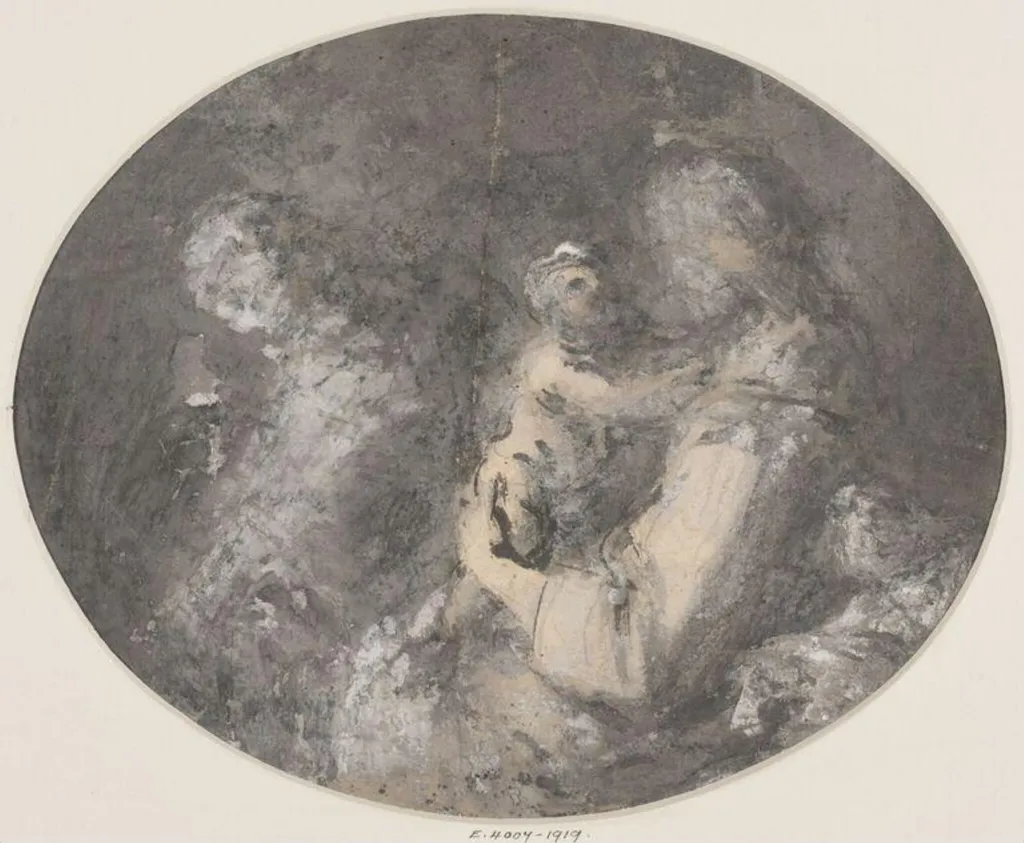
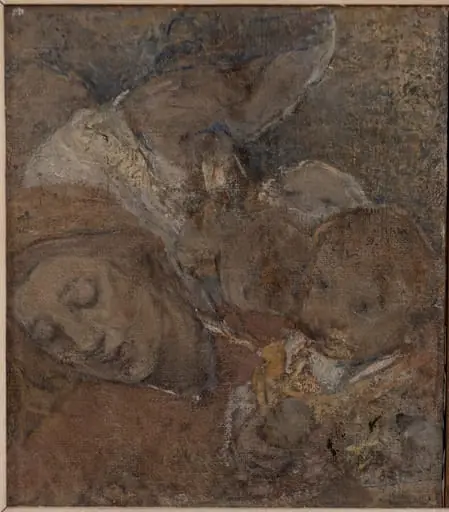
The Holy Family is a drawing by the Baroque artist Benjamin West. It dates from 1738 and is held in the collection of the Victoria and Albert Museum.
About this work
Overview
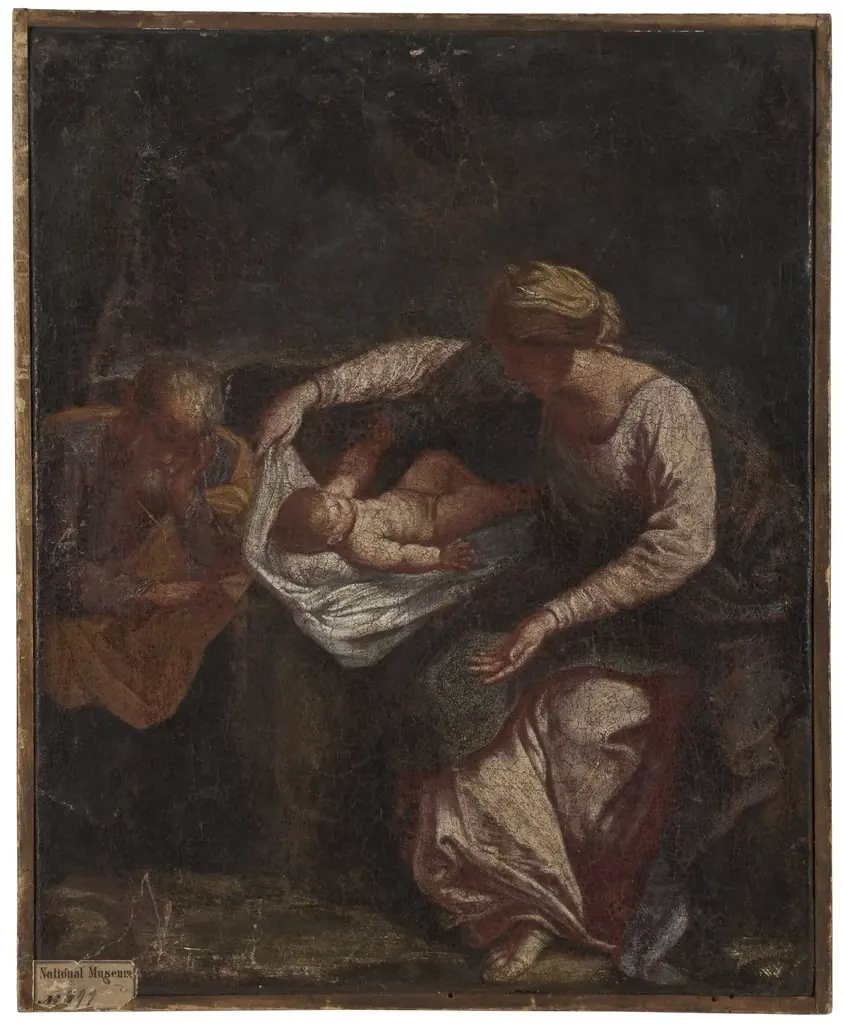
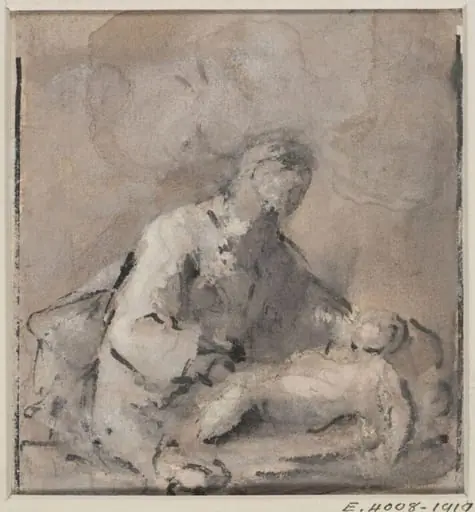
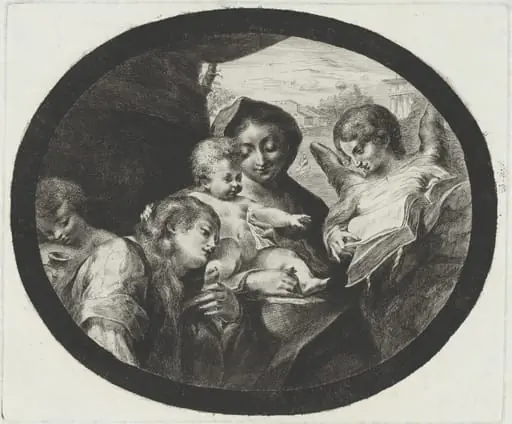
This drawing by Benjamin West, dated 1738, depicts a quiet moment within the Holy Family. Executed in soft, tonal lines on paper, it captures the intimate grouping of three figures in a sparse, rocky setting. The work is part of the Victoria and Albert Museum’s collection and reflects West’s early engagement with religious subjects before his later prominence as a historical painter.
Subject & Meaning
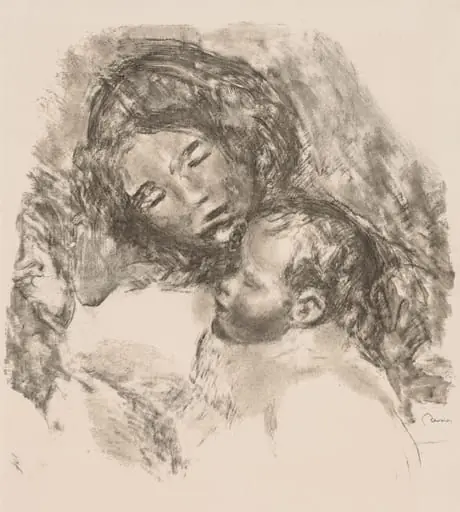
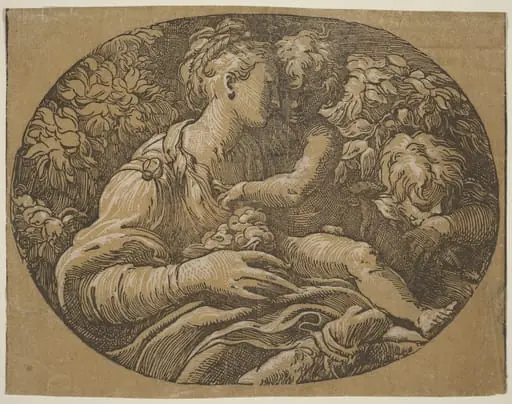
The composition centers on a mother holding a child, with a figure—likely Joseph—gazing toward them in silent contemplation. The absence of halos or overt symbols shifts focus to human tenderness rather than divine spectacle. The huddled posture and subdued expressions suggest a moment of private devotion, grounding the sacred in quiet domesticity.
Technique & Style
West employed fine, layered strokes and delicate dots to model form and shadow, creating a tactile surface that suggests texture without heavy line work.
West employed fine, layered strokes and delicate dots to model form and shadow, creating a tactile surface that suggests texture without heavy line work. The contrast between light-pressed areas and a darkened background enhances the three-dimensionality of the figures. The effect is achieved through controlled dabbing and light scratching, evoking a sense of atmosphere rather than defined outlines.
History & Provenance
Created during West’s formative years in Pennsylvania, this drawing predates his move to London and his eventual role as president of the Royal Academy. It remained in private hands until acquired by the Victoria and Albert Museum, where it is preserved as an early example of his draftsmanship and spiritual subject matter.
Context
In the mid-18th century, religious imagery in British art was often reserved for grand compositions. West’s intimate sketch stands apart, reflecting a personal, almost devotional approach to sacred themes. Its modest scale and informal technique align with contemporary drawing practices used for study and private reflection rather than public display.
Legacy
Though not widely exhibited, this drawing offers insight into West’s artistic development and his sensitivity to emotional nuance in religious scenes. It anticipates his later narrative style, emphasizing human emotion over grandeur, and remains a quiet testament to his early command of tonal drawing.
Artist & collection

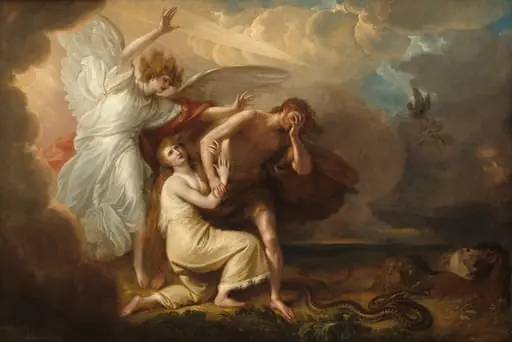 The Expulsion of Adam and Eve from Paradise
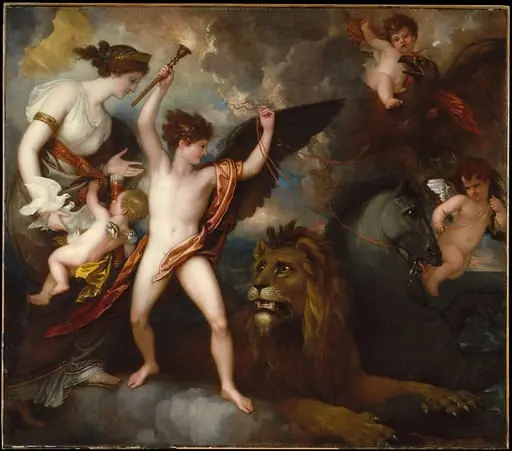 Omnia Vincit Amor, or The Power of Love in the Three Elements
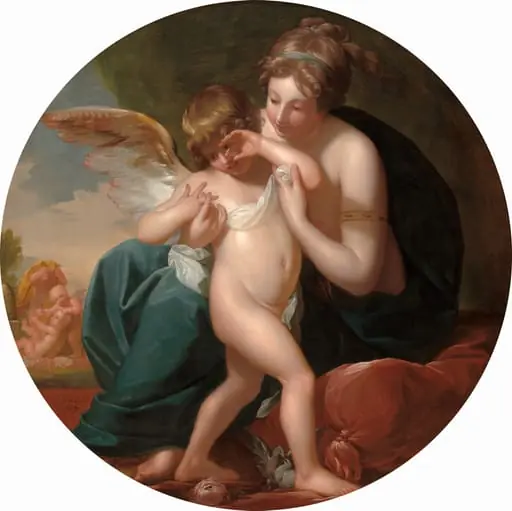 Cupid, Stung by a Bee, Is Cherished by his Mother
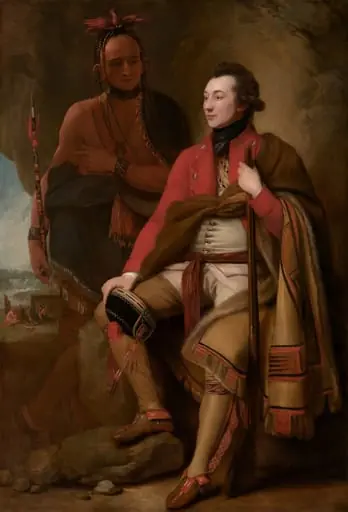 Colonel Guy Johnson and Karonghyontye (Captain David Hill)
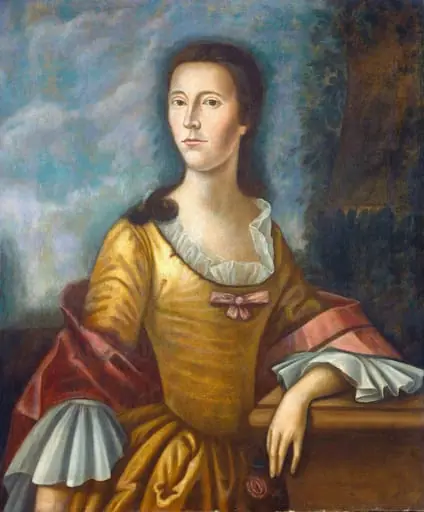 Mary Bethel Boude (Mrs. Samuel Boude)
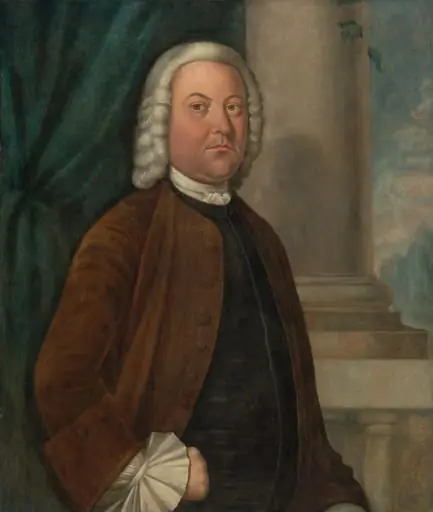 Dr. Samuel Boude
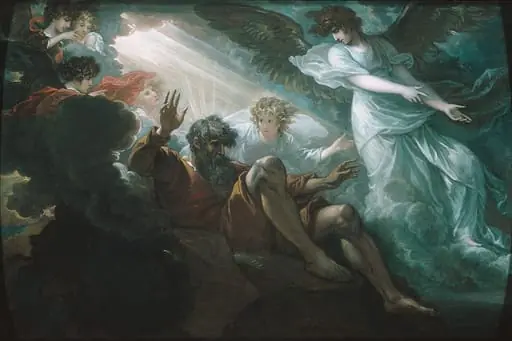 Moses Shown the Promised Land
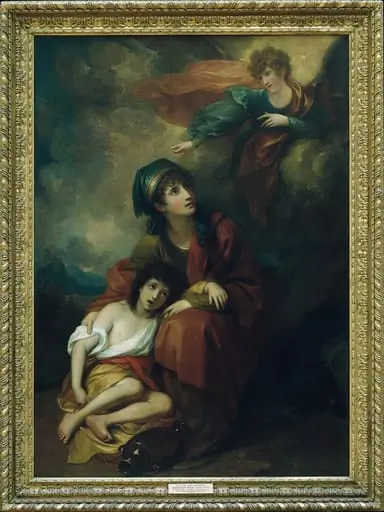 Hagar and Ishmael