Artwork
The Peep o'Day Boy
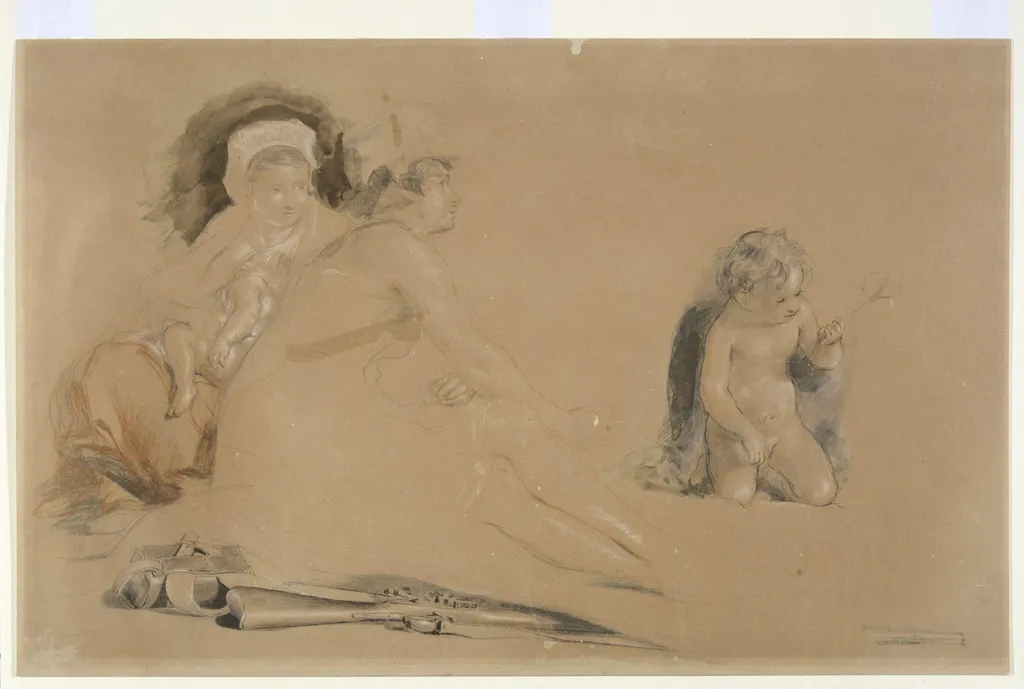
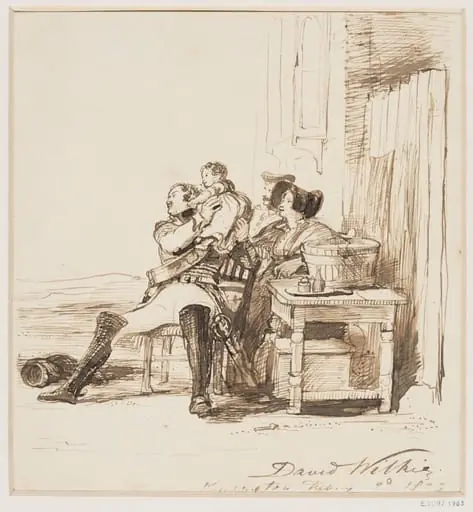
The Peep o'Day Boy is a drawing by the Romanticist artist David RA Wilkie. It dates from 1840 and is held in the collection of the Victoria and Albert Museum. Created in 1840, this drawing by Sir David Wilkie is a preparatory study for his larger painting *The Irish Whiskey Still*.
About this work
Overview
Created in 1840, this drawing by Sir David Wilkie is a preparatory study for his larger painting *The Irish Whiskey Still*. Executed in pencil and wash, it captures a fleeting moment in rural Ireland with minimal detail, focusing on posture and gesture rather than finish. The composition directly anticipates the arrangement of figures in the final work, now in the National Gallery of Scotland.
Subject & Meaning
Wilkie’s focus on unposed, natural interaction reflects his interest in everyday Irish rural existence, avoiding sentimentality.
The scene depicts three figures in a modest outdoor setting: a woman seated on a rock cradling an infant, a child leaning against her back, and scattered tools and a barrel nearby. The quiet intimacy of the group suggests domestic life amid hardship, without overt narrative. Wilkie’s focus on unposed, natural interaction reflects his interest in everyday Irish rural existence, avoiding sentimentality.
Technique & Style
Wilkie employed rapid, fluid lines and soft tonal washes to suggest form and movement. The sketch’s looseness conveys immediacy—figures emerge from minimal strokes, shadows are hinted rather than defined. Tools and barrel are indicated with a few gestural marks, reinforcing the sense of a moment captured on the spot rather than composed in the studio.
History & Provenance
The drawing was made as part of Wilkie’s research for *The Irish Whiskey Still*, completed the same year. It remained in the artist’s possession until his death, later passing to his family. Its survival offers insight into his working method, linking closely to the finished painting now held by the National Gallery of Scotland.
Context
Wilkie traveled to Ireland in the 1830s to observe local life, producing numerous sketches that informed his later works. This drawing reflects his commitment to authenticity, avoiding idealized depictions. His focus on ordinary people aligned with broader 19th-century interests in social realism, though his approach remained observational rather than polemical.
Legacy
The sketch exemplifies Wilkie’s practice of using rapid studies to refine composition and expression before final execution. It reveals how his drawings functioned as vital intermediaries between observation and finished painting, influencing later artists who valued preparatory work as a record of artistic thought.
Artist & collection
Artist
Wilkie made watercolors and drawings that told detailed stories, often about real people and events.

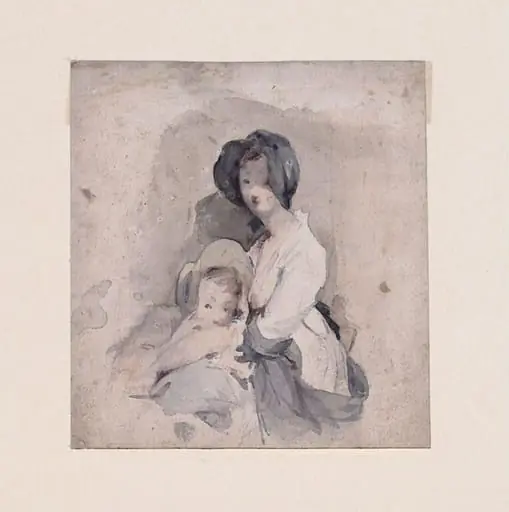
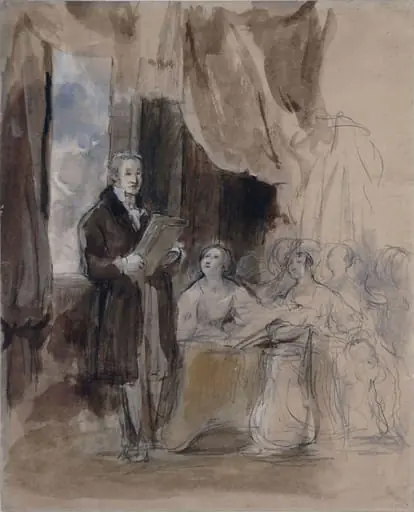
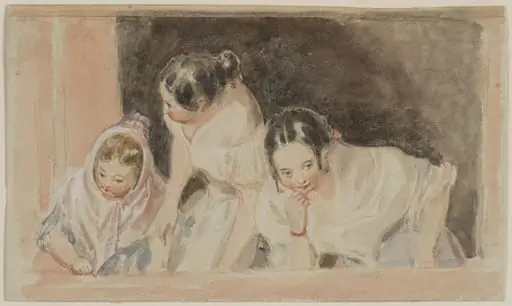
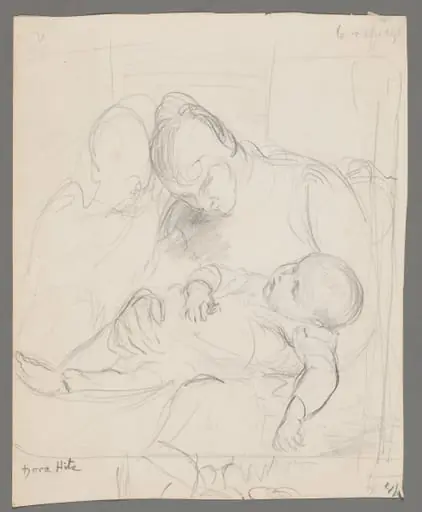 Hitz, Dora: Mother and Child
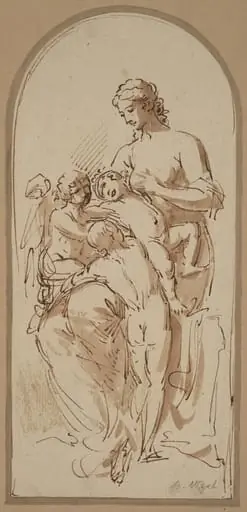 Charity
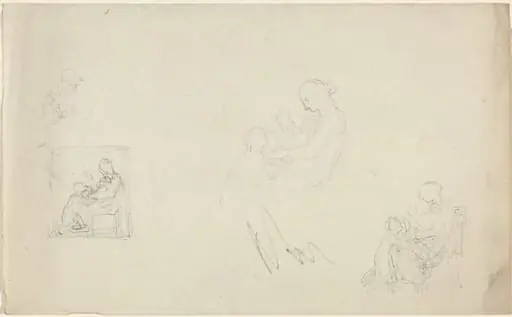 Four Studies of a Seated Woman with Children at Her Feet (Sketches for the Monument to Lady FitzHarris?)
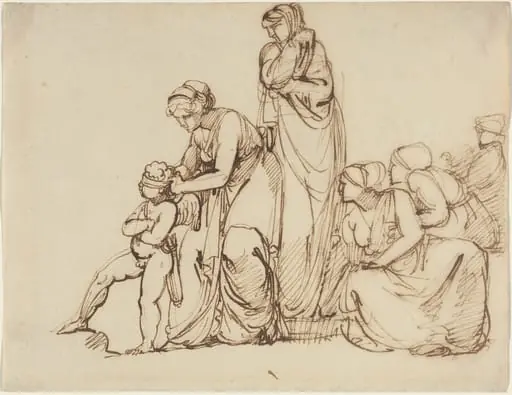 The Blindfolding of Cupid
 A Child on a Couch, No. 2
 Two drawings of a boatwoman holding a child
 A Western woman seated at a table
 Untitled
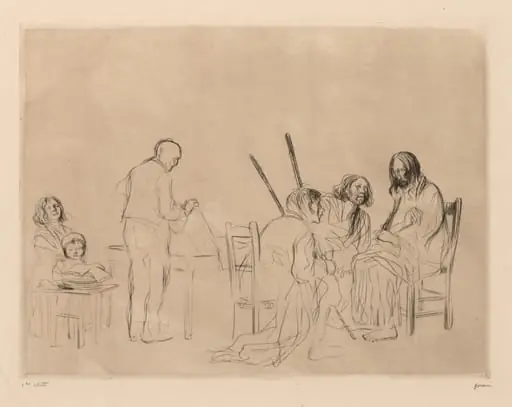 Before the Supper at Emmaus
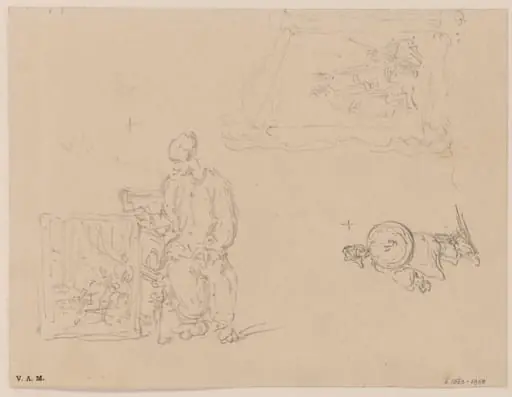 A figure seated beside a portrait, and other sketches
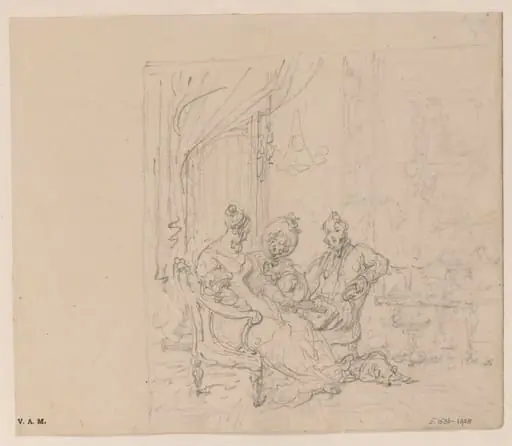 A sketch of three Western figures in a drawing room
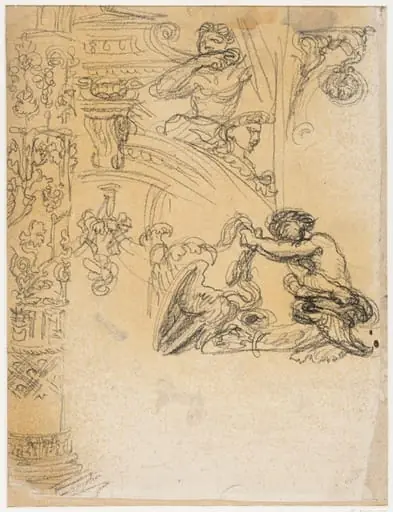 Studies by Alfred Stevens