Artwork
Bibi Lalouette
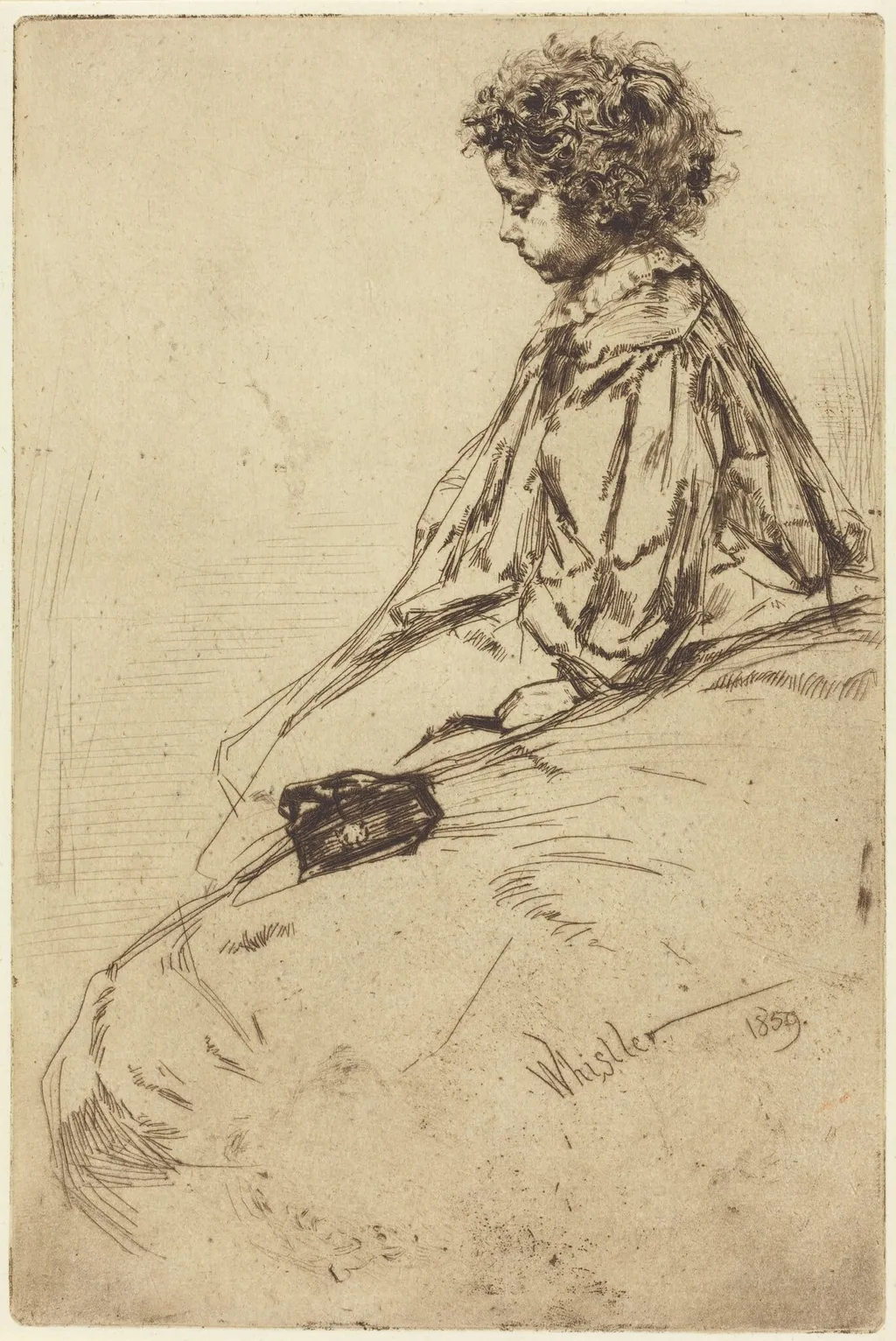
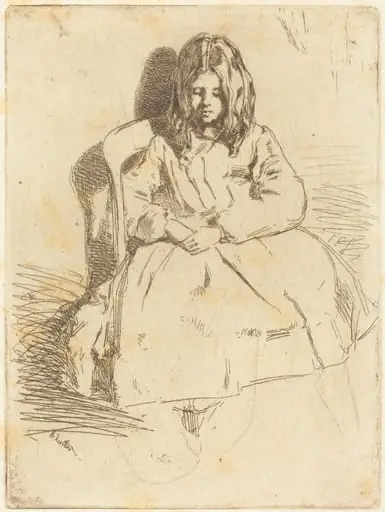
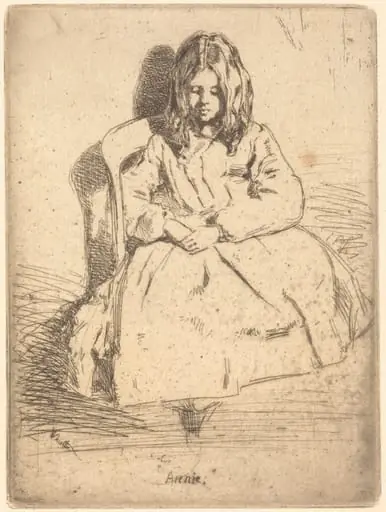
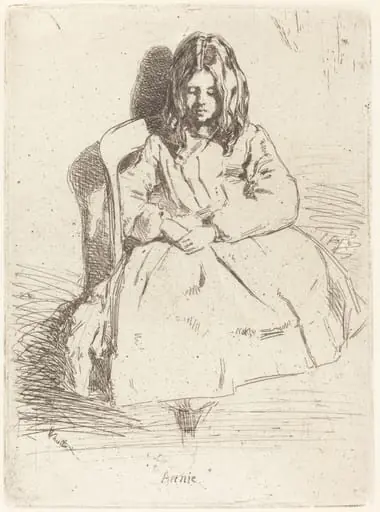
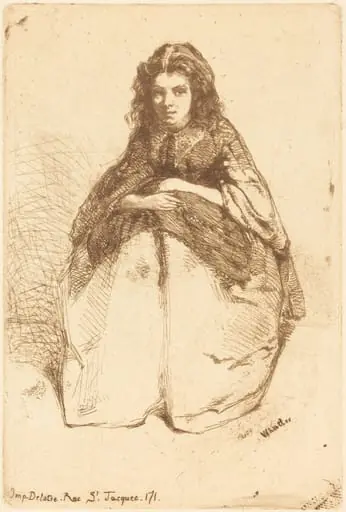
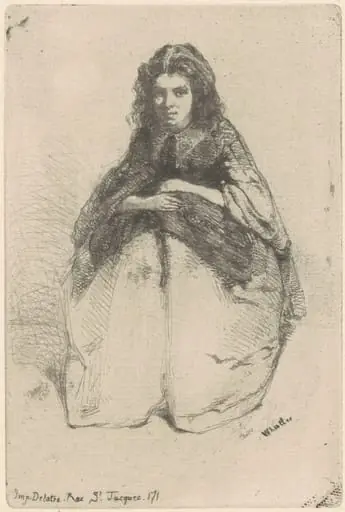
Bibi Lalouette is an ink print by the Impressionist artist James McNeill Whistler. It dates from 1859 and is held in the collection of the National Gallery of Art.
About this work
Overview
Though primarily known for his paintings, Whistler produced a significant body of prints that demonstrated his precision and sensitivity to tonal variation.
Created in 1859, *Bibi Lalouette* is an etching and drypoint on blue-gray laid paper, rendered in dark brown ink. The work is one of James McNeill Whistler’s early print studies, made during his formative years in Europe. Though primarily known for his paintings, Whistler produced a significant body of prints that demonstrated his precision and sensitivity to tonal variation. This piece exemplifies his interest in capturing quiet, unembellished moments through graphic means.
Subject & Meaning
The subject is a woman, likely a Parisian model or acquaintance, portrayed with restrained intimacy. Whistler avoids narrative or emotional embellishment, focusing instead on the quiet presence of the figure. Her identity remains unelaborated, consistent with his broader practice of prioritizing aesthetic harmony over storytelling. The title, possibly a nickname, adds a personal touch without revealing deeper context, reinforcing the work’s emphasis on form over biography.
Technique & Style
Whistler employed etching and drypoint to achieve fine, nuanced lines that define the contours of the face and drapery. The drypoint’s burr creates soft, velvety shadows, while the etched lines remain crisp and controlled. The blue-gray paper serves as a mid-tone ground, allowing the dark brown ink to modulate between deep shadow and delicate highlight. This method reflects his growing mastery of tonal subtlety, a hallmark of his mature printmaking.
History & Provenance
The print was made during Whistler’s early stay in Paris, where he immersed himself in the city’s artistic circles and experimented with printmaking techniques. It was not widely exhibited at the time and remained in private hands for much of the 19th century. Later, it entered institutional collections as interest in Whistler’s graphic work grew, particularly after his association with the Aesthetic Movement gained recognition.
Context
In the late 1850s, Whistler was distancing himself from academic traditions and embracing a more personal, sensory approach to art. *Bibi Lalouette* aligns with the emerging 'art for art's sake' ethos, rejecting moral or literary content in favor of formal qualities. The work reflects influences from Japanese prints and Dutch etchers, both of which emphasized simplicity and atmospheric effect over dramatic composition.
Legacy
Though lesser known than his later portraits or nocturnes, *Bibi Lalouette* illustrates the foundations of Whistler’s printmaking language. Its delicate balance of line and tone influenced subsequent generations of printmakers who valued restraint and technical refinement. The piece remains a quiet testament to his early commitment to visual purity and the expressive potential of the etched line.
Artist & collection
Artist
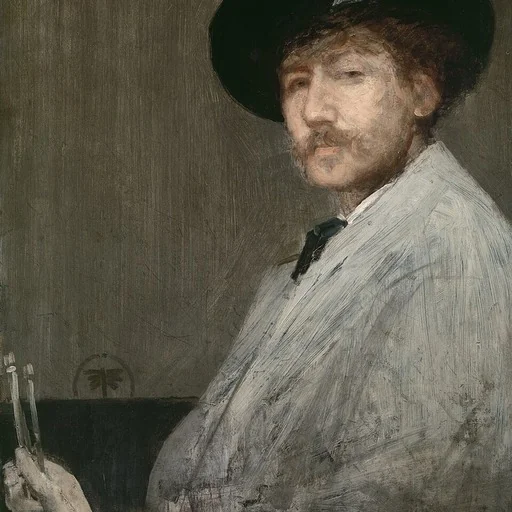
James Abbott McNeill Whistler was an American painter in oils and watercolor, and printmaker, active during the American Gilded Age and based primarily in the United Kingdom.

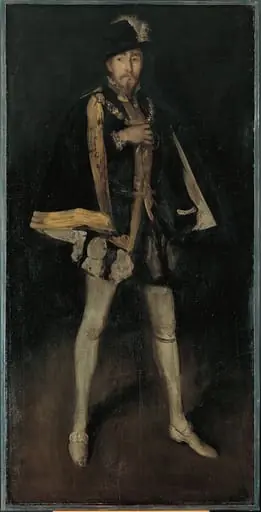 Arrangement in Black, No. 3: Sir Henry Irving as Philip II of Spain
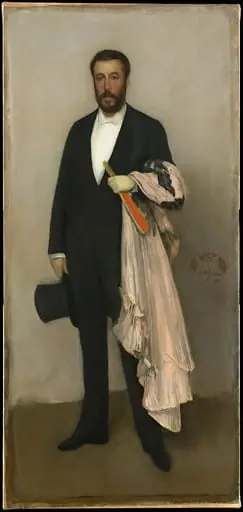 Arrangement in Flesh Colour and Black: Portrait of Theodore Duret
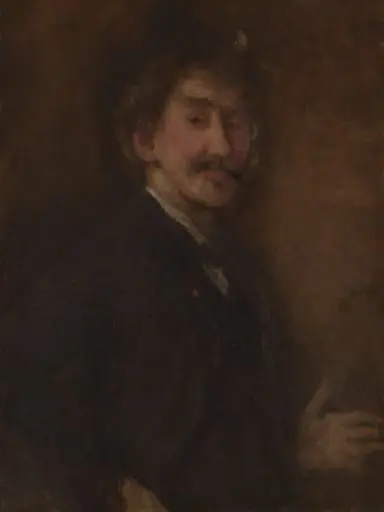 Gold and Brown: Self-Portrait
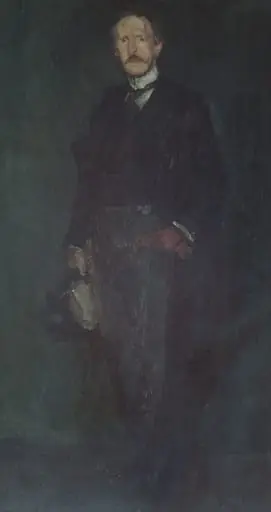 Edward Guthrie Kennedy
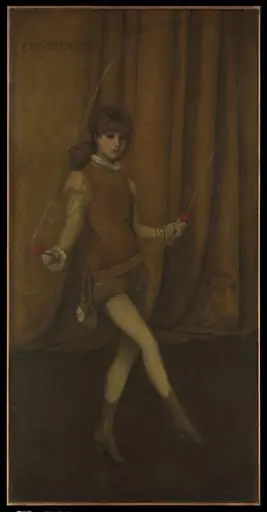 Harmony in Yellow and Gold: The Gold Girl—Connie Gilchrist
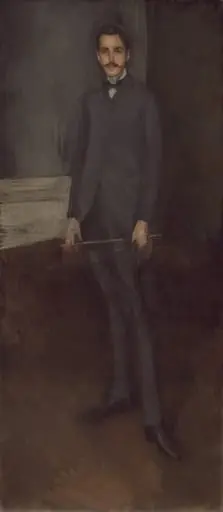 George W. Vanderbilt
 Symphony in White, No. 1: The White Girl
 Henry Irving as Philip II of Spain