Artwork
Black Lion Wharf
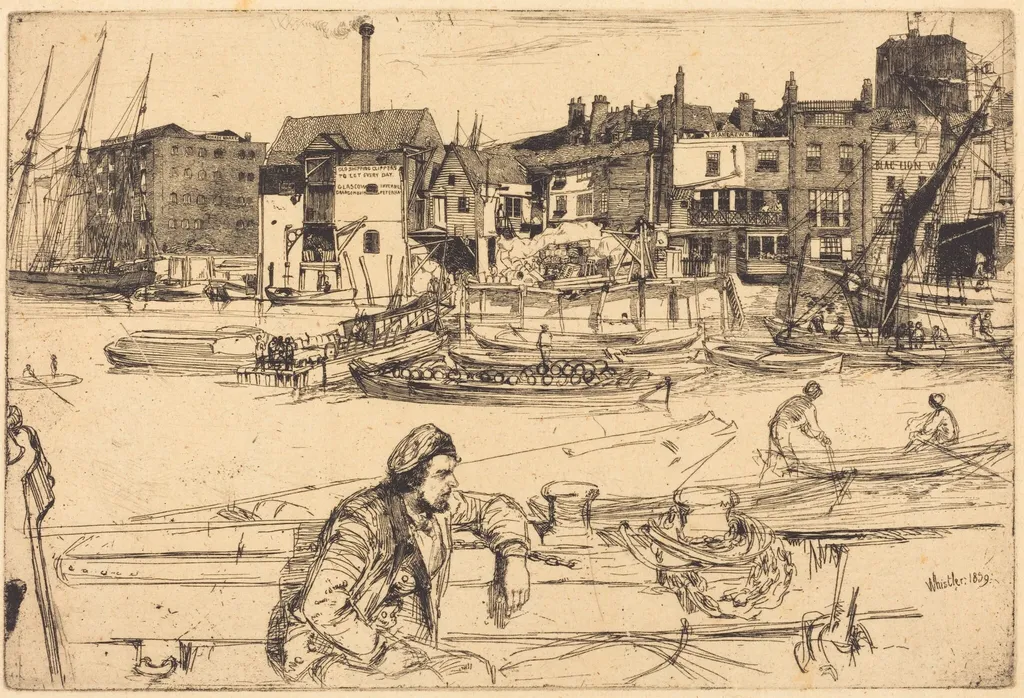
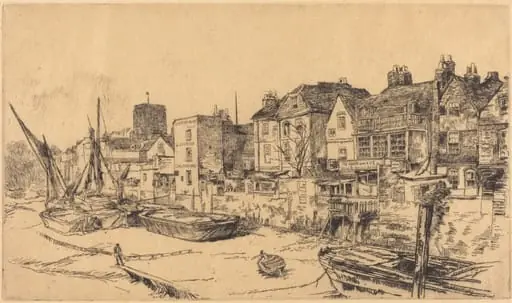
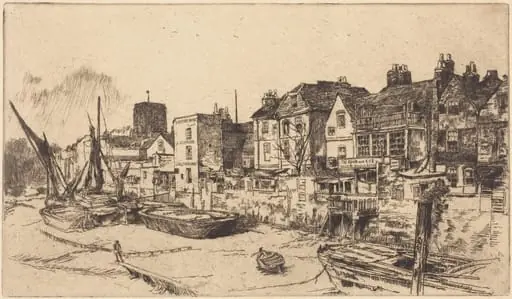
Black Lion Wharf is an ink print by the Impressionist artist James McNeill Whistler. It dates from 1859 and is held in the collection of the Rosenwald Collection.
About this work
Overview
Though American by birth, Whistler developed his artistic voice in Britain, where he engaged with urban landscapes and the quiet rhythms of dockside life.
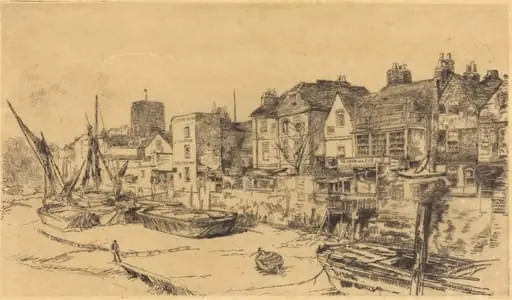
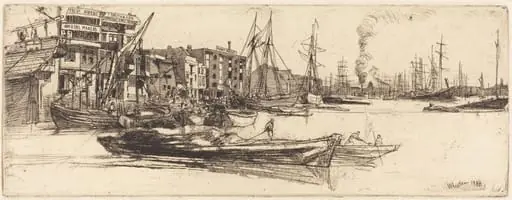
Created in 1859, *Black Lion Wharf* is an early etching by James McNeill Whistler, made during his formative years in London. Though American by birth, Whistler developed his artistic voice in Britain, where he engaged with urban landscapes and the quiet rhythms of dockside life. This print reflects his interest in capturing transient moments rather than idealized scenes, aligning with his later advocacy for art independent of moral or narrative purpose.
Subject & Meaning
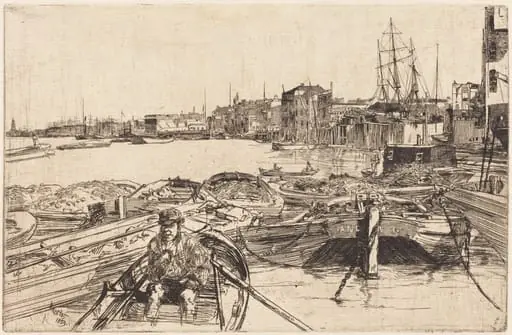
The scene portrays a working stretch of the Thames near Black Lion Wharf, with moored vessels, weathered warehouses, and figures going about daily tasks. A seated man in the foreground, hat in hand, observes the activity without engagement, suggesting contemplation amid commerce. The signage—'Old Shipping Clippers,' 'Black Lion'—anchors the image in a specific time and place, emphasizing the unromanticized reality of industrial river life.
Technique & Style
Whistler employed etching to render the scene with loose, fluid lines that suggest motion and texture without detailed finish. The inked strokes convey the roughness of wood, the stillness of water, and the fleeting presence of people, avoiding polish in favor of immediacy. His method prioritizes atmosphere over precision, using minimal marks to imply depth, structure, and activity—an approach that would become central to his aesthetic philosophy.
History & Provenance
The print was made during Whistler’s early period in London, shortly after his return from Paris and before his rise to prominence in the art world. It was likely produced for personal or small-scale circulation, not public exhibition. No major institutional acquisition record exists from the time, but it remains part of the broader corpus of his graphic work, studied for its role in his artistic evolution.
Context
In the late 1850s, London’s riverside was a hub of trade and labor, increasingly shaped by industrialization. Whistler’s focus on such sites contrasted with the prevailing taste for grand historical or pastoral subjects. His choice to depict ordinary dockworkers and commercial architecture aligned with emerging realist tendencies, while his restrained technique distanced him from overt social commentary.
Legacy
Though not among Whistler’s most famous works, *Black Lion Wharf* illustrates his early commitment to capturing urban life with economy and nuance. It prefigures his later tonal compositions and reinforces his rejection of narrative sentimentality. As a representative of his graphic output, it contributes to understanding how his prints helped redefine printmaking as a medium for personal expression rather than reproduction.
Own this work as a print
Artist & collection
Artist
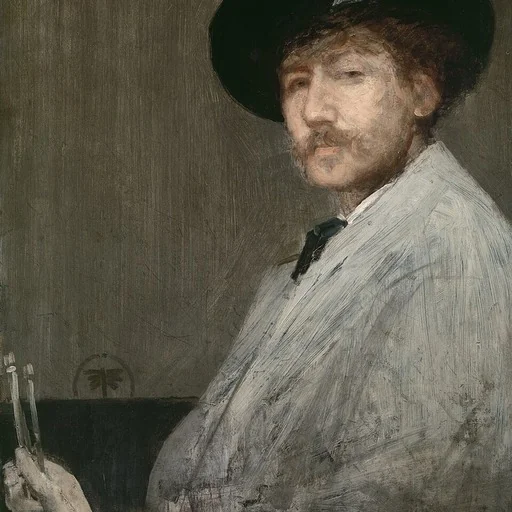
James Abbott McNeill Whistler was an American painter in oils and watercolor, and printmaker, active during the American Gilded Age and based primarily in the United Kingdom.
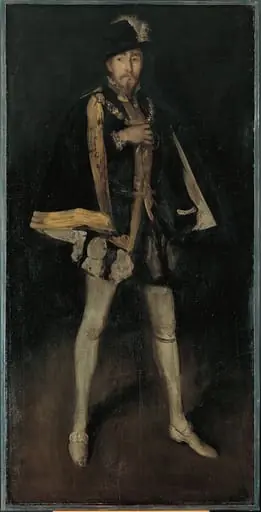 Arrangement in Black, No. 3: Sir Henry Irving as Philip II of Spain
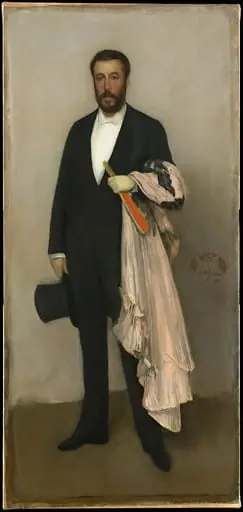 Arrangement in Flesh Colour and Black: Portrait of Theodore Duret
 Gold and Brown: Self-Portrait
 Edward Guthrie Kennedy
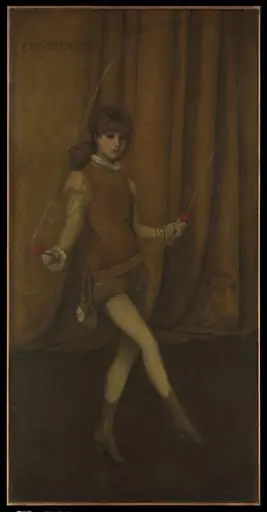 Harmony in Yellow and Gold: The Gold Girl—Connie Gilchrist
 George W. Vanderbilt
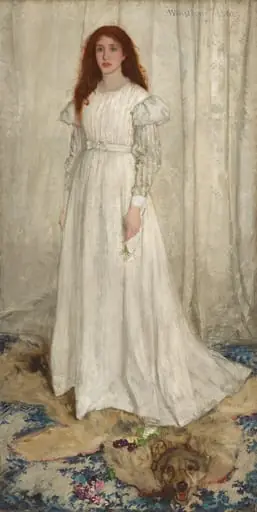 Symphony in White, No. 1: The White Girl
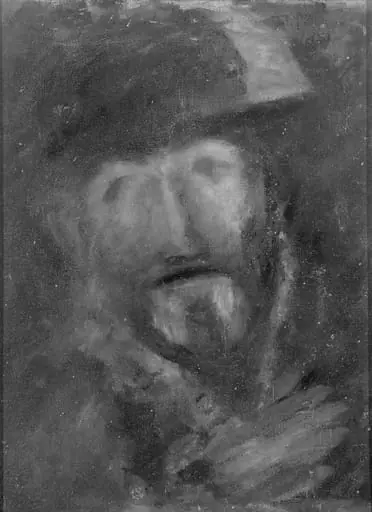 Henry Irving as Philip II of Spain