Artwork
The 'Adam and Eve', Old Chelsea
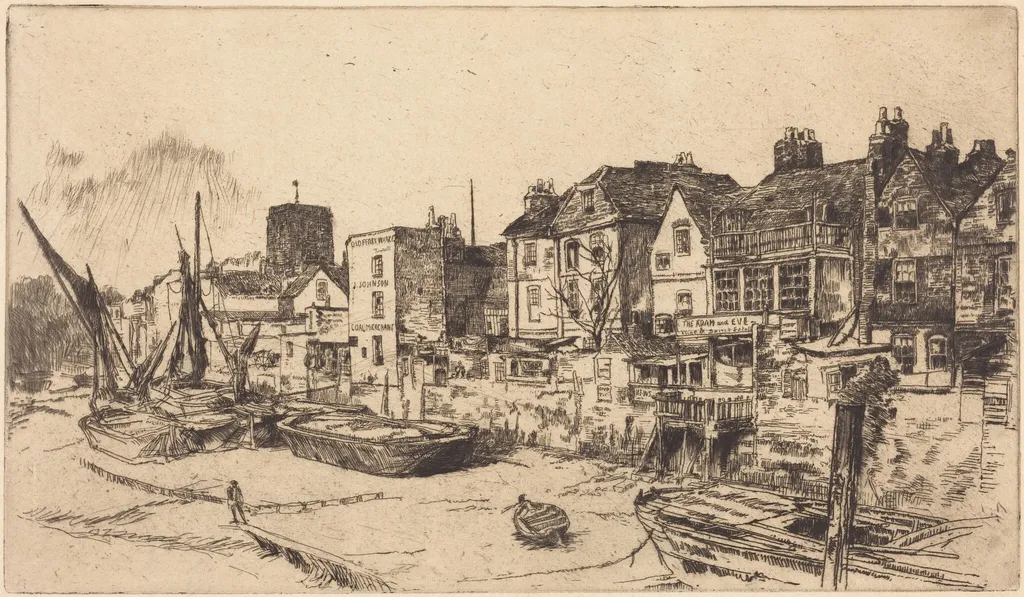
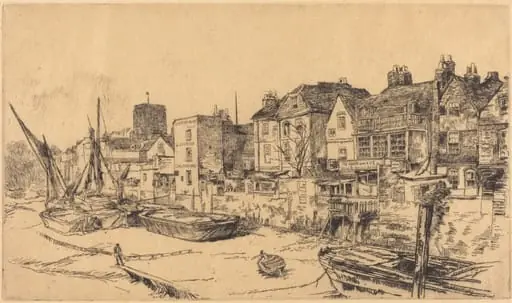
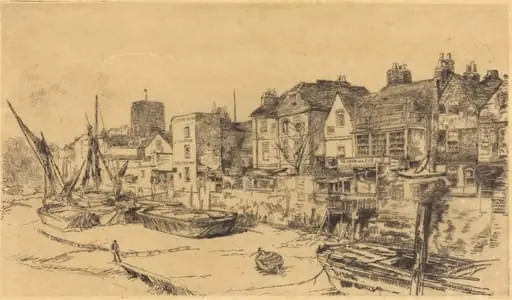
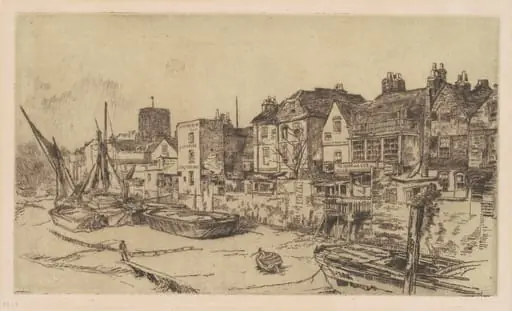
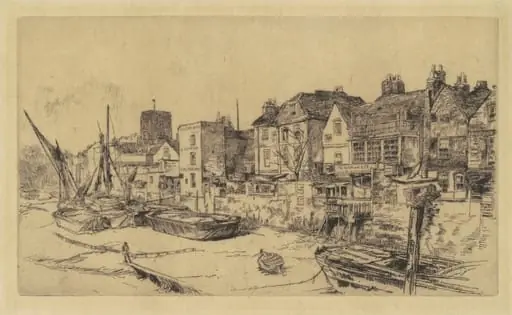
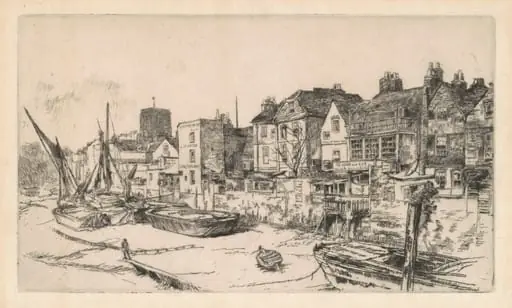
The 'Adam and Eve', Old Chelsea is an ink print by the Impressionist artist James McNeill Whistler. It dates from 1878 and is held in the collection of the National Gallery of Art.
About this work
Overview
This print exemplifies his commitment to tonal balance and refined technique, aligning with the principles of 'art for art’s sake.
Created in 1878, *The 'Adam and Eve', Old Chelsea* is an etching and drypoint on laid paper by James McNeill Whistler. As an American artist based in London, Whistler focused on the aesthetic qualities of urban landscapes rather than storytelling. This print exemplifies his commitment to tonal balance and refined technique, aligning with the principles of 'art for art’s sake.' The work belongs to a series of intimate cityscapes capturing the quiet rhythms of Chelsea along the Thames.
Subject & Meaning
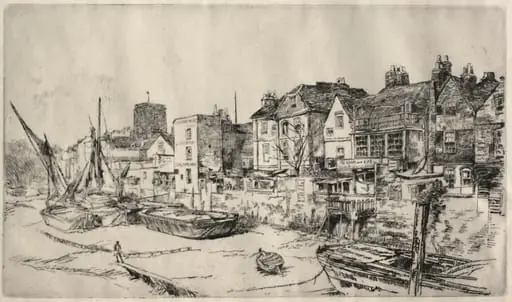
The scene portrays a tranquil stretch of Old Chelsea’s riverside, with a row of modest houses, moored boats, and a solitary figure on the bank. No religious or moral narrative is implied by the title; instead, it likely references the quiet, primal stillness of the setting. Whistler avoided symbolic interpretation, inviting viewers to appreciate the composition’s rhythm and atmosphere rather than its content. The figure is incidental, a marker of scale rather than a protagonist.
Technique & Style
Whistler employed etching and drypoint to achieve fine, varied lines and soft gradations of tone. The dark outlines of buildings contrast with the muted grey sky, while the textured water and weathered wood of the boats add tactile depth. Drypoint’s burr creates subtle halos around edges, enhancing the atmospheric quality. His approach prioritized visual harmony over detail, using minimal marks to suggest form and light, a hallmark of his graphic style.
History & Provenance
The print was made during Whistler’s most productive period as a printmaker, following his return to London after years abroad. It was likely part of a private circulation among collectors and fellow artists, not widely published. The work remained in private hands for much of the 20th century before entering institutional collections. Its title, possibly whimsical or ironic, was not assigned by Whistler for symbolic reasons but may have been added later by a dealer or owner.
Context
Whistler’s Chelsea scenes emerged amid London’s rapid urban expansion, capturing overlooked corners of the city before modernization altered their character. His focus on quiet, uneventful views contrasted with the dramatic narratives favored by Victorian art. While contemporaries like the Pre-Raphaelites emphasized detail and moral themes, Whistler’s work aligned with emerging modernist sensibilities that valued mood, composition, and the artist’s personal vision.
Legacy
This print exemplifies Whistler’s influence on the evolution of printmaking in the late 19th century, shifting focus from illustration to expressive technique. His emphasis on tonal harmony and restrained composition influenced later artists in the Aesthetic Movement and early modernists. Though not widely exhibited in his lifetime, his graphic works gained recognition for their technical innovation and quiet poeticism, securing his place in the history of print.
Artist & collection
Artist
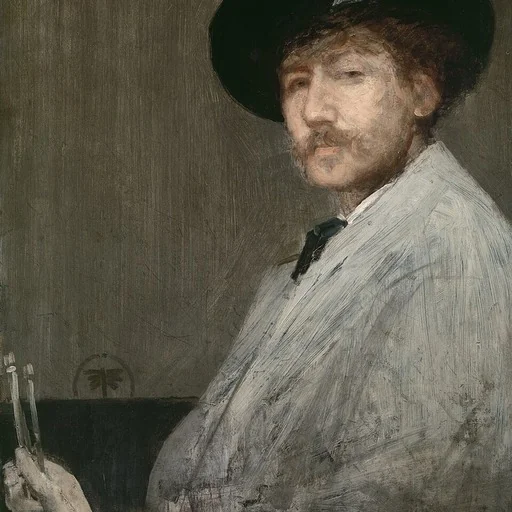
James Abbott McNeill Whistler was an American painter in oils and watercolor, and printmaker, active during the American Gilded Age and based primarily in the United Kingdom.

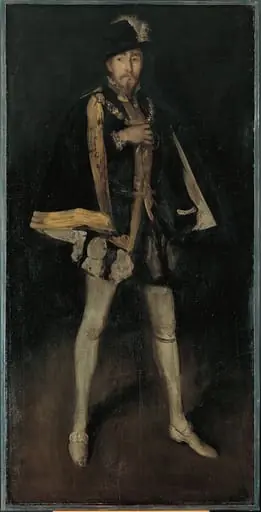 Arrangement in Black, No. 3: Sir Henry Irving as Philip II of Spain
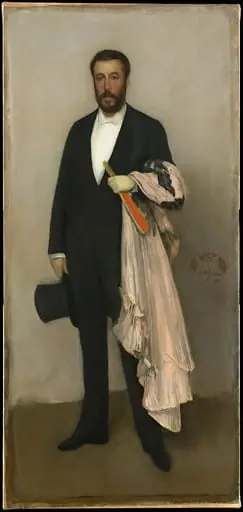 Arrangement in Flesh Colour and Black: Portrait of Theodore Duret
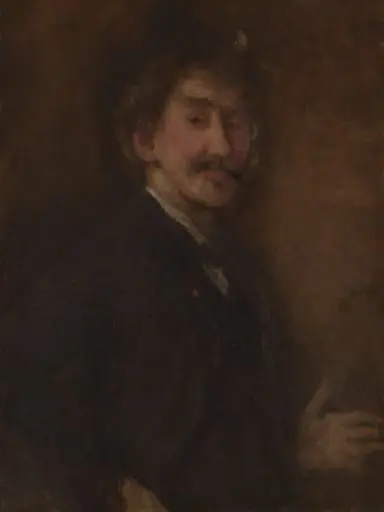 Gold and Brown: Self-Portrait
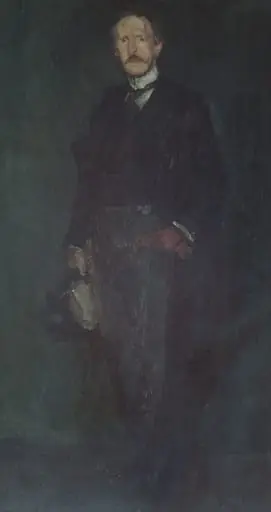 Edward Guthrie Kennedy
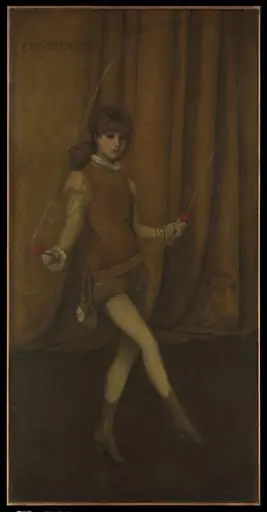 Harmony in Yellow and Gold: The Gold Girl—Connie Gilchrist
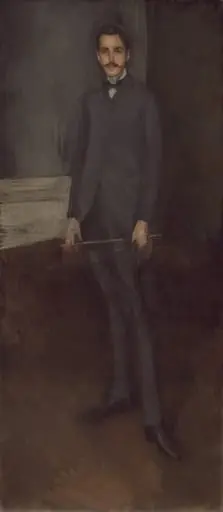 George W. Vanderbilt
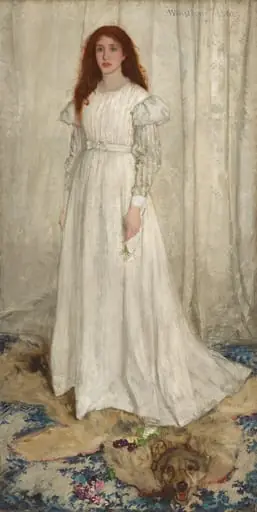 Symphony in White, No. 1: The White Girl
 Henry Irving as Philip II of Spain