Artwork
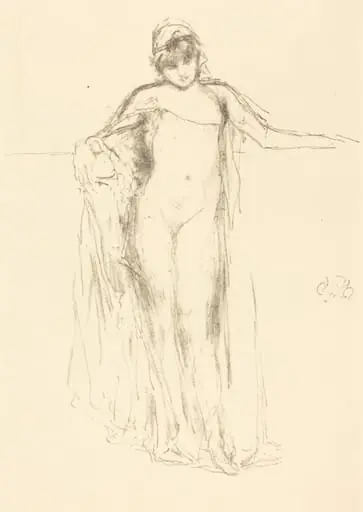
Draped Figure, Standing
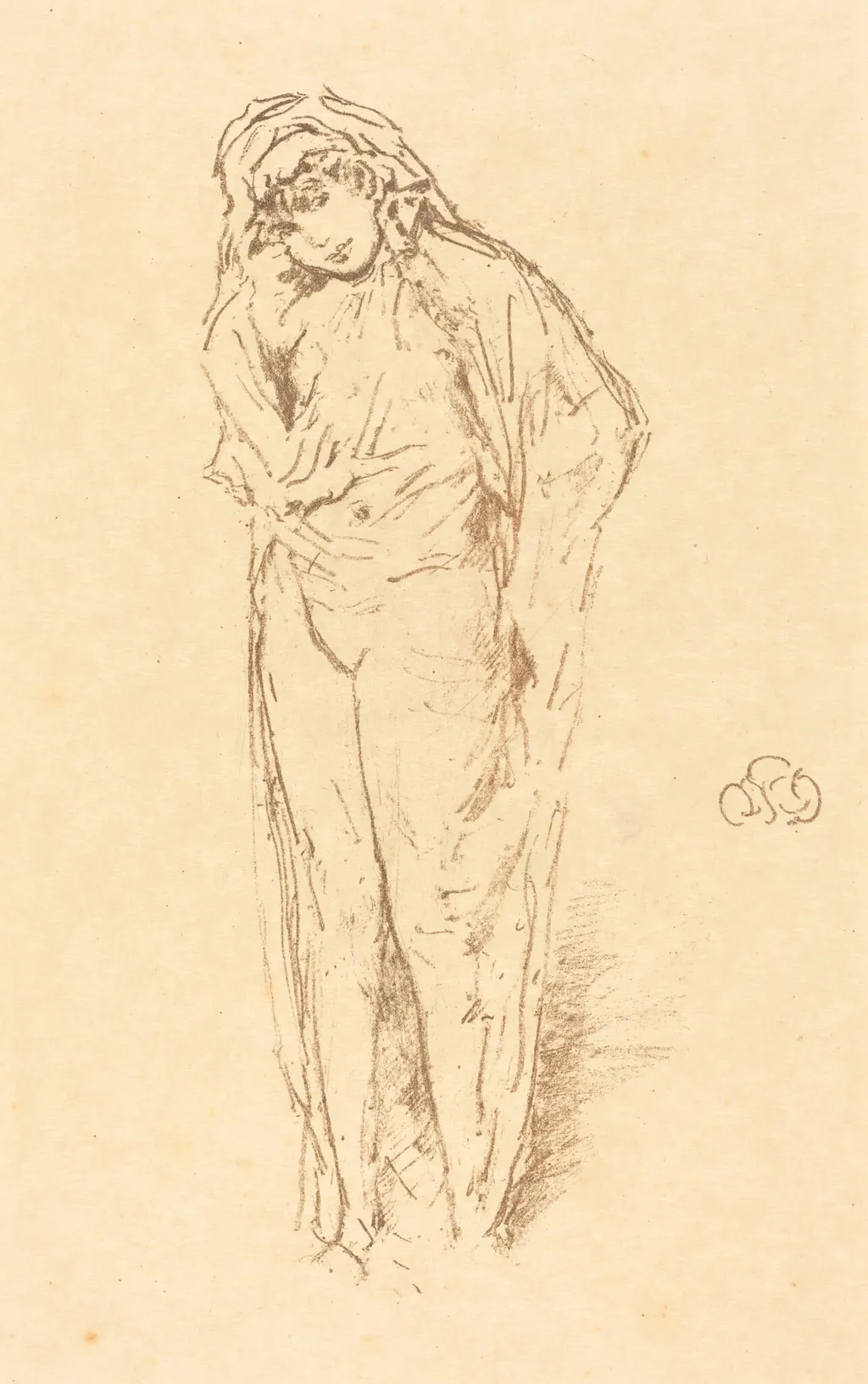
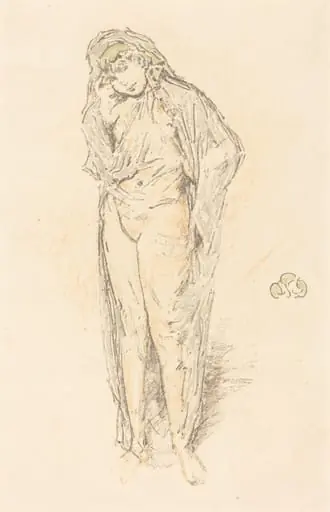
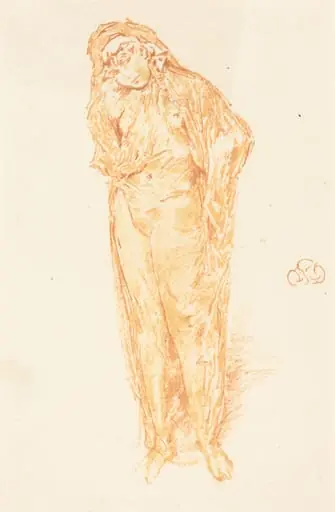
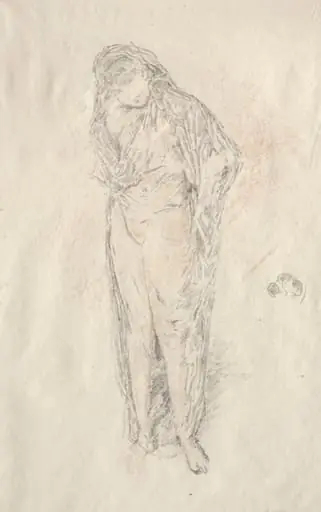
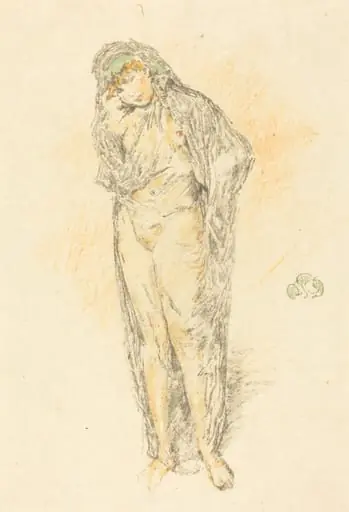
Draped Figure, Standing is an ink print by the Impressionist artist James McNeill Whistler. It dates from 1891 and is held in the collection of the National Gallery of Art.
About this work
Overview
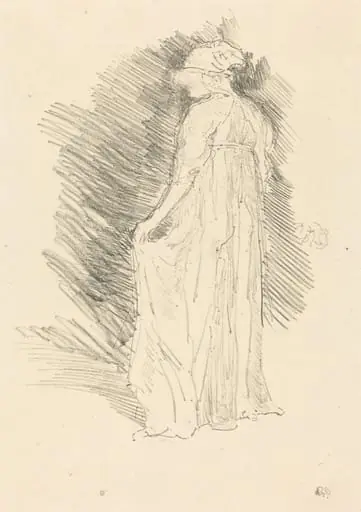
Draped Figure, Standing is a 1891 lithograph by James McNeill Whistler, executed in black on wove paper. Characterized by quick, rough lines, the work appears to be a rapid study rather than a finished piece, capturing the essential pose of a sideways-standing figure draped in loose cloth.
Subject & Meaning
The subject is a figure standing sideways, partially draped in a loose cloth, with the artist prioritizing the capture of pose over detail or narrative. The work embodies Whistler's aesthetic principles, emphasizing form and composition without moral or thematic depth.
Technique & Style
The lithograph features hasty, expressive lines, indicative of a swift execution. The plain wove paper and lack of embellishment further suggest a preliminary or practice work, highlighting Whistler's ability to convey form with minimal detail.
History & Provenance
Created in 1891 by James McNeill Whistler, an American artist predominantly based in the UK, the work reflects his broader practice across oils, watercolor, and printmaking during the late 19th century.
Context
Draped Figure, Standing aligns with the 'art for art's sake' movement, which Whistler supported. This approach valued aesthetic refinement over narrative or moral content, positioning the work within early modern artistic tendencies.
Artist & collection
Artist
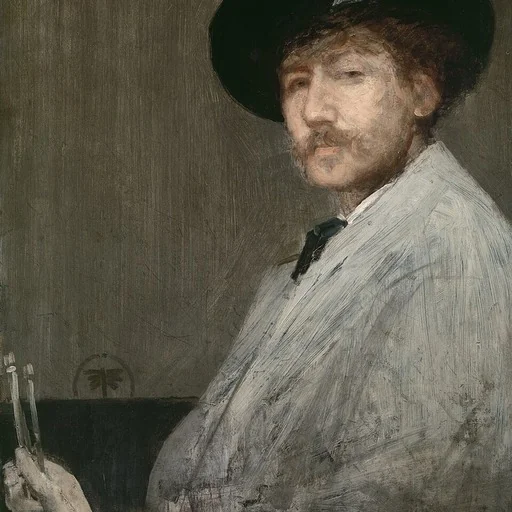
James Abbott McNeill Whistler was an American painter in oils and watercolor, and printmaker, active during the American Gilded Age and based primarily in the United Kingdom.

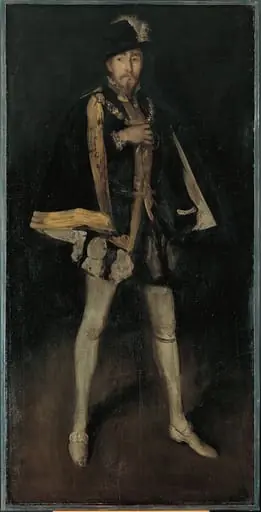 Arrangement in Black, No. 3: Sir Henry Irving as Philip II of Spain
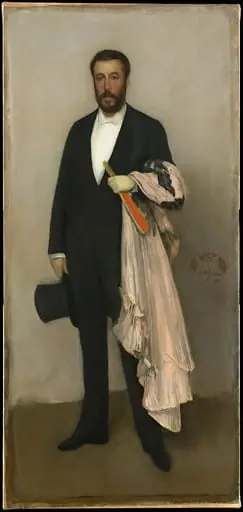 Arrangement in Flesh Colour and Black: Portrait of Theodore Duret
 Gold and Brown: Self-Portrait
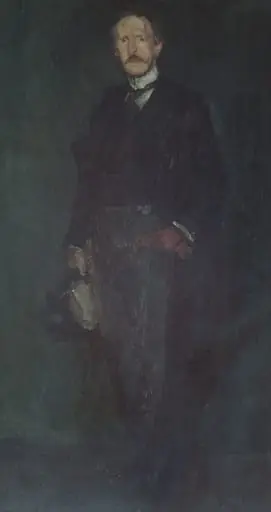 Edward Guthrie Kennedy
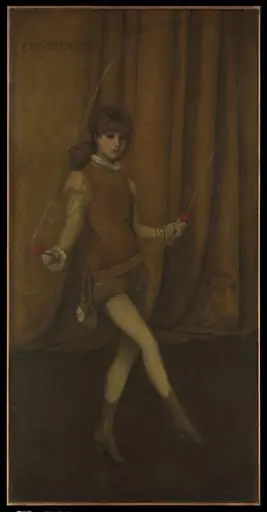 Harmony in Yellow and Gold: The Gold Girl—Connie Gilchrist
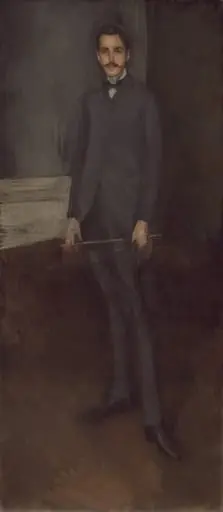 George W. Vanderbilt
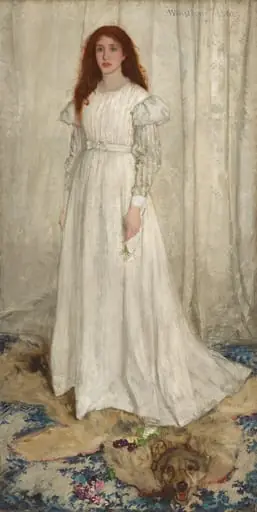 Symphony in White, No. 1: The White Girl
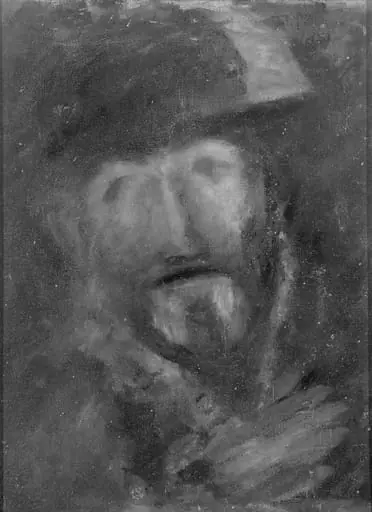 Henry Irving as Philip II of Spain