Artwork
Draped Figure, Standing
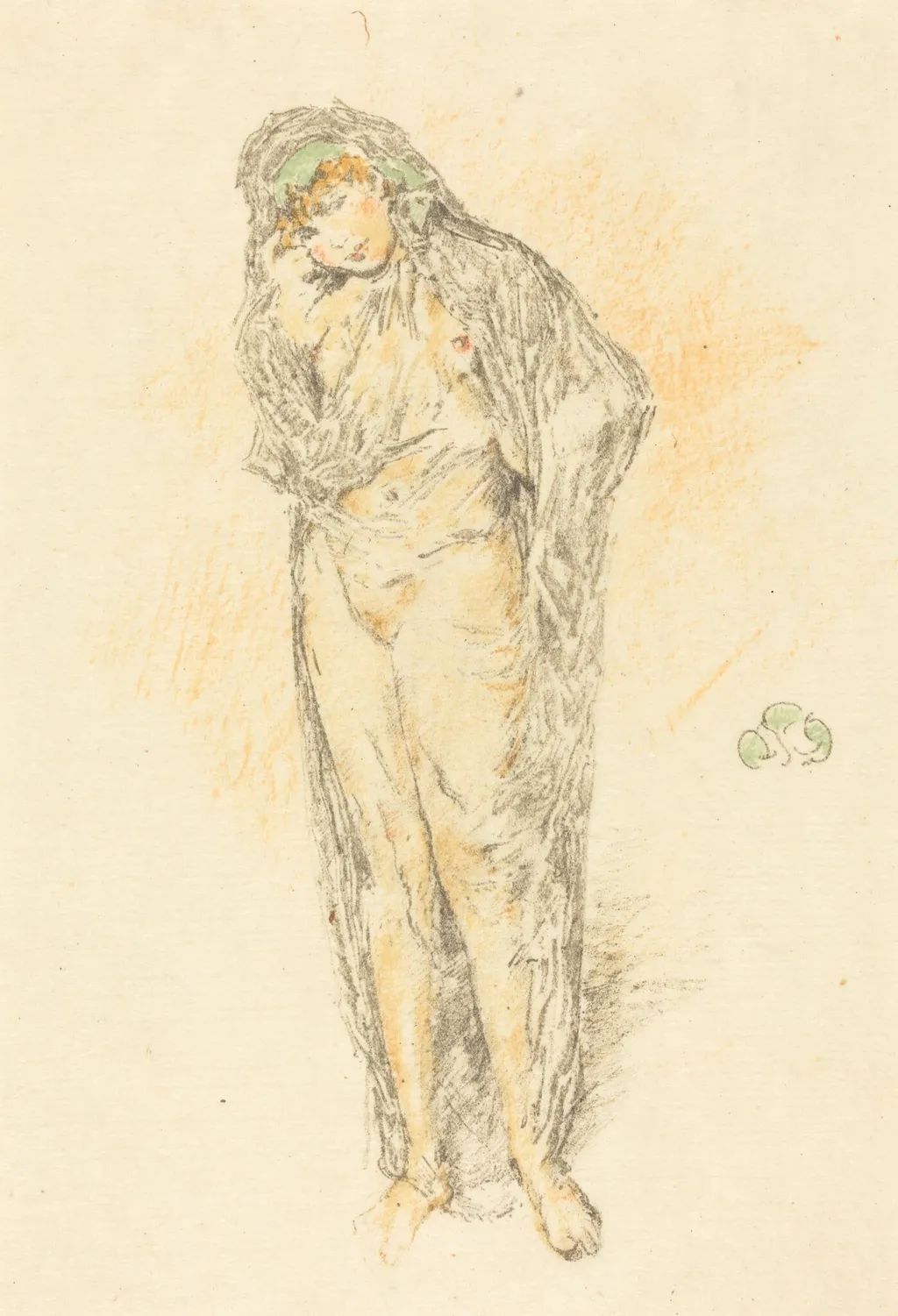
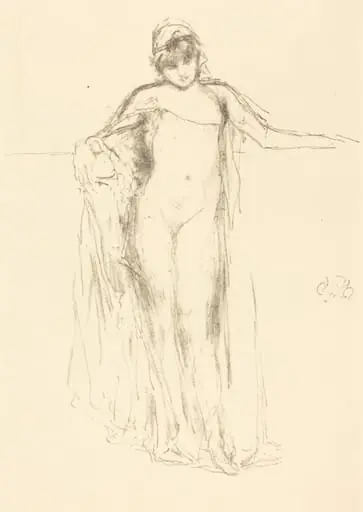
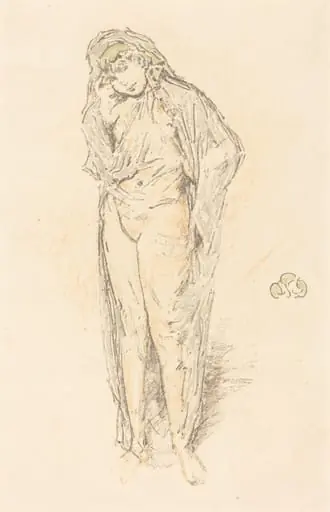
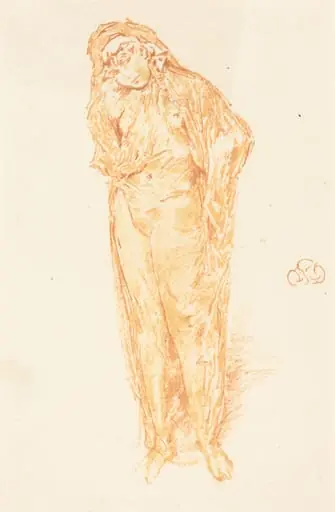
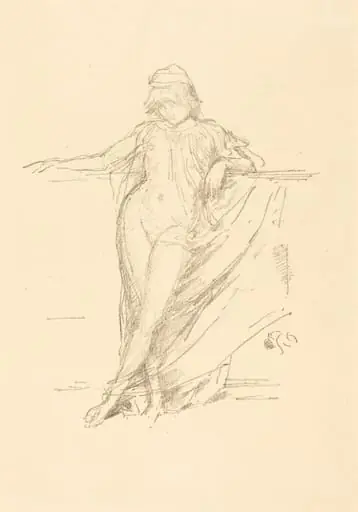
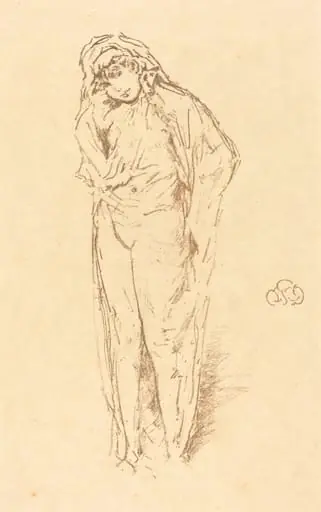
Draped Figure, Standing is an ink print by the Impressionist artist James McNeill Whistler. It dates from 1891 and is held in the collection of the National Gallery of Art.
About this work
Overview
This work exemplifies his interest in quiet, non-narrative compositions, aligning with his belief in art’s autonomy from moral or storytelling functions.
Created in 1891, *Draped Figure, Standing* is a color lithograph on wove paper by James McNeill Whistler. Though best known for oils and watercolors, Whistler produced a significant body of prints, often exploring form and tone with minimal detail. This work exemplifies his interest in quiet, non-narrative compositions, aligning with his belief in art’s autonomy from moral or storytelling functions.
Subject & Meaning
The image presents a solitary female figure in a sideways stance, wrapped in loosely rendered drapery that suggests modesty while revealing contours beneath. There is no identifiable setting or narrative context; the focus lies in the figure’s stillness and the interplay of fabric and form. The ambiguity invites contemplation rather than interpretation, consistent with Whistler’s pursuit of aesthetic harmony over explicit meaning.
Technique & Style
Whistler employed lithography to achieve subtle tonal gradations using soft browns, muted greens, and faint washes of shadow. The lines are fluid and sketchlike, avoiding precision in favor of immediacy. The drapery is suggested rather than defined, with uneven folds that imply movement and weight without detailed modeling. This approach reflects his preference for suggestion over finish, characteristic of his mature graphic work.
History & Provenance
Produced in 1891, the print emerged during a period when Whistler was deeply engaged with printmaking, often experimenting with color lithography after his return to London. While the exact provenance of this specific impression is not widely documented, it belongs to a series of figure studies Whistler made in the 1890s, many of which were privately circulated or used as preparatory works for larger compositions.
Context
In the context of late 19th-century art, Whistler’s lithographs stood apart from the dominant realist and narrative traditions. His focus on tone, composition, and quiet presence aligned with broader Aesthetic Movement ideals, which valued sensory experience over moral instruction. This print reflects his engagement with Japanese prints and the growing interest in printmaking as a fine art medium in Europe and America.
Legacy
Whistler’s *Draped Figure, Standing* contributes to a body of work that redefined printmaking as a vehicle for personal expression rather than reproduction. Its understated quality influenced later artists interested in minimalism and atmospheric form. Though not widely exhibited during his lifetime, such works are now recognized for their quiet innovation in the evolution of modern graphic art.
Artist & collection
Artist
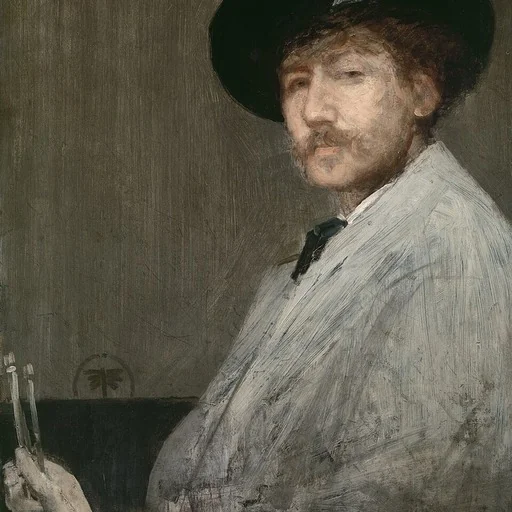
James Abbott McNeill Whistler was an American painter in oils and watercolor, and printmaker, active during the American Gilded Age and based primarily in the United Kingdom.

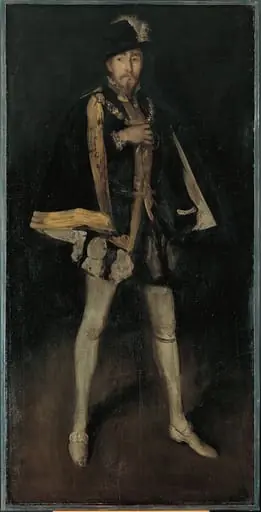 Arrangement in Black, No. 3: Sir Henry Irving as Philip II of Spain
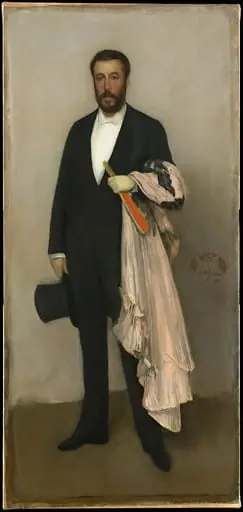 Arrangement in Flesh Colour and Black: Portrait of Theodore Duret
 Gold and Brown: Self-Portrait
 Edward Guthrie Kennedy
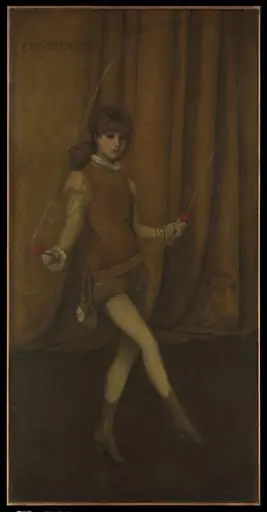 Harmony in Yellow and Gold: The Gold Girl—Connie Gilchrist
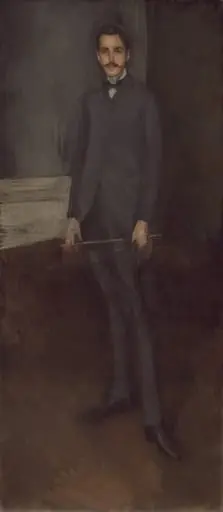 George W. Vanderbilt
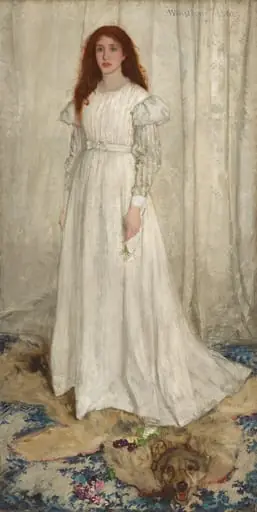 Symphony in White, No. 1: The White Girl
 Henry Irving as Philip II of Spain