Artwork
Limehouse
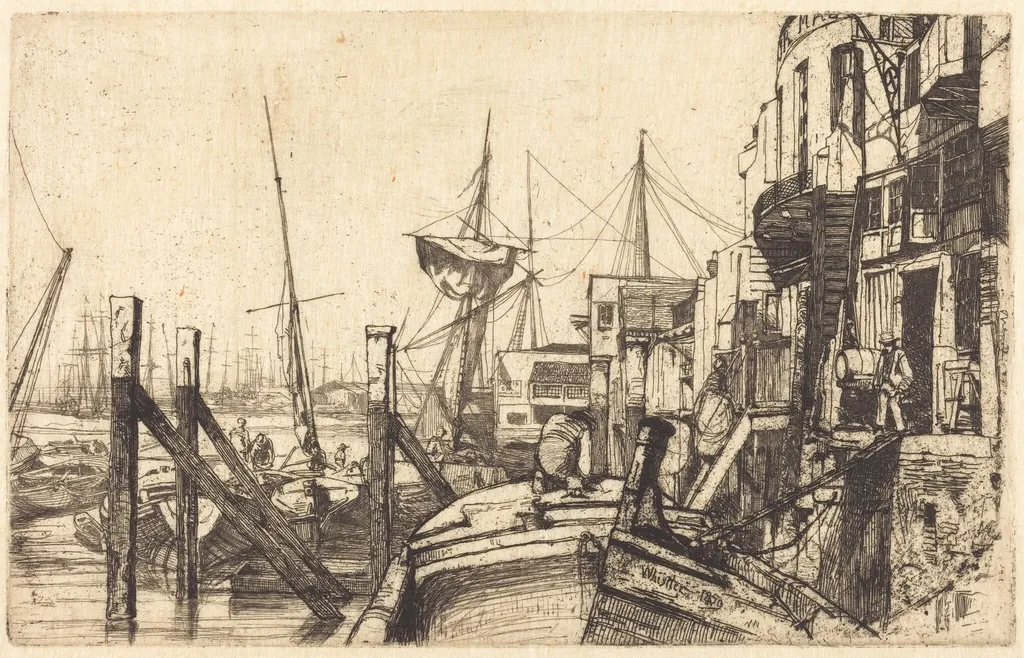
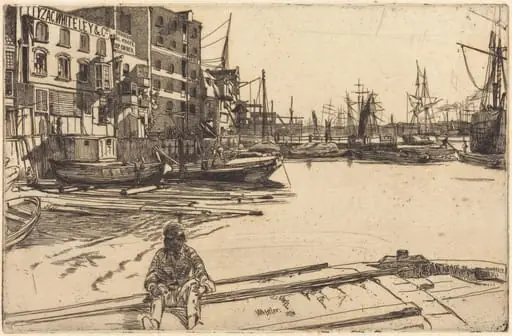
Limehouse is an ink print by the Impressionist artist James McNeill Whistler. It dates from 1859 and is held in the collection of the National Gallery of Art. Created in 1859, this print combines etching and dry‑point on Japanese paper.
About this work
Overview
Created in 1859, this print combines etching and dry‑point on Japanese paper. It records a modest riverside scene in London’s East End, where tightly packed houses line the water’s edge and small boats drift nearby. The composition is restrained, emphasizing atmosphere over detail.
Subject & Meaning
The image portrays a quiet stretch of the Thames bordered by a dense, working‑class neighborhood. By focusing on ordinary architecture and the calm water, the work suggests the everyday rhythm of urban life, inviting contemplation of the modest environment rather than grandiose spectacle.
Technique & Style
Whistler employed both etched lines and dry‑point burr to achieve delicate shading and subtle tonal variation. The use of Japanese paper enhances the softness of the marks, while the restrained line work creates a muted, atmospheric quality that balances light and shadow.
History & Provenance
Produced during Whistler’s early London period, the print emerged amid a circle of artists experimenting with printmaking as a means of affordable, reproducible art. It reflects the artist’s developing interest in tonal harmony that would later characterize his oeuvre.
Context
In the mid‑19th century, the East End’s industrial waterfront was a common subject for artists documenting rapid urban change. Whistler’s approach differs from more narrative depictions, opting for a quiet, observational perspective that aligns with contemporary movements toward realism and tonalism.
Artist & collection
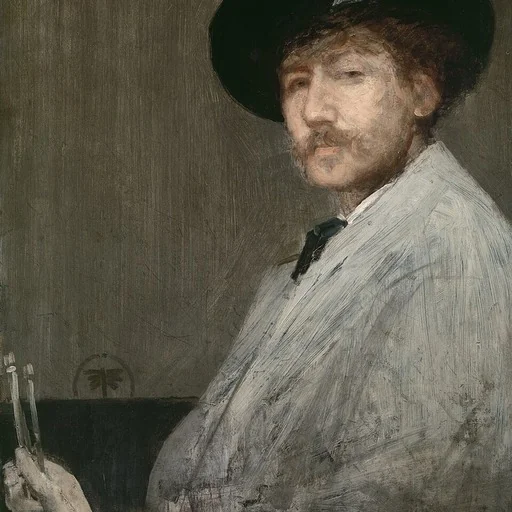
Artist
James Abbott McNeill Whistler was an American painter in oils and watercolor, and printmaker, active during the American Gilded Age and based primarily in the United Kingdom.

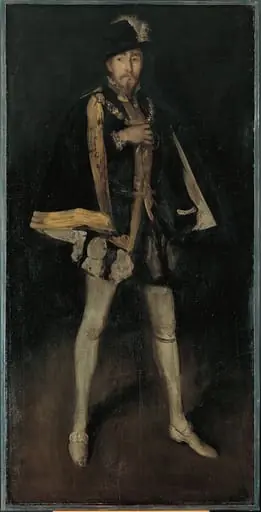 Arrangement in Black, No. 3: Sir Henry Irving as Philip II of Spain
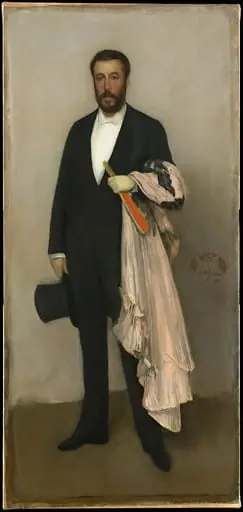 Arrangement in Flesh Colour and Black: Portrait of Theodore Duret
 Gold and Brown: Self-Portrait
 Edward Guthrie Kennedy
 Harmony in Yellow and Gold: The Gold Girl—Connie Gilchrist
 George W. Vanderbilt
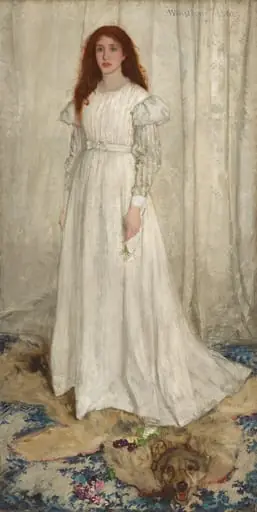 Symphony in White, No. 1: The White Girl
 Henry Irving as Philip II of Spain