Artwork
Lobster-Pots
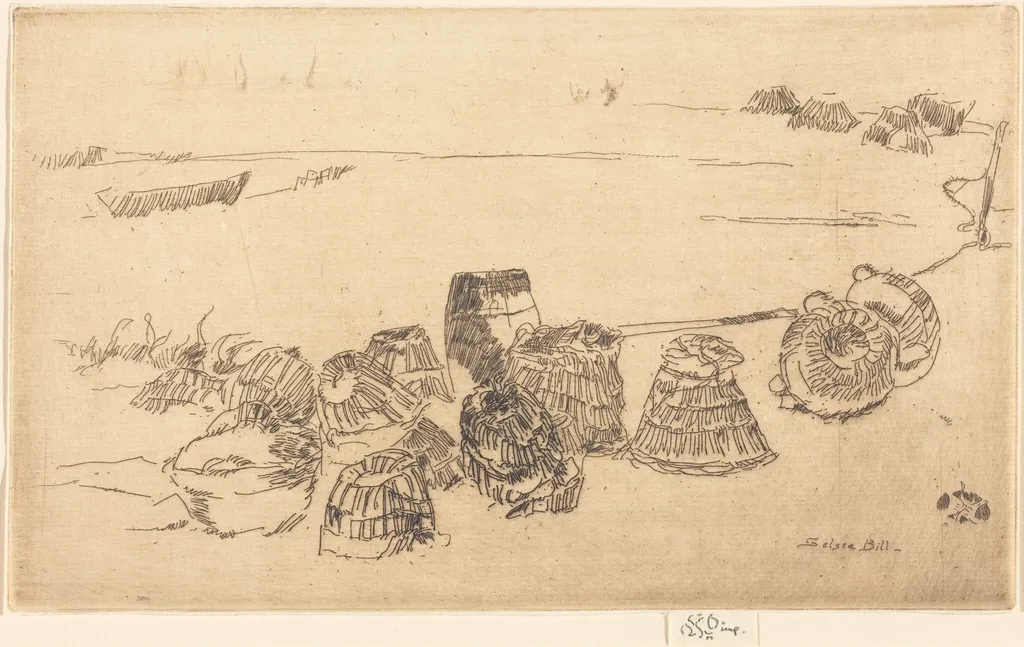
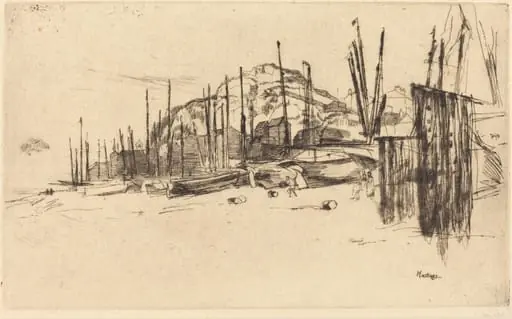
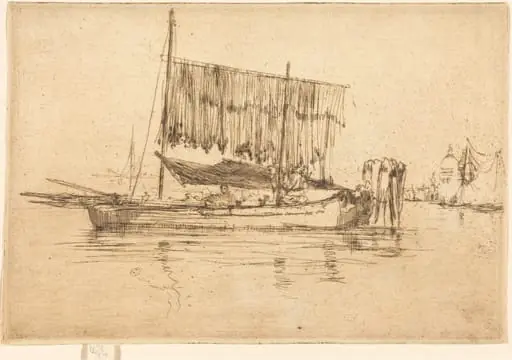
Lobster-Pots is an ink print by the Impressionist artist James McNeill Whistler. It dates from 1880 and is held in the collection of the National Gallery of Art.
About this work
Overview
Created circa 1880, *Lobster‑Pots* is a print by James McNeill Whistler executed with both etching and drypoint on laid paper. The work depicts a modest seaside scene in which a line of weathered lobster traps lies scattered on the sand, their forms rendered with quick, gestural strokes that suggest a fleeting observation rather than a detailed study.
Subject & Meaning
The composition presents a row of lobster pots, some overturned, others partially buried, set against a barely suggested shoreline with distant waves and low‑lying structures. By focusing on ordinary, utilitarian objects, Whistler underscores his belief that art need not convey narrative or sentiment, allowing the viewer to contemplate the quiet dignity of everyday labor.
Technique & Style
Whistler combined traditional etching—where acid bites lines into a metal plate—with drypoint, a needle‑based method that creates burr‑rich, velvety marks. The resulting image is marked by uneven, sketch‑like lines and intentional blank spaces, giving the print a spontaneous, unfinished quality that mirrors the immediacy of a hand‑drawn note.
History & Provenance
Although Whistler is chiefly remembered for his oils and watercolors, his printmaking activity peaked during his years in Britain in the late nineteenth century, aligning with the broader “art for art’s sake” movement. *Lobster‑Pots* emerged from this period and has since been documented in several catalogues of Whistler’s graphic work, remaining in private and institutional collections.
Artist & collection
Artist
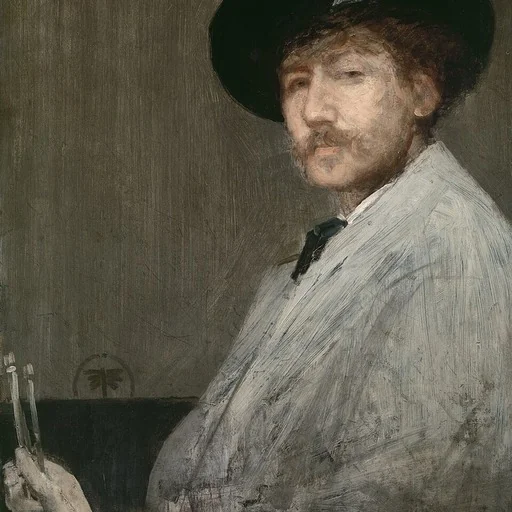
James Abbott McNeill Whistler was an American painter in oils and watercolor, and printmaker, active during the American Gilded Age and based primarily in the United Kingdom.

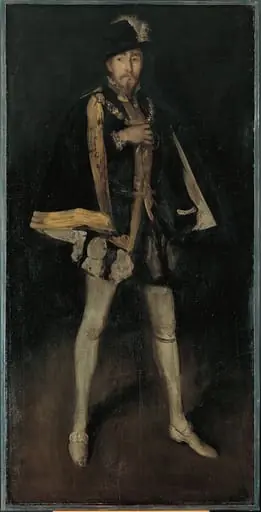 Arrangement in Black, No. 3: Sir Henry Irving as Philip II of Spain
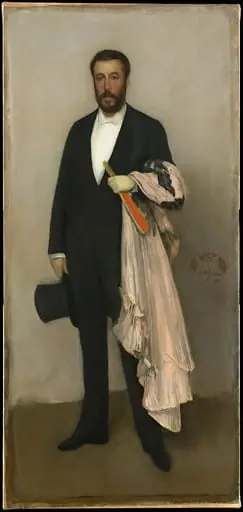 Arrangement in Flesh Colour and Black: Portrait of Theodore Duret
 Gold and Brown: Self-Portrait
 Edward Guthrie Kennedy
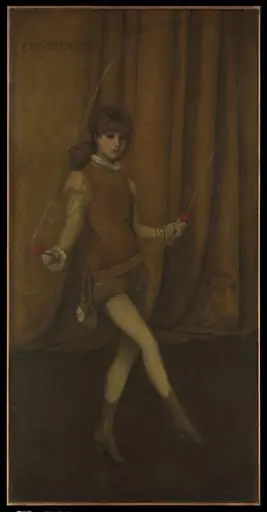 Harmony in Yellow and Gold: The Gold Girl—Connie Gilchrist
 George W. Vanderbilt
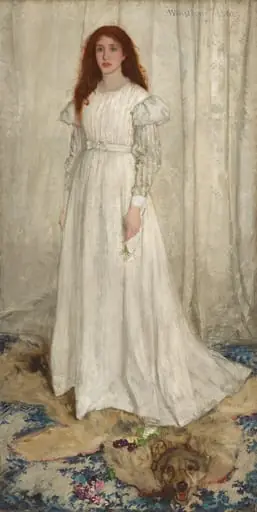 Symphony in White, No. 1: The White Girl
 Henry Irving as Philip II of Spain