Artwork
Red House, Paimpol
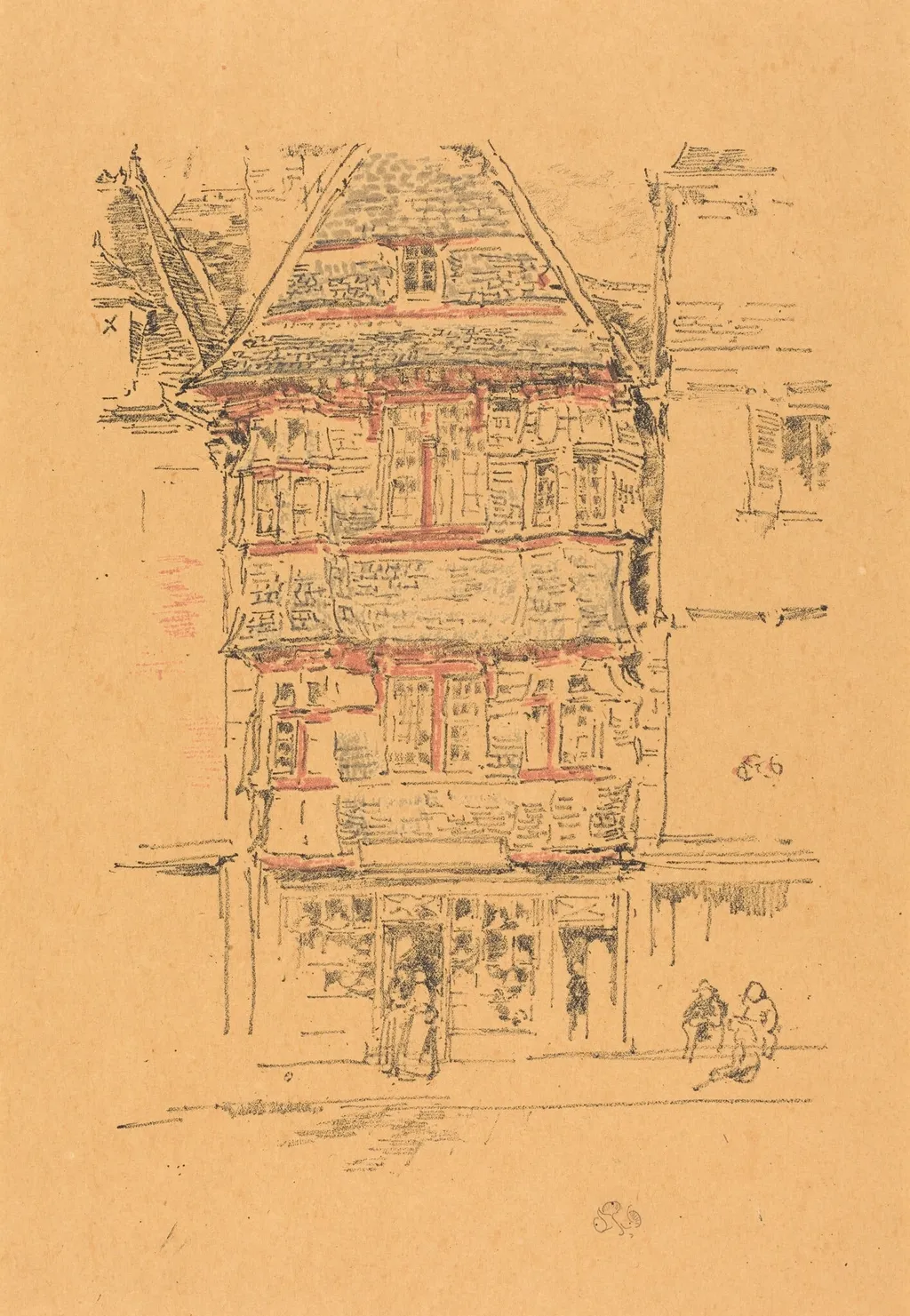
Red House, Paimpol is an ink print by the Impressionist artist James McNeill Whistler. It dates from 1893 and is held in the collection of the National Gallery of Art.
About this work
Overview
Created in 1893, *Red House, Paimpol* is a color lithograph by James McNeill Whistler, produced during his travels in Brittany.
Created in 1893, *Red House, Paimpol* is a color lithograph by James McNeill Whistler, produced during his travels in Brittany. Executed on wove paper, the work reflects Whistler’s interest in printmaking alongside his better-known paintings. Unlike his more elaborate compositions, this piece captures a modest architectural subject with restrained detail, focusing on form and atmospheric tone rather than narrative.
Subject & Meaning
The print portrays a modest two-story stone house in Paimpol, France, with a steeply pitched roof and evenly spaced windows. A solitary figure sits on a bench in the foreground, while another stands near the entrance, suggesting quiet domestic life. The absence of dramatic action or symbolic elements shifts focus to the structure’s presence within its landscape, emphasizing stillness and place over story.
Technique & Style
Whistler employed color lithography to layer subtle tones of brown, red, and gray, building the house’s texture through delicate washes rather than sharp lines. The composition is simplified, with soft edges and minimal detail, evoking a sense of immediacy. The technique allows for a sketch-like quality, yet the structure remains clearly defined, revealing Whistler’s mastery of tonal harmony over linear precision.
History & Provenance
Whistler produced this print during a period of extensive travel in northern France, following his earlier work in Venice and London. It was likely made for personal or small-scale distribution, not as a commercial edition. The work entered public collections in the 20th century, preserved as part of Whistler’s broader print oeuvre, though it never achieved widespread recognition during his lifetime.
Context
In the 1890s, Whistler was increasingly focused on printmaking as a means of exploring light and form outside the constraints of oil painting. His travels in Brittany exposed him to rural architecture that contrasted with urban London scenes. *Red House, Paimpol* aligns with a broader trend among artists of the time to find aesthetic value in ordinary, unidealized landscapes and structures.
Legacy
Though less known than Whistler’s nocturnes or portraits, *Red House, Paimpol* exemplifies his late printmaking approach: quiet, economical, and attentive to subtle tonal shifts. It contributes to the understanding of his interest in lithography as a medium for intimate observation, influencing later artists who valued restraint and atmospheric nuance over grandeur.
Artist & collection
Artist
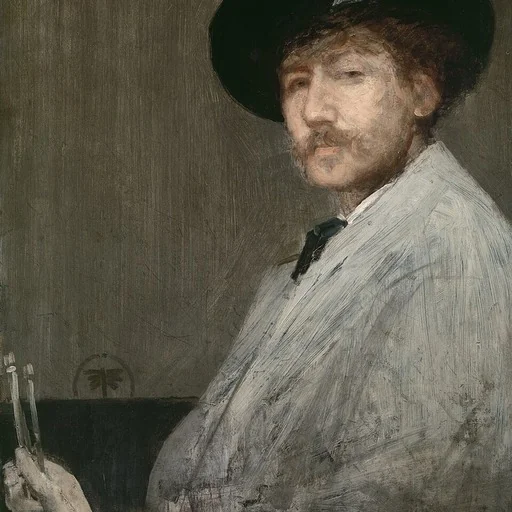
James Abbott McNeill Whistler was an American painter in oils and watercolor, and printmaker, active during the American Gilded Age and based primarily in the United Kingdom.

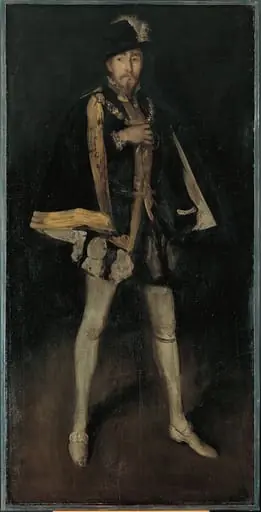 Arrangement in Black, No. 3: Sir Henry Irving as Philip II of Spain
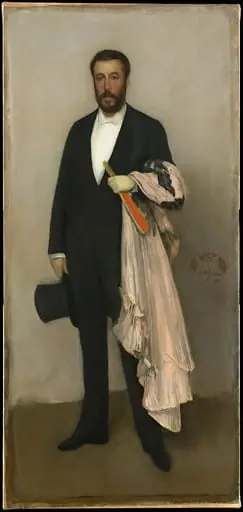 Arrangement in Flesh Colour and Black: Portrait of Theodore Duret
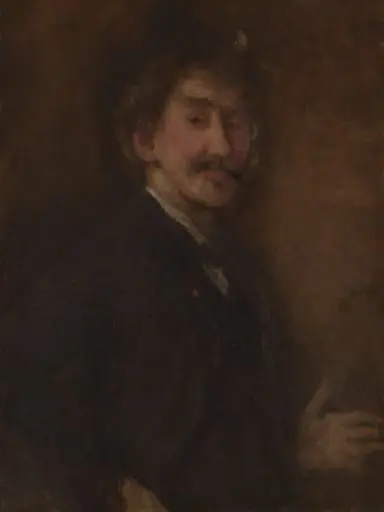 Gold and Brown: Self-Portrait
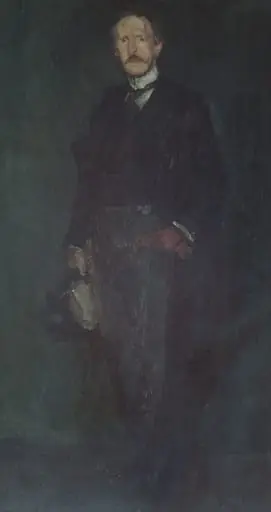 Edward Guthrie Kennedy
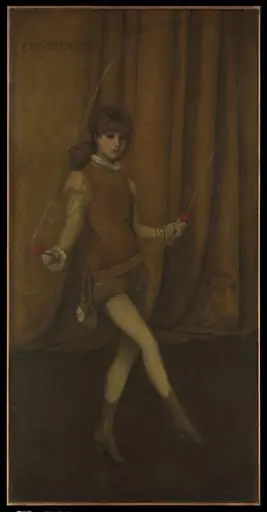 Harmony in Yellow and Gold: The Gold Girl—Connie Gilchrist
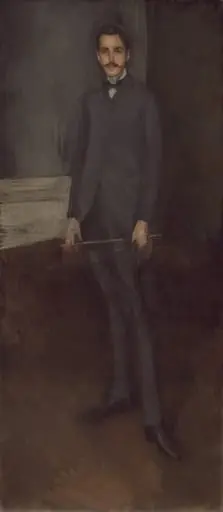 George W. Vanderbilt
 Symphony in White, No. 1: The White Girl
 Henry Irving as Philip II of Spain
 Gabled Roofs, Vitré
 Gabled Roofs
 Rue Furstenburg
 Ancienne habitation à Bourges, dite "La Maison du Musicien" (An Old House at Bourges, Sometimes Called the "Musician's House")
 Ancienne habitation à Bourges, dite "La Maison du Musicien" (An Old House at Bourges, Sometimes Called the "Musician's House")
 The Old Tannery, Strasbourg
 Windows Opposite Hotel, Bourges
 Place du Tertre