Artwork
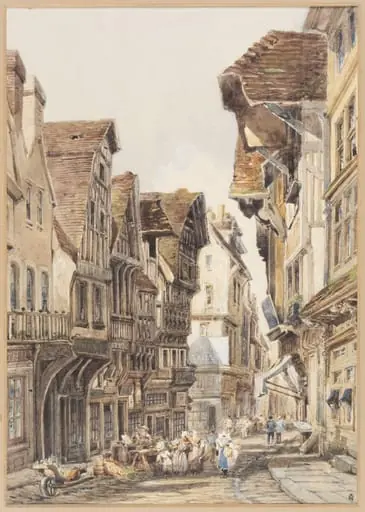
Ancienne habitation à Bourges, dite "La Maison du Musicien" (An Old House at Bourges, Sometimes Called the "Musician's House")
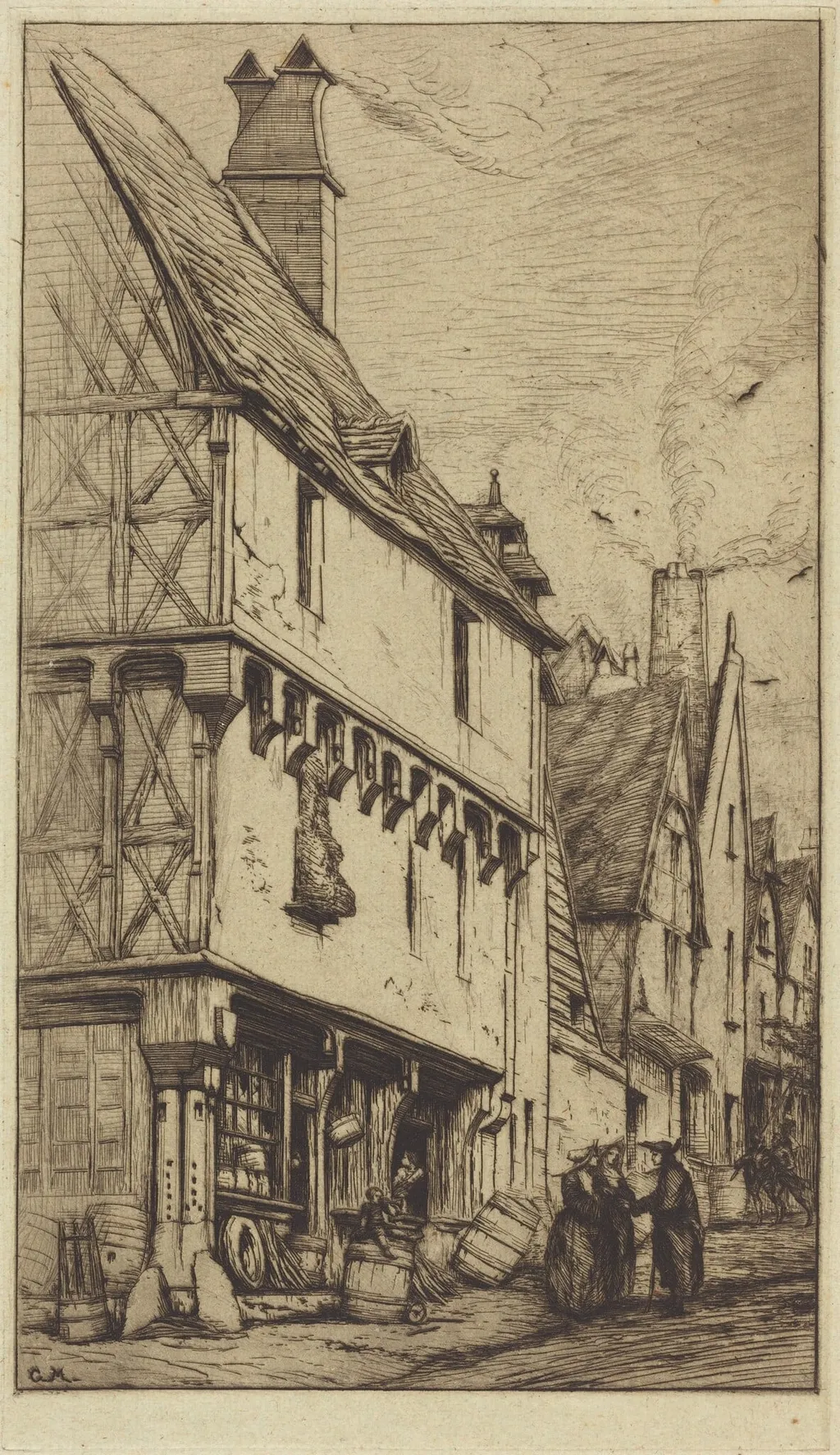
Ancienne habitation à Bourges, dite "La Maison du Musicien" (An Old House at Bourges, Sometimes Called the "Musician's House") is an ink print by the Impressionist artist Charles Meryon. It dates from 1860 and is held in the collection of the National Gallery of Art. Created in 1860, this etching with drypoint on green laid paper captures a modest urban dwelling in Bourges, France.
About this work
Overview
His choice of medium reflects his technical dedication and physical limitation—color blindness led him to focus exclusively on monochromatic printmaking.
Created in 1860, this etching with drypoint on green laid paper captures a modest urban dwelling in Bourges, France. Charles Meryon, primarily known for his depictions of Paris, turned his attention to provincial architecture in this work. His choice of medium reflects his technical dedication and physical limitation—color blindness led him to focus exclusively on monochromatic printmaking. The green tint of the paper subtly enhances the atmospheric tone of the scene.
Subject & Meaning
The scene portrays a narrow street lined with aging half-timbered buildings, one of which leans precariously under a wooden crane. A carriage waits near a shop with large windows, while two figures converse on the sidewalk. The composition conveys quiet daily life within a decaying urban fabric. Meryon’s focus on ordinary structures suggests an interest in the dignity of the overlooked, rather than grand monuments or idealized vistas.
Technique & Style
Meryon employed etching combined with drypoint to achieve a range of tonal textures. The drypoint technique, in which lines are scratched directly into the plate, produces rich, velvety blacks and fine, fuzzy edges that contrast with the cleaner lines of etched grooves. The green paper grounds the image in a muted, earthy palette, reinforcing the work’s somber, introspective mood. The dense yet delicate line work renders both structure and atmosphere with precision.
History & Provenance
This print was made during a period when Meryon traveled beyond Paris to document regional architecture. Though less studied in English-speaking contexts, his work was respected among French printmakers and collectors of his time. The green paper used here is consistent with his late 1850s to early 1860s practice, and the image likely originated from his personal sketchbooks, later refined into finished prints for private circulation.
Context
In mid-19th century France, urban renewal was transforming cities, and older structures like the one depicted were increasingly rare. Meryon’s interest in such buildings aligned with a broader Romantic fascination with decay and memory. Unlike contemporaries who idealized the past, he presented architecture with unembellished observation, capturing the quiet persistence of everyday life amid physical decline.
Legacy
Meryon’s meticulous approach to etching influenced later generations of printmakers who valued technical rigor over dramatic effect. Though his reputation remained largely confined to France, his works are now held in major collections as exemplars of 19th-century graphic art. This piece exemplifies his ability to elevate the mundane through precise draftsmanship and emotional restraint.
Artist & collection
Artist
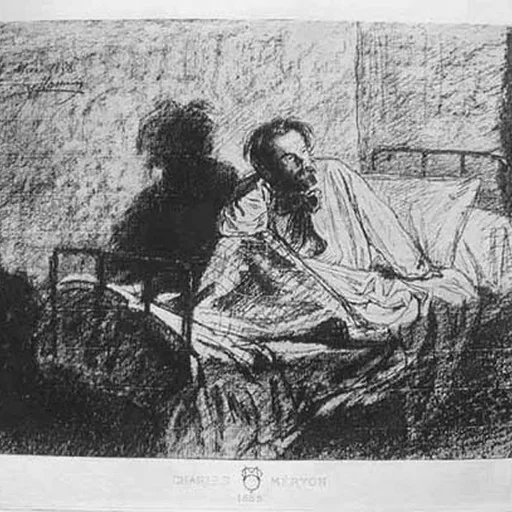
Charles Meryon (sometimes Méryon, 23 November 1821 – 14 February 1868) was a French artist who worked almost entirely in etching, as he had colour blindness.

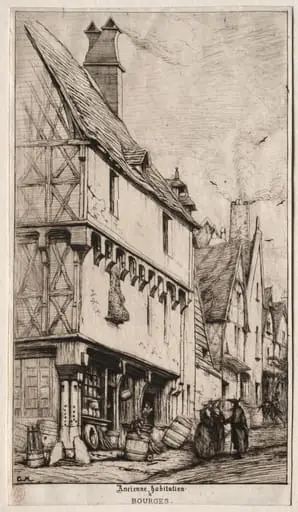 An Old House at Bourges, sometimes called the Musician's House
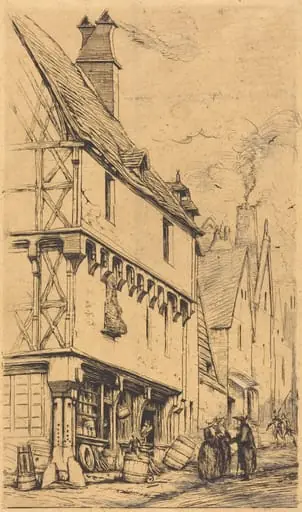 Ancienne habitation à Bourges, dite "La Maison du Musicien" (An Old House at Bourges, Sometimes Called the "Musician's House")
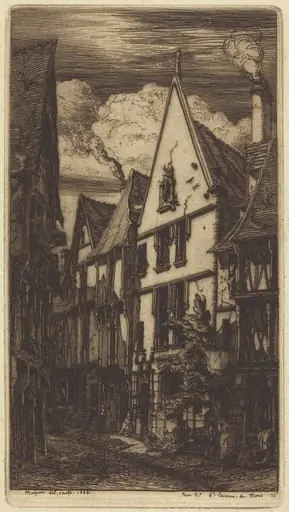 La Rue des Toiles, à Bourges
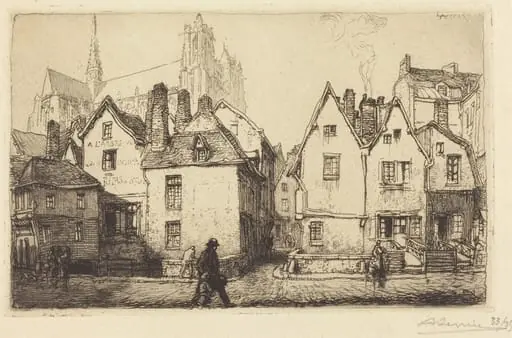 Old Houses at Amiens (Vieilles maisons a Amiens)
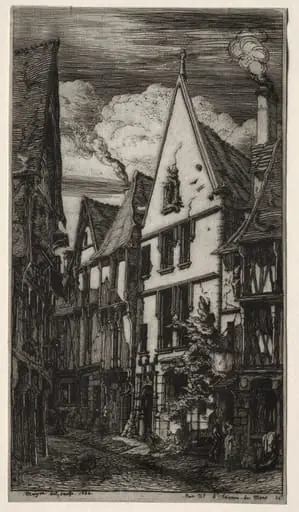 Rue des Toiles, Bourges
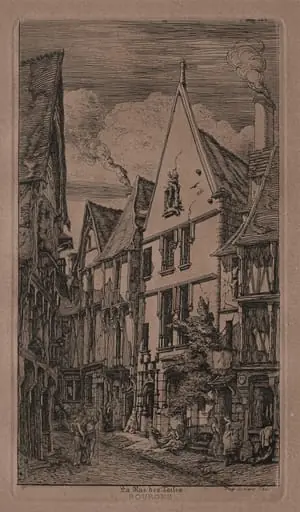 Rue des Toilés, Bourges
 Old Houses at Lisieux, Normandy