Artwork
Place du Tertre
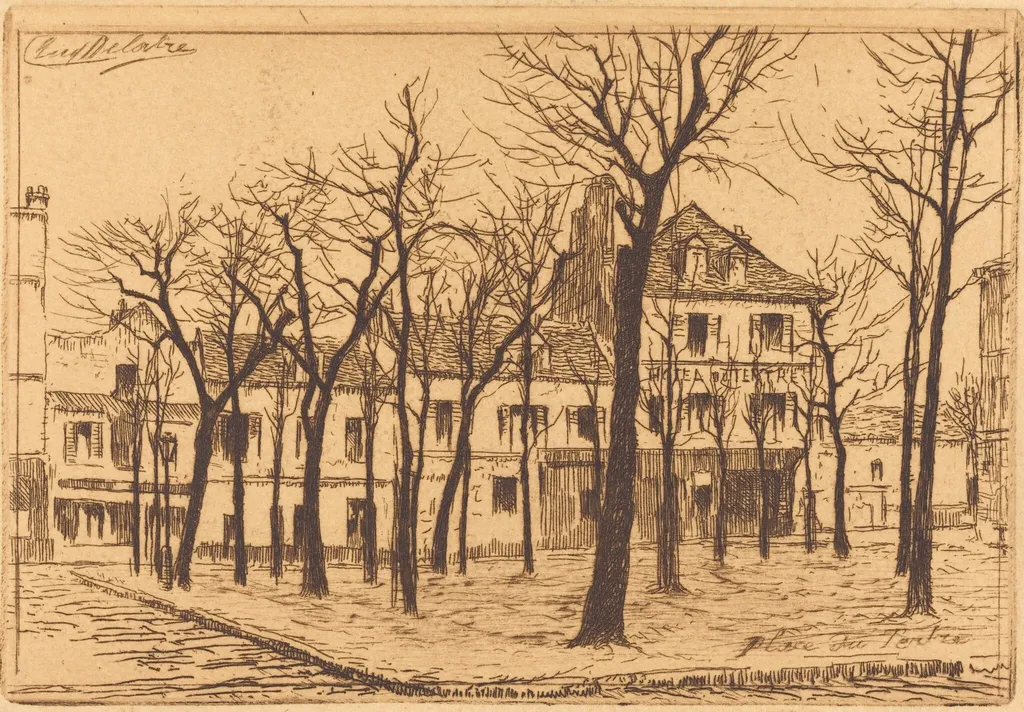
Place du Tertre is an ink print by the Romanticist artist Auguste Delâtre. It dates from 1864 and is held in the collection of the National Gallery of Art.
About this work
Overview
Place du Tertre is an 1864 etching executed in brown ink by French printmaker Auguste Delâtre. The work presents a compact urban scene rendered in monochrome, capturing a quiet street corner framed by skeletal trees and modest architecture. The composition is signed with the place name “Capucins,” indicating the specific location depicted.
Subject & Meaning
The image portrays a narrow thoroughfare lined with low‑rise buildings of flat roofs and simple window openings. In the foreground, leafless trees twist their branches against a pale sky, suggesting a late‑autumn or early‑winter atmosphere. The uneven ground, dotted with grass and patches of earth, conveys a sense of everyday life in a modest Parisian quarter.
Technique & Style
Delâtre employed the traditional intaglio etching process, incising fine, controlled lines into a copper plate before printing on paper with brown ink. The delicate hatching creates texture on the bark of the trees and the facades of the structures, while broader strokes define the sky and ground. The limited tonal range emphasizes line work over tonal modeling.
History & Provenance
Created in 1864, the etching reflects Delâtre’s interest in urban topography during the mid‑nineteenth century. While specific ownership records are scarce, the print has appeared in several catalogues of French etchers and is held in public collections that document the period’s printmaking activity.
Context
Place du Tertre belongs to a broader movement of French artists who documented contemporary cityscapes through print media. The work aligns with the realist tendency to record ordinary streetscapes without romanticizing the scene, offering a factual visual record of a Parisian neighborhood before Haussmann’s extensive renovations.
Own this work as a print
Artist & collection


 The Street Lamp
 Castle with Two Towers
 Large Farm with Draw Well
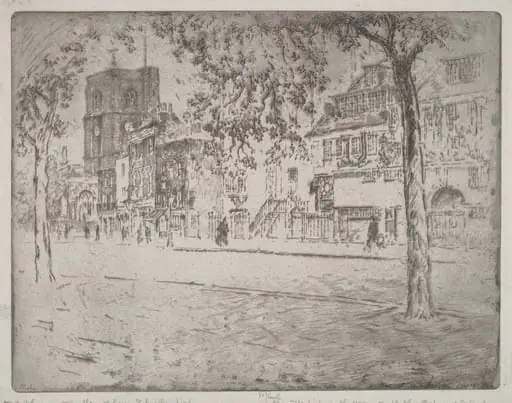 House Where Whistler Died
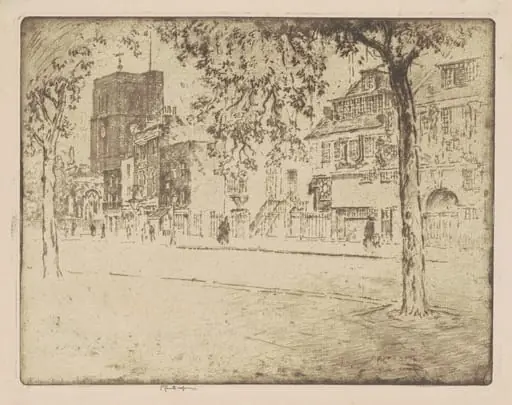 House Where Whistler Died
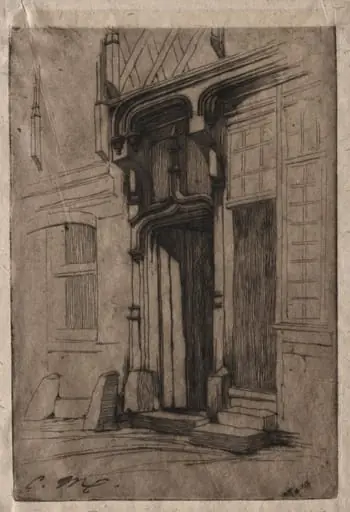 Doorway of an Ancient Convent in the Rue Mirabeau, Bourges
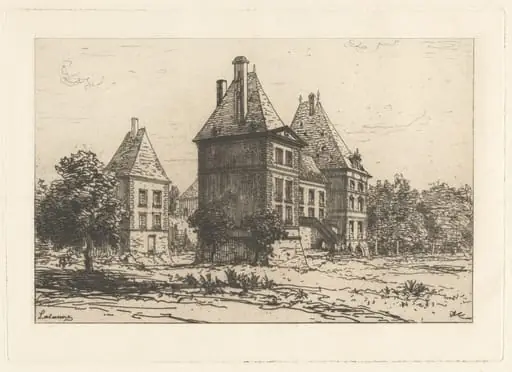 Castle with Two Wings
 Farms in a Village
 Old Museum, Beauvais
 Farms
Farms Thames Street, Newport
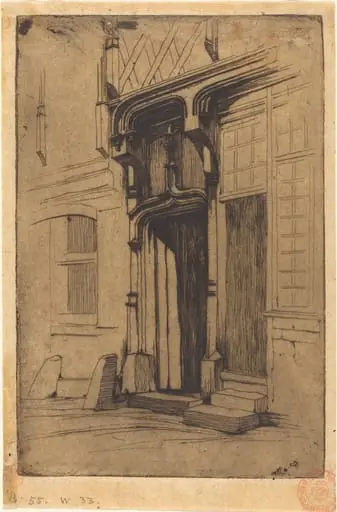 Porte d'un ancien couvent, Rue Mirabeau, à Bourges (Doorway of an Ancient Convent, in the Rue Mirabeau, Bourges)