Artwork
Thames Police
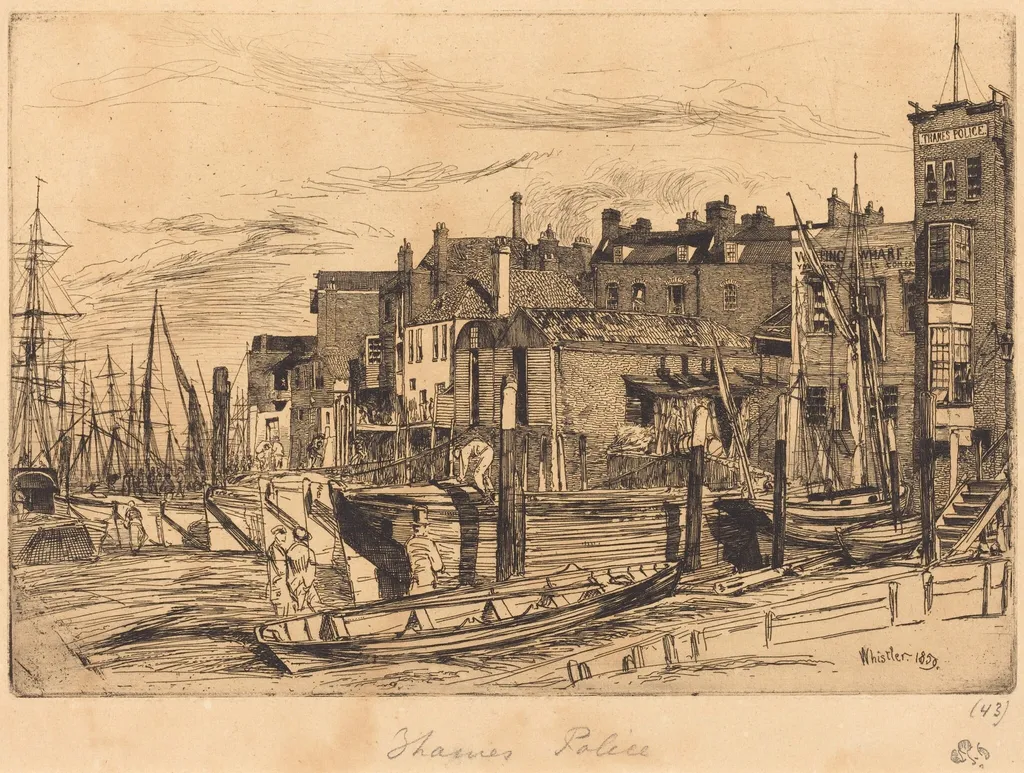
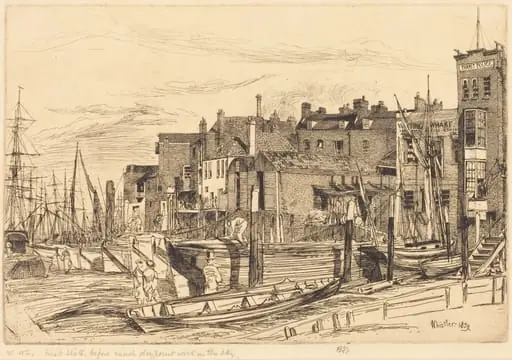
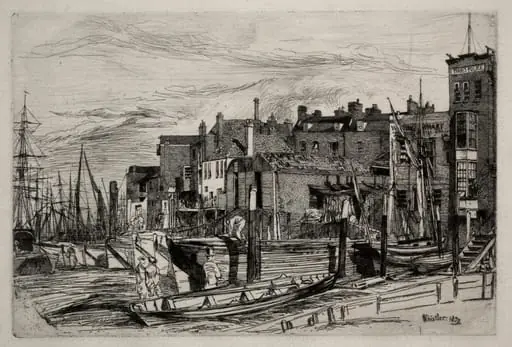
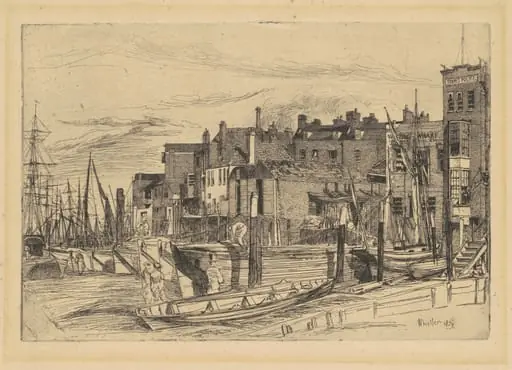
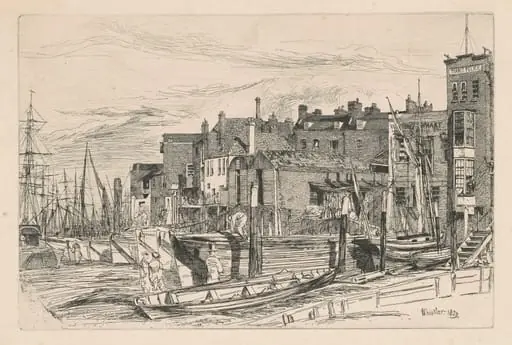
Thames Police is an ink print by the Impressionist artist James McNeill Whistler. It dates from 1859 and is held in the collection of the National Gallery of Art.
About this work
Overview
Created in 1859, *Thames Police* is an etching and drypoint on wove paper by James McNeill Whistler, an American artist working in London.
Created in 1859, *Thames Police* is an etching and drypoint on wove paper by James McNeill Whistler, an American artist working in London. The print captures a moment along the River Thames, focusing on the bustling waterfront and the presence of the Thames River Police. Whistler’s interest in urban waterways and their daily rhythms is evident, as is his commitment to printmaking as a medium of quiet observation rather than grand narrative.
Subject & Meaning
The scene portrays a working riverfront with vessels moored along a crowded dock, laborers handling cargo, and a prominent police station marked with its name. The Thames Police, established to combat theft on the river, serve as an unobtrusive anchor in the composition. Whistler does not dramatize their role but includes them as part of the urban fabric, suggesting a quiet acknowledgment of order amid industrial chaos.
Technique & Style
Whistler combined etching with drypoint to achieve a range of linear textures. The drypoint technique, which involves scratching directly into the metal plate, produces rich, grainy lines that give the image a spontaneous, sketchlike quality. The loose, hurried strokes convey movement and immediacy, while the etched outlines define structure. This blend of precision and informality reflects his interest in capturing transient effects over idealized forms.
History & Provenance
Made during Whistler’s early years in London, *Thames Police* belongs to a series of river scenes he produced between 1859 and 1865. These works were often circulated among collectors and fellow artists, helping establish his reputation as a printmaker. The butterfly monogram, a signature he adopted in the 1860s, appears here, signaling his growing confidence as an artist and his desire to brand his aesthetic identity.
Context
In the late 1850s, London’s Thames was a vital commercial artery, lined with warehouses, docks, and policing institutions. Whistler’s focus on this working waterfront aligned with broader 19th-century interests in urban life, yet he avoided overt social commentary. Instead, he treated the scene as a study in light, line, and composition, anticipating later movements that prioritized formal qualities over narrative content.
Legacy
Though less celebrated than his later nocturnes, *Thames Police* exemplifies Whistler’s foundational approach to printmaking: a restrained, observational style that valued atmosphere and technique over sentiment. The work influenced contemporaries and successors who sought to elevate printmaking as a serious art form, demonstrating how everyday scenes could be transformed through careful draftsmanship and material sensitivity.
Artist & collection
Artist
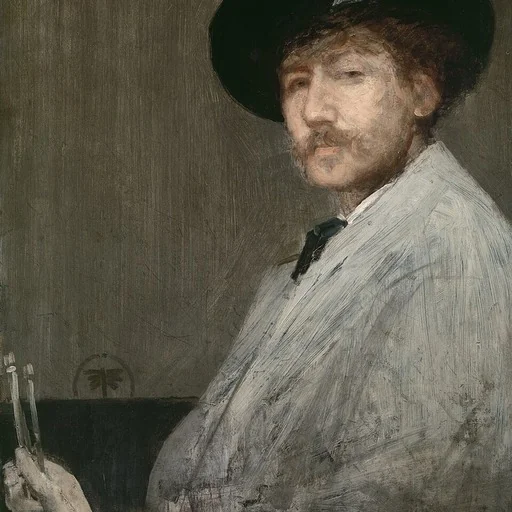
James Abbott McNeill Whistler was an American painter in oils and watercolor, and printmaker, active during the American Gilded Age and based primarily in the United Kingdom.

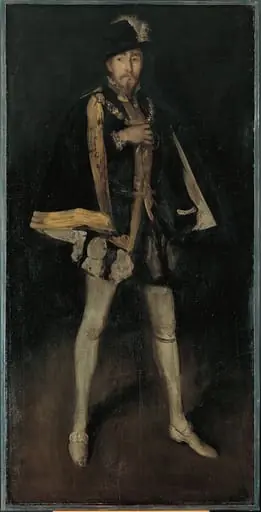 Arrangement in Black, No. 3: Sir Henry Irving as Philip II of Spain
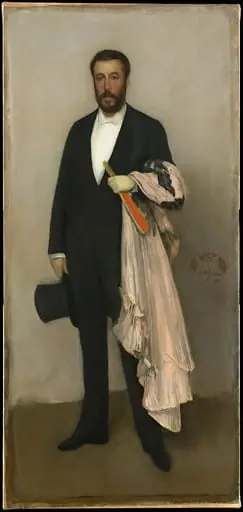 Arrangement in Flesh Colour and Black: Portrait of Theodore Duret
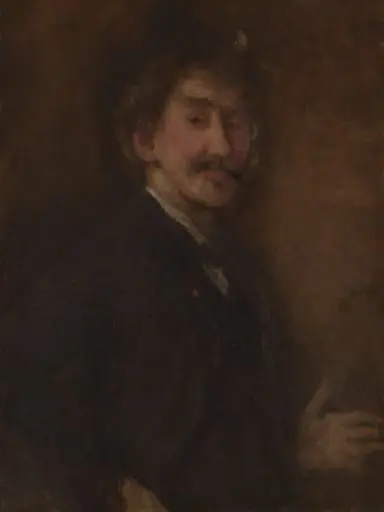 Gold and Brown: Self-Portrait
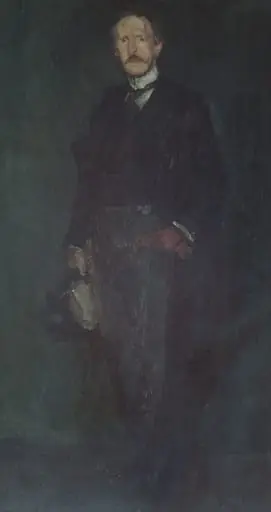 Edward Guthrie Kennedy
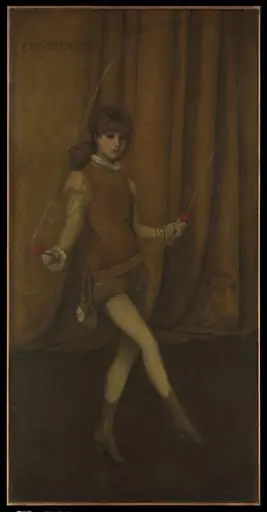 Harmony in Yellow and Gold: The Gold Girl—Connie Gilchrist
 George W. Vanderbilt
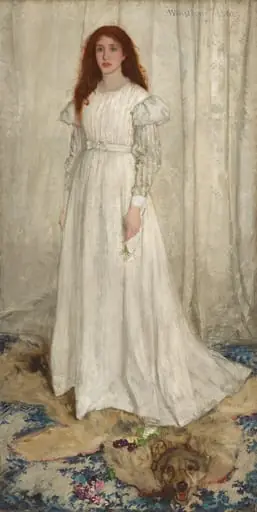 Symphony in White, No. 1: The White Girl
 Henry Irving as Philip II of Spain