Artwork
The Camp
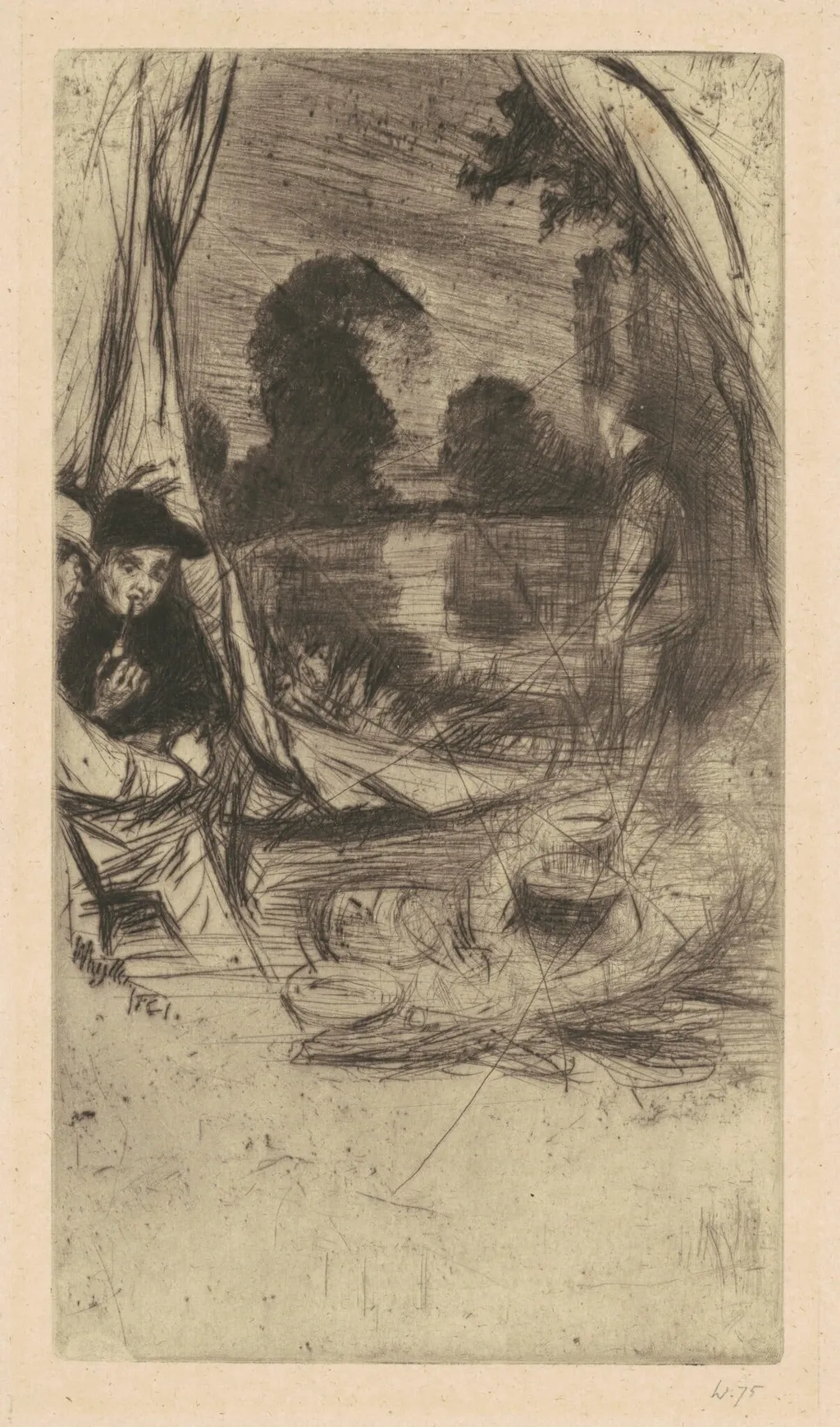
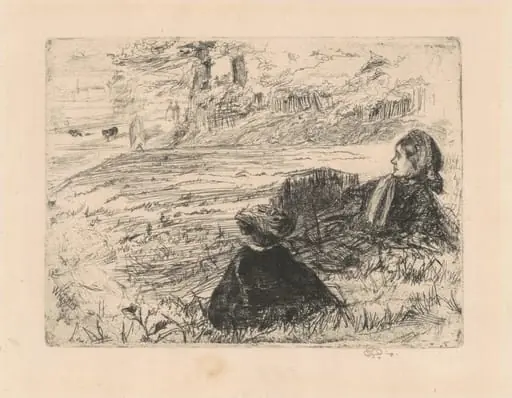
The Camp is an ink print by the Impressionist artist James McNeill Whistler. It dates from 1861 and is held in the collection of the National Gallery of Art.
About this work
Overview
Created in 1861, 'The Camp' is a drypoint print by James McNeill Whistler on laid paper. Rendered entirely in black ink, the work presents a quiet landscape beside a body of water, where natural elements are suggested through fine, incised lines rather than detailed representation. The medium’s intimacy and tonal subtlety align with Whistler’s interest in mood over narrative.
Subject & Meaning
The scene depicts a secluded campsite near water, with trees and their reflections forming a quiet, almost abstract composition. There is no human presence, and the absence of action invites contemplation. The work conveys stillness not through detail, but through the restraint of form and the balance of light and shadow, reflecting Whistler’s preference for atmospheric harmony.
Technique & Style
Whistler employed drypoint, a printmaking technique involving scratching lines directly into a metal plate, to achieve soft, velvety blacks and delicate gradations. The use of laid paper enhanced the tactile quality of the image, while the monochromatic palette eliminated distraction, focusing attention on texture and tone. His approach prioritized tonal harmony over precise depiction.
History & Provenance
Executed during Whistler’s early years in London, 'The Camp' belongs to a series of intimate landscape prints made between 1859 and 1863. These works were often experimental, created outside the demands of commercial portraiture. The print was likely produced for private circulation among artists and collectors, reflecting Whistler’s growing interest in printmaking as an independent art form.
Context
In the early 1860s, Whistler was moving away from academic traditions toward a more personal, tonal aesthetic. 'The Camp' aligns with contemporary European interest in Japanese prints and the English Pre-Raphaelites’ attention to nature, yet it diverges by rejecting narrative and detail. Instead, it emphasizes mood, placing it within a broader shift toward aestheticism in art.
Legacy
Though not widely exhibited in Whistler’s lifetime, 'The Camp' exemplifies his contribution to the revival of etching and drypoint as serious artistic media. Its quiet intensity influenced later printmakers who valued subtlety over spectacle. Today, it stands as a key example of how minimal means can evoke profound stillness in printmaking.
Artist & collection
Artist
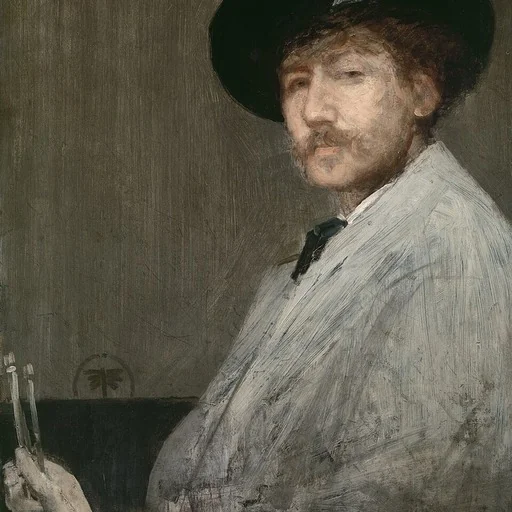
James Abbott McNeill Whistler was an American painter in oils and watercolor, and printmaker, active during the American Gilded Age and based primarily in the United Kingdom.

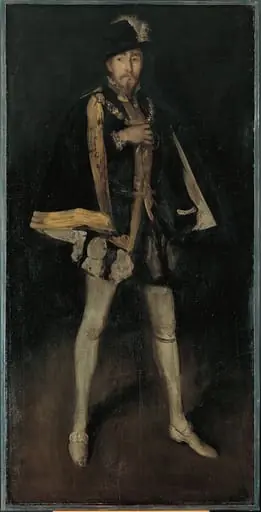 Arrangement in Black, No. 3: Sir Henry Irving as Philip II of Spain
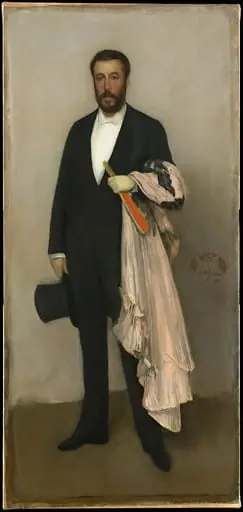 Arrangement in Flesh Colour and Black: Portrait of Theodore Duret
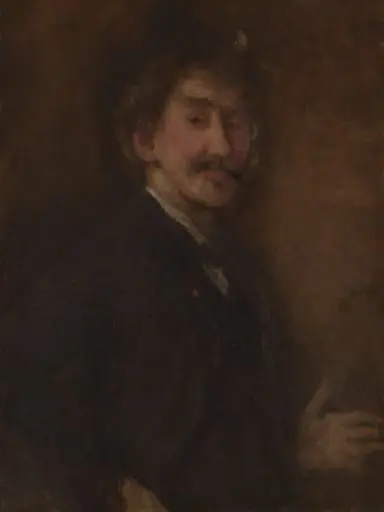 Gold and Brown: Self-Portrait
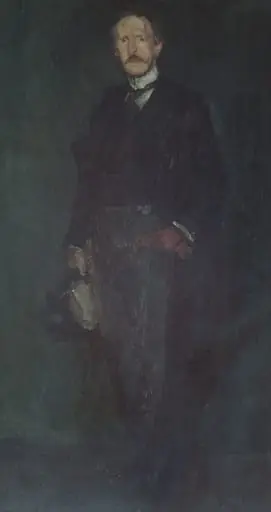 Edward Guthrie Kennedy
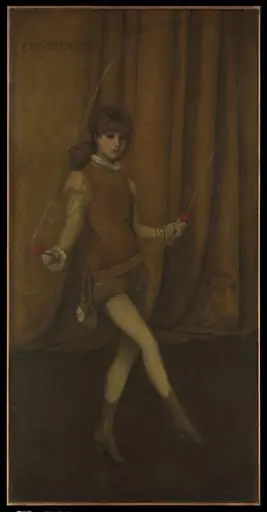 Harmony in Yellow and Gold: The Gold Girl—Connie Gilchrist
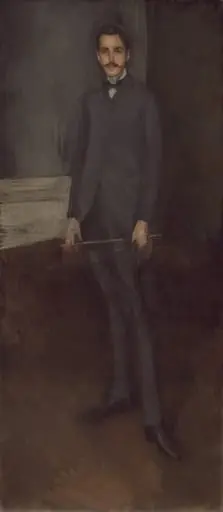 George W. Vanderbilt
 Symphony in White, No. 1: The White Girl
 Henry Irving as Philip II of Spain
 The Murder (Le Meurtre)
 Bathers (Les baigneuses)
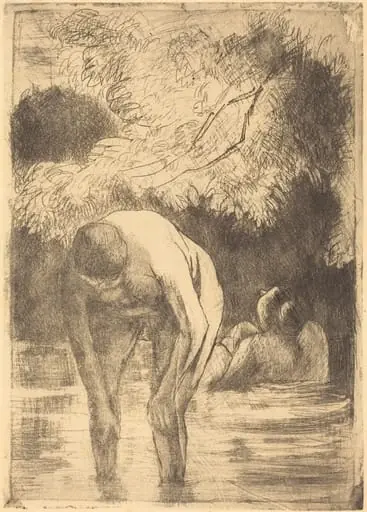 Two Women Bathing (Les deux baigneuses)
![Fisherman on the Lakeshore [Pescatore sulla riva del lago], by Antonio Fontanesi](https://artifactworldgallery.com/img/antonio-fontanesi--fisherman-on-the-lakeshore-pescatore-sulla-riva-del-lago--ffdfb2d7020ad437-w320.webp) Fisherman on the Lakeshore [Pescatore sulla riva del lago]
Fisherman on the Lakeshore [Pescatore sulla riva del lago]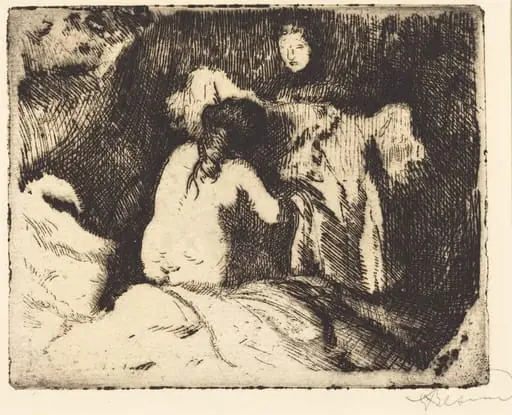 Getting Up (Le lever)
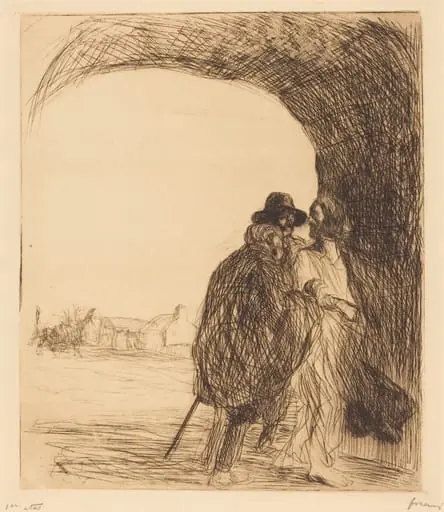 La rencontre sous la voute (3e planche) (The Meeting under the Arch) (third plate)
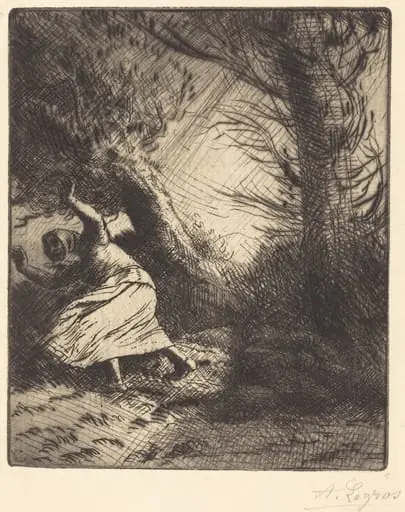 Thunder (Un coup de foudre)
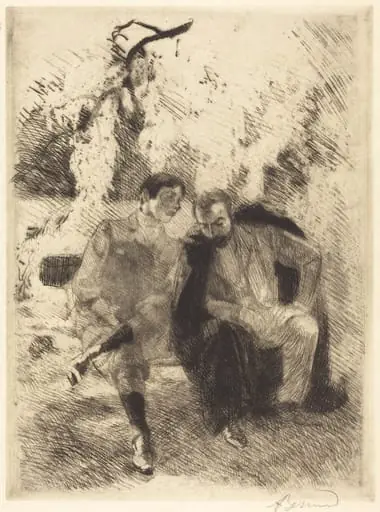 Confidences
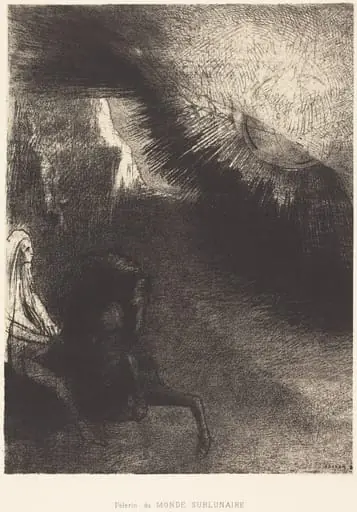 Pélerin du monde sublunaire (Pilgrim of the sublunary world)
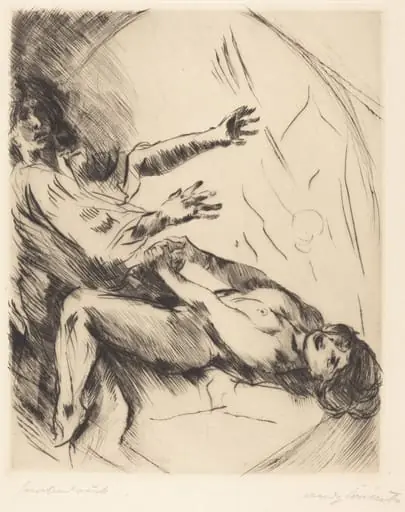 Joseph und Potiphars Weib I (Joseph and Potiphar's Wife I)
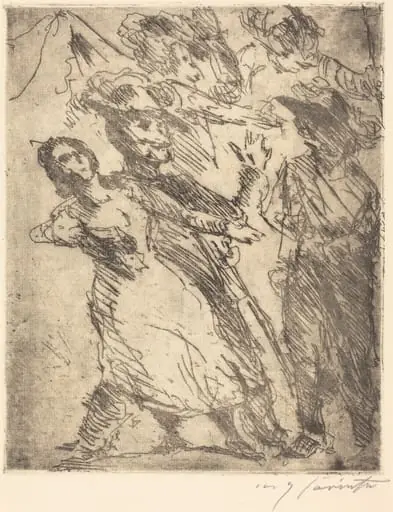 Kavaliere mit einer frau (Cavaliers with a Woman)
 Nursemaid and Child